Logarithmic Functions and Properties
Not sure you’re ready?
Take the ~3-minute readiness diagnostic and see where you stand.
To understand an exponential function is to understand a process that compounds upon itself, accelerating outward into infinity. But when we ask the inverse question—how long a process must run to achieve a specific magnitude—we are demanding a logarithm. For an aspiring secondary mathematics educator, demystifying this relationship transforms a notoriously mechanical unit of algebra into a masterclass on inverse operations. We do not teach logarithms merely as an arbitrary set of properties to memorize; we teach them as the precise algebraic tools designed specifically to untangle a variable trapped in an exponent. In Praxis 5165 items, you will be assessed not just on your algebraic fluency, but on your ability to anticipate domain restrictions, identify extraneous solutions, and translate these structural truths into instructional clarity.
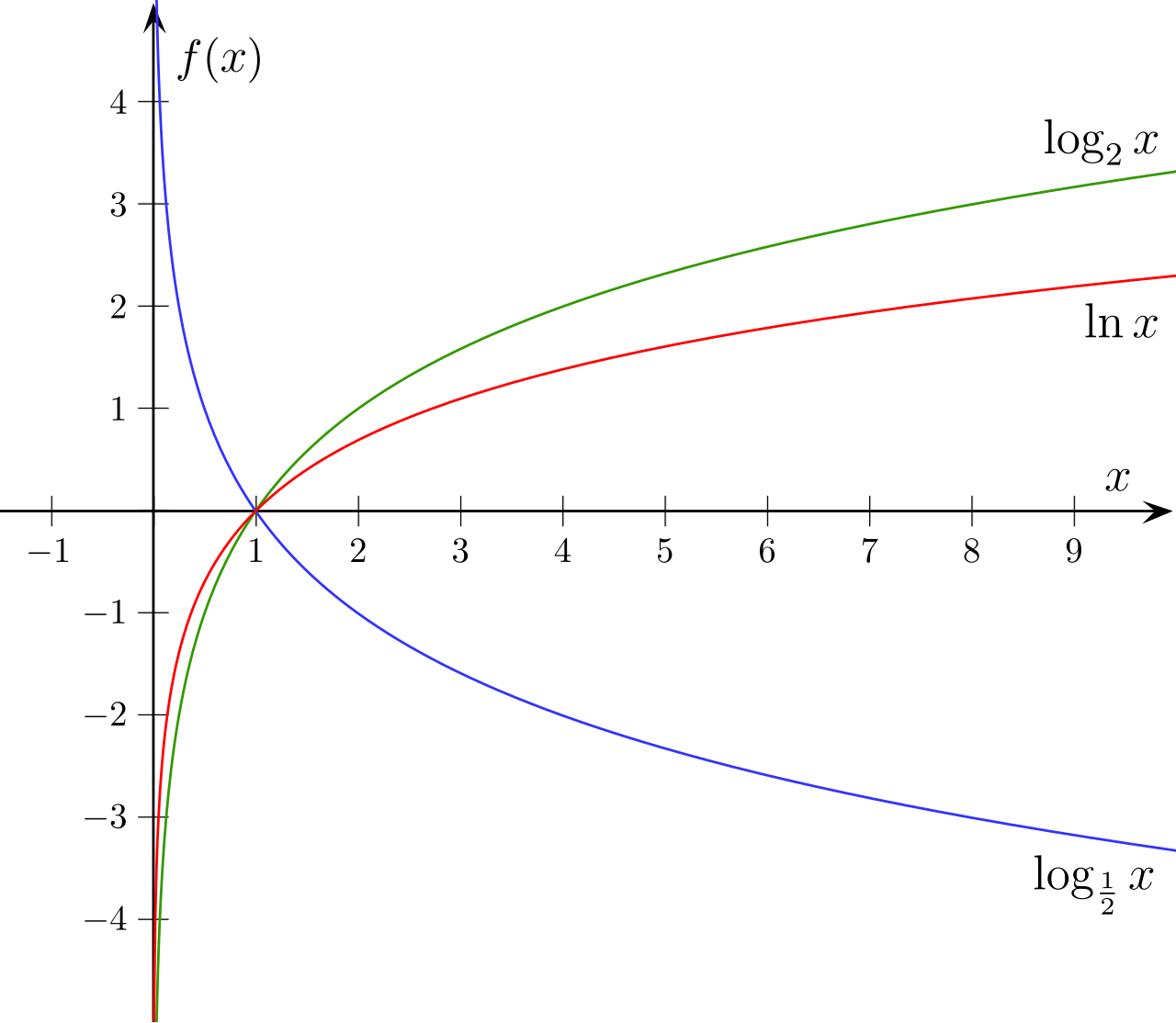
Before manipulating equations, your students must deeply grasp the visual and structural relationship between exponents and logs. A logarithmic function and an exponential function with the identical base are inverse functions of each other.
Because they map the exact opposite inputs and outputs, the graphs of inverse logarithmic and exponential functions reflect across the line y=x. This visual reflection dictates all of their defining characteristics.
Consider the fundamental exponential function f(x)=bx. As x becomes intensely negative, the output approaches zero but never touches it. Thus, the graph of a basic exponential function f(x)=bx contains a horizontal asymptote at the line y=0. Its range is strictly positive real numbers. By flipping the x and y coordinates to form the inverse, we construct the basic logarithmic function, f(x)=logb(x).
This inversion locks in the following spatial rules:
- The domain of a basic logarithmic function f(x)=logb(x) consists exclusively of all positive real numbers.
- The argument of a real-valued logarithmic function must be strictly greater than zero. (Zero and negative arguments mathematically crash the real-number definition).
- The range of a basic logarithmic function f(x)=logb(x) consists of all real numbers.
- The graph of a basic logarithmic function f(x)=logb(x) contains a vertical asymptote at the line x=0.
| Feature | Exponential: f(x)=bx | Logarithmic: f(x)=logb(x) |
|---|---|---|
| Domain | All real numbers (−∞,∞) | Positive real numbers (0,∞) |
| Range | Positive real numbers (0,∞) | All real numbers (−∞,∞) |
| Asymptote | Horizontal at y=0 | Vertical at x=0 |
Finally, what qualifies as a valid base? To prevent oscillating functions (which occur with negative bases) or a flat, constant function (since 1x=1), the base of a logarithmic function must be a positive real number strictly not equal to 1.
Logarithms ask a simple question: "To what power must I raise the base to get the argument?"
From this question alone, two elementary identities emerge:
- The logarithm of 1 to any valid base evaluates to exactly 0. (Because b0=1).
- The logarithm of any valid base b evaluated at that same base b is exactly 1. (Because b1=b).
When a function meets its inverse, they neutralize each other, returning the original input. This reveals two powerful cancellation properties you will rely on heavily when solving equations:
The inverse logarithmic property states that a base b raised to the logarithm of x with base b equals x for any positive real number x. Formula: blogb(x)=x
The inverse exponential property states that the logarithm with base b of b raised to the power of x equals x for any real number x. Formula: logb(bx)=x
Logarithms effectively translate higher-level operations into lower-level operations. Multiplication becomes addition; division becomes subtraction; exponentiation becomes multiplication. This happens because logarithms are exponents, so they follow the laws of exponents.
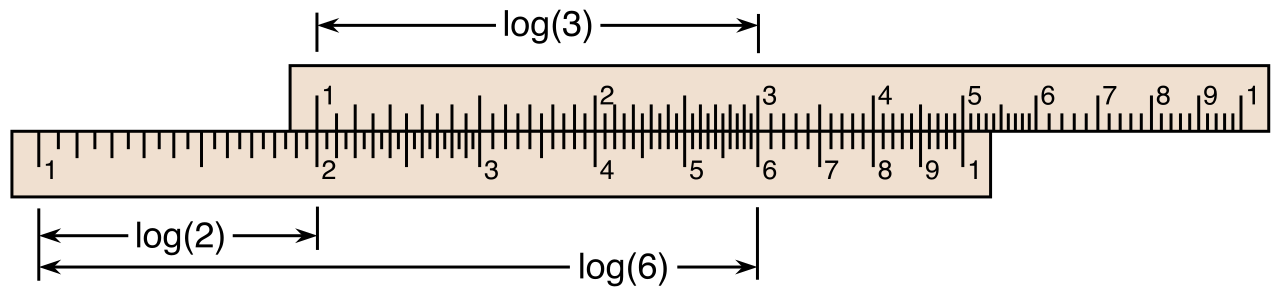
When teaching students to expand or condense expressions, you will utilize three primary properties:
- The product property of logarithms states that the logarithm of a product equals the sum of the logarithms of the factors. logb(xy)=logb(x)+logb(y)
- The quotient property of logarithms states that the logarithm of a quotient equals the difference of the logarithms of the numerator and denominator. logb(yx)=logb(x)−logb(y)
- The power property of logarithms states that the logarithm of a number raised to an exponent equals the exponent multiplied by the logarithm of the number. logb(xy)=y⋅logb(x)
A critical procedural note for the classroom: When working in reverse to pack terms tightly together, condensing an expression with multiple logarithmic terms involves applying the power property to coefficients before applying the product or quotient properties. For example, to condense 2log(x)+log(y), you must first pull the 2 inside as an exponent (log(x2)+log(y)) before applying the product property to get log(x2y).
While a base b can be any positive number other than 1, we encounter two bases continuously in science, finance, and mathematical modeling.
- The common logarithm is a logarithm with a base of exactly 10. When you see log(x) without a specified base, it implies base 10. We use this heavily in measuring phenomena like earthquake intensity (Richter scale) or sound (decibels).
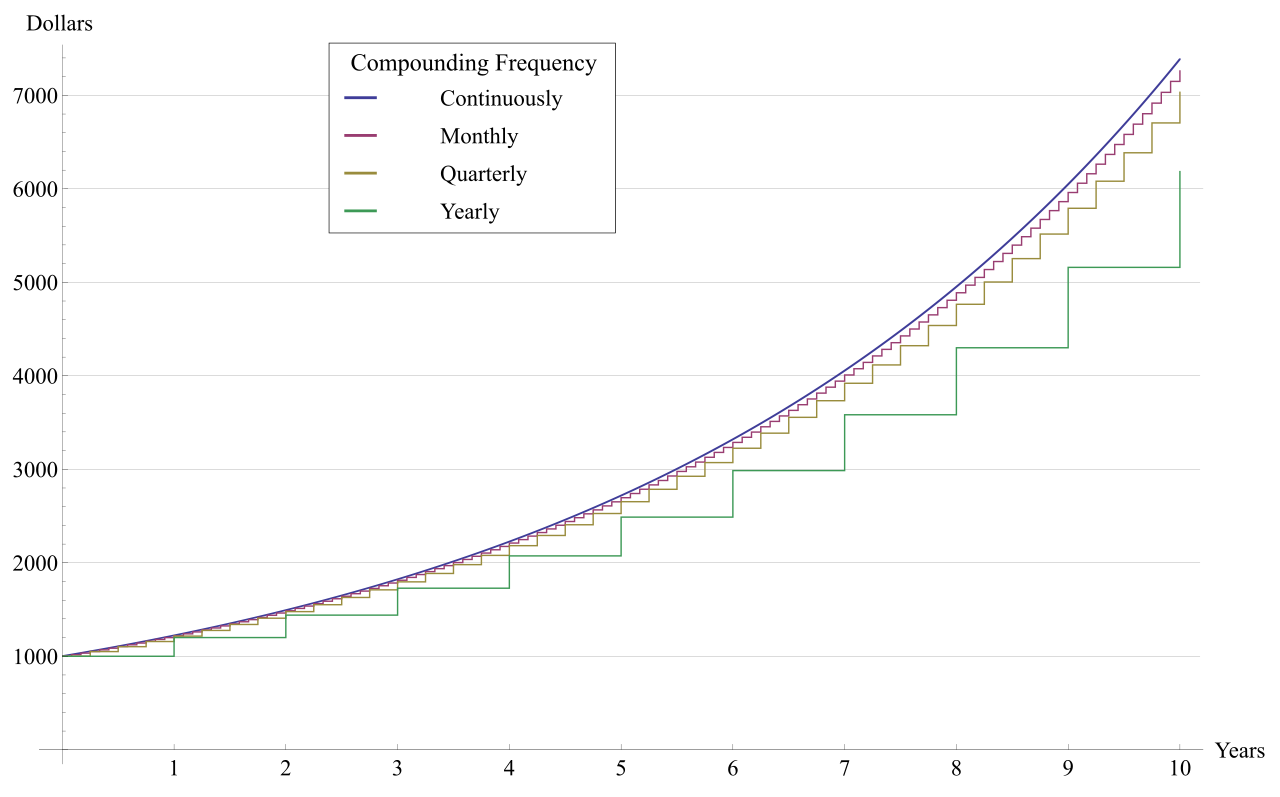
- The natural logarithm is a logarithm with a base of the mathematical constant e. Written as ln(x), this governs continuous growth systems, such as calculating continuous compound interest (e.g., an account growing to $5,000 at a continuous rate).
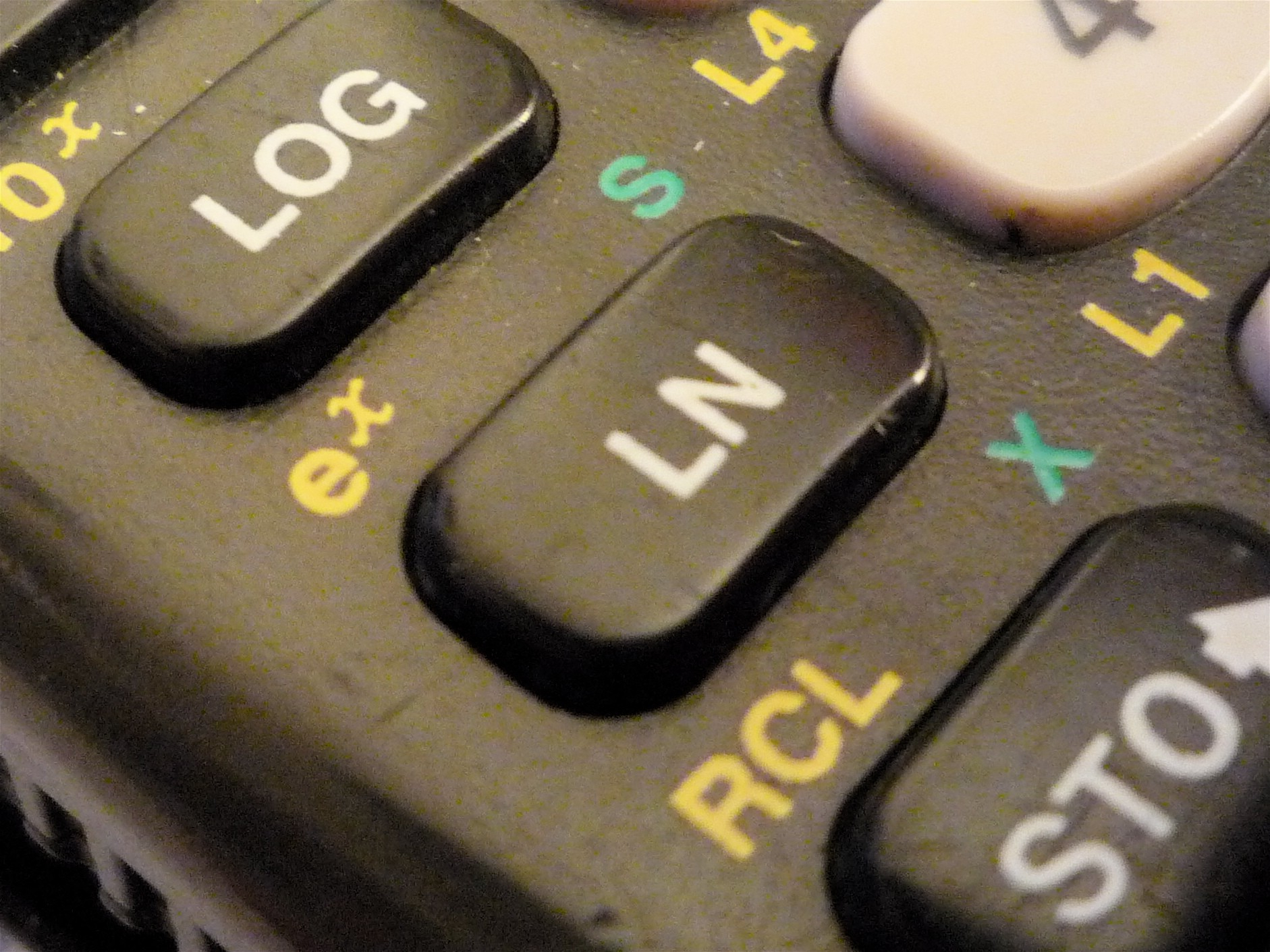
Calculators universally feature standard keys for LOG (base 10) and LN (base e). But what happens when you face a biology problem modeling a bacteria population doubling, leading to log2(150)?
Historically, and analytically, we use a formula to bridge the gap:
The change-of-base formula states that the logarithm of x to base b equals the logarithm of x to base c divided by the logarithm of b to base c. logb(x)=logc(b)logc(x)
By setting c to 10 or e, the change-of-base formula enables the evaluation of logarithms with arbitrary bases using common or natural logarithms on a calculator. For our bacteria, log2(150)=ln(2)ln(150).
Teaching with Tech Context: In contemporary Praxis assessments and classroom settings, you should be aware that modern hardware has minimized the manual necessity of this formula. Many graphing calculators feature a specialized logBASE function designed to evaluate logarithms with arbitrary bases directly, usually found under the Math menu. However, algebraic manipulation on the Praxis will still frequently test your conceptual knowledge of the change-of-base formula.
When a variable is trapped in an exponent, you generally have two paths toward a solution.
Path 1: The One-to-One Property If you can force both sides of an equation to share the exact same base, you can bypass logarithms entirely. The one-to-one property of exponential functions states that if a base b raised to the power of x equals b raised to the power of y, then x must equal y. For instance, if 2x=8, rewrite as 2x=23. Therefore, x=3.
Path 2: Logarithmic Intervention Often, bases will fiercely resist matching (e.g., 5x+1=17). Here, we force the exponent down. Procedurally, solving an exponential equation requires isolating the exponential term on one side of the equation before applying a logarithm to both sides. If the equation is 3(5x+1)−4=47, you must first add 4 and divide by 3 to isolate 5x+1=17.
Once isolated, take the natural log (or common log) of both sides: ln(5x+1)=ln(17). Why do we do this? Because applying a logarithm to both sides of an exponential equation allows the variable in the exponent to be isolated using the power property of logarithms. The exponent (x+1) pulls to the front: (x+1)ln(5)=ln(17). From here, simple division and subtraction yield x=ln(5)ln(17)−1.
Logarithmic equations parallel exponential equations in their solution paths.
If you have a single logarithm on each side matching in base, you can strip them away. The one-to-one property of logarithms states that if the logarithm of x to base b equals the logarithm of y to base b, then x must equal y.
If, instead, you have logs on one side and a constant on the other, you must condense multiple logs into a single logarithm, rewrite the equation in exponential form using the inverse properties, and solve.
However, solving logarithmic equations contains a dangerous algebraic pitfall that examiners love to test.
The Domain Expansion Trap
Watch what happens when a student encounters this problem: log2(x)+log2(x−2)=3
The student correctly condenses the left side: log2[x(x−2)]=3
They correctly rewrite it in exponential form: x2−2x=23 x2−2x−8=0
They correctly factor: (x−4)(x+2)=0 x=4 or x=−2
The trap springs shut on x=−2.
Combining logarithmic terms using the product or quotient properties can expand the mathematical domain of an equation.
In our original equation, the individual terms log2(x) and log2(x−2) rigorously demand x>0 and x>2, respectively. The domain of the original problem is strictly (2,∞). But when the student multiplied x(x−2) to get x2−2x, a negative times a negative became a positive! The mathematical domain subtly expanded to include negative numbers that were illegal in the original, un-condensed state.
Because of this invisible domain expansion, extraneous solutions occur in logarithmic equations when a calculated root results in a zero or negative argument in any of the original logarithmic terms.
If we test x=−2 in the original equation, we get log2(−2)+log2(−4)=3. This is mathematically undefined. Therefore, the golden rule of logarithmic algebra: All proposed solutions to a logarithmic equation must be substituted back into the original equation to identify and reject extraneous solutions.
By anchoring your instruction in the visual boundaries of the graphs, the rigidity of domains, and the beautiful symmetry of inverse functions, you prepare your students—and yourself—to master these equations flawlessly on exam day.