Trigonometric Functions and the Unit Circle
Not sure you’re ready?
Take the ~3-minute readiness diagnostic and see where you stand.
A point traversing a circle of radius one provides the mathematical machinery to model everything from the oscillation of a pendulum to the alternating current in a power grid. By placing a circle on a Cartesian plane, trigonometry is liberated from the rigid confines of right triangles. The unit circle extends the definitions of sine and cosine beyond acute angles, transforming them into continuous, periodic functions capable of describing endless cycles. For the secondary mathematics teacher, mastering the unit circle is not an exercise in memorizing a static diagram of coordinates; it is about grasping the dynamic geometry of rotation. This foundation bridges algebraic equations with geometric symmetry, equipping you to guide students from basic geometric ratios to the advanced functional analysis they will encounter in calculus.
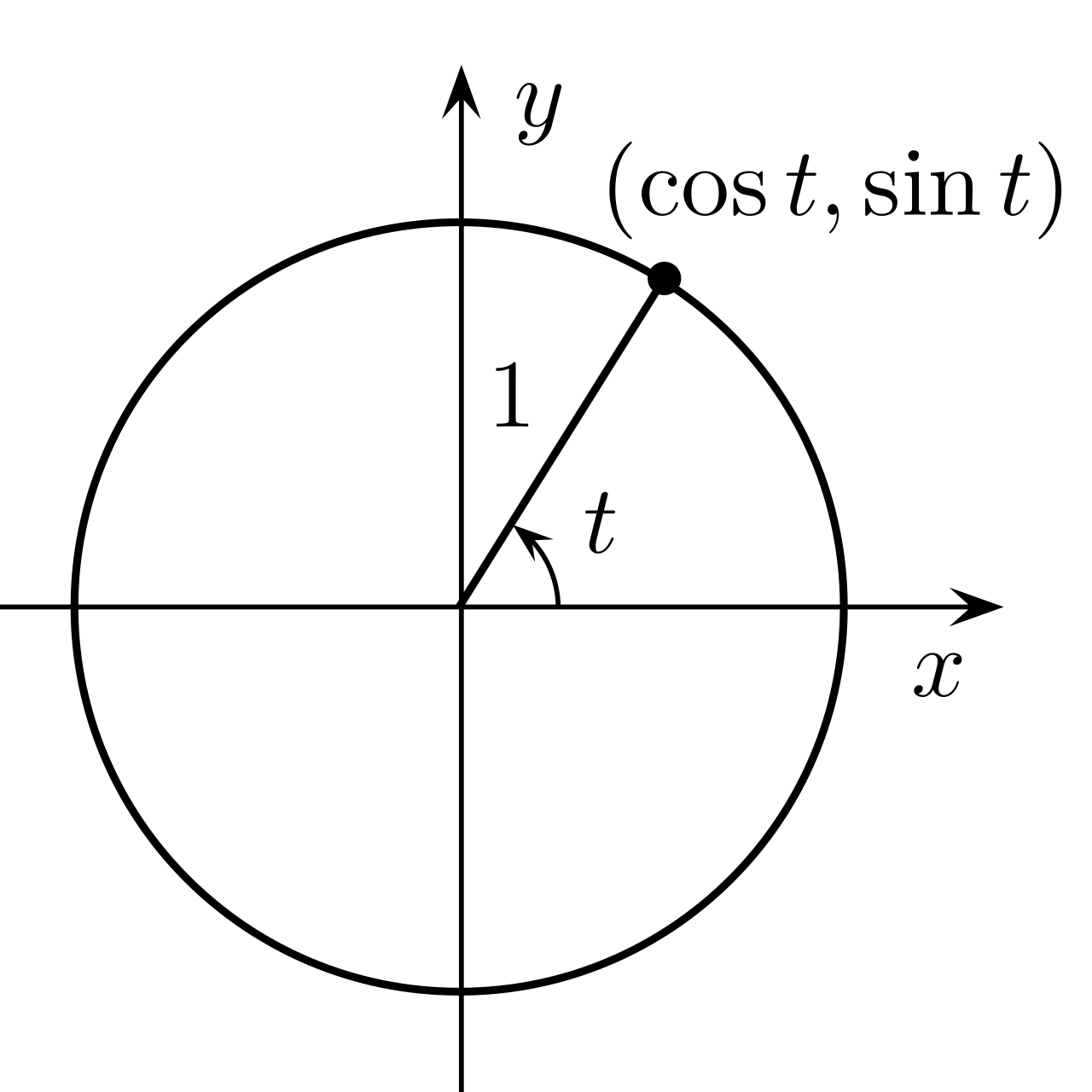
Before we can evaluate a trigonometric function, we must standardize how we talk about angles. To build a consistent mathematical language, we place an angle in standard position: its vertex is fixed exactly at the origin of a Cartesian coordinate plane, and its initial side lies immovably along the positive x-axis.
From this starting line, the angle is defined by the rotation of its terminal side.
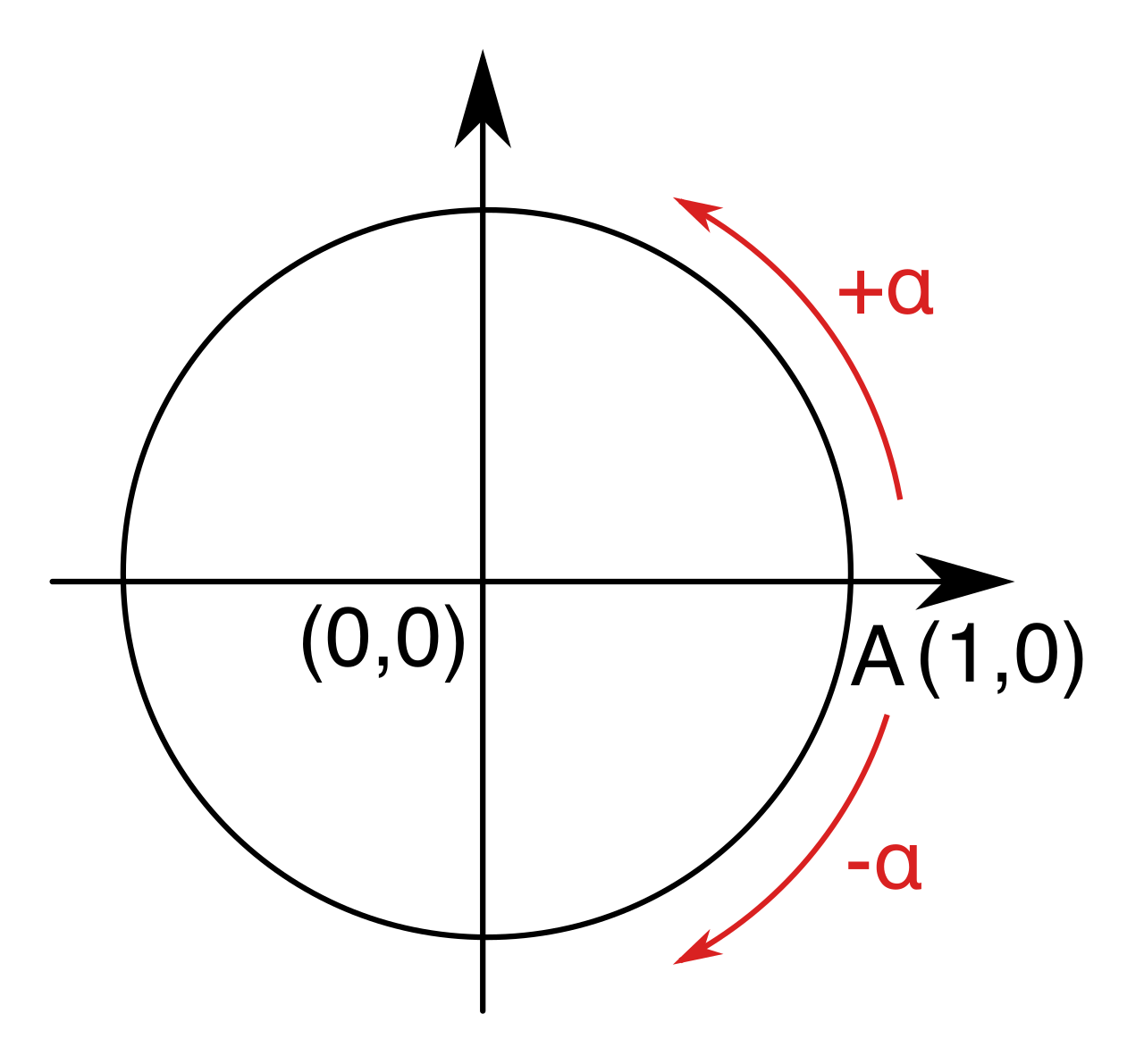
- Positive angles are generated by a counterclockwise rotation of the terminal side from the positive x-axis.
- Negative angles are generated by a clockwise rotation of the terminal side from the positive x-axis.
Degrees vs. Radians
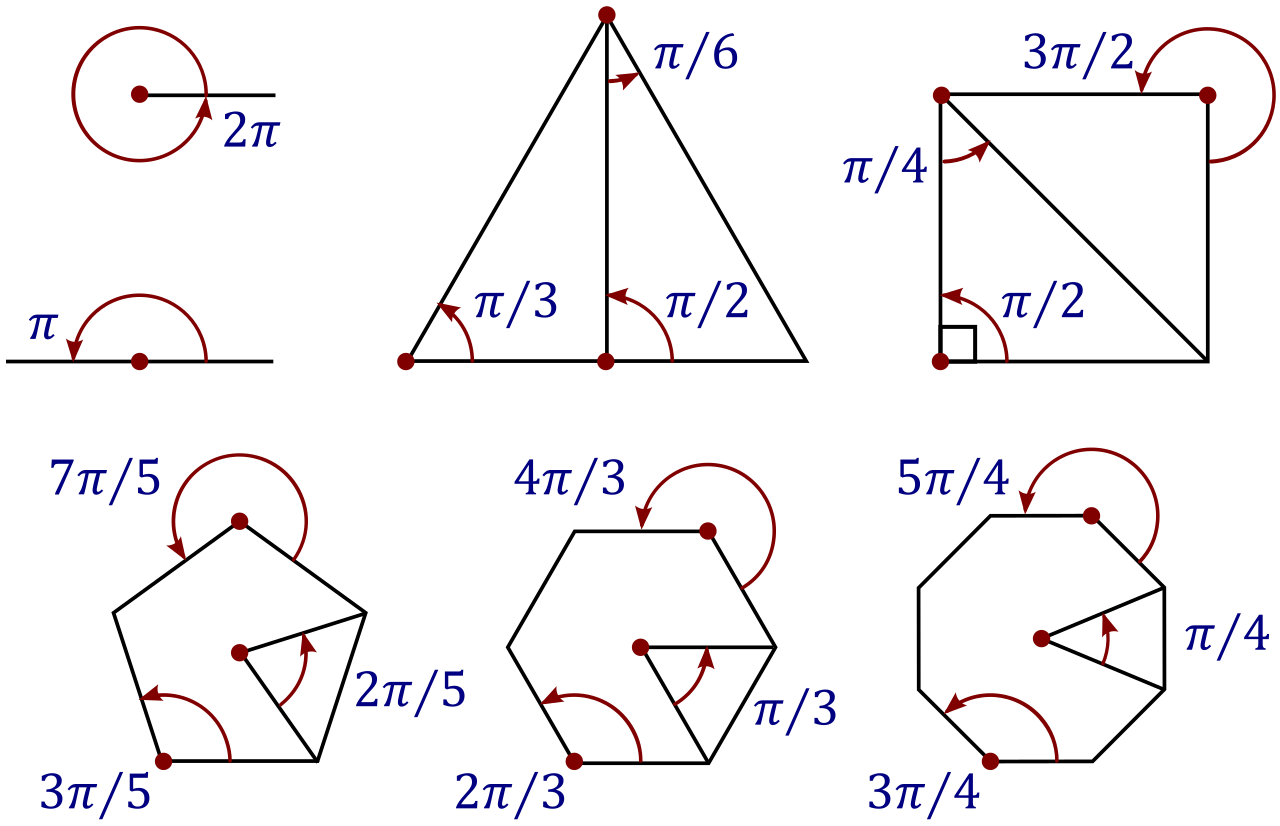
Humanity historically divided the circle into 360 arbitrary slices. Thus, one full revolution around a circle is exactly 360 degrees. However, calculus and physics demand a unit of measure intrinsically linked to the circle's geometry. Enter the radian. One full revolution around a circle is exactly 2π radians, because the circumference of a circle with a radius of one is exactly 2π.
Because 360 degrees and 2π radians describe the exact same full rotation, we can divide both by two to find a crucial anchor point: an angle of 180 degrees is equivalent to π radians.
This equivalence gives us our conversion engines.
- The conversion factor to change degrees to radians is π radians divided by 180 degrees.
- The conversion factor to change radians to degrees is 180 degrees divided by π radians.
As a teacher, you must ensure your students instinctively recognize the primary milestones of the first quadrant. By applying the conversion factor to standard geometric angles, we establish these foundational equivalencies:
- An angle of 90 degrees is equivalent to π/2 radians. (A quarter turn)
- An angle of 60 degrees is equivalent to π/3 radians.
- An angle of 45 degrees is equivalent to π/4 radians.
- An angle of 30 degrees is equivalent to π/6 radians.
Teaching Tip: When students struggle with radians, remind them they are just counting fractions of a half-circle (π). If they view π/6 as "one-sixth of a 180-degree protractor," the abstract becomes deeply intuitive.
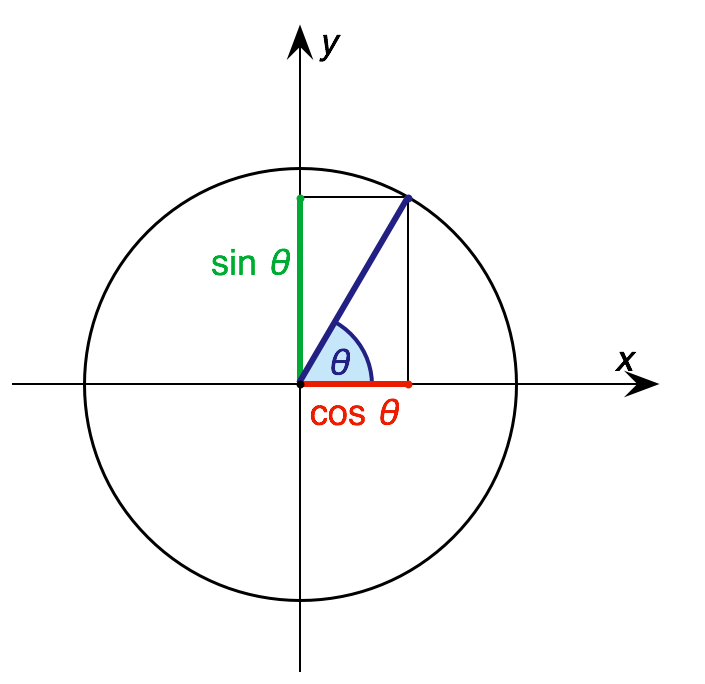
The unit circle is a circle with a radius of exactly one centered at the origin of a Cartesian coordinate plane. Because the distance formula from the origin (0,0) to any point (x,y) on the circle is 1, the algebraic equation of the unit circle is x2+y2=1.
If we draw an angle θ in standard position, its terminal side slices through the unit circle at a specific coordinate (x,y). This intersection is the Rosetta Stone of trigonometry:
- For any point (x,y) on the unit circle, the x-coordinate represents the cosine of the corresponding standard-position angle. (x=cosθ)
- For any point (x,y) on the unit circle, the y-coordinate represents the sine of the corresponding standard-position angle. (y=sinθ)
From these two coordinates, the remaining four standard trigonometric functions are built as ratios:
- The tangent of an angle is the ratio of the y-coordinate to the x-coordinate on the unit circle. (tanθ=y/x)
- The secant of an angle is the reciprocal of the x-coordinate on the unit circle. (secθ=1/x)
- The cosecant of an angle is the reciprocal of the y-coordinate on the unit circle. (cscθ=1/y)
- The cotangent of an angle is the ratio of the x-coordinate to the y-coordinate on the unit circle. (cotθ=x/y)
Domain Boundaries and Undefined Values
Because we are dealing with fractions, we must be vigilant about division by zero. A graphing calculator will throw an error, but your students need to know why that error occurs mathematically.
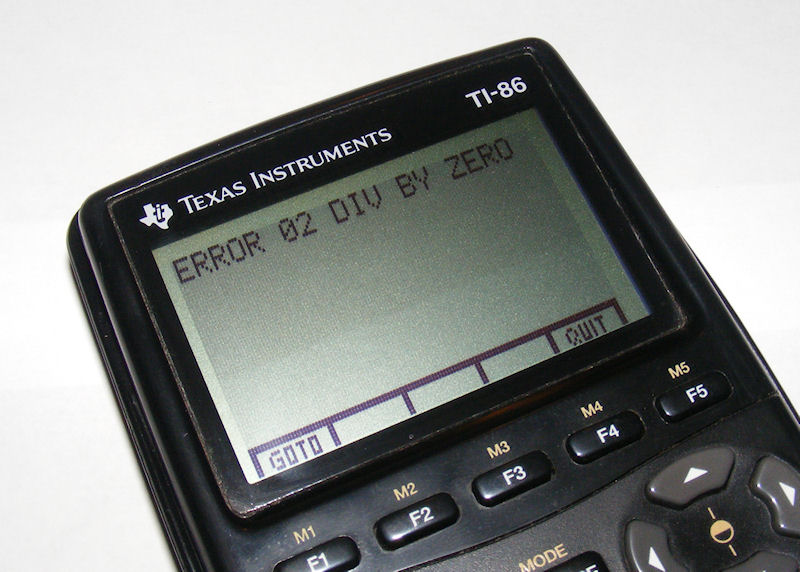
Whenever a point on the unit circle lands on the y-axis, the x-coordinate is exactly zero (e.g., at 90∘ or 270∘). Therefore, the tangent function is undefined when the x-coordinate on the unit circle is exactly zero. By the same logic, the secant function is undefined when the x-coordinate on the unit circle is exactly zero.
Conversely, when a point lands on the x-axis, the y-coordinate is zero (e.g., at 0∘ or 180∘). Consequently, the cosecant function is undefined when the y-coordinate on the unit circle is exactly zero, and the cotangent function is undefined when the y-coordinate on the unit circle is exactly zero.
To fluently navigate the unit circle, one must memorize the exact values for the special right triangles residing in Quadrant I.
- The sine of 30 degrees evaluates to exactly 1/2.
- The cosine of 30 degrees evaluates to 3/2.
- The sine of 45 degrees evaluates to 2/2.
- The cosine of 45 degrees evaluates to 2/2.
- The sine of 60 degrees evaluates to 3/2.
- The cosine of 60 degrees evaluates to exactly 1/2.
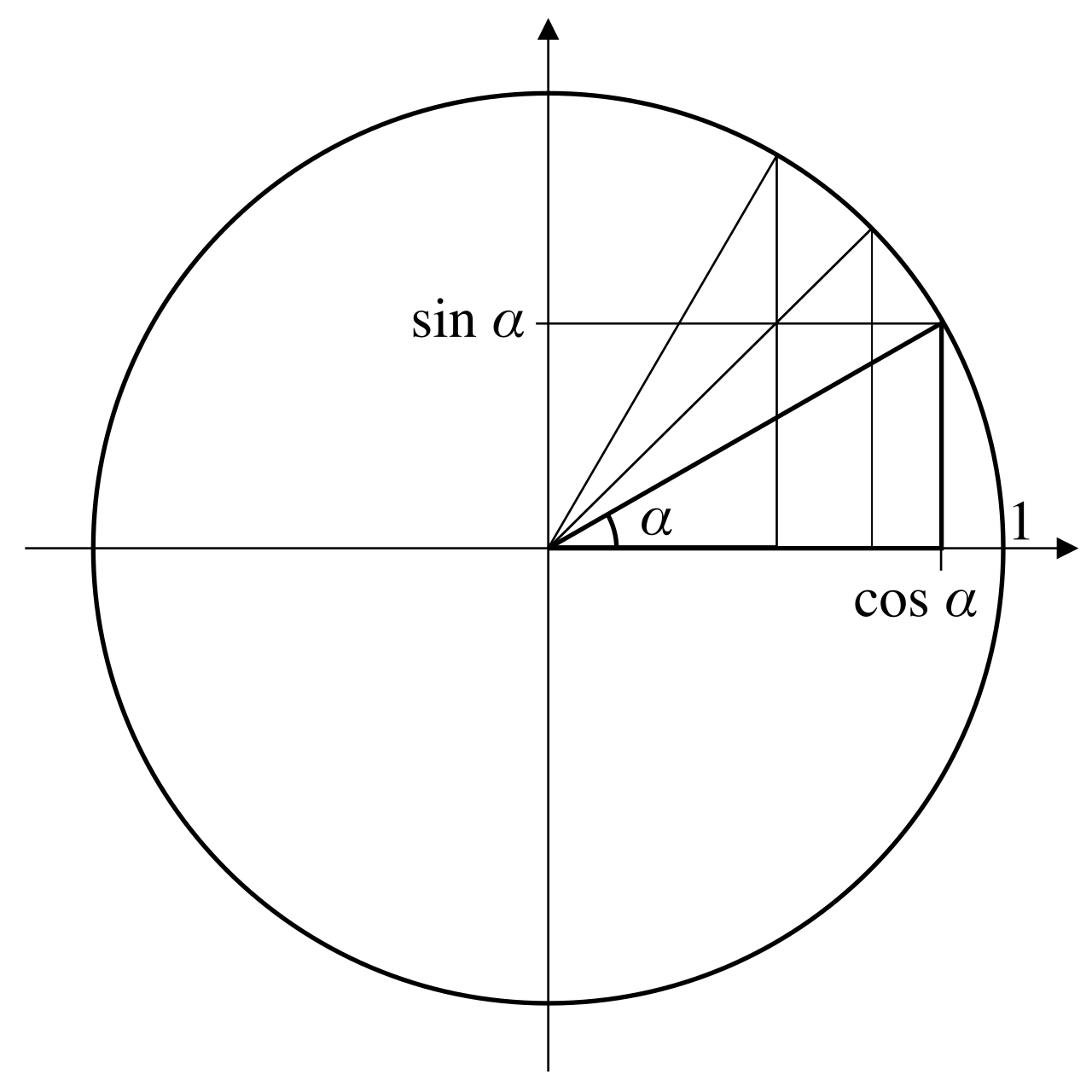
Notice the elegance here: the sine of 30∘ and cosine of 60∘ are identical. This is because they are complementary angles.
Expanding Beyond Quadrant I
How do we evaluate the sine of 150∘? We use a reference angle. A reference angle is the acute positive angle formed by the terminal side of an angle and the x-axis. Because it measures the shortest angular distance to the horizontal baseline, reference angles always have a measure between 0 degrees and 90 degrees inclusive.
To evaluate a trigonometric function for any angle, determine the trigonometric value for the reference angle and apply the appropriate sign for the quadrant.
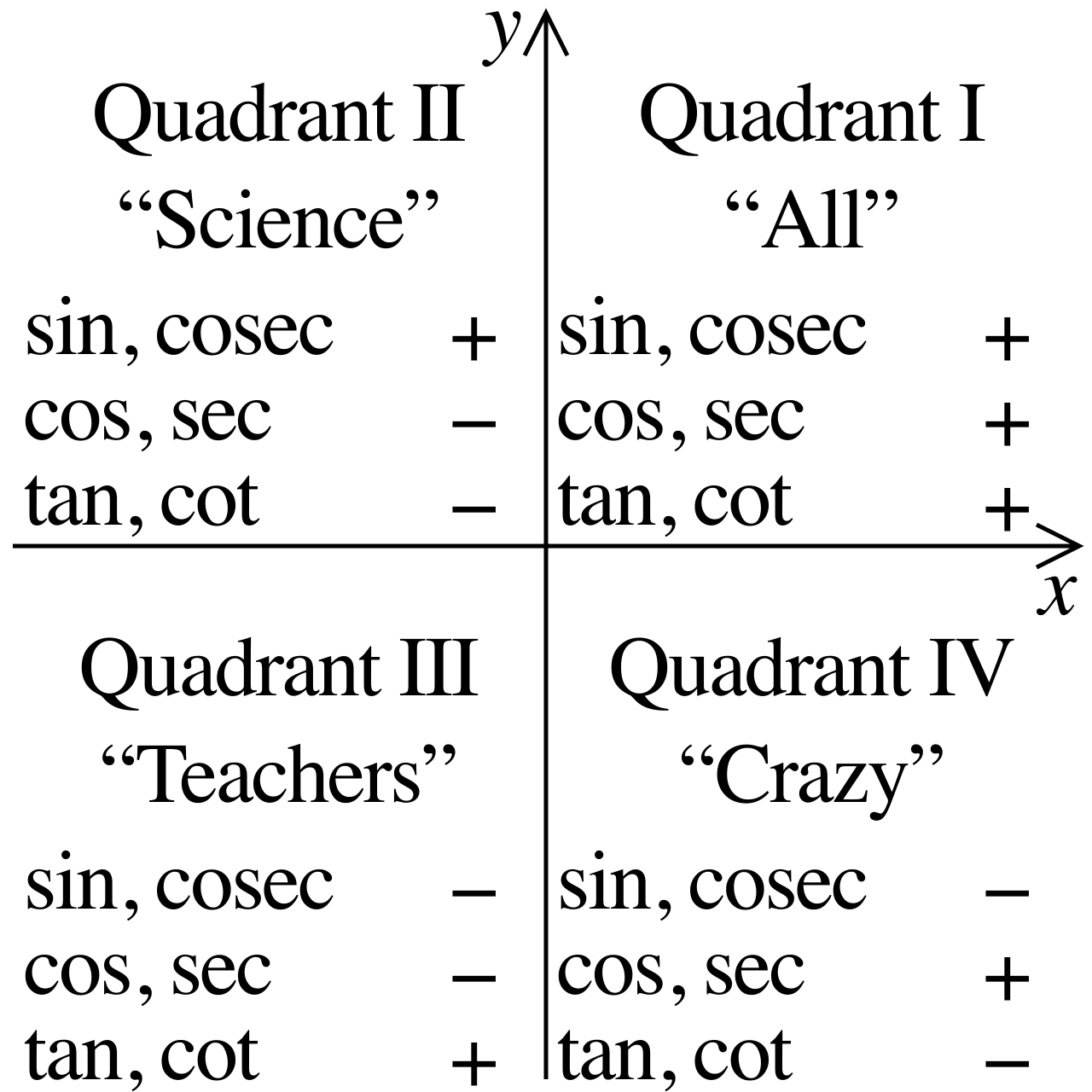
The sign of the function depends entirely on the signs of the x and y coordinates in that specific quadrant:
- Quadrant I (+, +): All six standard trigonometric functions yield positive values for angles terminating in Quadrant I.
- Quadrant II (-, +): Only the sine and cosecant functions yield positive values for angles terminating in Quadrant II. (Because y is positive, but x is negative).
- Quadrant III (-, -): Only the tangent and cotangent functions yield positive values for angles terminating in Quadrant III. (Because a negative y divided by a negative x yields a positive ratio).
- Quadrant IV (+, -): Only the cosine and secant functions yield positive values for angles terminating in Quadrant IV. (Because x is positive, but y is negative).
Mnemonic: Many teachers use All Students Take Calculus (All, Sine, Tangent, Cosine) to quickly recall which primary functions are positive in Quadrants I, II, III, and IV, respectively.
The coordinate plane doesn't stop recognizing angles once we hit 360 degrees. If a snowboarder completes a 540-degree spin, they have rotated one and a half times. Where do they land?
They land on a coterminal angle. Coterminal angles are angles drawn in standard position that share the exact same terminal side.
Because a full circle returns you to your starting position, coterminal angles can be generated by adding integer multiples of 360 degrees to an original angle. In radian measure, the logic is identical: coterminal angles can be generated by adding integer multiples of 2π radians to an original angle.
Since the terminal sides are physically identical on the Cartesian plane, the (x,y) coordinates they intersect are identical. Therefore, trigonometric functions evaluated at coterminal angles always yield identical values. For instance, sin(450∘) is identical to sin(90∘), which is exactly 1.
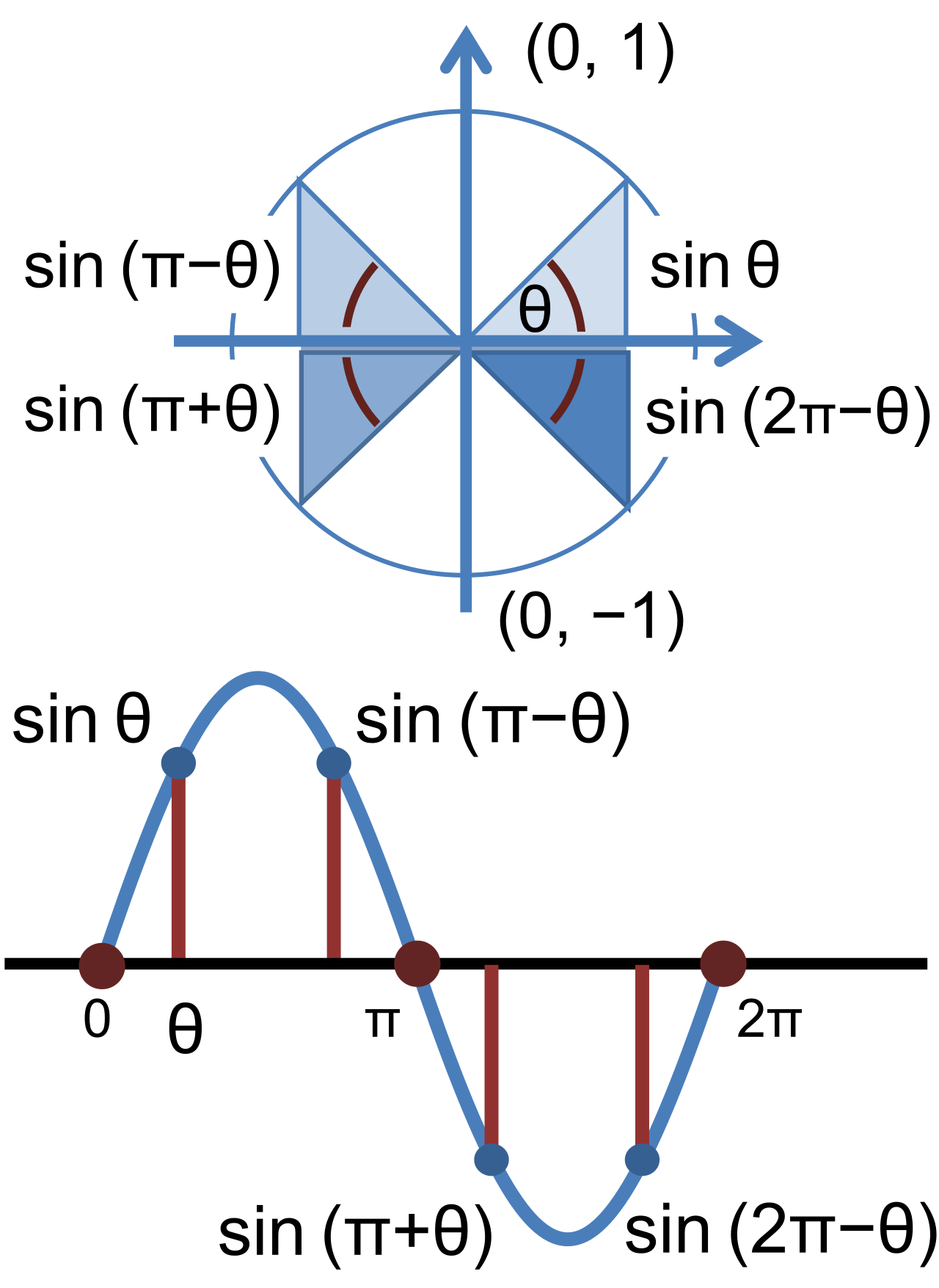
The real power of the unit circle lies in its predictability. The unit circle exhibits geometric symmetry across the x-axis, across the y-axis, and across the origin. This profound geometric symmetry translates directly into the algebraic symmetry of trigonometric functions.
Even and Odd Functions
When an angle rotates clockwise into negative territory (−θ), it mirrors the positive rotation (θ) across the x-axis. The x-coordinate (cosine) remains exactly the same, while the y-coordinate (sine) flips its sign.
- The cosine function exhibits even symmetry. Mathematically, the equation cos(−θ)=cos(θ) demonstrates the even symmetry of the cosine function.
- The sine function exhibits odd symmetry. Mathematically, the equation sin(−θ)=−sin(θ) demonstrates the odd symmetry of the sine function.
- Because tangent is sine divided by cosine (an odd divided by an even), the tangent function exhibits odd symmetry. Consequently, the equation tan(−θ)=−tan(θ) demonstrates the odd symmetry of the tangent function.
Periodicity
A function that repeats its values at regular intervals is periodic. Formally, a periodic function satisfies the equation f(x)=f(x+P) for some non-zero constant P and all x in the domain. The smallest positive value for P is called the fundamental period.
Because the unit circle maps a complete revolution, the sine function has a fundamental period of 2π radians, and similarly, the cosine function has a fundamental period of 2π radians. Every time you travel 2π, the y and x coordinates reset entirely.
Tangent operates slightly differently. Because tangent is the ratio of y/x, the ratio repeats perfectly every half-circle (for instance, the positive ratio in Quadrant I is mirrored precisely by the negative-over-negative positive ratio in Quadrant III). Therefore, the tangent function has a fundamental period of π radians.
Ultimately, the law of periodicity guarantees that evaluating a trigonometric function at an angle theta plus its period yields the exact same value as evaluating the function at theta.
For the aspiring Praxis 5165 educator, your objective is to ensure your future students see these connections not as disparate formulas, but as an interconnected web. The equation x2+y2=1, the right triangles in the first quadrant, the infinite spiraling of coterminal angles, and the rhythmic waves of period 2π are all simply different dialects of the exact same geometric language.