Radicals and Rational Exponents
Not sure you’re ready?
Take the ~3-minute readiness diagnostic and see where you stand.
Mathematics often provides us with a Rosetta Stone—a way to translate a geometric concept into an arithmetic language that obeys predictable, programmable rules. The transition from radicals to rational exponents is precisely one of these translations. We take the notion of a root, which originates in the geometry of squares and cubes, and seamlessly integrate it into the algebraic machinery of exponents. For an aspiring secondary mathematics teacher, mastering this translation is not just about memorizing formulas; it is about recognizing that radicals and rational exponents are two different dialects spoken by the same mathematical entity. When you stand at the board and show your students how to navigate between a radical expression and a scientific notation calculation, you are teaching them how to control the scale and structure of the universe on a single line of paper.
Nature does not care whether you use a radical symbol or a fractional superscript; the underlying quantity remains identical. However, the notation we choose dictates the algebraic tools at our disposal. Exponents are built for smooth algebraic manipulation, whereas radicals often provide better intuitive visualization of roots.
The essential bridge between these notations is how we define a fractional power. The expression am/n is defined as the n-th root of a raised to the m-th power.
This definition gives us immense flexibility because it can be interpreted in two mathematically equivalent ways, depending on what makes the calculation easier:
- The expression am/n is equivalent to the n-th root of am. Algebraically, this is written as nam.
- The expression am/n is equivalent to the m-th power of the n-th root of a. Algebraically, this is written as (na)m.
When you are teaching a student to evaluate 82/3 without a graphing calculator, the second path is a revelation. Instead of squaring 8 to get 64 and then hunting for the cube root (which is 4), the student can simply take the cube root of 8 first (which is 2) and square it to get 4. The mechanics are the same, but the cognitive load is vastly different.
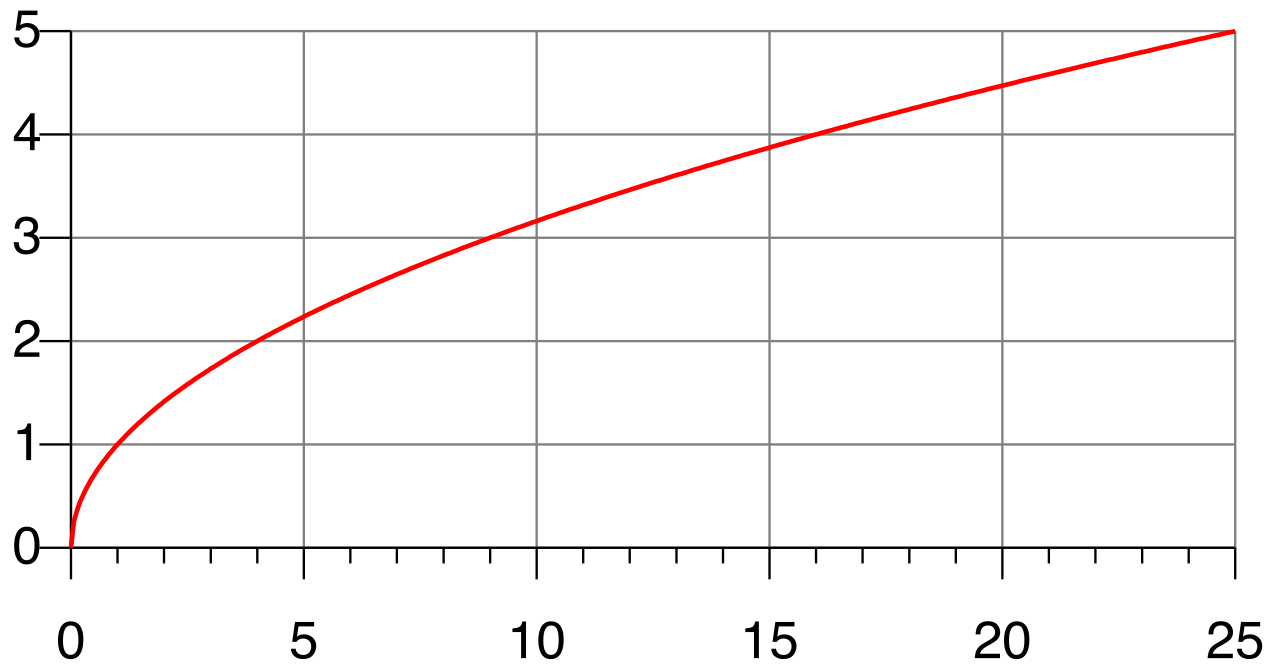
Before we can freely operate on roots, we must define the domain boundaries. This is where graphing calculators often confuse students, rendering half a graph invisible without a clear explanation of why. The domain of a radical depends entirely on whether the index n is even or odd.
Odd Index: The n-th root of x is defined as a real number for all real numbers x when the index n is an odd integer.
Because a negative number raised to an odd power remains negative (e.g., (−2)3=−8), we can comfortably evaluate 3−8=−2. The domain is all real numbers.
Even Index: The n-th root of x is only defined as a real number for non-negative real numbers x when the index n is an even integer.
Because any real number raised to an even power is non-negative, there is no real number that can be squared or raised to the fourth power to yield a negative result. Consequently, for an even index n, the base a in am/n must be non-negative to produce a real number.
Furthermore, to ensure functions are single-valued (a requirement to pass the vertical line test), we rely on the concept of the principal root. The principal square root of a positive number is defined as the positive square root of that number. Thus, while both 3 and -3 square to 9, the expression 9 strictly evaluates to 3.
The Hidden Absolute Value
One of the most heavily tested concepts on the Praxis (5165): Mathematics exam—and a frequent source of curriculum-context teaching errors—is the simplification of an n-th root of an n-th power.
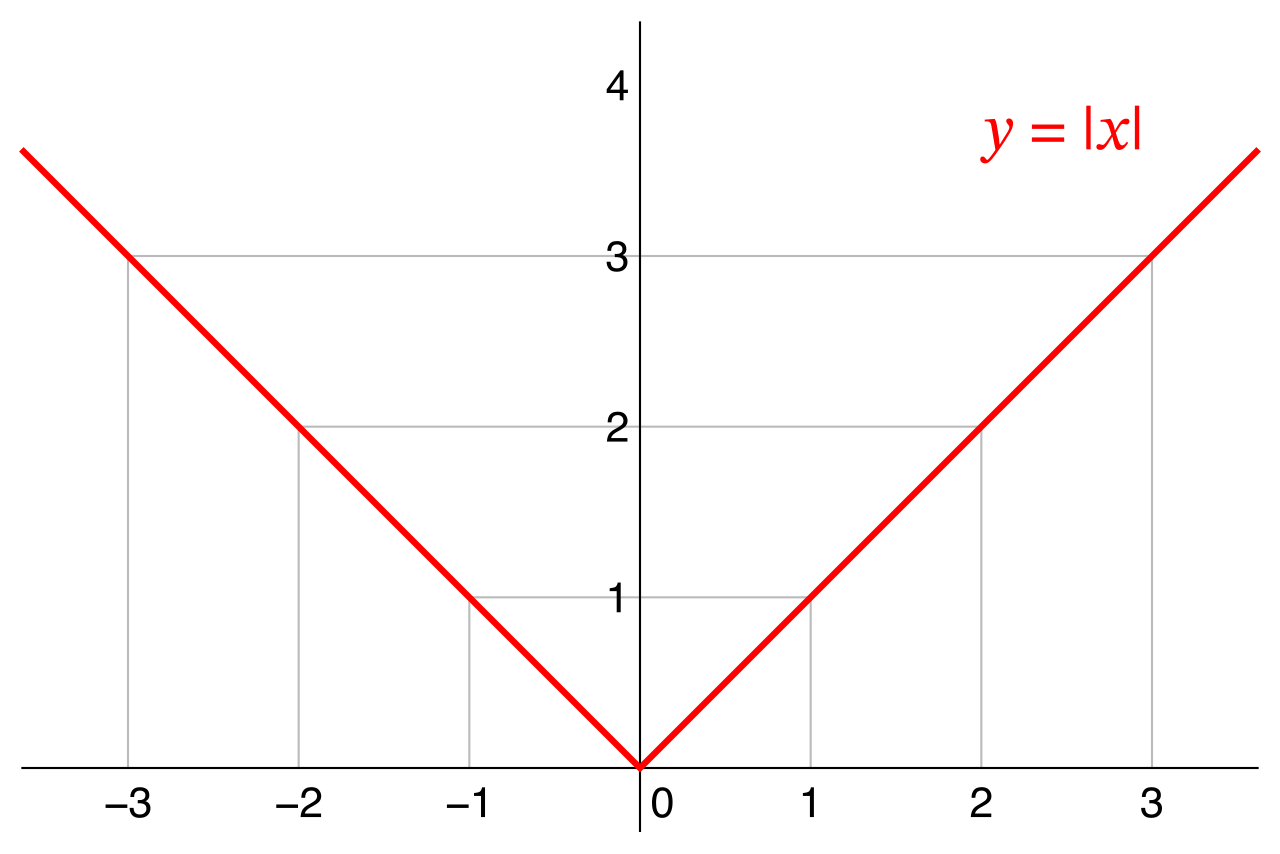
- For any real number x and any even integer n, the n-th root of xn equals the absolute value of x. (nxn=∣x∣)
- For any real number x and any odd integer n, the n-th root of xn equals x. (nxn=x)
If a student simplifies x2 as simply x, they will fail to understand why the graph of y=x2 is a V-shaped absolute value curve on their graphing calculator, rather than the straight line y=x. When x=−5, x2=25, and the principal square root of 25 is 5, which is ∣−5∣.
Once a radical expression is translated into rational exponents, it falls subject to the universal laws of exponents. These rules are not arbitrary; they are the logical consequence of counting factors.
| Rule Name | Formal Definition | Why it Works / Application |
|---|---|---|
| Product Rule | The product rule for rational exponents states that xa multiplied by xb equals xa+b. | Bases must be identical. If you have a factors of x and b factors of x, you have a+b factors in total. |
| Quotient Rule | The quotient rule for rational exponents states that xa divided by xb equals xa−b for any non-zero base x. | Factors in the denominator cancel factors in the numerator. Division translates to subtraction of exponents. |
| Power of a Power | The power of a power rule for rational exponents states that the expression (xa)b equals xa×b. | You are duplicating a group of a factors b times, resulting in multiplication of the exponents. |
| Power of a Product | The power of a product rule states that the expression (xy)a equals xa multiplied by ya. | The exponent distributes over multiplication. Note: It does not distribute over addition! (x+y)a=xa+ya. |
We must also anchor the exponent system with two foundational definitions regarding zeros and negatives:
- Any non-zero base raised to the power of zero equals exactly 1. (a0=1)
- The expression a−m/n is equal to 1 divided by am/n for any non-zero base a.
A negative exponent has absolutely nothing to do with making a number negative; it is a command to take the reciprocal.
Sometimes, remaining in radical notation is geometrically intuitive or algebraically convenient. When operating on radicals, we rely on properties that mirror the power of a product and power of a quotient rules.
- The n-th root of the product ab equals the n-th root of a multiplied by the n-th root of b, provided all roots are real numbers. (nab=nanb)
- The n-th root of the quotient a/b equals the n-th root of a divided by the n-th root of b, provided b is non-zero and all roots are real numbers. (na/b=nbna)
Simplifying and Combining
Simplifying a radical expression involves factoring out perfect n-th powers from the radicand. If you are asked to simplify 50, you are looking for the largest perfect square tucked inside 50. Since 50=25×2, we apply our product rule: 25×2=252=52.
When it comes to addition and subtraction, the rules become highly restrictive. You cannot add 2 and 3 any more than you can combine x and y. Two radical expressions can be combined using addition or subtraction only if they share the exact same index and the exact same radicand. For instance, 335+435=735.
Historically, before digital calculators, dividing by a long, non-terminating decimal (like 2) was computationally miserable. Dividing by an integer was much easier. Thus, "rationalizing the denominator" became standard practice. Today, we maintain this practice primarily to standardize answers and expose equivalence.
Monomial Denominators
Rationalizing a monomial denominator involves multiplying the numerator and denominator by a radical that makes the overall denominator a perfect n-th power.
Warning for teachers: A common student mistake is to simply multiply the numerator and denominator by whatever radical is in the denominator. This works for square roots (e.g., 1/x⋅x/x=x/x). But consider 1/3x. Multiplying by 3x/3x yields 3x/3x2, which is still irrational! To rationalize a cube root, you must complete the perfect cube. You multiply by 3x2/3x2 to yield a denominator of 3x3, which simplifies cleanly to x.
Binomial Denominators and the Conjugate
When the denominator is a binomial containing a radical, such as 3+2, multiplying by a single term won't clear the radical. We must invoke the "difference of squares" pattern: (A+B)(A−B)=A2−B2.
Rationalizing a binomial denominator containing a square root involves multiplying the numerator and denominator by the conjugate of the denominator.
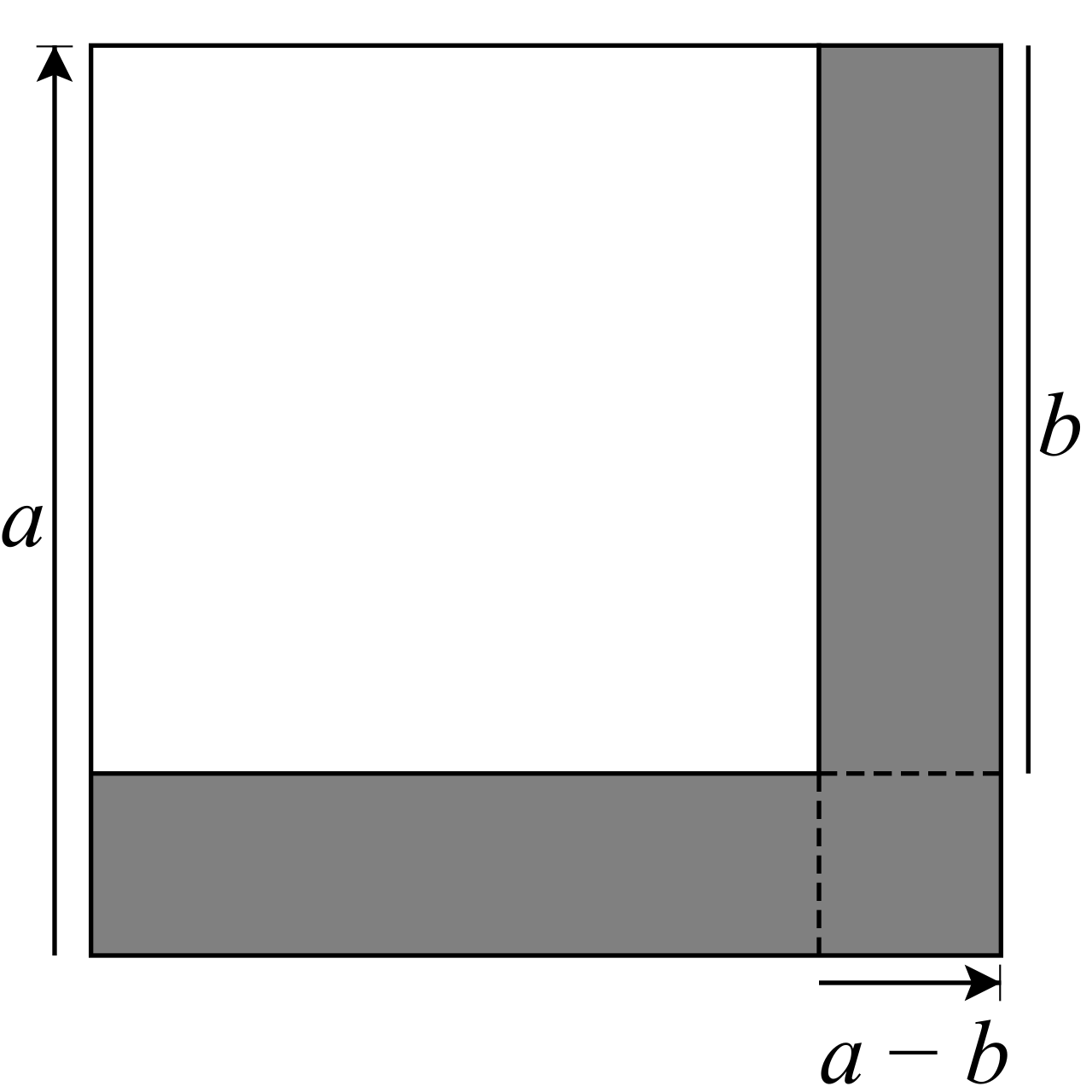
What is a conjugate? The conjugate of a binomial consisting of a plus the square root of b is the binomial a minus the square root of b. If your denominator is (3+2), its conjugate is (3−2). Multiplying these yields 32−(2)2=9−2=7. The irrational components brilliantly collapse into a tidy rational integer.
Just as rational exponents allow us to handle complex roots elegantly, scientific notation allows us to compress the unimaginably large and the microscopically small into a manageable format.
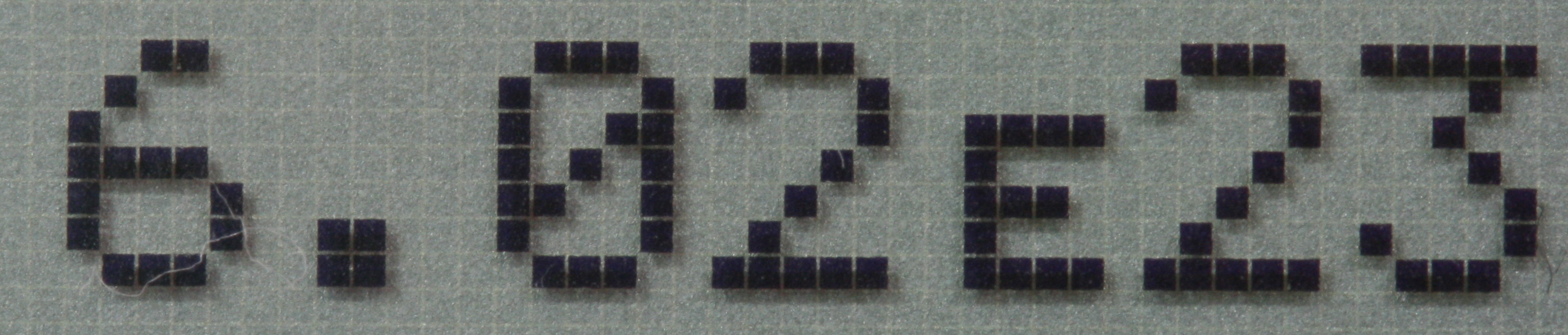
Scientific notation represents a number as the product of a coefficient and a power of 10. To be in standard scientific notation, two rigid formatting rules must be obeyed:
- In standard scientific notation, the absolute value of the coefficient must be greater than or equal to 1 and strictly less than 10. (1≤∣c∣<10)
- In standard scientific notation, the exponent of the base 10 must be an integer.
The exponent instantly communicates the magnitude of the number:
- A positive integer exponent in scientific notation indicates a number greater than or equal to 10 when the coefficient is positive. (e.g., 3.2×104=32,000)
- A negative integer exponent in scientific notation indicates a positive number strictly between zero and one when the coefficient is positive. (e.g., 4.5×10−3=0.0045)
Operating in Scientific Notation
When calculating with scientific notation, the properties of exponents return to center stage. You treat the coefficients like normal numbers and apply exponent rules to the powers of 10.
| Operation | Strategy |
|---|---|
| Multiplication | To multiply two numbers in scientific notation, multiply the coefficients together and add the base 10 exponents. If the new coefficient exceeds 10, adjust the decimal and exponent to return to standard form. |
| Division | To divide two numbers in scientific notation, divide the numerator's coefficient by the denominator's coefficient and subtract the denominator's exponent from the numerator's exponent. |
| Raising to a Power | Raising a number in scientific notation to a power involves raising the coefficient to that power and multiplying the original base 10 exponent by that power. |
| Addition / Subtraction | Adding or subtracting numbers in scientific notation requires rewriting both numbers so they share the exact same base 10 exponent. You cannot add 2×10⁴ and 3×10⁵ without shifting one to match the other—much like finding a common denominator for fractions. |
The Teacher's Perspective
Whether you are simplifying 4x12y5 or calculating the distance between galaxies using 9.46×10¹⁵ meters, the structural rules remain invariant. Exponents—whether integer, rational, negative, or zero—exist to keep track of repeated multiplication in a systematic way. Radicals are the geometric cousins of those fractions. And scientific notation is the practical application of those powers of 10 applied to reality.
As an educator preparing for the Praxis (5165): Mathematics exam, your goal is not merely to perform these operations, but to recognize the hidden absolute values, anticipate the domain restrictions on even roots, and fluently translate between these numerical representations. You are teaching your students that mathematics is not a collection of disconnected rules, but a highly cohesive, deeply interconnected language.