Triangles and Polygons
Not sure you’re ready?
Take the ~3-minute readiness diagnostic and see where you stand.
Consider four rigid rods pinned together at their ends to form a quadrilateral. If you press on one corner, the entire structure collapses into a flattened parallelogram. Now consider three rigid rods pinned together. Press on any corner, and the structure remains utterly unyielding. This fundamental physical distinction—the inherent rigidity of the triangle—is why the rules governing three-sided polygons form the bedrock of Euclidean geometry and, by extension, the spatial intuition you will soon teach. For the aspiring educator preparing for the Praxis (5165): Mathematics exam, mastering the properties of triangles and polygons is not merely an exercise in memorizing formulas. It is about understanding the strict mathematical constraints of space so you can unpack these concepts intuitively for your future students.
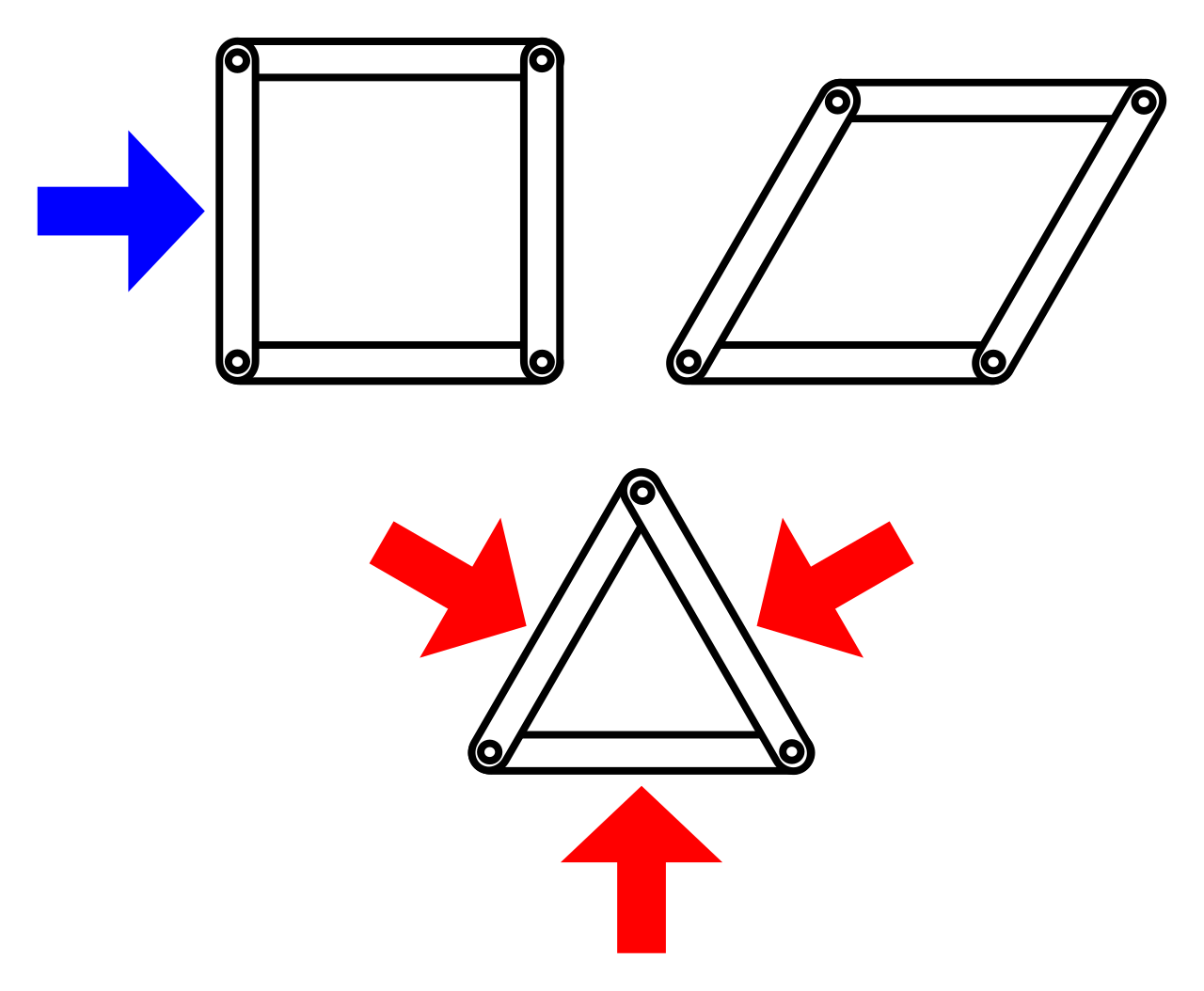
Before we can calculate area or identify angles, we must establish what it takes for a triangle to exist. Your students will often assume that any three lengths can form a triangle. This is a profound misunderstanding of two-dimensional space.
If you take a 10-inch stick, a 2-inch stick, and a 3-inch stick, they will never connect. The spatial constraint at play is the Triangle Inequality Theorem, which states that the sum of the lengths of any two sides of a triangle must be strictly greater than the length of the third side. Consequently, the positive difference between the lengths of any two sides of a triangle must be strictly less than the length of the third side. These bounds give you a definitive mathematical "window" for any missing side.
Once a triangle is formed, its angles and sides are inextricably locked in a proportional dance. If you open a hinge wider, the side opposite that hinge must grow longer. Therefore, the longest side of a triangle is located directly opposite the largest interior angle of the triangle. Conversely, the shortest side of a triangle is located directly opposite the smallest interior angle of the triangle.
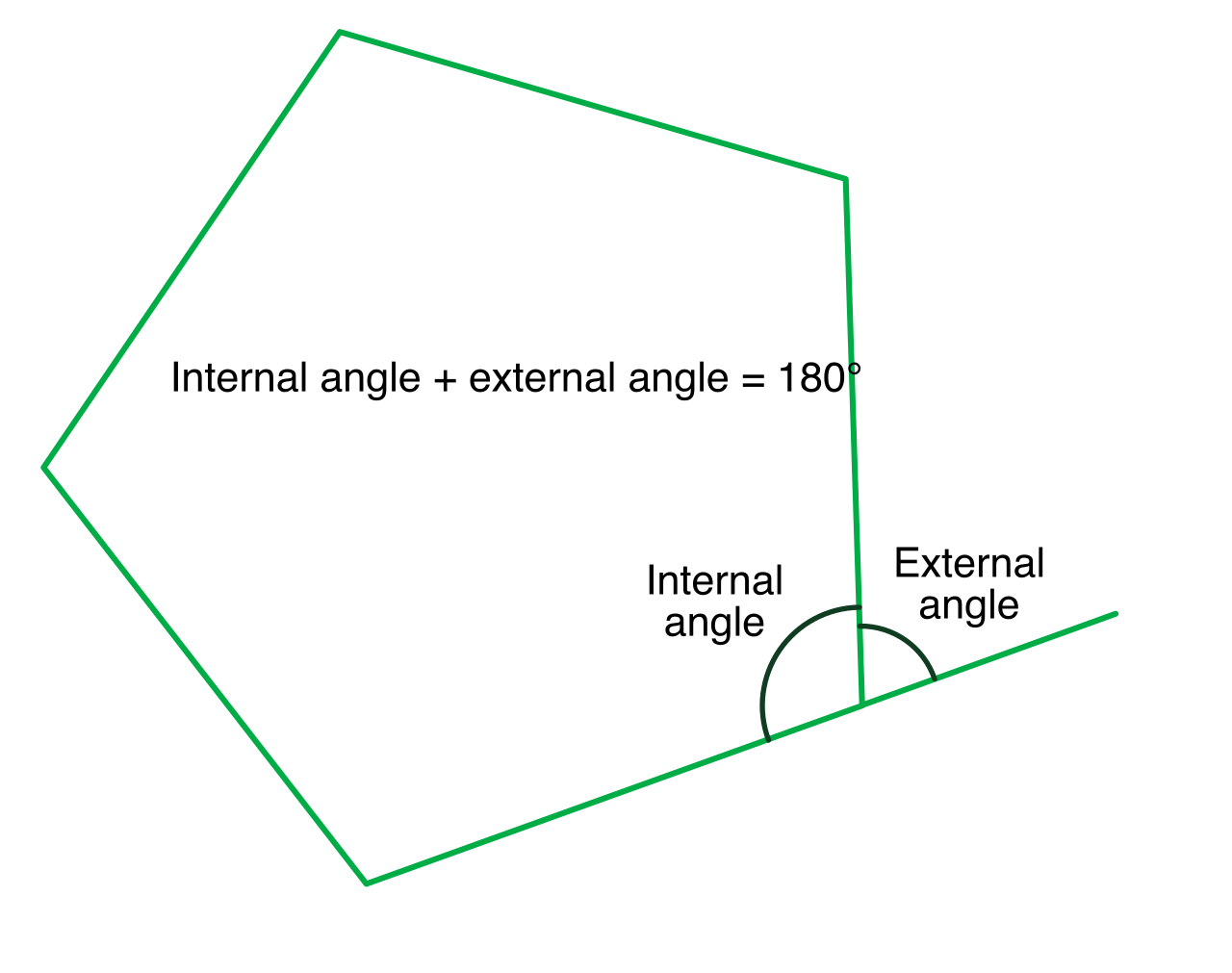
The Exterior Angle Theorem If you extend one side of a triangle outward, you create an exterior angle. The measure of an exterior angle of a triangle is equal to the sum of the measures of the two remote interior angles of the triangle. Because of this direct equality, a powerful inequality naturally follows: the measure of an exterior angle of a triangle is strictly greater than the measure of either remote interior angle of the triangle.
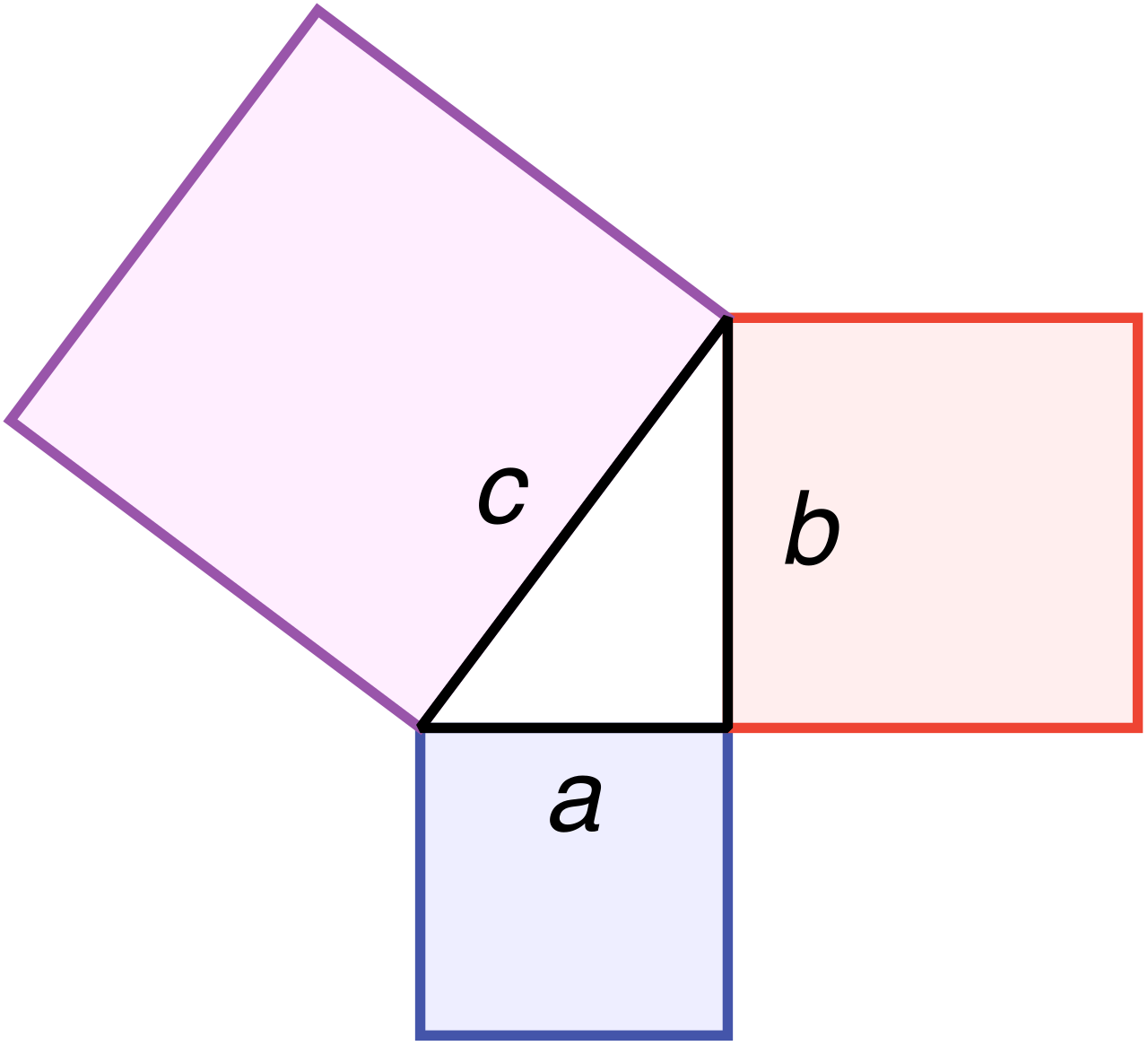
When one angle of a triangle locks at exactly 90∘, the geometry falls entirely into the domain of the Pythagorean theorem. In a right triangle, the square of the length of the hypotenuse equals the sum of the squares of the lengths of the two legs (a2+b2=c2).
For your standardized exam, you must recognize the integer manifestations of this rule—known as Pythagorean triples—instantly. Doing so bypasses tedious graphing calculator work.
- A triangle with side lengths of 3, 4, and 5 units forms a right triangle.
- A triangle with side lengths of 5, 12, and 13 units forms a right triangle.
- A triangle with side lengths of 8, 15, and 17 units forms a right triangle.
But what happens if we break that perfect 90∘ angle? Imagine the longest side (c) acting as a lid over the two legs.
- If we pinch the legs closer together, the lid must shrink. Thus, if the square of the longest side of a triangle is strictly less than the sum of the squares of the other two sides (c2<a2+b2), the triangle is an acute triangle.
- If we pull the legs wider apart, the lid must stretch. Thus, if the square of the longest side of a triangle is strictly greater than the sum of the squares of the other two sides (c2>a2+b2), the triangle is an obtuse triangle.
Special Right Triangles
Certain right triangles emerge naturally from dissecting regular polygons, creating reliable proportion ratios that students will encounter constantly in trigonometry.
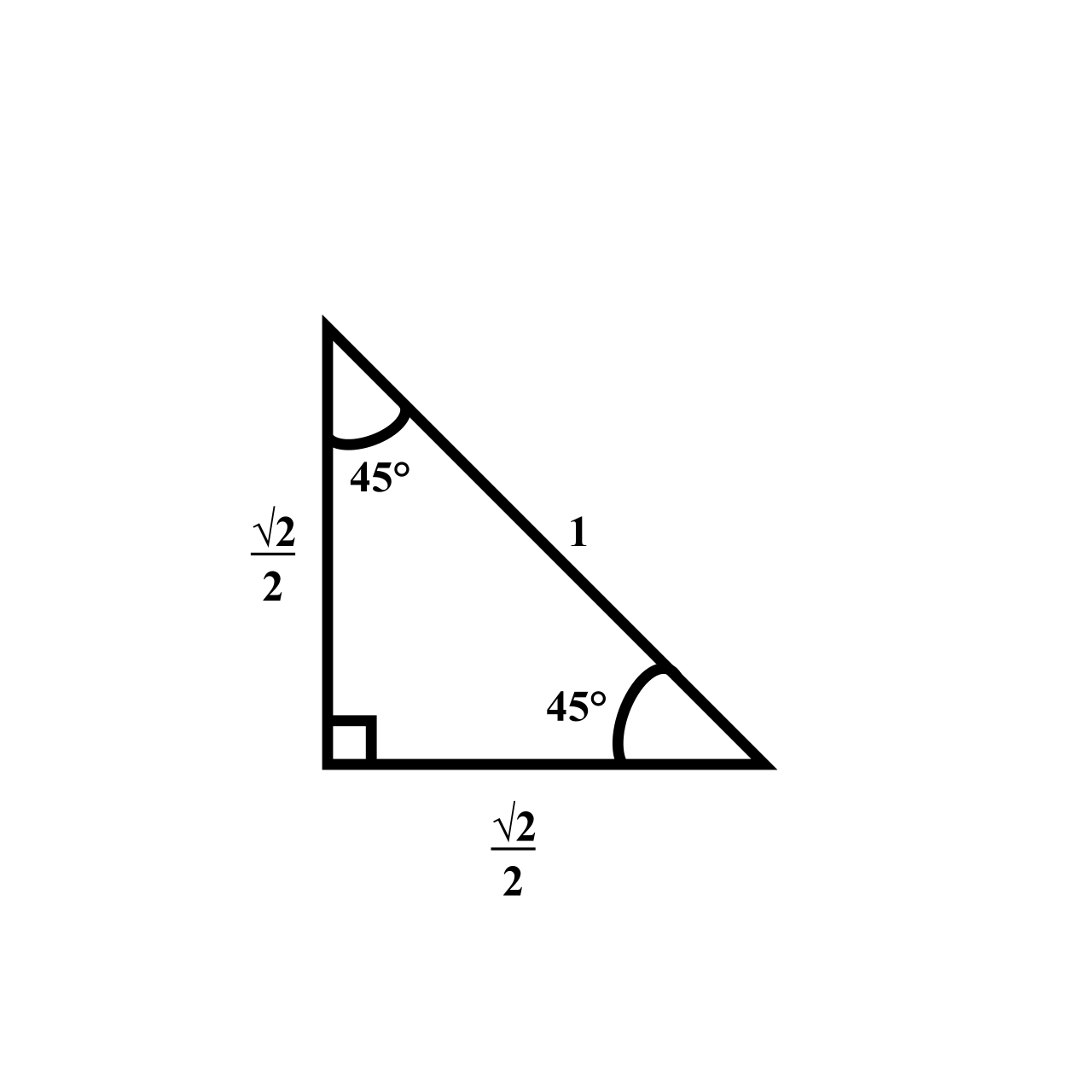
The Isosceles Right Triangle (45-45-90) Created by slicing a square down its diagonal. In a 45-45-90 right triangle, the two legs are congruent. By applying the Pythagorean theorem, we find that in a 45-45-90 right triangle, the length of the hypotenuse is exactly the length of a leg multiplied by the square root of 2.
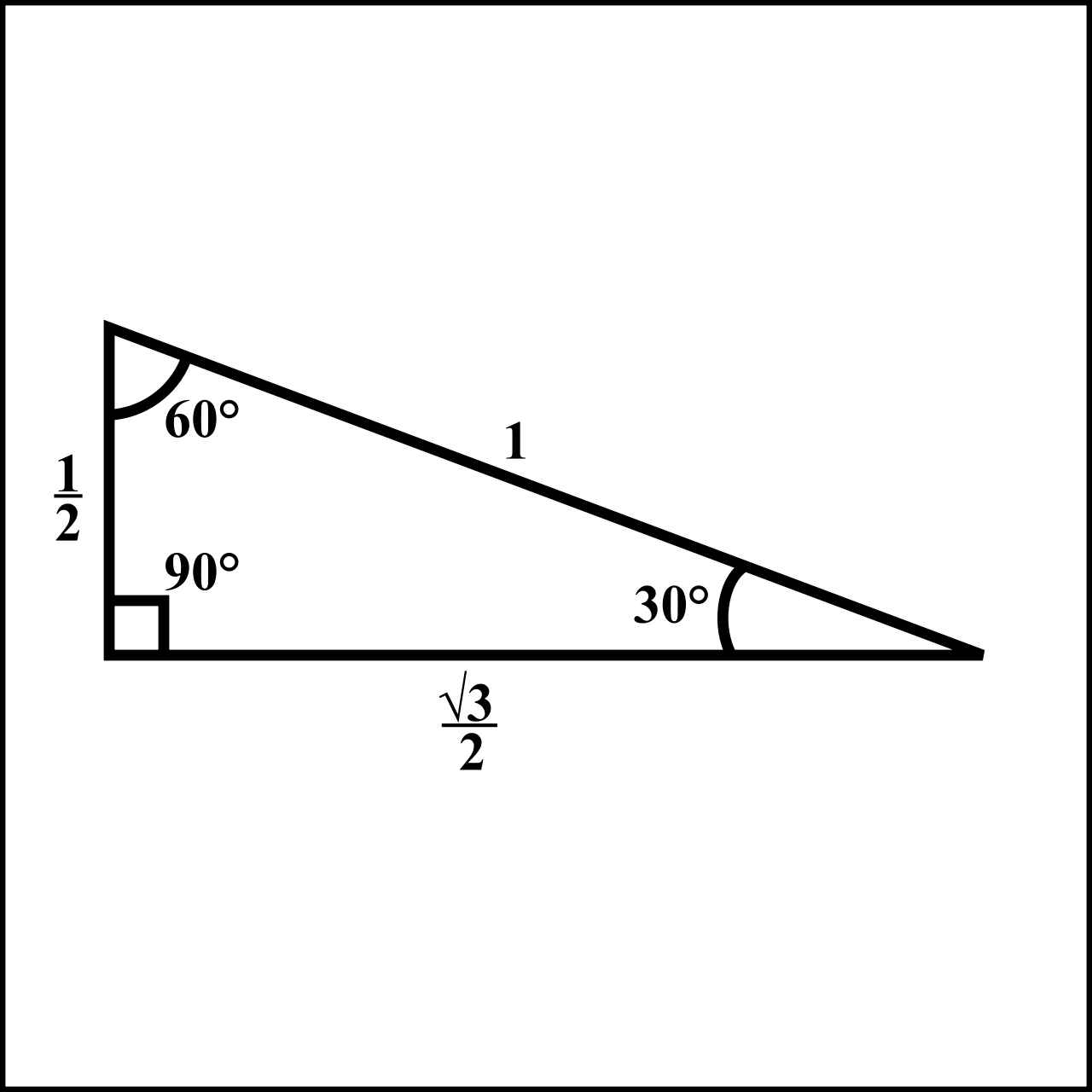
The Half-Equilateral Triangle (30-60-90) Created by dropping an altitude down an equilateral triangle. Here, size ordering is crucial. In a 30-60-90 right triangle, the shorter leg is always positioned opposite the 30-degree angle. Because this triangle is exactly half of an equilateral triangle, in a 30-60-90 right triangle, the hypotenuse is exactly twice the length of the shorter leg. Furthermore, the longer leg is exactly the length of the shorter leg multiplied by the square root of 3.
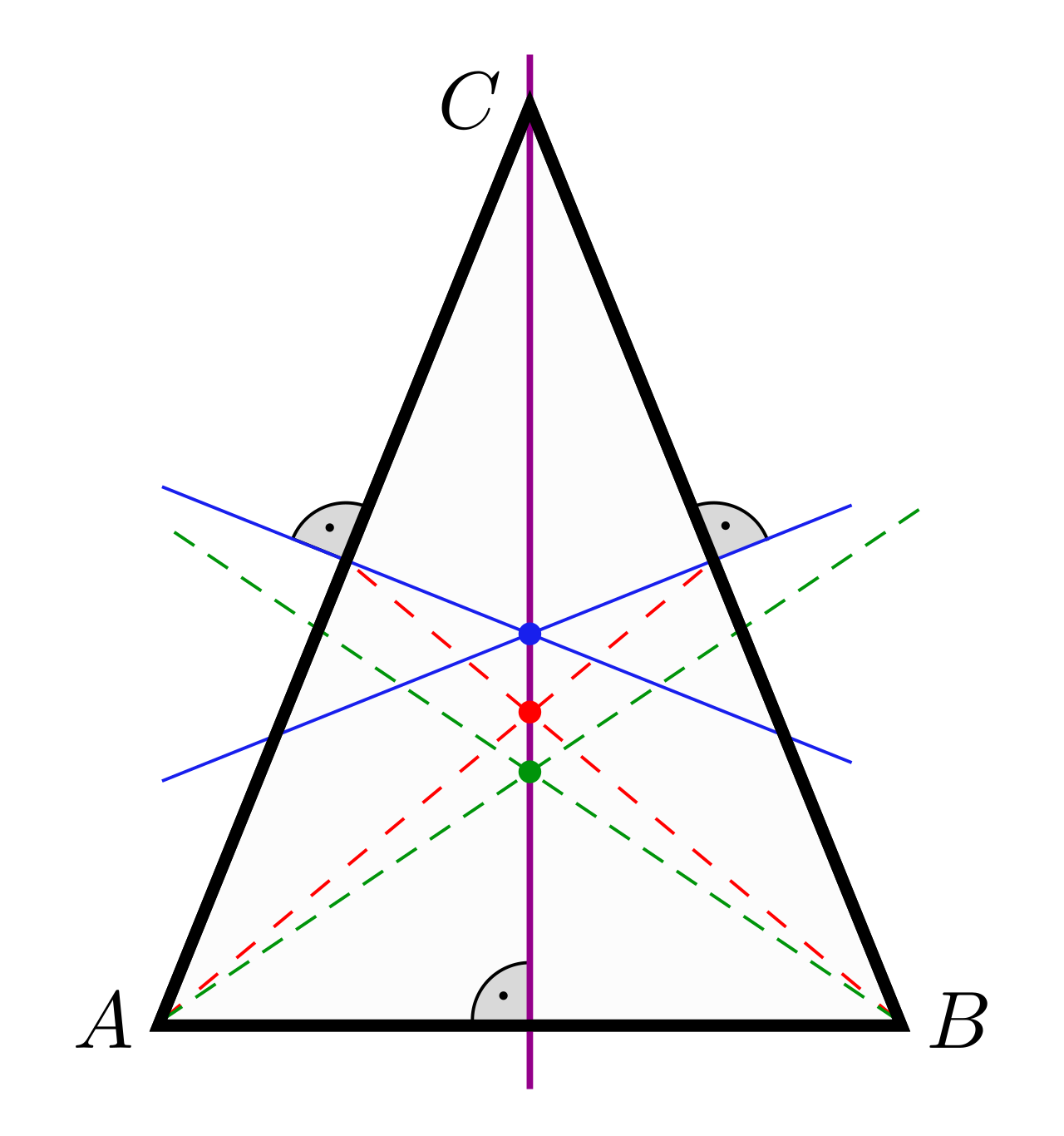
Symmetry introduces elegant shortcuts into geometric reasoning. An isosceles triangle has at least two congruent sides. By the nature of symmetry, the angles opposite the congruent sides of an isosceles triangle are congruent.
When you bisect this symmetry from the top vertex, magic happens. The altitude drawn to the base of an isosceles triangle bisects the vertex angle. Simultaneously, the altitude drawn to the base of an isosceles triangle bisects the base. This splits the isosceles triangle into two perfectly congruent right triangles.
When we push this symmetry to its absolute limit, we arrive at the equilateral triangle. An equilateral triangle has three congruent sides. Because side lengths dictate angle measures, an equilateral triangle has three congruent interior angles. Knowing the sum of interior angles is 180∘, every interior angle of an equilateral triangle measures exactly 60 degrees.
Just like its isosceles cousin, the altitude of an equilateral triangle bisects the base of the equilateral triangle, and the altitude of an equilateral triangle bisects the vertex angle of the equilateral triangle. Using the 30-60-90 rules derived from this altitude, we can prove a critical shortcut for your exam: the area of an equilateral triangle with side length s is equal to s squared multiplied by the square root of 3, all divided by 4 (Area=4s23).
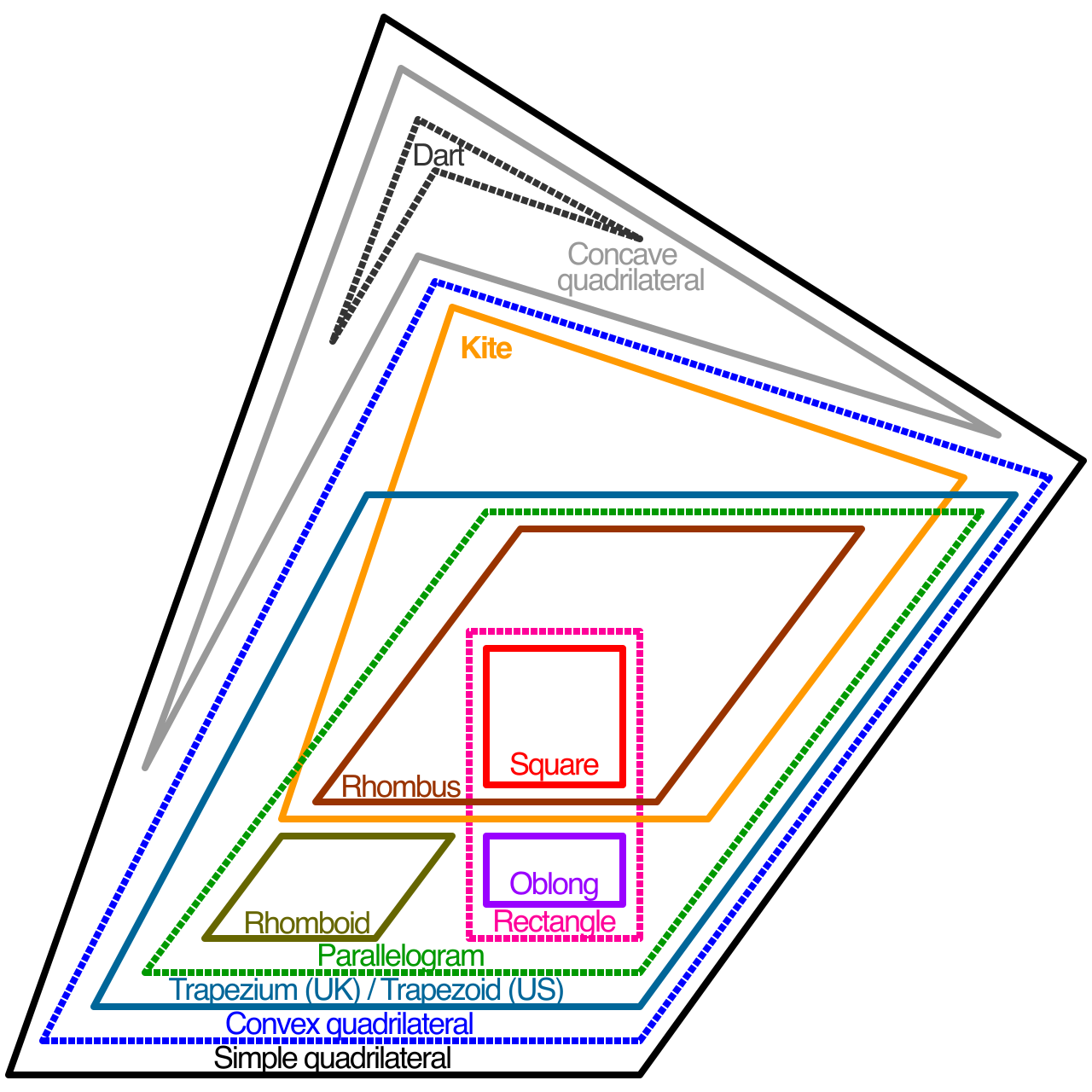
When we move to four sides, we lose inherent rigidity. The sum of the interior angles of any convex quadrilateral is exactly 360 degrees. To make sense of quadrilaterals, we classify them by their constraints—specifically, how their sides are parallel to one another.
Parallelograms
The most pivotal quadrilateral family is the parallelogram. A parallelogram is a quadrilateral with two pairs of parallel opposite sides. This simple constraint cascades into a wealth of theorems:
- The opposite sides of a parallelogram are congruent.
- The opposite interior angles of a parallelogram are congruent.
- Any two consecutive interior angles of a parallelogram are supplementary.
- The diagonals of a parallelogram bisect each other.
If you are asked to prove a shape is a parallelogram, remember this elegant sufficient condition: a quadrilateral is guaranteed to be a parallelogram if exactly one pair of opposite sides is both parallel and congruent.
Special Parallelograms When we impose additional constraints on parallelograms, we get specific subsets:
- Rectangles: A rectangle is a parallelogram containing exactly four right angles. Because it perfectly balances horizontal and vertical lines, the diagonals of a rectangle are congruent.
- Rhombi: A rhombus is a parallelogram containing exactly four congruent sides. The internal symmetry is profound: the diagonals of a rhombus intersect at perpendicular angles, and the diagonals of a rhombus bisect the interior angles of the rhombus.
- Squares: The ultimate regular quadrilateral. A square is a quadrilateral that has exactly four congruent sides, and simultaneously, a square is a quadrilateral that has exactly four right angles. It inherits every property of the parallelogram, rectangle, and rhombus.
Trapezoids
If we relax the rules and allow only one pair of parallel lines, we leave the parallelogram family entirely. A trapezoid is a quadrilateral containing exactly one pair of parallel sides. The parallel sides of a trapezoid are called the bases of the trapezoid, while the non-parallel sides of a trapezoid are called the legs of the trapezoid.
To find the "average" width of a trapezoid, we use the midsegment. The midsegment of a trapezoid is parallel to the bases of the trapezoid. Furthermore, the length of the midsegment of a trapezoid is exactly half the sum of the lengths of the two bases.
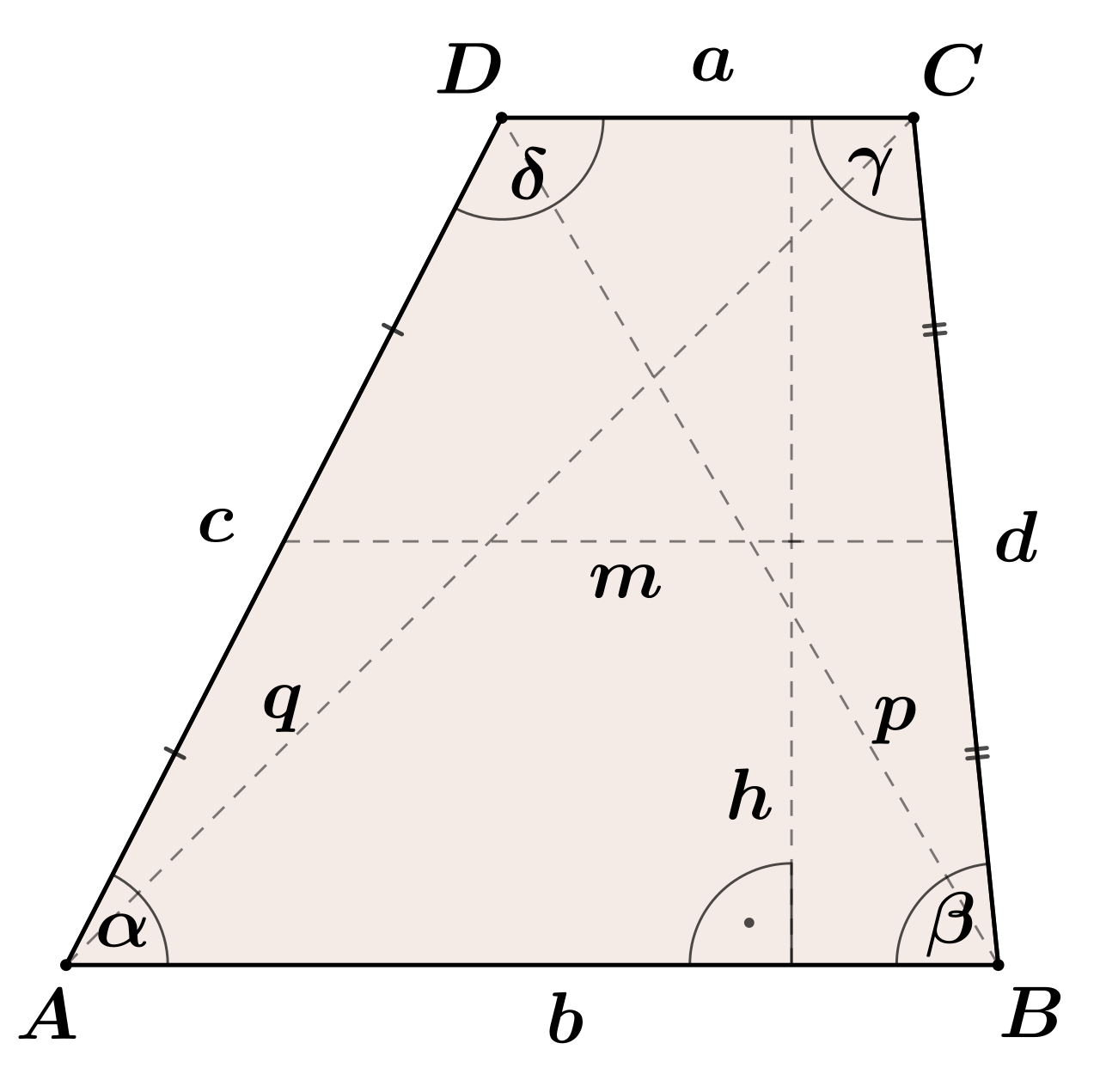
If we force a trapezoid to be symmetrical, we create an isosceles trapezoid. An isosceles trapezoid is a trapezoid with congruent non-parallel legs. Because of this symmetry, the base angles of an isosceles trapezoid are congruent, and remarkably, the diagonals of an isosceles trapezoid are congruent.
Kites
Finally, consider a shape defined not by parallel sides, but by adjacent congruence. A kite is a quadrilateral with exactly two distinct pairs of consecutive congruent sides. Imagine a traditional flying kite: it has a line of symmetry right down its primary axis.
Because of this cross-like framework, the diagonals of a kite intersect at perpendicular angles. The primary axis cuts the crossbar perfectly in half, meaning exactly one diagonal of a kite bisects the other diagonal. Furthermore, because of how the distinct pairs of sides meet, a kite contains exactly one pair of opposite congruent interior angles (located between the non-congruent sides).
As you prepare to teach this material, you must be able to zoom out and apply these rules to polygons of any size, governed by n, the number of sides.
Interior Angles Every convex polygon can be divided into (n−2) triangles by drawing diagonals from a single vertex. Since each triangle contributes 180∘, the sum of the interior angles of an n-sided convex polygon is 180 degrees multiplied by the quantity n minus 2.
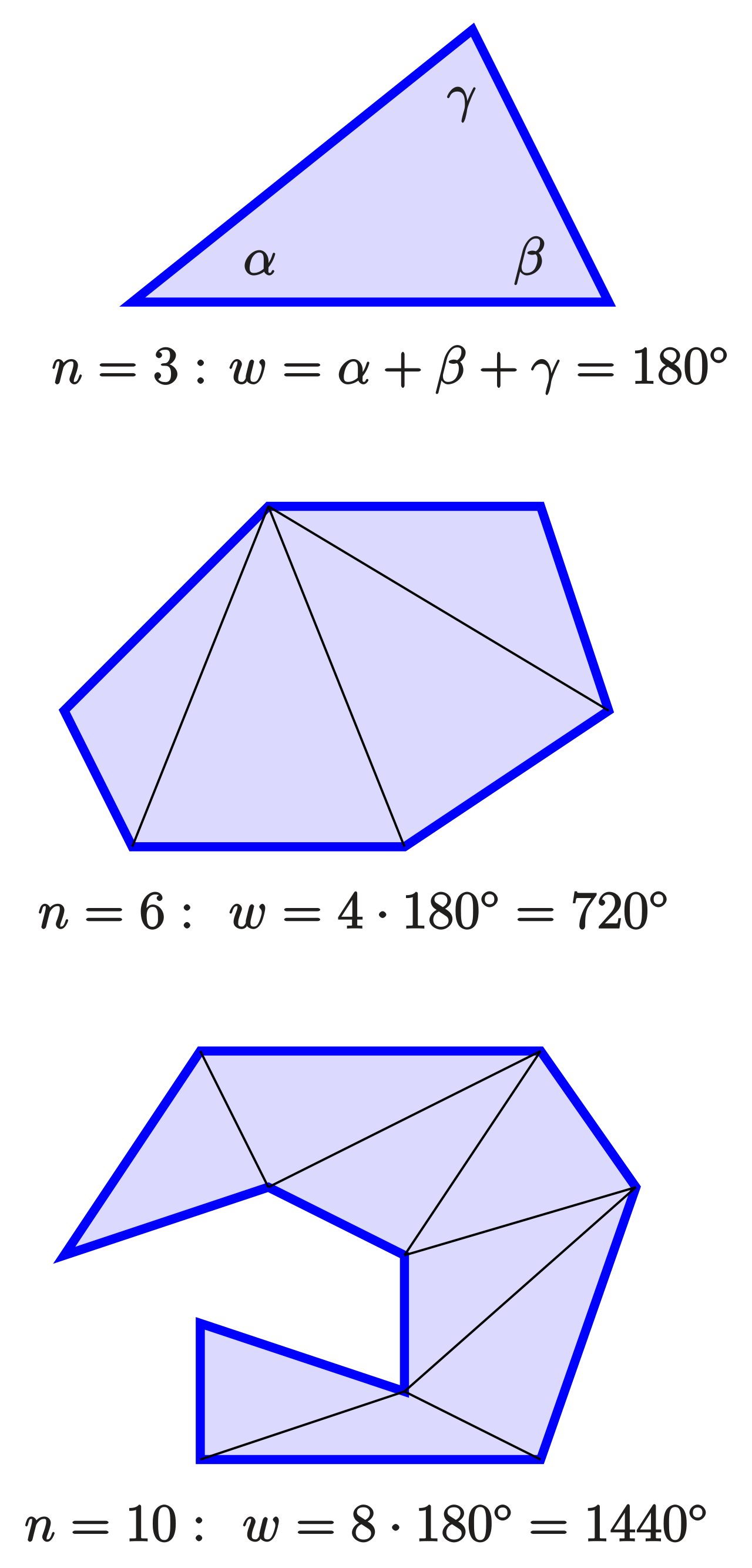
Exterior Angles Now, imagine walking the perimeter of a polygon. To get back to where you started, you must eventually turn a full circle. Because of this physical reality, the sum of the exterior angles of any convex polygon is exactly 360 degrees, regardless of whether the polygon has 3 sides or 3,000 sides!
Regular Polygons When an architect wants total uniformity, they use regular polygons. A regular polygon is a polygon that is both equilateral and equiangular. Because the angles are shared equally, the measure of a single interior angle of an n-sided regular polygon is 180 degrees multiplied by the quantity n minus 2, all divided by n. Similarly, the measure of a single exterior angle of an n-sided regular polygon is exactly 360 degrees divided by n.
Diagonals Finally, we must understand the interior connectivity of a polygon. From any given vertex in an n-sided polygon, you can draw a diagonal to every other vertex except itself and its two immediate neighbors—meaning (n−3) diagonals per vertex. Multiplying this by n vertices counts every diagonal twice (once from each end). Therefore, the total number of diagonals in an n-sided polygon is equal to n multiplied by the quantity n minus 3, all divided by 2.
Mastering these properties does more than prepare you for the Praxis (5165): Mathematics exam. It equips you with the structural blueprints of geometry, ensuring you can explain the elegant "why" behind the theorems to the next generation of mathematical thinkers.