Biosphere and Species Interactions
Not sure you’re ready?
Take the ~3-minute readiness diagnostic and see where you stand.
Ecology is the study of boundaries and the forces that inevitably blur them. A single tree in a forest is not merely a discrete object; it is a nexus of continuous biological and physical transactions. Water moves from the soil through roots, carbon dioxide is pulled from the air, and sunlight is captured to forge sugar. In turn, insects consume the leaves, birds consume the insects, and fungi patiently wait to dismantle them all. To understand life on Earth—and to effectively teach it to the next generation of scientific thinkers—we must abandon the notion of isolated creatures. Life is an intricate, hierarchical tapestry of relationships. As you prepare to guide secondary students through the complexities of the natural world, you must be equipped not only with the vocabulary of ecology but with a profound understanding of how these systems fit together.
To make sense of the dizzying complexity of nature, ecologists organize the world into nested levels of organization, much like a set of Russian nesting dolls. When your students ask, "What exactly are we studying?", this hierarchy provides the map.
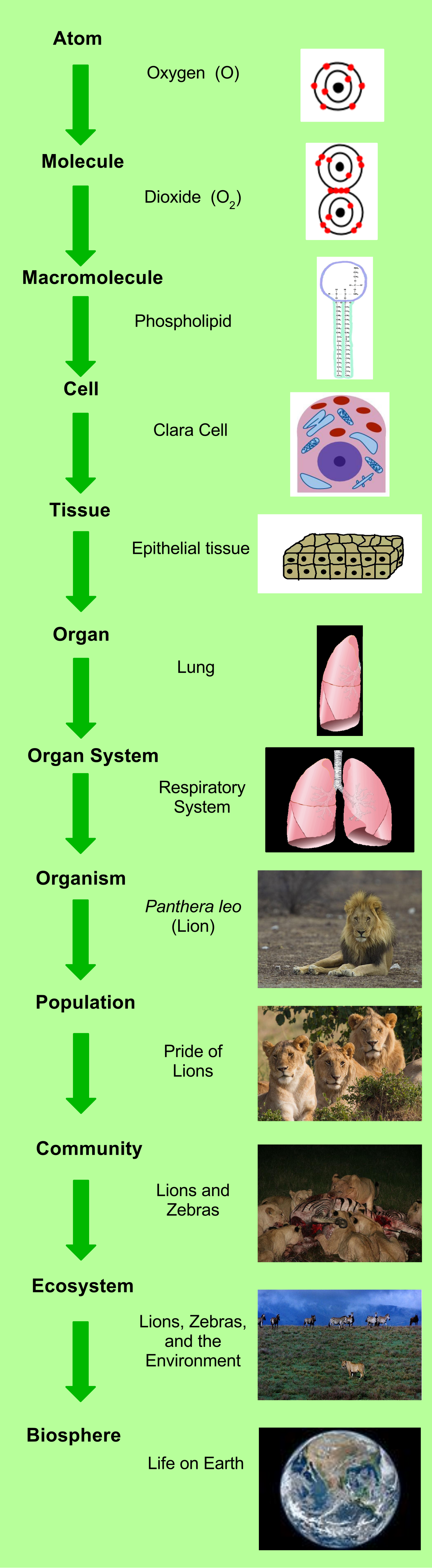
At the base level, we have the organism, which is simply a single living individual of a specific species. But organisms do not exist in a vacuum. When you look at a meadow and see not just one rabbit, but a whole group of them interbreeding and sharing resources, you are looking at a population—which consists of all individuals of a single species living in a specific geographical area.
If we expand our view to include the foxes hunting the rabbits, the grass they eat, and the beetles in the soil, we arrive at the biological community. This level includes all the interacting populations of different species within a specific geographical area. Notice that up to this point, we have only discussed living things. These living components of an environment are known as biotic factors.
But life is dictated by the non-living stage on which it performs. The abiotic factors—the non-living chemical and physical parts of the environment, such as sunlight, temperature, rainfall, and soil minerals—are just as critical. When you combine the biological community and the non-living abiotic environment interacting together as a system, you have an ecosystem.
Zoom out further, and ecosystems that share similar climates and host distinct plant and animal communities are grouped into a biome (think of the sweeping African savanna or the dense Amazonian rainforest). Finally, the ultimate container for all these biomes is the biosphere, which encompasses all zones of Earth's land, water, and atmosphere where life exists.
Teacher's Toolkit: When teaching this hierarchy, emphasize the interactions at the ecosystem level. An ecosystem isn't just a list of parts; it is defined by the verb interacting. A terrarium sitting on your classroom windowsill is a perfect, observable ecosystem demonstrating the marriage of biotic and abiotic factors.
In any ecosystem, energy and resources are finite. This scarcity inevitably leads to competition.
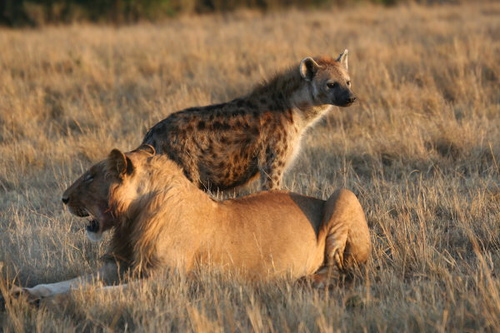
If two individuals of the same species are fighting for the same mate or the same territory, this is intraspecific competition. Because they have the exact same needs, this competition is incredibly fierce. Conversely, interspecific competition occurs between individuals of different species competing for a shared resource—like a lion and a hyena competing for a fresh kill.
To understand how species survive this competition, we must look at the ecological niche, which is the functional role and position of a species within the local environment. It is not just where an organism lives, but what it does—how it acquires energy, when it reproduces, and how it interacts with the physical space.
An organism's fundamental niche is the theoretical maximum; it is the full range of environmental conditions under which a species can survive and reproduce in the absence of any interference. However, because of interspecific competition, an organism rarely gets to enjoy its fundamental niche. Instead, it occupies a realized niche—the actual set of environmental conditions under which a species exists due to biotic interactions like competition.
The Competitive Exclusion Principle
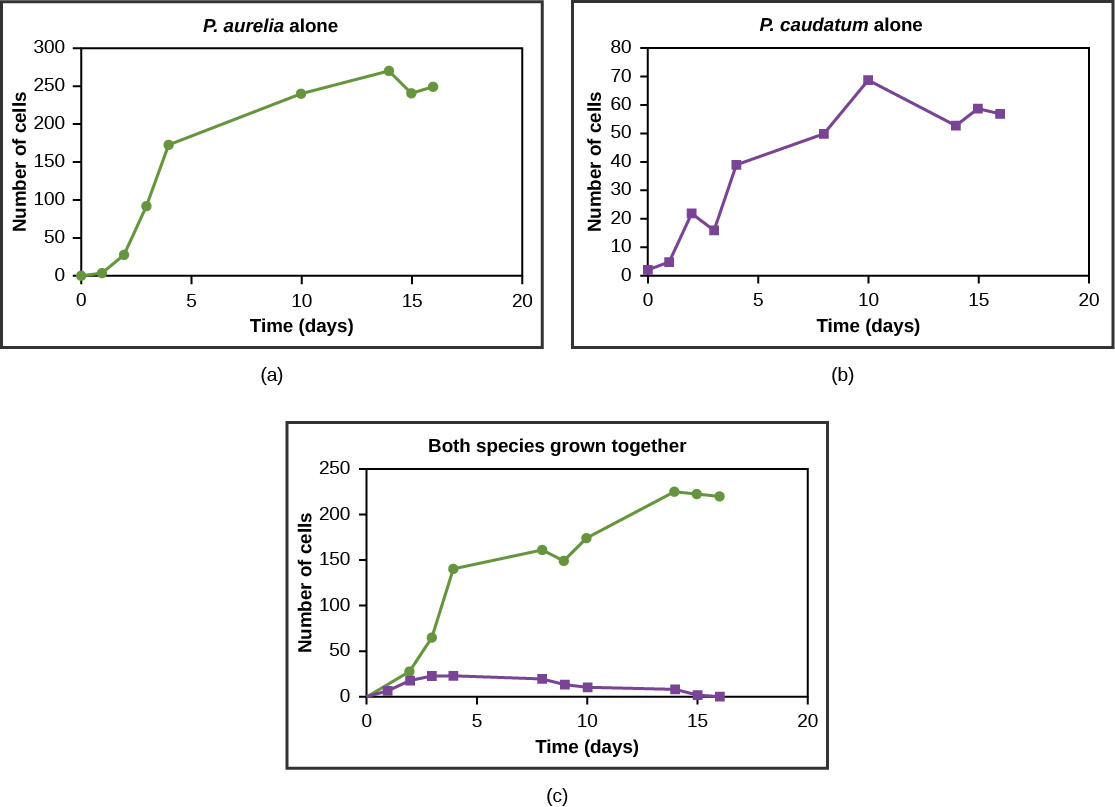
What happens if two species try to occupy the exact same niche? The competitive exclusion principle provides the answer: two species competing for the exact same limiting resource cannot stably coexist. One will eventually outcompete and eliminate the other.
Historical Context: Russian ecologist Georgiy Gause famously formulated the competitive exclusion principle using experiments with Paramecium species. When grown separately, P. aurelia and P. caudatum thrived. When grown in the same test tube, competing for the exact same bacteria, P. aurelia consistently drove P. caudatum to extinction.
To avoid the doom of competitive exclusion, evolution offers two brilliant escape routes:
- Resource partitioning: This is the evolutionary process where competing species use different resources—or use the same resource at different times or in different spaces—to reduce niche overlap. Think of different species of warblers foraging in completely different distinct zones of the exact same spruce tree.
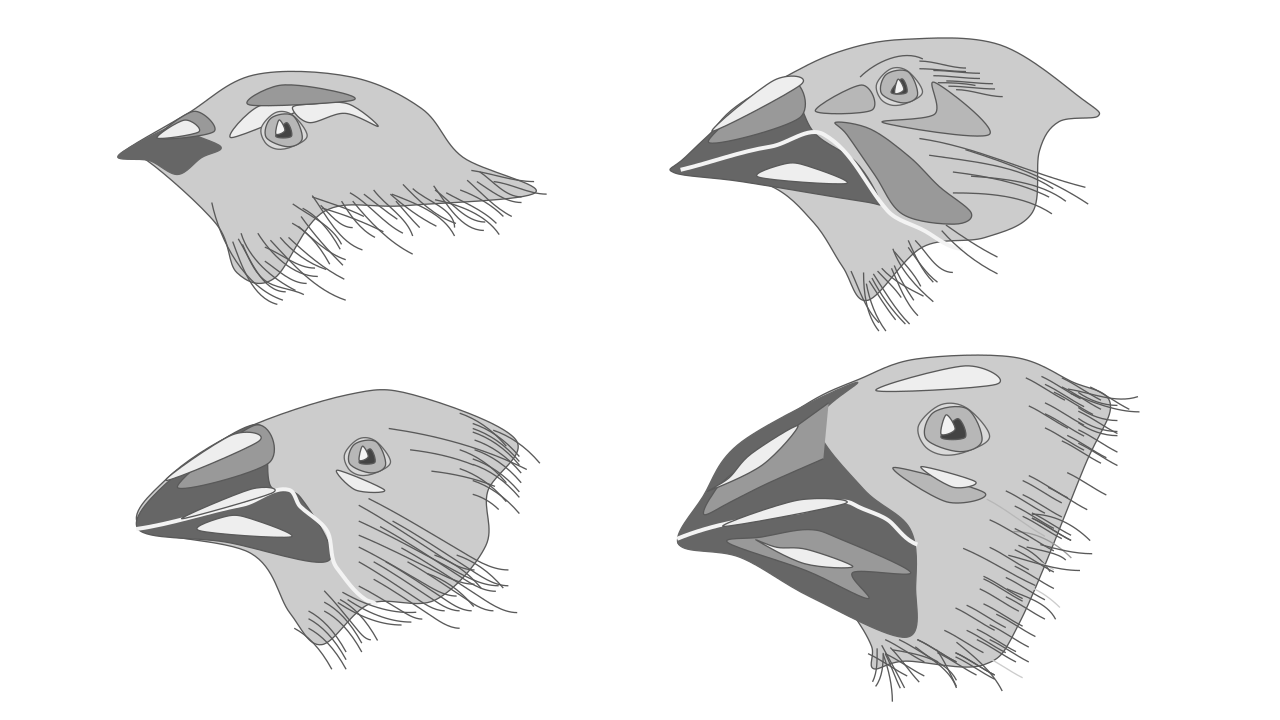
- Character displacement: Sometimes, competing requires physical changes. Character displacement is the evolutionary divergence of traits in sympatric (co-occurring) populations of similar species to reduce competition. For example, two species of finches on the same island might evolve distinctly different beak sizes to exploit different sized seeds, whereas on islands where they live alone, their beaks are much more similar.
While competition is a driving force of nature, so is cooperation—or at least, close physical association. Symbiosis is defined as a close, prolonged physical association between individuals of two different species. It is crucial to remind your students that "symbiosis" does not automatically mean "friendly." It simply means "living together."
We categorize symbiotic relationships based on the balance of benefit and harm:
1. Mutualism (+ / +)
Mutualism is a symbiotic relationship in which both participating species benefit.
- Obligate mutualism occurs when one species cannot survive without the specific mutualistic partner. A classic example is mycorrhizae, which represents a mutualistic relationship between plant roots and specific fungi. The fungi vastly expand the root network's ability to absorb water and minerals, while the plant provides the fungi with photosynthesized sugars. Without each other, both perish.
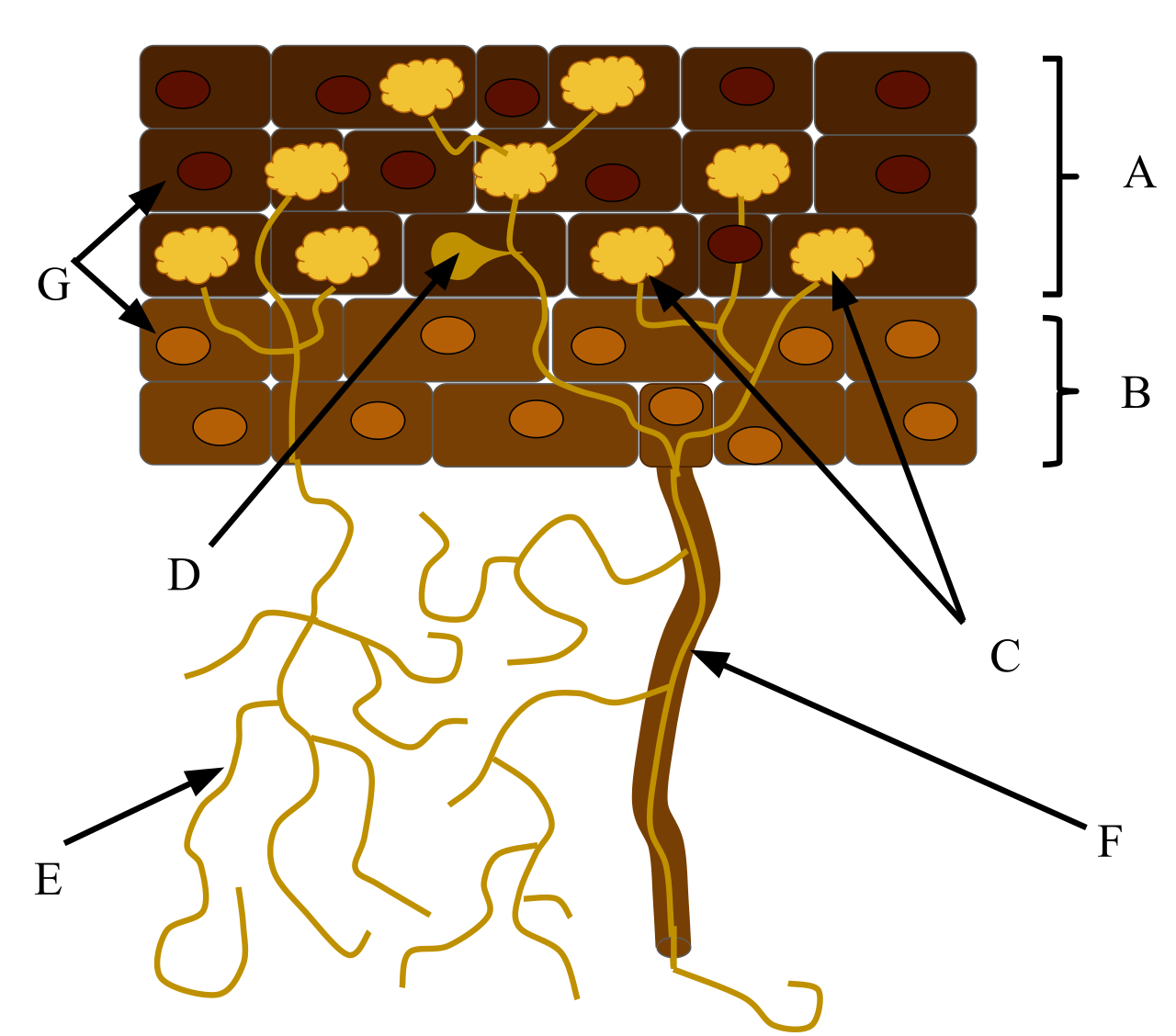
- Facultative mutualism is a beneficial relationship between species that is not strictly necessary for the survival of either species. Think of oxpecker birds eating ticks off a rhinoceros; both benefit, but both could survive apart.
2. Commensalism (+ / 0)
Commensalism is a symbiotic relationship where one species benefits and the second species is neither helped nor harmed. A beautiful example is epiphytes (like orchids or bromeliads) growing on tree branches without harming the host tree. The epiphyte gets closer to the sunlight, and the massive tree is completely unaffected by the tiny plant resting on its bark.
3. Parasitism (+ / -)
Parasitism is a symbiotic relationship where one organism benefits at the expense of a host organism (the organism that is harmed). Parasites do not typically want to kill their host immediately, as that destroys their home and food source.
- Ectoparasites live on the external surface of a host organism (e.g., ticks, lice, leeches).
- Endoparasites live inside the body of a host organism (e.g., tapeworms, malaria-causing Plasmodium).
4. Amensalism (- / 0)
Often overlooked in high school textbooks, amensalism is an interaction where one species is harmed while the second species remains entirely unaffected. Picture an elephant walking through the brush to get to a watering hole. It crushes the grass beneath its feet. The grass is severely harmed, but the elephant receives no benefit or harm from stepping on the grass.
Predation is a biological interaction where a predator organism captures and feeds on a prey organism. This interaction governs the flow of energy through the upper tiers of an ecosystem.
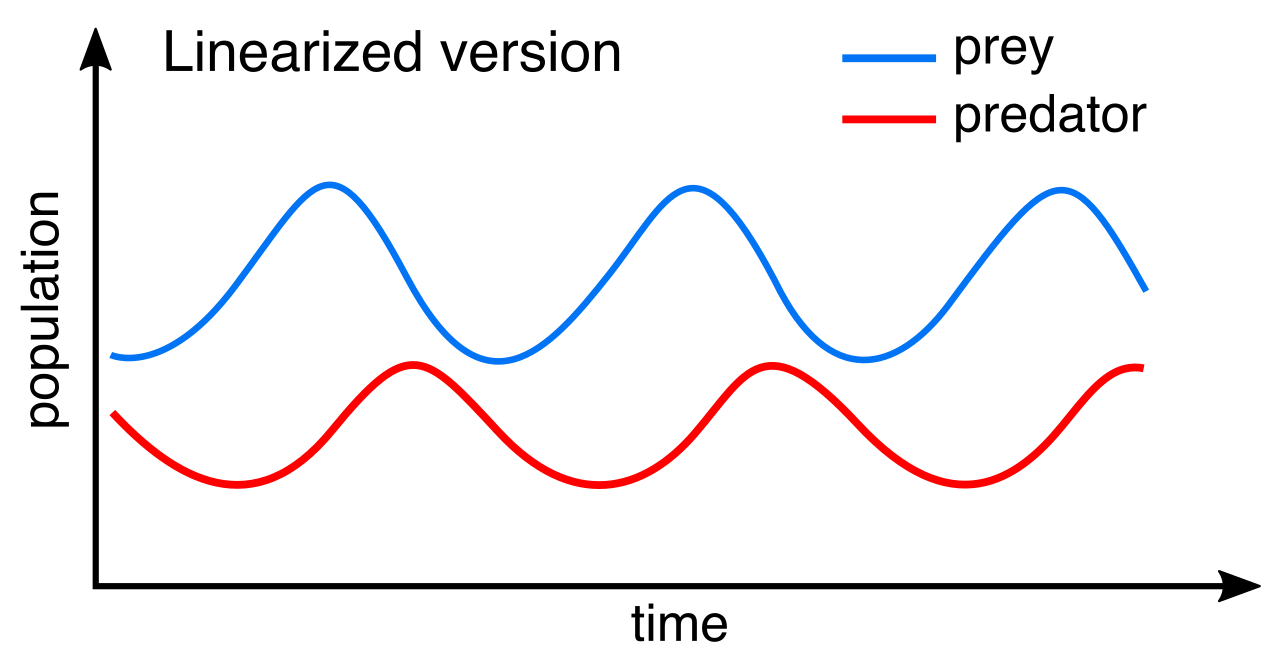
When you graph predator and prey populations over time, they do not remain flat. Instead, predator and prey population dynamics often exhibit coupled cyclical oscillations over time. When prey is abundant, predators feast, reproduce, and their population spikes. This overabundance of predators drastically reduces the prey population. With food now scarce, the predator population crashes, allowing the prey population to recover, and the cycle begins anew. Crucially, changes in a predator population generally lag behind changes in the corresponding prey population.
Morphological Adaptations for Survival
This constant threat of being eaten drives a spectacular evolutionary arms race. Organisms have developed ingenious ways to avoid predation, or to become better predators:
| Adaptation | Description | Example |
|---|---|---|
| Camouflage | A morphological adaptation allowing an organism to blend into the environment to avoid detection. | A leaf-tailed gecko resting invisibly against a tree trunk. |
| Aposematic coloration | A bright warning appearance signaling toxicity or unpalatability to predators. | The neon-bright skin of poison dart frogs shouting, "Do not eat me!" |
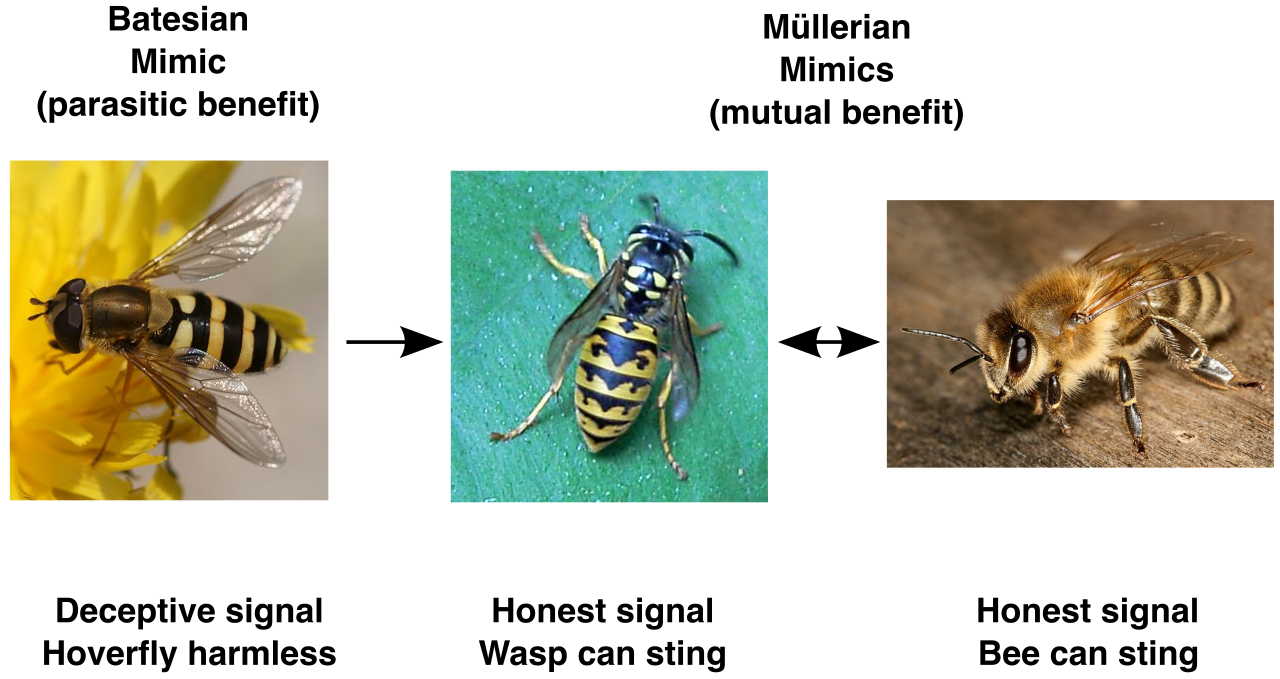
| Batesian mimicry | Occurs when a harmless species evolves to imitate the warning signals of a harmful species. It is an evolutionary bluff. | A non-venomous scarlet king snake mimicking the bands of a deadly coral snake. |
| Müllerian mimicry | Occurs when two or more unpalatable (toxic) species evolve to visually resemble one another. This is "shared corporate branding." | Various species of stinging bees and wasps all sharing black and yellow stripes, reinforcing the visual warning to predators. |
Not all species carry the same weight in an ecosystem. Some exert control that defies their biomass or numbers.
A keystone species is an organism on which other species in an ecosystem largely depend. By definition, a keystone species has a disproportionately large impact on the surrounding environment relative to the species' numerical abundance. The removal of a keystone species causes a drastic change or collapse of the entire ecosystem structure.
Apex predators often act as keystone species by regulating the population sizes of primary consumers. When top predators are removed or added, it triggers a trophic cascade—an ecological phenomenon causing reciprocal changes in relative populations of predator and prey throughout a food chain.
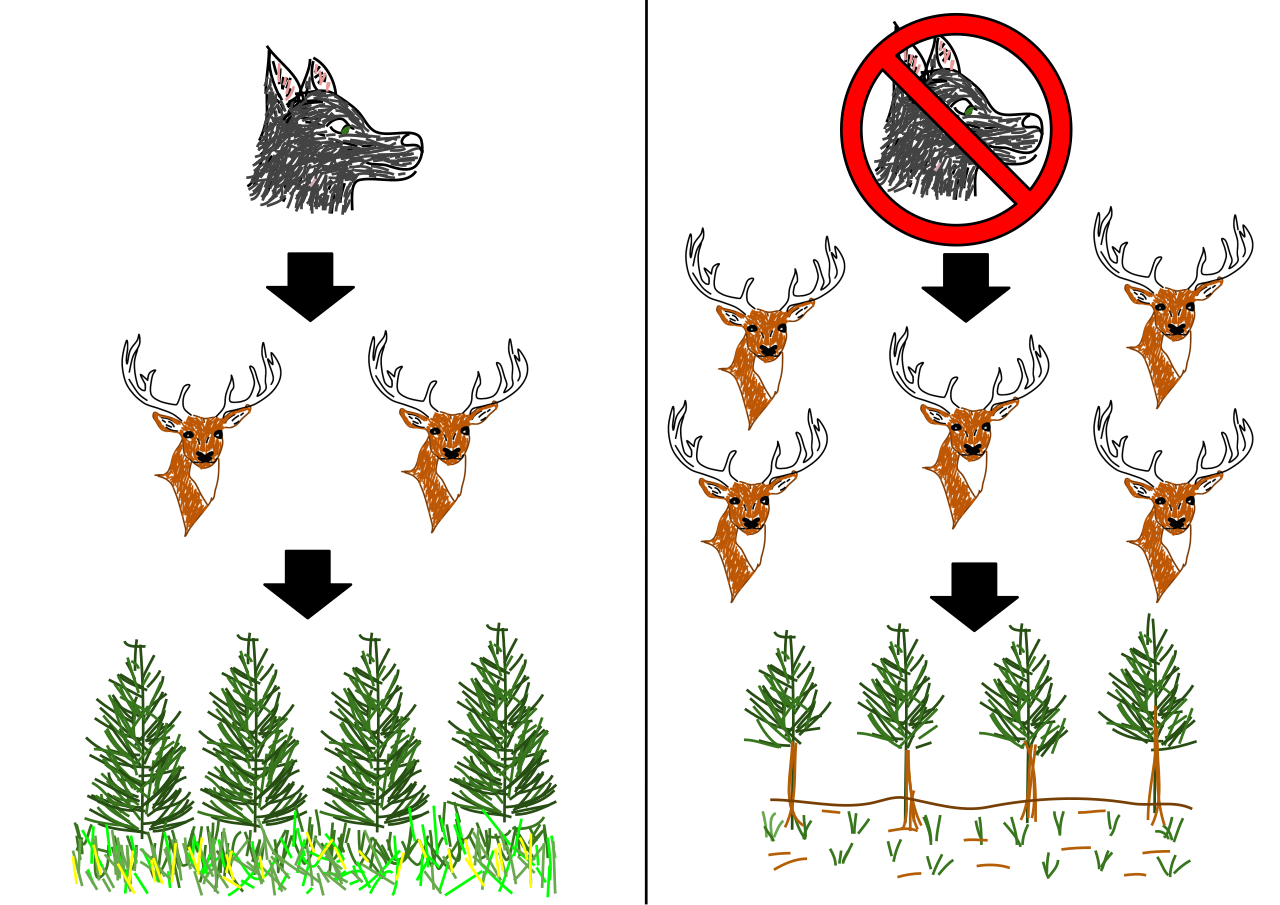
Real-World Application: Sea otters function as keystone species in kelp forests by controlling sea urchin populations. If otters are hunted, the sea urchin population explodes. The urchins graze relentlessly, severing the kelp at its base and turning a biodiverse underwater forest into a barren "urchin barren." The otters' presence dictates the health of the entire biome.
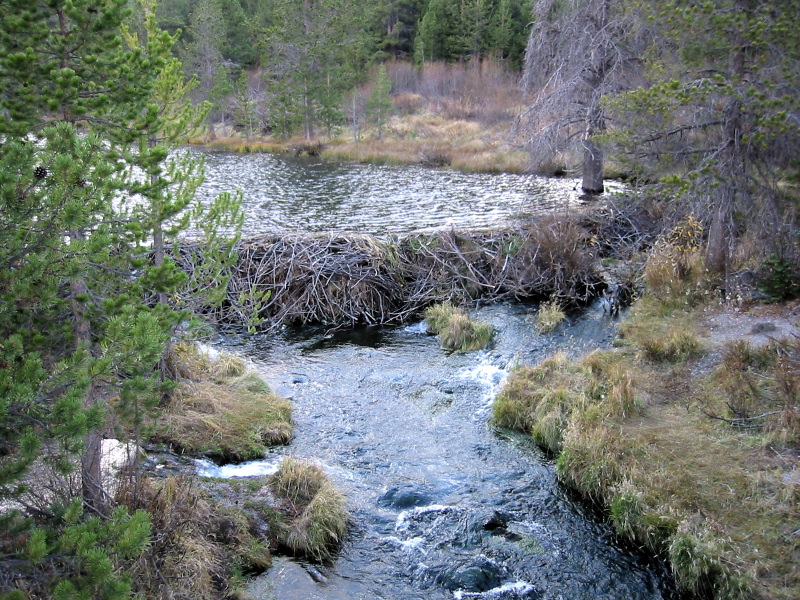
While predators control an ecosystem from the top down through eating, others control it through physical labor. Ecosystem engineers are organisms that create, significantly modify, or maintain habitats. Beavers act as ecosystem engineers by building dams that alter water flow and create entirely new wetland habitats. They drown terrestrial areas, create ponds that harbor fish and amphibians, and completely restructure the local abiotic and biotic factors.
Conclusion for the Educator
As you stand before your future classroom, remember that biology is not a list of vocabulary words—it is the study of a grand, ongoing negotiation between living things and their planet. Whether it is Georgiy Gause peering into a microscope at Paramecium fighting for space, or the dramatic return of a trophic cascade in Yellowstone, the principles of ecology show us that nothing stands alone. Equip your students with this framework, and they will never look at a walk in the woods the same way again.