Community Structure and Succession
Not sure you’re ready?
Take the ~3-minute readiness diagnostic and see where you stand.
Imagine attempting to build a thriving high school on a barren slab of volcanic basalt. There is no foundation, no infrastructure, and certainly no students. Before a single class can convene, the very ground must be broken down, weathered, and transformed to support life. This foundational transformation is the essence of ecological succession, which is the directional and predictable change in community structure over time.
For you, the future biology educator, understanding succession is not merely about memorizing a sequence of plants. It is about mastering the mechanics of ecosystem resilience, energy flow, and population dynamics. Your students will need to see nature not as a static painting, but as a dynamic, constantly rebalancing equation. This guide will provide you with the vivid analogies and rigorous conceptual frameworks you need to not only pass your certification exam but to teach these concepts with absolute clarity.
When a habitat changes, the trajectory of life depends entirely on what was left behind. We divide these trajectories into two distinct pathways.
Primary Succession: Starting from Scratch
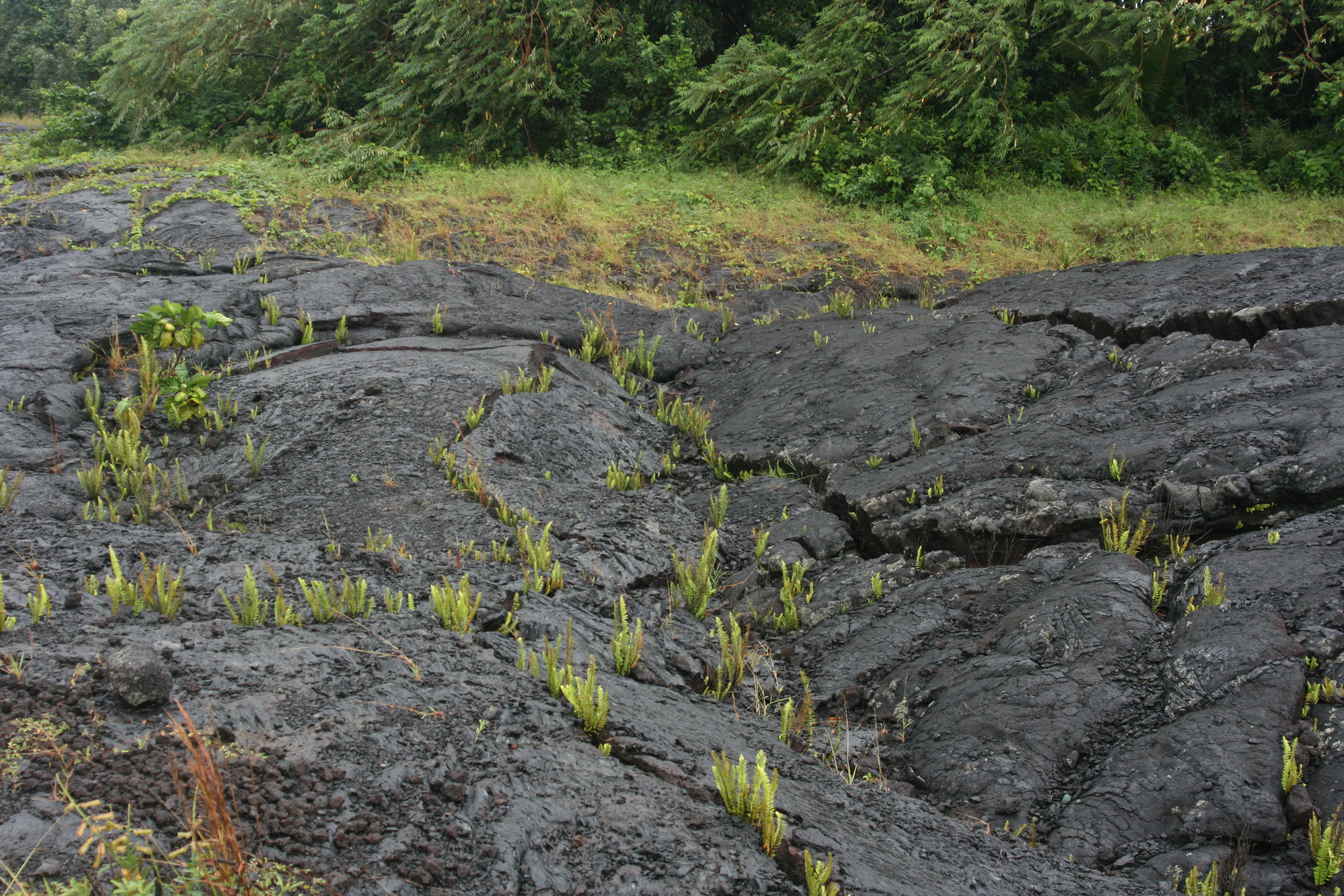
Primary succession occurs in lifeless areas where soil is incapable of sustaining life. Nature is quite literally starting from a blank slate.
Consider the real-world laboratories of primary succession: it takes place on newly formed volcanic islands erupting from the ocean, or on bare rock left exposed by retreating glaciers. Because there is no biological legacy—no seeds, no nutrients, no soil—the process is agonizingly slow.
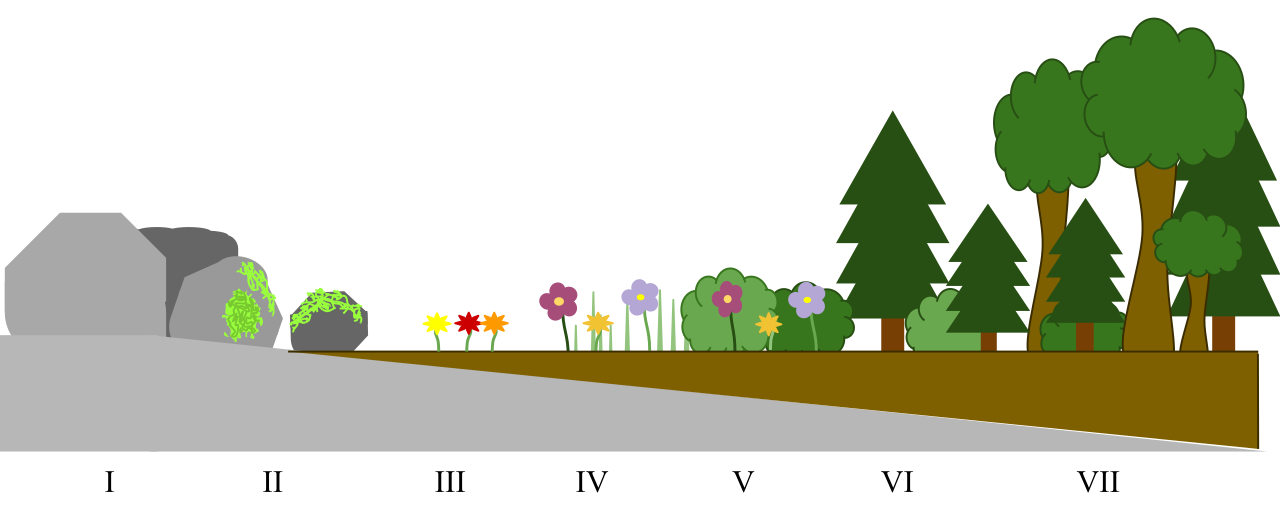
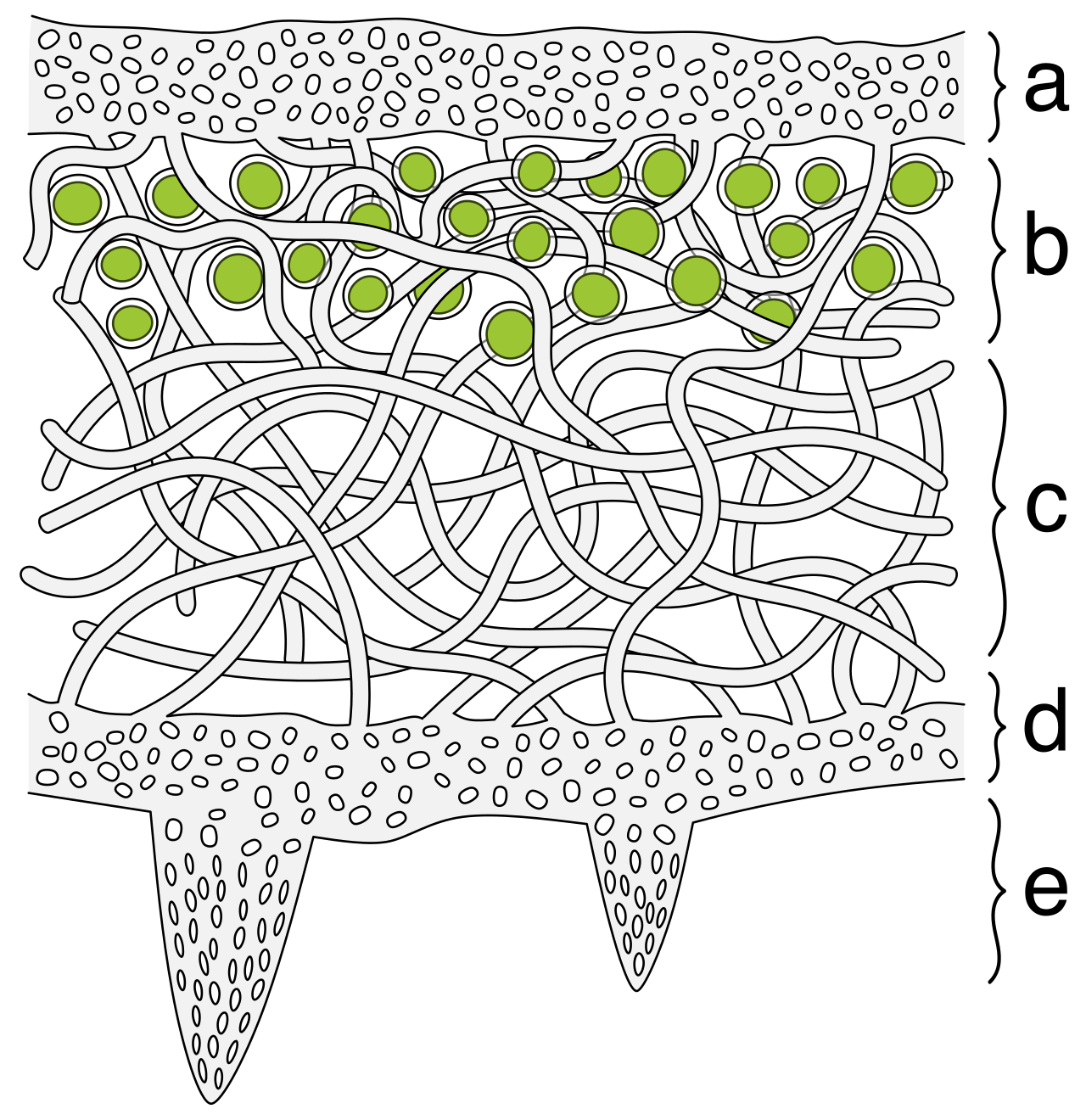
The heroes of this stage are the pioneer species, the first organisms to colonize a barren environment. Lichens and mosses are common pioneer species in primary succession. Lichens—a symbiotic marvel of fungi and algae—do the heavy lifting. They secrete acids that physically and chemically weather bare rock into initial soil. By slowly breaking down the geological substrate and trapping windblown organic debris, they pave the way for vascular plants to eventually take root.
Secondary Succession: The Head Start
In contrast, secondary succession occurs in areas where a biological community has been removed by a disturbance, but it critically requires the pre-existence of intact soil.
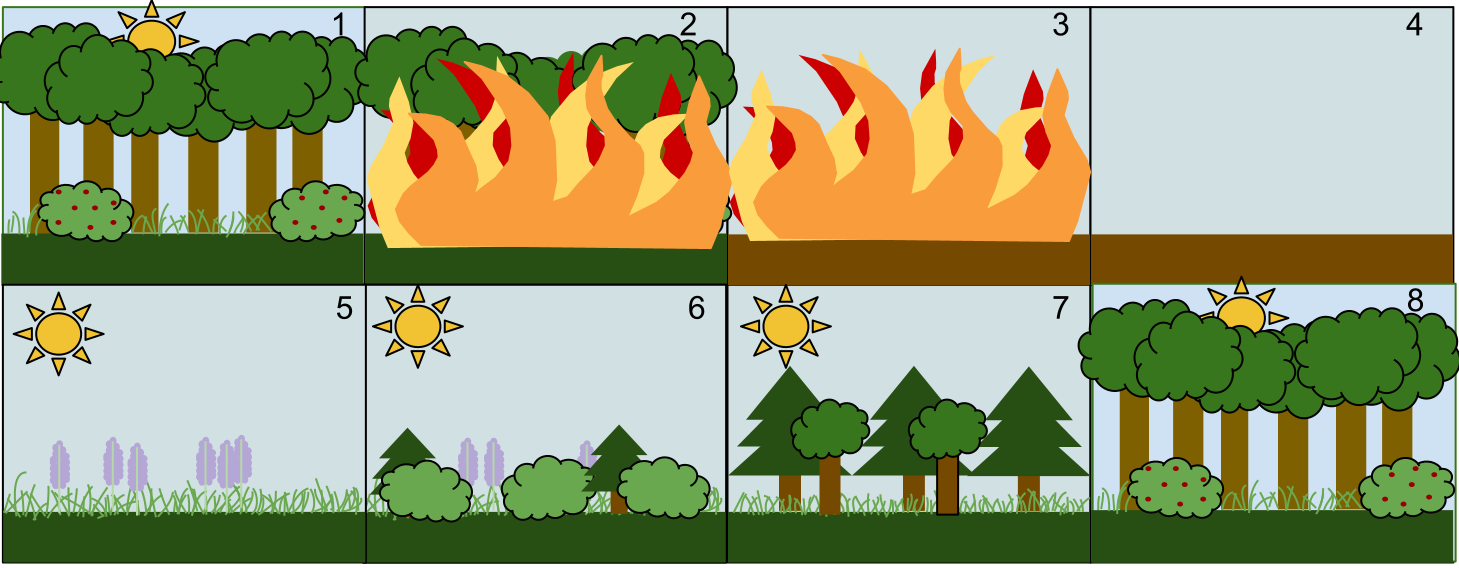
You see this in daily life. Wildfires trigger secondary succession by clearing existing above-ground vegetation, turning towering forests into ash. Abandoned agricultural fields undergo secondary succession when farmers stop plowing.
Because the soil remains, secondary succession proceeds at a faster rate than primary succession due to the presence of established soil. Furthermore, secondary succession proceeds at a faster rate than primary succession due to the presence of an underground seed bank—a buried reservoir of viable seeds just waiting for sunlight and water. Consequently, the pioneer species in secondary succession are typically fast-growing herbaceous annual plants and grasses, rather than rock-weathering lichens.
Summary Comparison for the Classroom
| Feature | Primary Succession | Secondary Succession |
|---|---|---|
| Starting Condition | No soil, lifeless bare rock/sand | Intact soil remains, existing biological legacy |
| Common Causes | Volcanic eruptions, glacial retreat | Wildfires, agriculture, logging |
| Pioneer Species | Lichens, mosses | Fast-growing herbaceous annuals, grasses |
| Rate of Change | Exceptionally slow (centuries to millennia) | Relatively fast (decades to centuries) |
To teach ecology effectively, frame the ecosystem as a business. As succession progresses, the "economy" of the forest changes drastically.
During the early and middle stages of ecological succession, total ecosystem biomass increases continuously. Plants are multiplying, growing taller, and storing carbon. Gross primary productivity (GPP)—the total amount of solar energy captured by photosynthesis—increases rapidly during early successional stages as leaf area expands to capture more sunlight.
But we must distinguish between gross revenue and net profit. Net primary productivity (NPP) is the energy remaining after the plants have paid their own metabolic bills (cellular respiration).
- Mid-Succession: Net primary productivity peaks in mid-successional stages. The ecosystem is highly efficient, adding massive amounts of new growth every year.
- Late-Succession: Surprisingly, net primary productivity declines in late-successional stages.
- The Cause: The decline in net primary productivity during late succession is caused by a massive increase in autotrophic respiration from accumulated plant biomass.
Think of a mature, ancient forest like a massive corporation. It has huge gross revenue (GPP), but it also has a staggering "payroll" of maintaining billions of living cells in massive tree trunks and root systems. The respiratory costs are so high that very little new growth (NPP) is added. At this point, total ecosystem biomass stabilizes when a community reaches a mature climax state.
As the physical environment changes, so do the evolutionary strategies of the inhabitants.
r-selected vs. K-selected Species Early successional environments strongly favor r-selected species. These organisms invest heavily in producing massive amounts of offspring quickly, perfectly adapted to colonize empty, unstable environments. Conversely, late successional environments strongly favor K-selected species. These organisms grow slowly, live longer, and are fiercely competitive, dominating stable, crowded environments.
Tracking species counts over time reveals a fascinating, non-linear pattern:
- Species richness generally increases over the course of early to mid ecological succession as new niches open up and plants create vertical stratification (canopies, understories).
- Species diversity often peaks during intermediate stages of ecological succession. At this Goldilocks moment, you have a mix of lingering early-successional pioneers and newly arriving late-successional competitors coexisting.
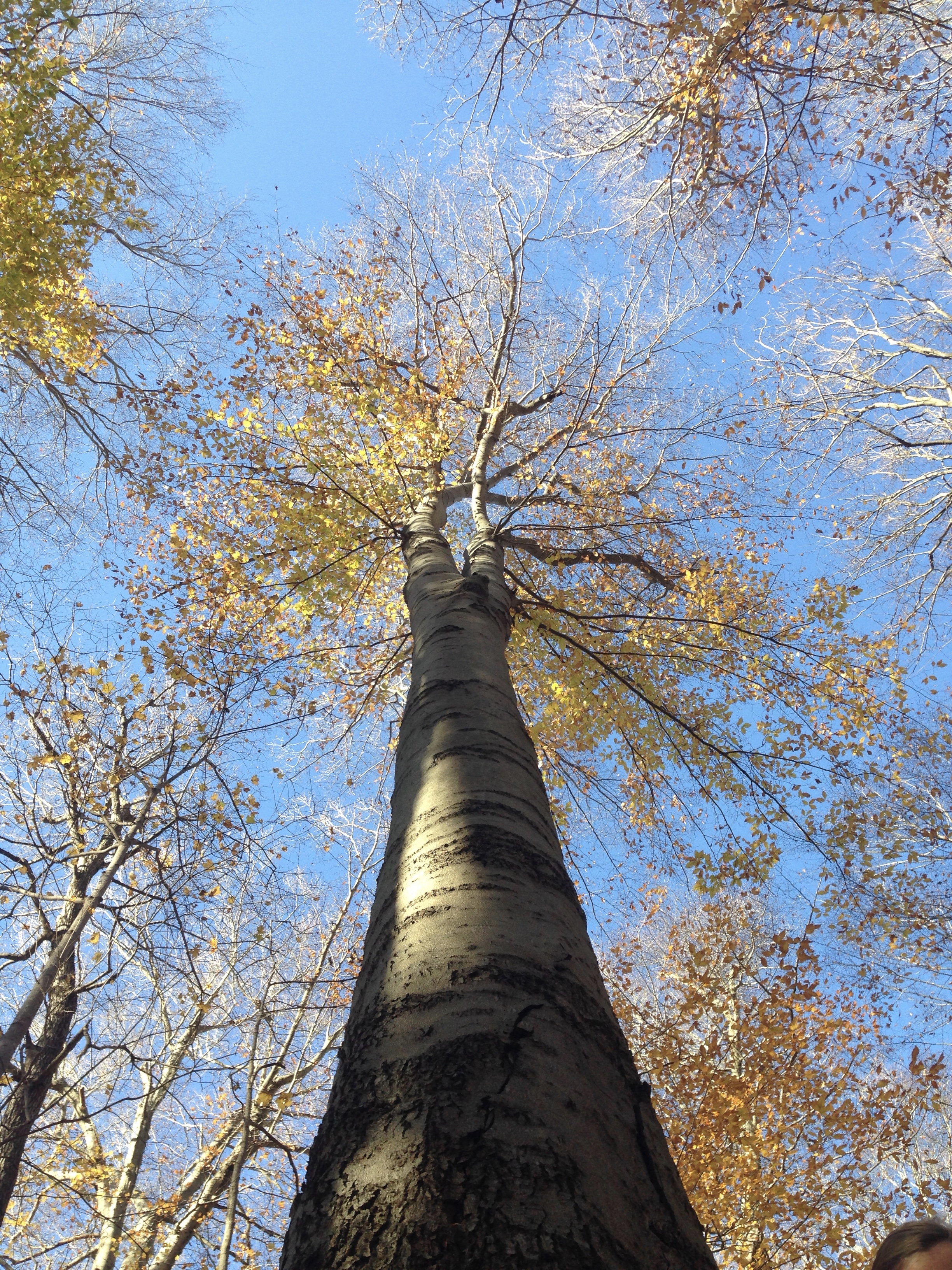
- Ultimately, species diversity declines slightly in climax communities due to competitive exclusion by dominant late-successional species. The towering oaks and beeches cast such deep shade that the sun-loving pioneers are starved out.
The endpoint of this journey is the climax community. Climax communities are relatively stable assemblages of late-successional species that are in equilibrium with local environmental conditions. Unless disturbed, they will perpetuate themselves indefinitely.
How exactly do species replace one another? Ecologists have identified three distinct behavioral models to explain community turnover. Teach these to your students as the three ways people behave when trying to secure seats in a crowded cafeteria:
- The Facilitation Model: This model states that early colonizing species modify the environment to make it more suitable for subsequent species. (Like pulling out a chair for the next person). For example, nitrogen-fixing pioneer plants enrich the soil, deliberately making it habitable for the larger trees that will eventually shade them out.
- The Inhibition Model: This states that early colonizing species actively prevent the establishment of later species through competition. (Like throwing your backpack over three chairs so nobody else can sit). Some plants release toxic chemicals into the soil (allelopathy) to hold their territory until they eventually die off.
- The Tolerance Model: This states that late-arriving species establish and grow regardless of the presence or absence of early colonizers. They don't need help, and they aren't bothered by the pioneers; they simply tolerate the conditions and out-compete the others over time.
Ecosystems are rarely left in peace. An ecological disturbance is a temporary change in environmental conditions that causes a pronounced change in an ecosystem. Fires, hurricanes, floods, and human developments constantly reset the successional clock.
When a disturbance strikes, ecologists measure the ecosystem's response using two vital metrics:
- Ecological resistance is the ability of a community to remain physically and functionally unchanged during a disturbance. A deep-rooted prairie might resist a fast-moving surface fire without missing a beat.
- Ecological resilience is the speed at which a community recovers to its pre-disturbance state.
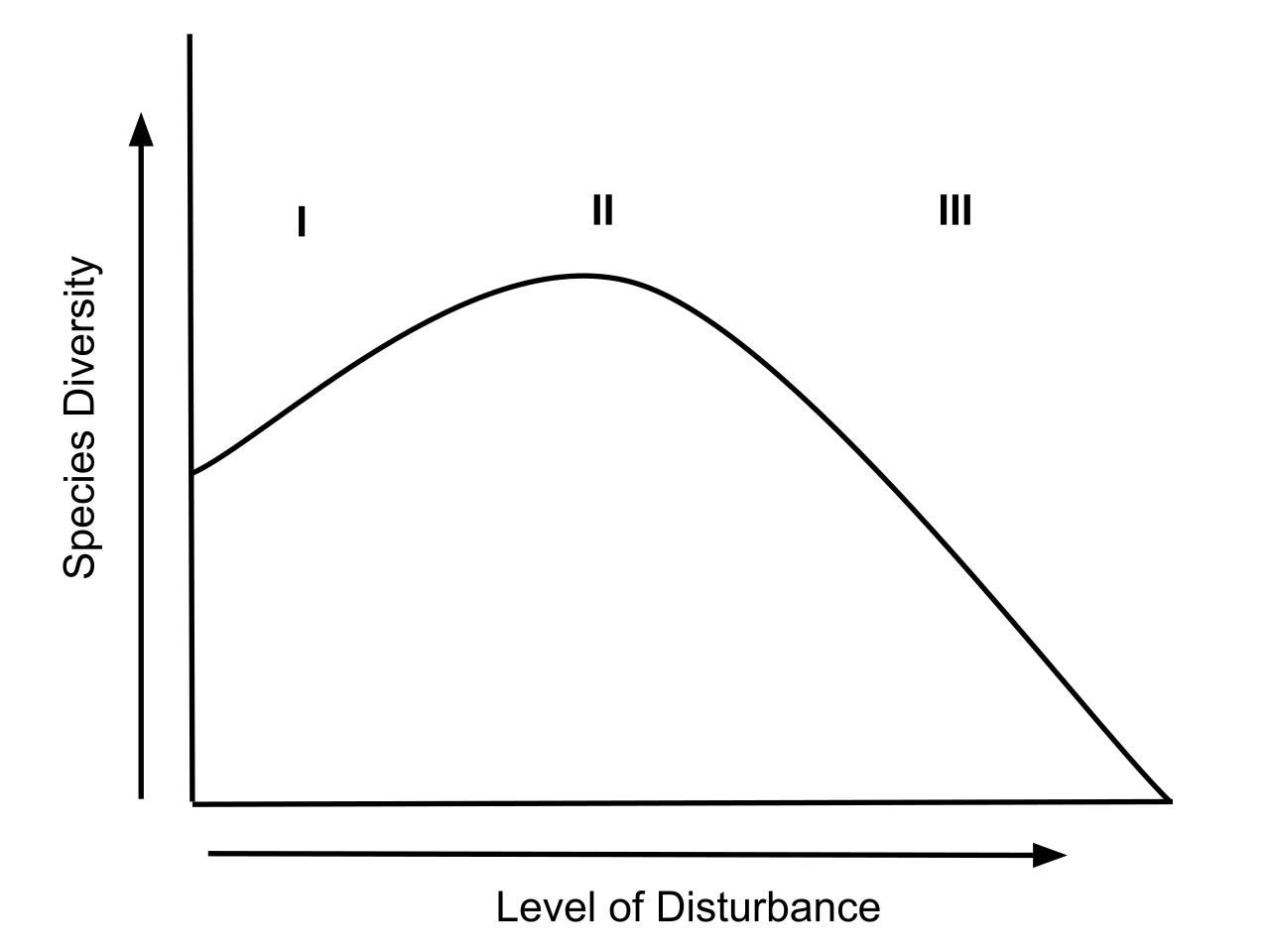
The Intermediate Disturbance Hypothesis (IDH)
One of the most profound concepts in ecology—and a staple of the Praxis exam—is the Intermediate Disturbance Hypothesis. This hypothesis posits two things:
- Local species diversity is maximized when ecological disturbances occur at moderate frequencies.
- Local species diversity is maximized when ecological disturbances occur at moderate intensities.
Why? Let's look at the extremes:
- High levels of ecological disturbance reduce species diversity by constantly eliminating slow-growing late-successional species. The ecosystem is perpetually stuck in the pioneer stage.
- Low levels of ecological disturbance reduce species diversity by allowing dominant competitors to exclude subordinate species. Without fires or storms to knock back the heavyweights, a few dominant trees completely monopolize the sunlight and soil.
Moderate disturbances act as a great equalizer. They periodically punch holes in the canopy, ensuring that r-selected pioneers and K-selected competitors both have a place to live.
The Geography of Recovery: Spatial Dynamics
Disturbance isn't just about when; it's about where. The spatial scale of a disturbance dictates the availability of recolonizing individuals from adjacent undisturbed patches. If a fire wipes out 10,000 acres, seeds have a long way to travel. If a single tree falls in a forest, the gap is instantly filled by neighbors.
Therefore, small-scale spatial disturbances create localized patches of different successional stages within a larger landscape. Think of it like a patchwork quilt. You might have a mature oak stand right next to a patch of pioneer grasses where a lightning strike caused a micro-fire five years ago.
This leads us to a beautiful concluding principle of ecology: a landscape composed of a mosaic of different successional patches exhibits higher overall regional species diversity than a uniform landscape.
By understanding that destruction and disturbance are not the end of an ecosystem, but rather the very engines of its diversity, you provide your future students with a profound lens through which to view the natural world.