Means of Providing Access to the Curriculum
Not sure you’re ready?
Take the ~3-minute readiness diagnostic and see where you stand.
A curriculum is a doorway. If that doorway is built to standard, fixed dimensions, a student in a wheelchair cannot enter, no matter how brilliantly the room inside is decorated. In the general education classroom, our instructional materials, assignments, and assessments are often built to a rigid, idealized standard of the "average" student. But cognitive science and our own daily observations tell us a profound truth: the "average" student is a statistical myth.
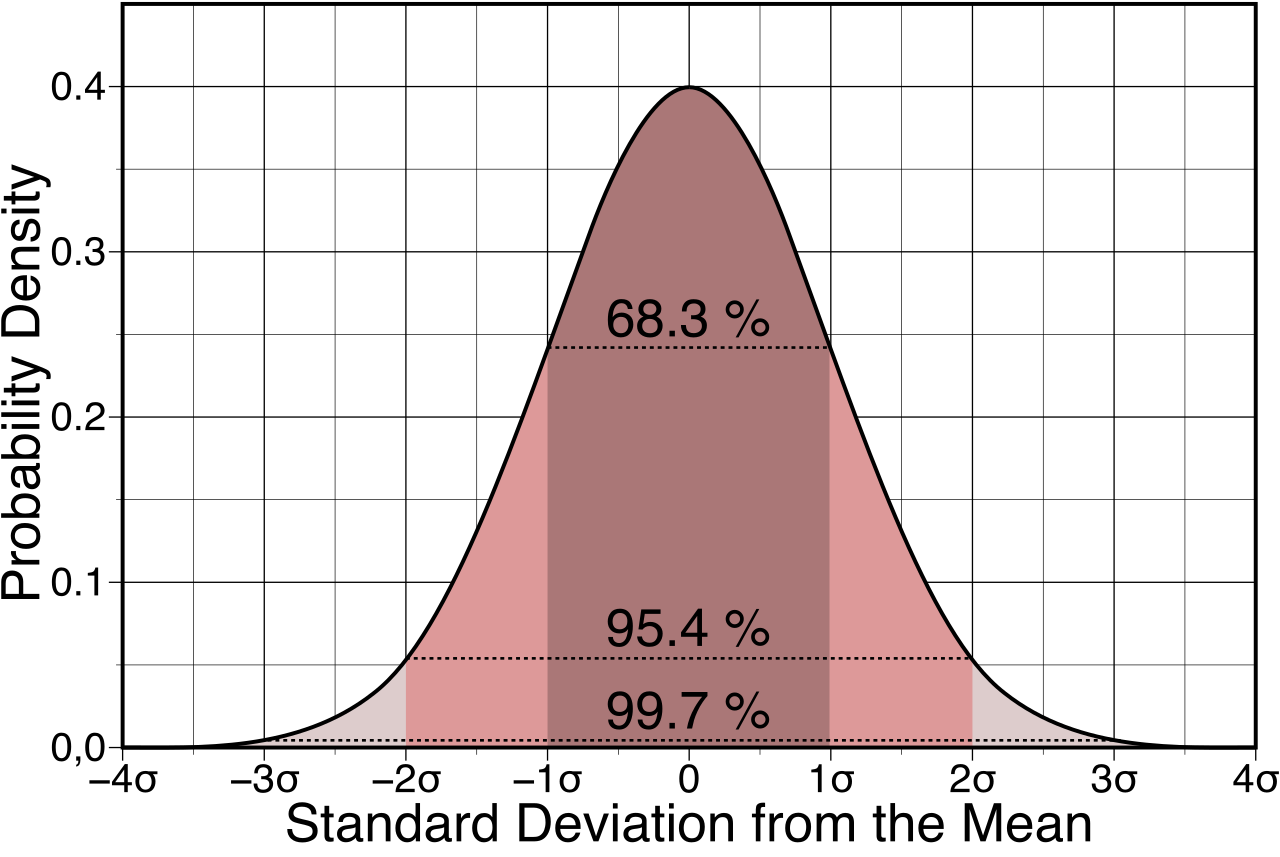
To guarantee that every student has meaningful access to the curriculum, we must master the precise engineering of how we teach. As a special educator, you are the architect of this access. You will manipulate three distinct tools—accommodations, modifications, and Universal Design for Learning (UDL)—to ensure that the doorway to learning is wide enough, and the path clear enough, for every mind in your classroom.
In the daily reality of a school building, the terms "accommodation" and "modification" are often used interchangeably by well-meaning professionals. This is a critical error. The difference between the two is not a matter of semantics; it is a legal and life-altering boundary. Blurring them can jeopardize a student’s academic trajectory.
Accommodations: Altering the How
An accommodation alters how a student accesses educational material or how a student demonstrates learning.
Think of an accommodation as giving a student a pair of prescription glasses. The glasses do not make the text simpler to read; they merely remove the visual barrier to reading it. Crucially, an accommodation does not change the instructional level of the general education curriculum, it does not change the content of the general education curriculum, and it does not lower the performance expectations for a student. The destination remains exactly the same; we are simply providing a different vehicle to get there.

We categorize accommodations by the specific barrier they remove:
- Presentation accommodations allow students to access information in formats other than standard print.
- Example: Providing large-print text for a student with a visual impairment is a presentation accommodation. The text is identical; only the visual delivery changes.
- Response accommodations allow students to complete assignments or tests in alternative ways.
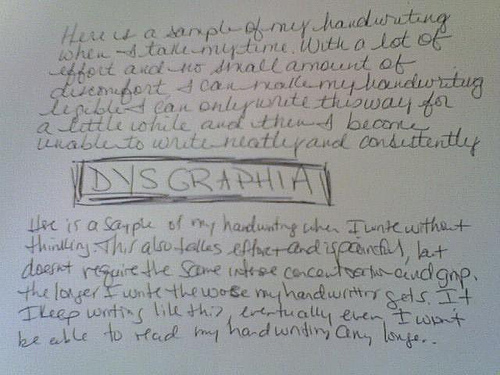
- Example: Allowing a student to use a word processor instead of writing by hand is a response accommodation. You are still assessing their ability to compose an essay, but you have removed the barrier of fine motor dysgraphia.
- Setting accommodations change the physical location or environmental conditions of instruction or testing.
- Example: Allowing a student with attention deficit hyperactivity disorder (ADHD) to take a test in a separate quiet room is a setting accommodation. The test is the same; the acoustic and visual distractions are minimized.
- Timing accommodations change the allowable length of time a student has to complete an assignment or test.
- Scheduling accommodations alter the organization of time or the sequence of activities during a school day (e.g., scheduling a complex math assessment for the morning when a student's executive functioning is sharpest).
Modifications: Altering the What
If accommodations change the how, a modification changes the what. A modification fundamentally alters the complexity of the curriculum standard being taught, and it changes the specific content a student is expected to learn. Consequently, a modification changes the instructional level of the curriculum for a student.
- Curriculum Modification Example: Assigning a student a reading passage written at a significantly lower grade level than the rest of the class is a curriculum modification.
- Instructional Modification Example: Requiring a student to master only three vocabulary words while peers master twenty words is an instructional modification.
Why this matters for your daily practice: Modifications are most frequently implemented for students with significant cognitive disabilities. You must handle modifications with immense care because implementing instructional modifications can affect a student's eligibility to earn a standard high school diploma. If you alter the complexity of the standards, the student is no longer meeting the state's criteria for standard graduation. You are not just changing a Tuesday lesson plan; you are shifting the trajectory of their secondary education.
Summary Comparison
| Feature | Accommodation | Modification |
|---|---|---|
| What does it change? | The format, environment, or timing (How). | The complexity, content, or level (What). |
| Are expectations lowered? | No. Expectations remain at grade level. | Yes. Expectations are altered or reduced. |
| Impact on graduation? | Preserves standard diploma eligibility. | Can affect standard diploma eligibility. |
If accommodations and modifications are interventions applied after a curriculum is built, Universal Design for Learning (UDL) is the architectural blueprint used before the first brick is laid.
UDL is an educational framework intended to optimize teaching for all students. It focuses on proactively eliminating barriers in the learning environment before instruction begins. To understand UDL, you must accept a fundamental premise of neuroscience: Universal Design for Learning assumes that learner variability is the norm rather than the exception.
Retrofitting existing lessons with individualized accommodations is fundamentally different from proactively designing lessons with Universal Design for Learning principles. Think of a building with a staircase. If you realize later that a student in a wheelchair needs access, you might nail a piece of plywood over the stairs. That is an accommodation—a retrofit. It works, but it's clunky, it singles the student out, and it requires constant maintenance. UDL says, "Let's build the school with a ramp and automatic doors from day one." Now, the student in the wheelchair can enter smoothly, but so can the delivery worker carrying a heavy box, and the student on crutches. By designing for the margins, you improve the system for everyone.

Because of this, Universal Design for Learning requires teachers to build flexibility into the curriculum during the initial lesson planning phase.
The Neuroscience of UDL: The Three Core Principles
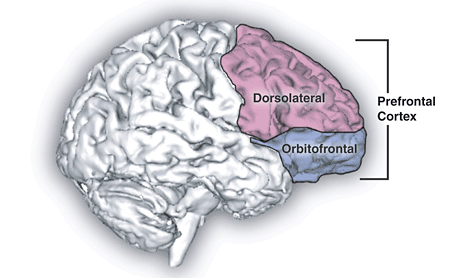
The Universal Design for Learning framework contains three core principles based on different brain networks. When we plan a lesson, we must design for the affective, recognition, and strategic networks of the brain.
Principle 1: Providing Multiple Means of Engagement
The first Universal Design for Learning principle addresses the affective brain networks representing the why of learning.
If a student does not care about the material, or feels anxious, or lacks stamina, their cognitive engine simply will not start. Engagement is not about entertaining students; it is about hooking their neurological drive.
- Providing multiple means of engagement involves recruiting student interest through relevant and authentic activities. (e.g., teaching statistics by analyzing the data of a local sports team).
- It also involves building instructional strategies to sustain student effort and persistence (e.g., providing clear rubrics, frequent formative feedback, and fostering collaboration).
Principle 2: Providing Multiple Means of Representation
The second Universal Design for Learning principle addresses the recognition brain networks representing the what of learning.
This is how the brain gathers facts, categorizes information, and understands what it is seeing or hearing. If you deliver information through only one channel (like an hour-long spoken lecture), you create an immediate bottleneck for any student with an auditory processing deficit.
- Providing multiple means of representation involves offering instructional content in more than one sensory format.
- Practical Application: Providing text, audio, and video versions of a single lesson simultaneously provides multiple means of representation. A student can listen to the audiobook while following along in the physical text, reinforcing the recognition networks through both eyes and ears.
Principle 3: Providing Multiple Means of Action and Expression
The third Universal Design for Learning principle addresses the strategic brain networks representing the how of learning.
This involves executive functioning, planning, and expressing ideas. Once the student has the knowledge, how do they show it to you? A written exam is highly efficient for the teacher, but it conflates a student's content knowledge with their test-taking stamina and reading speed.
- Providing multiple means of action and expression allows students alternative ways to demonstrate their acquired knowledge.
- Practical Application: Allowing a student to choose between writing an essay and recording a podcast demonstrates multiple means of action and expression. In both formats, the student must research, organize thoughts, and construct an argument. The standard is maintained, but the barrier of the expressive medium is removed.
Tying It All Together
As you step into your classroom, remember that you are not there to force square pegs into round holes.
- Use UDL to design a brilliantly flexible classroom from the very beginning, assuming that every brain in your room is wired differently.
- When UDL isn't quite enough to bridge the gap, apply accommodations to level the playing field without lowering the bar.
- And when a student's cognitive reality dictates a different destination entirely, collaborate with the IEP team to ethically and legally apply modifications.
By mastering these three concepts, you move beyond merely delivering content. You ensure that learning actually happens.