Organizing the Learning Environment
Not sure you’re ready?
Take the ~3-minute readiness diagnostic and see where you stand.
The physical dimensions and temporal rhythms of a classroom function as an invisible co-teacher. Before a single instruction is spoken, the spatial geometry of the room has already dictated how students will interact, where their attention will naturally drift, and what behaviors are implicitly permitted. For the special education teacher, environmental design is not merely an exercise in interior decoration; it is a foundational, evidence-based intervention. By engineering the physical space to eliminate unnecessary friction and structuring time to eliminate paralyzing uncertainty, we construct a learning environment that actively supports diverse cognitive, physical, and sensory profiles.
In special education, we cannot expect a student to self-regulate or focus deeply if the environment itself is chaotic, inaccessible, or overstimulating. We must systematically design the external environment to scaffold the student's internal cognitive and emotional state.
When designing a classroom layout, your primary goal is to ensure universal access while preserving your ability to manage the room dynamically. Think of the classroom floor plan as a circulatory system: if the arteries are blocked, the system fails.
To establish this functional foundation, high-traffic classroom areas must be free of obstacles to accommodate students with mobility and visual impairments. A clustered path to the pencil sharpener or the classroom library creates unnecessary physical friction and invites off-task behavior.
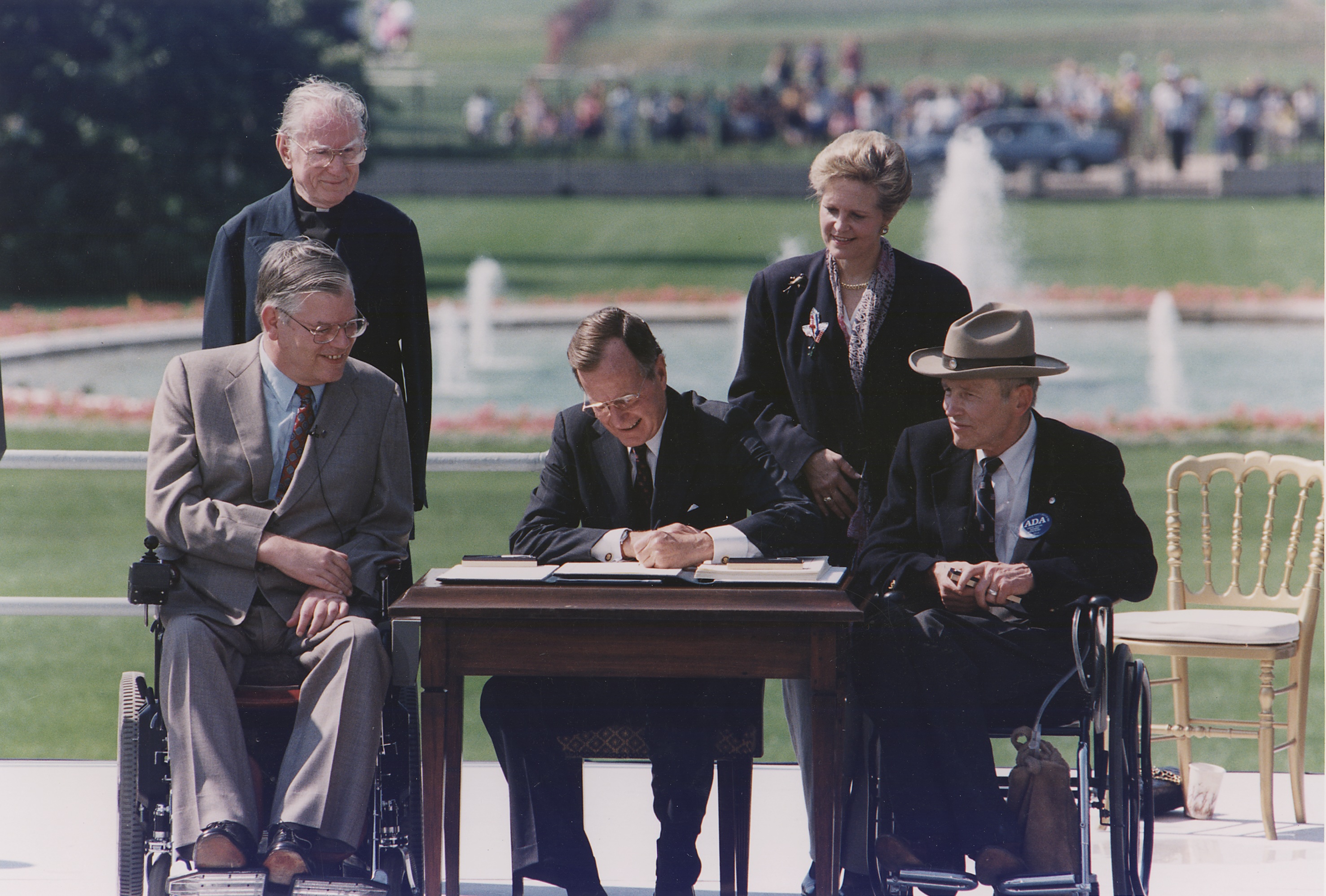
Crucial Compliance Fact: The Americans with Disabilities Act (ADA) requires classroom aisles to have a minimum clearance of 36 inches for wheelchair accessibility. This is not merely a guideline; it is a legal and functional baseline for an equitable environment.
To optimize the remaining instructional space, the primary teacher desk should be positioned out of the main instructional space to maximize student learning areas. A massive teacher desk in the center of the room creates a physical barricade. By moving it to the periphery, you reclaim square footage for student movement and collaboration.
Furthermore, you must design for independence. Storing frequently used instructional materials at the students' physical level promotes independent access. If a student must constantly ask you to reach their math manipulatives, you have inadvertently manufactured learned helplessness.
Finally, as the lead architect of this space, teachers must maintain a clear line of sight to all student areas to monitor behavior and ensure safety. If a bookshelf obscures your view of the reading corner, you cannot intervene when a conflict sparks or recognize when a student is quietly struggling.
Every classroom hums with a baseline level of sensory data—light, sound, and movement. For many students, particularly those with specific learning disabilities, ADHD, or autism, an unmanaged sensory environment is equivalent to staring directly into a strobe light while trying to solve a calculus problem. We must act as a filter.
Visual and Auditory Engineering
- Visual Distractions: The outside world is intrinsically more stimulating than a worksheet. Placing student desks facing away from windows and doors reduces external visual distractions. By simply rotating the geometry of the desks, you instantly reduce the cognitive load required for students to maintain focus.
- Auditory Friction: The sharp scrape of a chair against linoleum can derail a lesson, particularly for students with sensory processing challenges. A highly practical, low-tech intervention is placing tennis balls on chair legs, which reduces environmental auditory distractions for noise-sensitive students.
- Lighting Control: Fluorescent lights emit a low-frequency hum and a harsh glare that can be physically painful to some learners. Dimming classroom lighting can reduce sensory overload for students with autism spectrum disorder, creating a calmer baseline for the entire room.

Designing for Self-Regulation
Despite our best efforts to mitigate overstimulation, students will occasionally become overwhelmed. When this occurs, they require a space to decompress safely. Designated quiet areas provide a safe physical space for students to self-regulate sensory input. This should never be used as a punitive "time-out" zone; rather, it is a tool for self-advocacy and neurological recovery.
Human beings look to their physical environment for clues on how to behave. If you walk into a cathedral, you whisper; if you walk into a stadium, you shout. We can leverage this psychological principle by creating distinct physical classroom zones for specific activities, which clarifies behavioral expectations for each area. A clearly defined "Reading Rug" signals quiet focus, while a "Maker Station" signals hands-on collaboration.
Selecting the Right Seating Arrangement
The configuration of student desks directly dictates the flow of communication. You must align the spatial geometry with your instructional goal.
| Seating Arrangement | Purpose and Impact |
|---|---|
| Traditional Row Seating | Minimizes peer-to-peer interaction to focus student attention on independent work. Best used during standardized testing or highly focused, independent drill-and-practice sessions. |
| Clustered Desk Arrangements | Promote peer collaboration during small-group instructional activities. Best for project-based learning or cooperative tasks, though it requires stronger behavioral management. |
| U-Shaped Seating | Facilitates teacher-led discussions by allowing all students to see the speaker. This creates an amphitheater effect, maintaining open lines of sight to the teacher while allowing students to see one another's faces. |
The Physics of Proximity
Behavioral management does not always require a verbal reprimand; often, it just requires physical presence.
Proximity Control involves a teacher moving physically closer to a student to gently redirect off-task behavior.
Think of this like gravitational pull. Without breaking the flow of your lecture, you casually walk toward a distracted student. As your physical mass approaches, the student's attention naturally realigns to the instructional orbit, all without a single word of public correction.
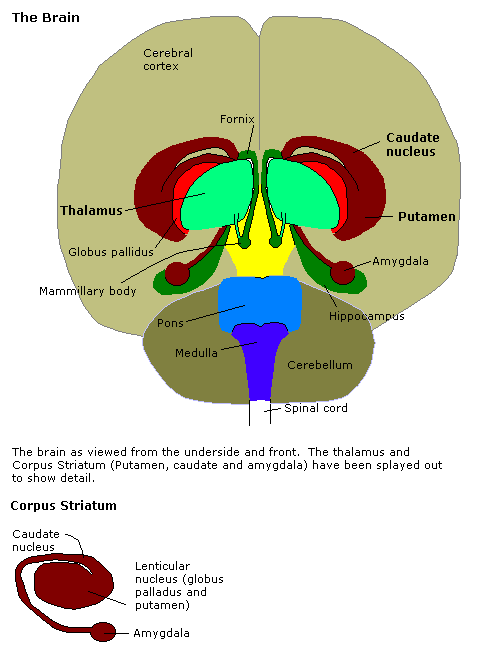
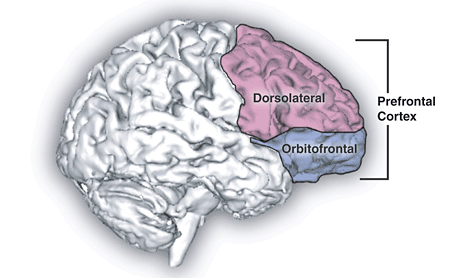
If the physical layout is the hardware of your classroom, the daily routines are the software. Students, particularly those with neurodivergent profiles or trauma histories, view the world as an inherently unpredictable and threatening place. Consistent classroom routines reduce student anxiety by creating a predictable learning environment. When a student knows exactly what is going to happen next, their amygdala settles, and their prefrontal cortex—the seat of learning and executive function—can activate.
Installing Routines: The Need for Automaticity
You cannot simply tell a student the rules and expect adherence. Explicitly teaching classroom routines requires the teacher to directly model the expected behavioral steps. If the routine is "turning in homework," you must physically demonstrate walking to the bin, placing the paper flat, and returning to the desk.
Crucially, students must practice classroom routines repeatedly until the execution of those procedures becomes automatic. Like a pianist practicing a scale, the goal is muscle memory. When routines are automatic, they require zero cognitive bandwidth, leaving 100% of the student's mental energy available for academic learning.

Visualizing Time and Sequence
Because verbal instructions are fleeting, we must anchor time in the visual domain.
- Visual Schedules: A visual schedule displays the daily sequence of classroom events using pictures or text. Because abstract concepts of time are difficult to grasp, visual schedules help students with autism spectrum disorder anticipate upcoming classroom activities, eliminating the panic of sudden change.
- First-Then Boards: This is an application of the Premack Principle. A First-Then board is a visual support strategy showing a less preferred activity followed immediately by a highly preferred activity (e.g., First Math Worksheet, Then iPad time). It provides a tangible light at the end of the tunnel for a resistant student.
- Visual Timers: "Five minutes left" is a meaningless phrase to a student lacking temporal awareness. Visual timers help students understand the duration of an activity by showing time passing concretely (e.g., a red disk slowly disappearing on a clock face).
The most dangerous moments in any classroom are the spaces between activities.
Transitions are defined as the periods of time when students move from one activity or location to another.
If routines are the stable platforms of your day, transitions are the bridges between them. When a bridge is poorly constructed, things fall through the cracks. Unstructured transition times increase the likelihood of disruptive student behavior. Chaos thrives in a vacuum of expectation.
To manage transitions flawlessly, you must implement a sequence of psychological and auditory scaffolds:
- The Cognitive Buffer: Never demand an abrupt halt to an engaging task. Providing a verbal warning before a transition gives students time to achieve closure on their current academic task. A simple "Two minutes remaining before we switch to reading" allows the brain to prepare for the shift.
- The Auditory Cue: Instead of yelling over the class to move, utilize sound conditioning. Auditory cues signal the beginning of a transition without requiring continuous teacher redirection. A soft chime or a specific song played over the speakers trains the students to automatically begin packing up their materials.
- The Emergency Brake: Occasionally, you need the entire room to freeze and look at you immediately. An attention signal is a brief auditory or visual cue used to immediately pause student activity across the entire classroom. Whether it is a rhythmic clap or a specific call-and-response ("Class, class!" / "Yes, yes!"), this signal must be practiced to absolute perfection so that it overrides all competing classroom noise.
By meticulously engineering the physical layout, anticipating sensory friction, and anchoring time into predictable, visible routines, you transition from being a reactive manager of behaviors to a proactive architect of learning.