Federal Safeguards of Stakeholders' Rights
Not sure you’re ready?
Take the ~3-minute readiness diagnostic and see where you stand.
When a state institution holds the power to label a child, determine their cognitive trajectory, and alter their educational environment, the inherent power imbalance between the school and the family is staggering. To correct this imbalance, the Individuals with Disabilities Education Act (IDEA) mandates procedural safeguards to protect the rights of students with disabilities and the parents of these students. These safeguards are not mere bureaucratic red tape; they are the architectural blueprints of equity. Procedural safeguards ensure that parents are equal partners in the special education decision-making process for a child, functioning as a system of checks and balances that prevents a school district from acting unilaterally.
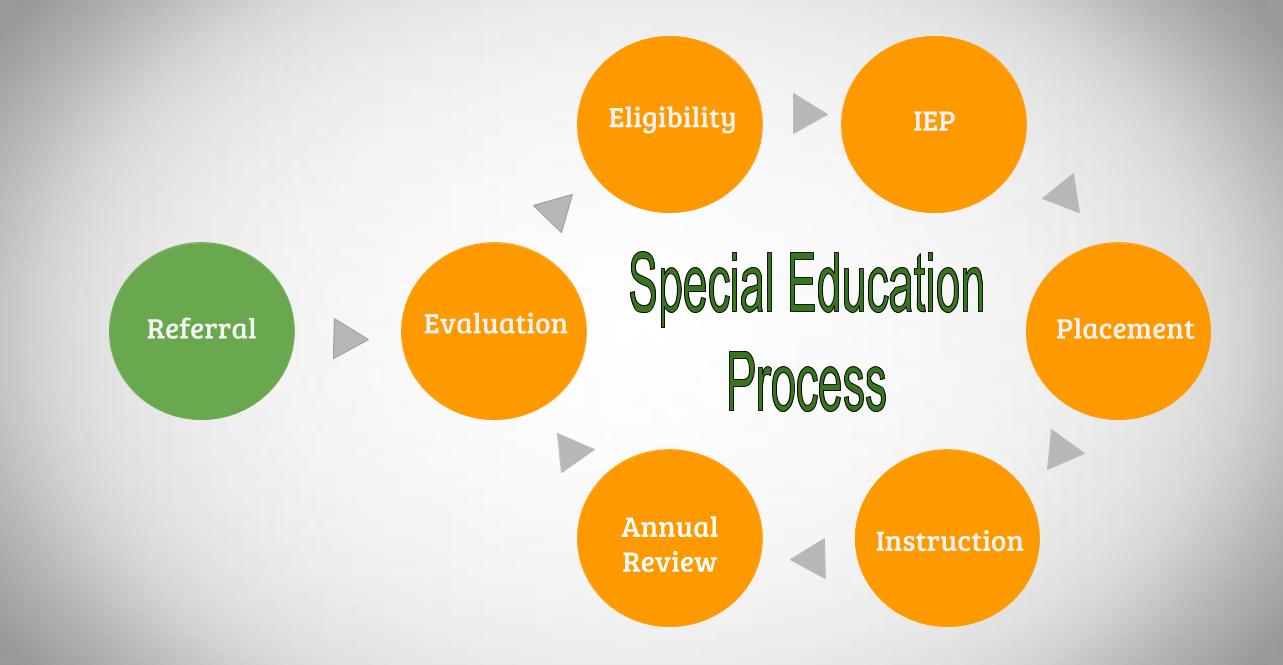
As a special education teacher, you are the daily steward of these rights. Understanding federal safeguards is not just about passing an exam—it is about knowing how to lawfully and ethically navigate the vital relationship between the school district, the family, and the child.
Information asymmetry—where the school knows the rules and the parents do not—destroys collaboration. To prevent this, IDEA requires absolute transparency regarding both the child's data and the rules of the game.

First, parents have the right to review all of the child's educational records under the Family Educational Rights and Privacy Act (FERPA) and IDEA. This means if a school relies on an email, a data sheet, or a behavioral log to make a decision, the parent has a fundamental right to see it.
Second, parents must be explicitly taught their rights. Schools must provide parents with a written copy of the procedural safeguards notice at least once every school year. However, providing it annually is not enough; there are high-stakes moments when parents are particularly vulnerable and must be reminded of their rights. Therefore, schools must provide the procedural safeguards notice upon:
- The initial referral for a special education evaluation.
- The first filing of a due process complaint in a school year.
- The first filing of a state complaint in a school year.
By placing this document in the parents' hands at these critical junctures, the law ensures they have the navigational chart exactly when the waters get rough.
Imagine you are driving a car, and your passenger suddenly grabs the steering wheel to change lanes. You would be startled and defensive. In special education, the school district cannot simply grab the wheel. They must use their turn signal, explain why they want to change lanes, and wait. That turn signal is Prior Written Notice (PWN).
Prior Written Notice (PWN) is a formal communication from the school detailing proposed or refused actions regarding a student's special education program.
You cannot make moves in secret. Specifically, schools must issue a Prior Written Notice before proposing to initiate or change the identification of a child, and similarly, before proposing to initiate or change the evaluation or educational placement of a child.
Equally vital is the school's obligation when they say "no." If a parent requests an evaluation for dyslexia and the school disagrees, they cannot simply say no in a hallway conversation. Schools must issue a Prior Written Notice before refusing to initiate or change the identification of a child, as well as before refusing to initiate or change the evaluation or educational placement of a child.
To ensure this notice is a bridge rather than a barrier, IDEA demands accessibility. A Prior Written Notice must be written in a language understandable to the general public—meaning no indecipherable educational jargon. Furthermore, a Prior Written Notice must be provided in the native language of the parent or other mode of communication used by the parent (such as Braille or sign language). If the parents cannot understand the PWN, the school has legally failed to provide it.
While PWN is the school announcing its intentions, informed consent is the parent explicitly granting permission.
Informed consent requires that parents are fully informed of all information relevant to the specific special education activity for which consent is sought. Handing a parent a form and saying, "Sign here," is not informed consent. You must explain the what, the how, and the why.
When is Consent Required?
Consent is mandatory at the gateways of special education. Schools must obtain informed written consent from a parent before:
- Conducting an initial evaluation of a child.
- The initial provision of special education and related services.
- Conducting a reevaluation of a child.
The Nuances of Consent
Understanding the boundaries of consent is critical for avoiding litigation and maintaining trust:
- Separation of Actions: Parental consent for an initial evaluation does not constitute consent for the initial provision of special education services. Think of it like a medical test: agreeing to a blood draw does not mean you agree to take the medication the doctor prescribes based on the results. They are two distinct, sequential gateways.
- Voluntary Nature: A parent's consent for special education services is voluntary. They can say yes, and they can say no.
- Revocability: A parent may revoke consent for special education services in writing at any time. If a family decides they no longer want their child to have an IEP, they hold the power to end it.
- Non-Retroactive Application: If a parent pulls their child out of special education, what happens to the past? Revoking parental consent for special education services is not retroactive. Crucially, revoking parental consent does not negate actions that occurred while the consent was active. The school is not required to amend the child's past educational records to erase the fact that they previously received services.
What happens when the school evaluates a child, and the parents believe the school got it completely wrong? The law anticipates this friction. Parents have the right to obtain an Independent Educational Evaluation (IEE) if the parents disagree with the evaluation obtained by the school district.
This introduces a brilliant legal mechanic regarding public funds. If a parent requests an Independent Educational Evaluation (IEE) at public expense, the school district has only two choices. The school district must either provide the IEE (meaning they pay for an outside psychologist or specialist to evaluate the child) OR file a due process complaint to defend their own evaluation.
They cannot simply ignore the request. A school district filing a due process complaint after an Independent Educational Evaluation request must prove to a hearing officer that the district's evaluation is appropriate. If the hearing officer agrees with the school, the parents can still get an IEE, but they must pay for it themselves.
When the school and the parents reach a stalemate, IDEA provides escalating avenues for resolution, keeping the focus on the child's needs.
1. State Complaints
State complaint procedures allow any individual or organization to file a written complaint alleging that a public educational agency has violated a requirement of IDEA. You do not even have to be the child's parent; an advocacy group can file a state complaint if they spot systemic non-compliance. Once filed, state educational agencies must resolve a state complaint within 60 days of the complaint being filed.
2. Mediation
Before heading to a courtroom setting, parties can attempt mediation. Mediation is a voluntary dispute resolution process where an impartial third party helps parents and the school district reach an agreement. To ensure this is accessible to families, the school district must bear the entire cost of the mediation process in special education disputes.
3. Due Process
When mediation fails or is bypassed, we enter the courtroom of special education. A due process complaint is a formal written request to resolve a dispute involving a student's special education identification, evaluation, or placement.
Because formal hearings are costly and adversarial, IDEA forces the parties to the table one last time. A resolution meeting must occur within 15 days of a school district receiving notice of a parent's due process complaint. The purpose of a resolution meeting is to give the school district an opportunity to resolve the due process complaint before a formal hearing begins.
If the resolution meeting fails, the dispute proceeds to a due process hearing.
A due process hearing is a formal legal proceeding overseen by an impartial hearing officer.
At this hearing, the stakes are high, and the rights of the parents mirror those found in formal civil litigation. During a due process hearing, parents have the right to:
- Be accompanied and advised by counsel (special education attorneys) and individuals with special knowledge.
- Present evidence.
- Compel the attendance of witnesses.
- Cross-examine witnesses.
The Anchor in the Storm: The Stay-Put Provision
During a due process dispute, a terrifying question arises for the family: Where does the child go to school while we fight this out?
IDEA answers this with the stay-put provision. The stay-put provision ensures that a child remains in the child's current educational placement during the pendency of any due process proceedings. If the school wants to move a child to an alternative school and the parents file for due process, the child stays exactly where they are until the hearing officer rules.
There is only one exception: The stay-put provision can be overridden if the parent and the school district mutually agree to a different educational placement during proceedings.
Finally, procedural safeguards dictate who holds these profound legal rights when a parent is unavailable, or when the child becomes an adult.
Surrogate Parents
When a child is a ward of the state or an unaccompanied homeless youth, who advocates for them? In these cases, surrogate parents are appointed to represent the educational interests of a child with a disability when no parent can be identified or located.
To ensure this surrogate acts purely in the child's best interest, conflict-of-interest laws are strict. A surrogate parent cannot be an employee of the state educational agency, the local educational agency, or any other agency involved in the education or care of the child. A teacher, principal, or state social worker cannot serve as the surrogate. The surrogate must be an independent advocate.
The Age of Majority
Special education rights do not permanently reside with the parents. Under IDEA, educational rights transfer from the parents to the student when the student reaches the age of majority in the student's state (usually age 18). At this moment, the student becomes the sole legal decision-maker for their IEP, consenting to their own evaluations and placements.
Because this is a massive shift in legal authority, schools must notify both the student and the parents of the impending transfer of educational rights at least one year before the student reaches the age of majority.
As you prepare for your exam and your future classroom, remember that procedural safeguards are not weapons designed to punish educators; they are the scaffolding of trust.
| Mechanism | Purpose | Your Daily Reality |
|---|---|---|
| PWN | School communicates intent to propose or refuse an action. | You draft this before changing an IEP or denying a parent's request for a new evaluation. |
| Consent | Parent grants permission for eval or initial services. | You ensure parents understand what they are signing before assessing a student. |
| Stay-Put | Freezes the student's placement during a formal dispute. | The student remains in your classroom while the lawyers hash out the disagreement. |
When you issue a Prior Written Notice in understandable language, when you secure truly informed consent, and when you recognize a parent's right to an IEE or due process, you are upholding the foundational promise of IDEA. You are ensuring that in the vast, complex machinery of the education system, the family always has a voice, a vote, and a path forward.