Defining and Using Various Assessments
Not sure you’re ready?
Take the ~3-minute readiness diagnostic and see where you stand.
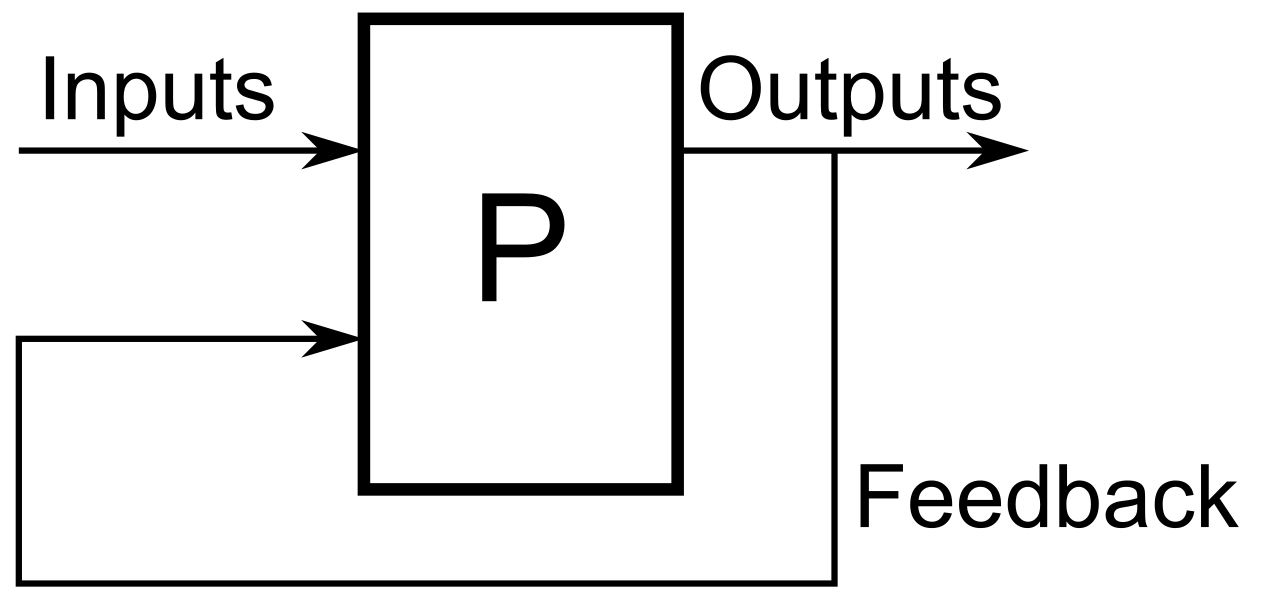
Imagine attempting to pilot an aircraft through heavy fog with only a final destination in mind, but no instruments to read your current altitude or heading. You would only know if you succeeded when you either arrived safely or crashed. In the special education classroom, instruction without continuous, varied measurement is exactly like flying blind. We do not assess students simply to generate a grade or satisfy a bureaucratic requirement; we assess them to locate exactly where they are in their cognitive development and to determine precisely what micro-adjustments are necessary to move them forward. Assessment is the feedback loop that makes teaching an empirical science rather than a series of hopeful guesses.
For the special education teacher managing mild to moderate disabilities, mastering the taxonomy of assessment—knowing exactly when to use a standardized metric versus an observational checklist—is the most critical mechanism for fulfilling the promises made in an Individualized Education Program (IEP).
A common source of confusion for aspiring special educators is the terminology surrounding assessments. It is crucial to understand that we classify assessments along two completely different axes:
- The Standardization Axis: How the test is built and administered (Formal vs. Informal).
- The Chronological Axis: When the test is given and why we are using the data (Formative vs. Summative).
Let us dissect these axes meticulously, because on your exam—and in your IEP meetings—using these terms with clinical precision is paramount.
When we ask whether an assessment is formal or informal, we are asking a question about strictness, standardization, and the mathematical weight of the resulting data.
Formal Assessments
Formal assessments follow strict standardized procedures for administration. This means the script you read, the time limit you set, and even the environment you test in must remain perfectly consistent from one student to the next. Why? Because you cannot compare variables in science if the testing conditions fluctuate. Consequently, formal assessments follow strict standardized procedures for scoring. You cannot give a student partial credit because you know "they tried hard" or "they usually know this."

Because of this rigidity, formal assessments yield quantitative data for statistical comparison. We use these numbers to compare a student’s performance against a broader population or a rigid set of criteria.
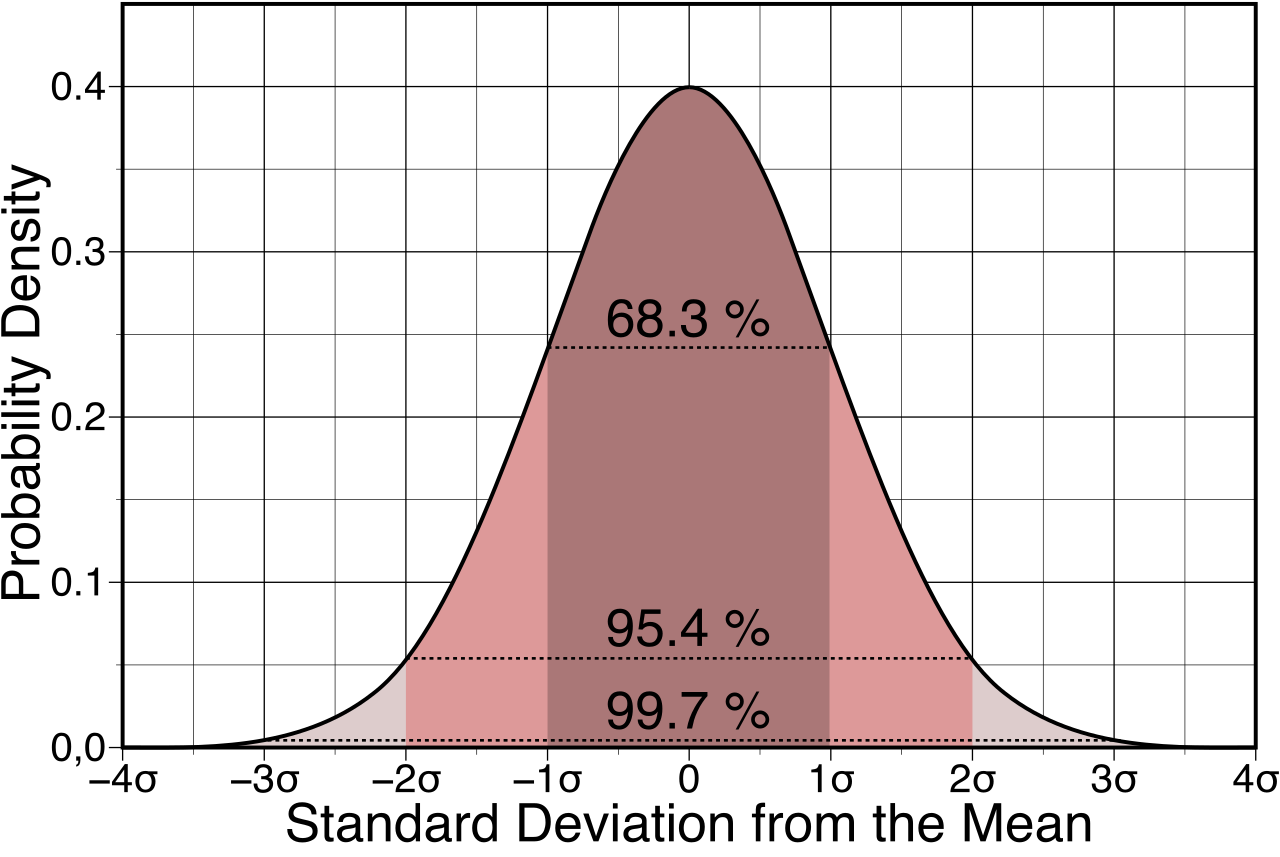
There are two primary categories here:
- Norm-referenced tests are a primary category of formal assessment. These compare a student's performance against a "norm" group of peers. When you look at an evaluation and see a student is in the "15th percentile," you are looking at a norm-referenced metric.
- Criterion-referenced tests are categorized as formal assessments. These measure a student's performance against a fixed set of predetermined criteria or learning standards, regardless of how other students perform.
Crucial Example: The Woodcock-Johnson Tests of Achievement is a formal assessment. It is heavily relied upon in special education to establish baseline data for initial IEP evaluations or triennial re-evaluations. You must administer it exactly as the manual dictates.
Informal Assessments
Conversely, informal assessments are non-standardized methods of evaluating student performance. They strip away the rigid laboratory conditions and look at the student in the wild. Informal assessments provide flexible data about student learning in natural classroom settings.
Because there is no rigorous scoring manual dictating percentiles, informal assessments rely heavily on teacher judgment for interpretation. You are the analytical instrument here. You are observing a student's behavior, work ethic, and real-time processing to make clinical judgments about their mastery.
Common tools in this category include:
- Teacher-made checklists are a form of informal assessment. If you are tracking whether a student remembers to capitalize the beginning of their sentences across a week of journal entries, a simple checklist provides immediate, usable data.
- Student portfolios are classified as informal assessments. Collecting a student’s writing over a semester to qualitatively analyze their expanding vocabulary relies entirely on natural classroom products and teacher evaluation.
- Running records used during reading instruction are informal assessments. When you sit next to a student, listen to them read aloud, and mark their specific phonetic miscues (e.g., substituting b for d), you are capturing incredibly rich, flexible data without relying on a standardized testing manual.
| Feature | Formal Assessments | Informal Assessments |
|---|---|---|
| Administration | Strict, standardized procedures | Non-standardized, adaptable |
| Data Yield | Quantitative, statistical comparison | Qualitative, flexible, descriptive |
| Setting | Often isolated, structured environment | Natural classroom settings |
| Interpretation | Standardized scoring rubrics | Relies heavily on teacher judgment |
| Examples | Woodcock-Johnson, Criterion/Norm tests | Portfolios, Checklists, Running records |
If formal and informal describe the nature of the tool, formative and summative describe the timing and intent of the tool.
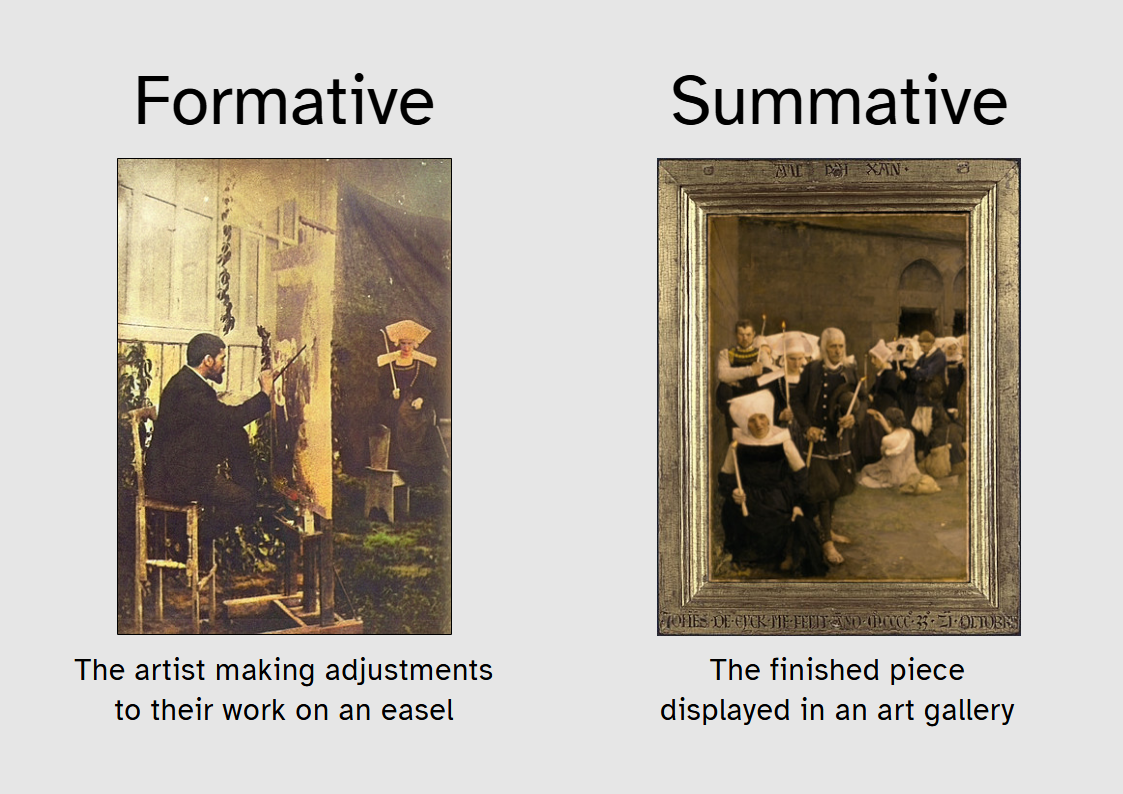
Formative Assessments: The Steering Wheel
Formative assessments are ongoing evaluations conducted during the instructional process. Think of the root word: form. You are actively forming the student's understanding.
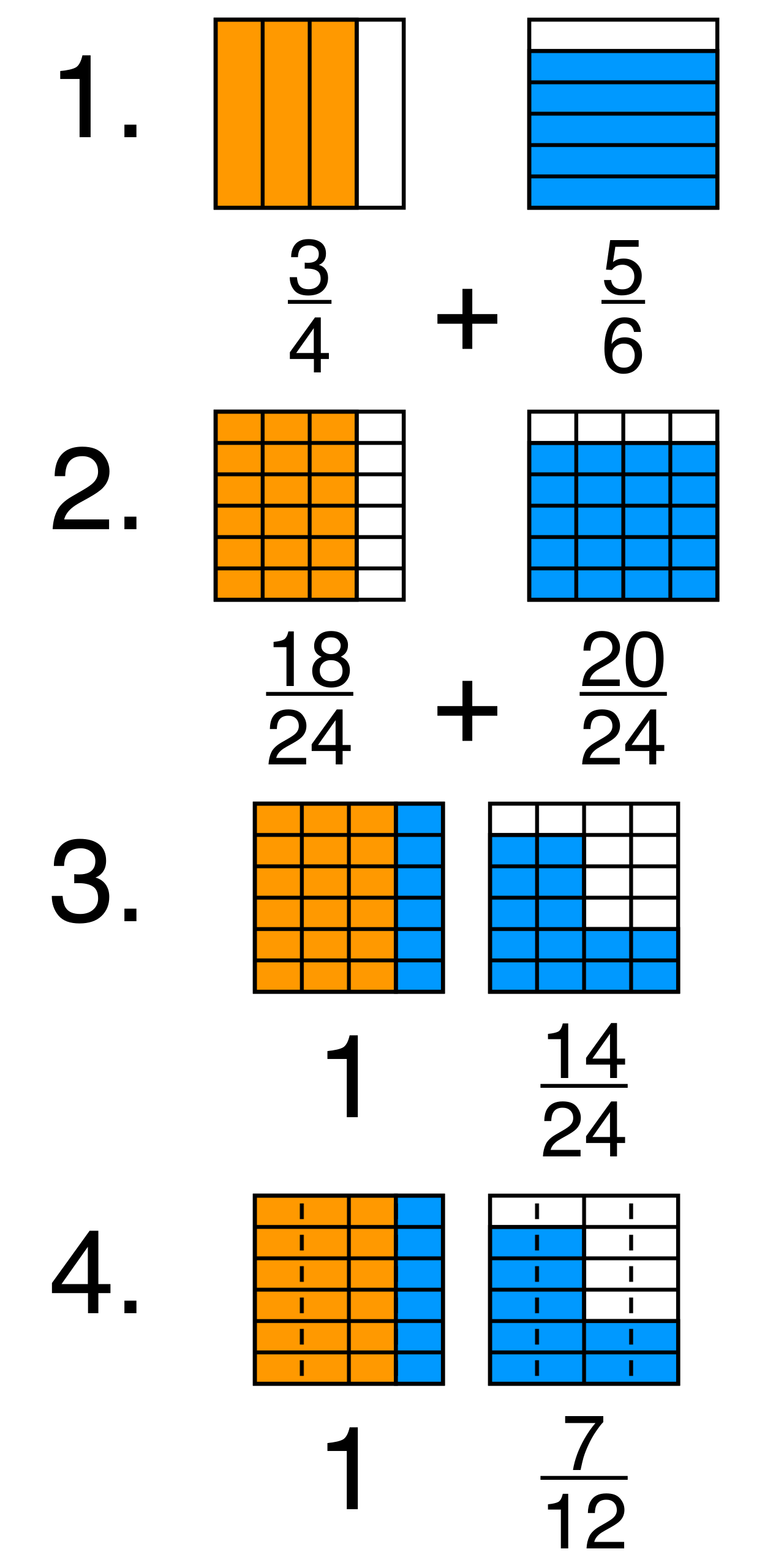
The essential utility here is responsiveness. Teachers use formative assessments to immediately adjust their teaching strategies. If you introduce the concept of adding fractions with unlike denominators, and a quick formative check reveals that 80% of your resource room students are totally lost, you do not move on to the next lesson. You stop, pivot, and reteach using a different modality.
Because they happen in real-time, formative assessments provide continuous feedback to both educators and students. The student learns what they are missing, and you learn where your instruction failed to connect.
Practical Applications:
- Exit tickets are classified as formative assessments. Handing a student a slip of paper with two math problems to solve before they leave the room tells you exactly where to start teaching tomorrow.
- Classroom questioning strategies serve as formative assessments. When you pause a lecture to ask targeted, open-ended questions and observe who can answer and who avoids eye contact, you are formatively assessing your room.
Summative Assessments: The Finish Line
In contrast, summative assessments evaluate student learning at the conclusion of an instructional period. Think of the root word: sum. It is the summary of everything that has occurred.
Summative assessments measure student achievement against a specific standard or benchmark. Because they occur at the end of learning (a unit, a semester, a year), it is generally too late to alter your teaching strategies for that specific material. Therefore, summative assessments are typically high-stakes evaluations used for grading or accountability.
Practical Applications:
- End-of-unit exams are examples of summative assessments. They summarize the student's mastery of the specific chapter or unit.
- Annual state standardized tests are classified as summative assessments. These provide data to the state and district regarding whether the student (and the school) met yearly benchmarks.
For the special educator, bridging the gap between grand summative goals and daily formative instruction is the core of the profession. How do we know if a mild-to-moderate intervention is actually working before the end-of-year summative test arrives? We use CBM.
Curriculum-Based Measurement is an objective method of monitoring student progress in basic academic skills. It is the perfect marriage of formal precision and everyday classroom relevance.
The Mechanics of CBM
Unlike an annual standardized test that takes four hours, Curriculum-Based Measurement utilizes brief timed probes to evaluate academic performance. These probes often take anywhere from one to three minutes to administer. Because they are brief, Curriculum-Based Measurement probes are administered at frequent regular intervals—often weekly or bi-weekly.
Crucially, as the name implies, Curriculum-Based Measurement tests material directly drawn from the student's daily curriculum. You are not testing them on abstract, generalized knowledge; you are testing them on the exact sight words, math facts, or reading passages you are teaching in your classroom that week.
Because of its high frequency and immediate relevance to instruction, Curriculum-Based Measurement can be used as a formative assessment to guide daily instructional decisions. It gives you a highly sensitive dashboard to monitor cognitive growth.
Common CBM Tools in Special Education:
- Oral reading fluency probes are a widely used type of Curriculum-Based Measurement. A student reads a passage for exactly one minute, and the teacher calculates words read correctly per minute (WCPM).
- Dynamic Indicators of Basic Early Literacy Skills (DIBELS) is a common Curriculum-Based Measurement system. It provides a standardized battery of short (one-minute) fluency measures that track early literacy skills like phonemic awareness and alphabetic principle.
The Role of CBM in Broader Frameworks
If you have a student struggling in the general education setting, you do not immediately place them in special education. You implement tiered interventions. Curriculum-Based Measurement is a standard assessment tool used within the Response to Intervention (RtI) framework.
When a student receives a targeted Tier 2 or Tier 3 reading intervention, Curriculum-Based Measurement is used to determine a student's responsiveness to specific instructional interventions. If the CBM data goes up, the intervention is working. If the data remains flat, the intervention is failing, and you possess the empirical evidence required to change course.
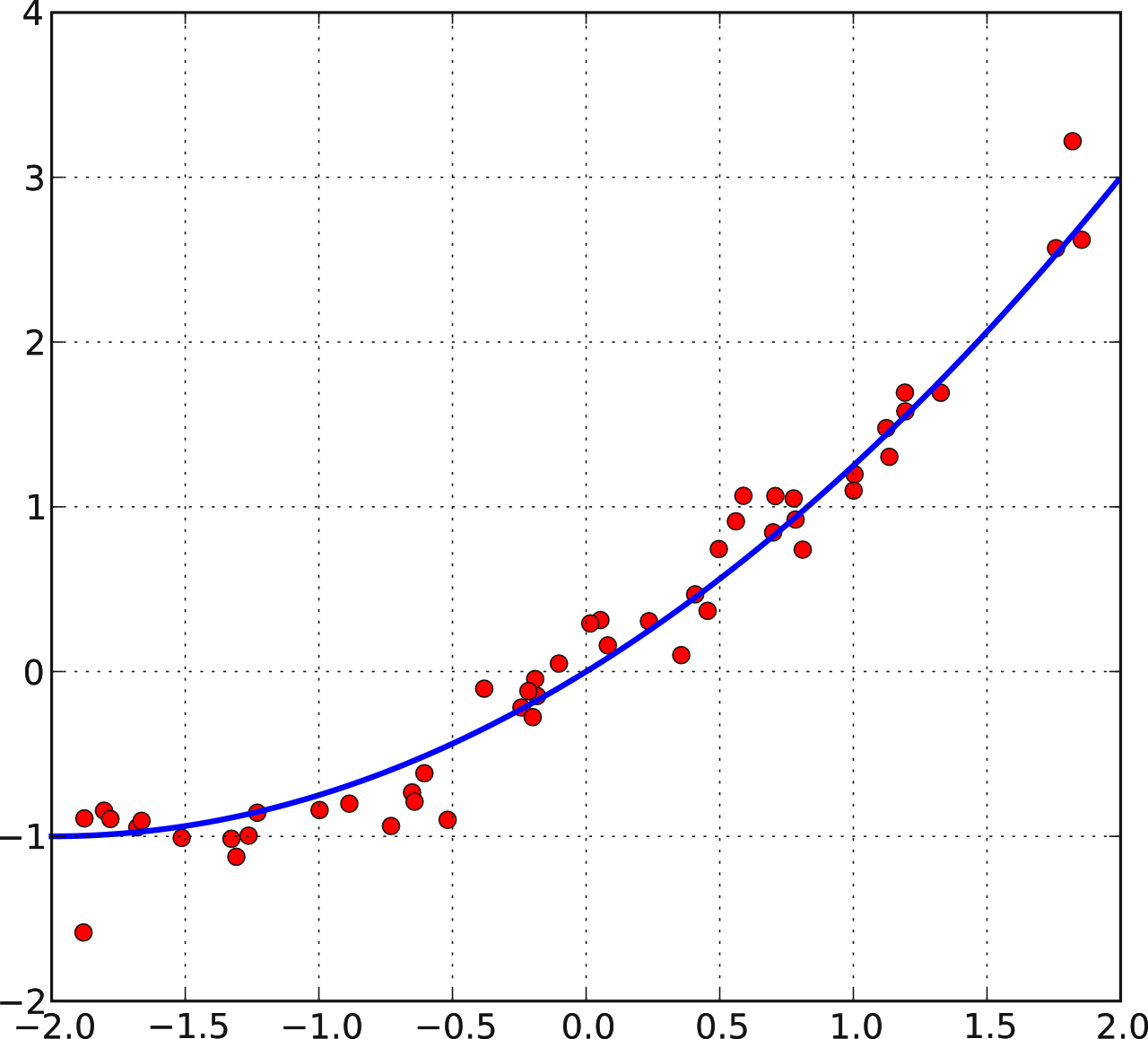
Collecting CBM data is only half the science; visualizing and acting upon it is the other. Teachers graph Curriculum-Based Measurement data to visually track student progress over time. A table of numbers is difficult to decipher at a glance; a line graph tells an immediate story.
When you set up a CBM graph for a student’s IEP goal, you establish two critical lines:
- The Aimline: An aimline on a Curriculum-Based Measurement graph represents the expected rate of student learning. You draw this line from the student's baseline (where they started) to their target goal (where they need to be by the end of the IEP year). It is the path of ideal trajectory.
- The Trendline: A trendline on a Curriculum-Based Measurement graph represents the student's actual rate of progress. This is a line of best fit drawn through the actual data points you collect every week.
The Golden Rule of Intervention Adjustment
Here is where the art of teaching meets the science of data. As you chart the student's weekly probes, you compare the trendline to the aimline.
There is a standardized, statistical trigger for instructional change that you must commit to memory: A teacher must adjust instruction if a student's Curriculum-Based Measurement trendline falls below the aimline for three to four consecutive data points.
Why three to four? Because human beings are not machines. A student might have one bad week because they did not sleep well. They might have two bad weeks because of an illness. But if a student scores below the expected trajectory for three to four consecutive assessments, it is no longer an anomaly—it is a trend. The intervention is not working. You must alter the instructional environment, increase the frequency of the intervention, reduce the group size, or try a different pedagogical approach entirely.
By mastering these instruments—formal, informal, formative, summative, and the precise calibrations of CBM—you transform from a mere purveyor of information into a clinical architect of learning. You no longer hope a student is progressing; you know exactly how fast they are moving, and exactly when to turn the wheel.