Basic Elements of Effective Lesson Plans
Not sure you’re ready?
Take the ~3-minute readiness diagnostic and see where you stand.
Designing instruction for students with mild to moderate disabilities is an exercise in precise cognitive engineering. Unlike a neurotypical learner who might bridge logical gaps intuitively, a student with a specific learning disability or cognitive delay requires a load-bearing instructional architecture. Explicit instruction is a highly structured teacher-directed approach essential for students with learning disabilities. It leaves nothing to chance, ensuring that working memory is never overloaded and that the path from ignorance to mastery is illuminated at every step. Consequently, lesson plans must integrate evidence-based practices that have been proven effective through rigorous scientific research, rather than relying on educational fads or unstructured discovery learning.
Before a single word is taught, the destination must be unequivocally clear. If you do not know exactly what a successful outcome looks like, neither will your students.
An effective lesson plan hinges on rigorously designed objectives. Vague goals like "the student will understand fractions" are functionally useless in special education. Instead, lesson objectives must clearly state the expected observable student behavior—something you can see, count, or measure.
To make this rigorous, we build objectives with three non-negotiable components:
| Component | Function | Real-World Example |
|---|---|---|
| Conditions | Lesson objectives must specify the conditions under which the student behavior will occur. | "Given a graphic organizer and a 4th-grade text..." |
| Behavior | The specific, observable action the student will take. | "...the student will write three supporting details..." |
| Criteria | Lesson objectives must include the criteria for acceptable performance. | "...with 100% accuracy across three consecutive trials." |
Because we are operating within special education, our blueprints have an added layer of legal and functional necessity: special education lesson plans must explicitly list the accommodations required by students' Individualized Education Programs (IEPs). If a student's IEP mandates extended time, text-to-speech software, or strategic seating, these are not "suggestions" to be added as an afterthought; they are structural requirements integrated directly into the day's plan.
Every successful lesson begins by warming up the cognitive engine.
For many students in your classroom, yesterday's lesson might feel like a distant memory. Therefore, daily review of prior learning is an essential component of effective lesson planning for students with cognitive delays. It reinforces neural pathways and provides a sturdy foundation for the day's new material.
Once prior learning is secured, we initiate the hook. An effective lesson plan for explicit instruction begins with an anticipatory set to activate prior knowledge. The educational theorist Madeline Hunter developed the instructional model containing elements such as anticipatory set, modeling, and guided practice. She understood that an anticipatory set focuses student attention before the main lesson begins. Think of it as priming a pump; you are showing the brain exactly which files to open before you start pouring in new data.
At the heart of the Madeline Hunter model is a sequence that transitions the cognitive load from the teacher to the student. The "I do, we do, you do" sequence is a common framework for explicit instruction.
The "I Do" Phase (Modeling)
The "I do" phase involves the teacher modeling the target skill through step-by-step demonstration. However, simply showing a student what to write is insufficient; you must show them how to think.
Crucial Strategy: Teachers must use think-alouds during the modeling phase to make internal cognitive processes visible to students.
If you are solving a math problem, do not just write the answer. Say aloud, "Hmm, I see a subtraction sign, but the bottom number is bigger than the top. What do I do? Oh, I need to borrow from the tens place." You are handing them the internal monologue they lack.
The "We Do" Phase (Guided Practice)
Next, you practice together. The "we do" phase consists of guided practice with significant teacher support. This is the crucible of learning. Students are attempting the skill, but you are hovering right there to catch them before they encode a mistake.
Teachers must provide immediate corrective feedback during guided practice. If a student mispronounces a digraph, you do not wait until Friday's quiz to correct it; you stop and fix it at that exact second.
When do we move to the next phase? This is where many novice teachers fail—they move on too quickly. Research recommends an 80 to 90 percent accuracy rate during guided practice before moving students to independent practice. If they are hitting 60%, they are practicing making mistakes. Keep them in the "We Do" phase until they hit that 80-90% threshold.
The "You Do" Phase (Independent Practice)
Finally, the training wheels come off. The "you do" phase involves independent practice without teacher assistance.
Warning: Independent practice should only occur after students achieve a high rate of success during guided practice. Independent practice is not for learning a new skill; it is for building fluency in a skill they have already grasped.
If you want a student to climb a wall, you have to build a staircase. Instruction for students with mild to moderate disabilities should progress from simple concepts to more complex concepts.
Logical sequencing requires breaking complex skills into smaller manageable steps. This process of breaking complex skills into smaller instructional steps is known as task analysis. If the goal is writing a paragraph, the task analysis might break it down into: brainstorming -> writing a topic sentence -> drafting three details -> writing a concluding sentence.
The Concrete-Representational-Abstract (CRA) Sequence
Nowhere is sequencing more visible than in mathematics. The Concrete-Representational-Abstract (CRA) sequence is an evidence-based logical progression for math instruction.
- Concrete: The concrete phase of math instruction involves using physical manipulatives to solve problems. (e.g., physically combining 3 blocks and 2 blocks).
- Representational: The representational phase of math instruction involves using drawings or pictures to solve problems. (e.g., drawing 3 tally marks and 2 tally marks).
- Abstract: The abstract phase of math instruction involves using numbers and symbols exclusively to solve problems. (e.g., writing the equation 3+2=5).
You cannot jump straight to abstract symbols and expect a student with a specific learning disability in math to intuitively grasp the magnitude of the numbers. The physical reality must map to the visual representation before it becomes a pure symbol.
A beautifully sequenced lesson will still fail if the delivery puts the room to sleep. Instructional pacing must be brisk to maintain student engagement.
Why brisk? Because dead air in a classroom is an invitation for challenging behavior. Brisk instructional pacing reduces off-task behavior in students with attention deficits. When the lesson moves quickly, there is simply no time to get distracted.
To maintain this brisk pace, effective lesson plans include frequent Opportunities to Respond (OTR). An Opportunity to Respond is a teacher prompt that requires a student to actively engage with the instructional material. This could be choral responding (the whole class answering at once), using individual whiteboards, or giving a thumbs-up/thumbs-down.
High rates of Opportunities to Respond are linked to increased academic achievement and decreased disruptive behavior. Instead of asking one student a question while 19 others zone out, you ask a question where all 20 students must hold up a whiteboard simultaneously.
Throughout the lesson, you are managing cognitive load using scaffolding, which provides temporary instructional support to help a student master a new skill. This might look like a sentence starter, a multiplication chart, or a guided graphic organizer.
However, a scaffold is a temporary structure. Teachers must gradually withdraw scaffolding as student competence increases. This gradual withdrawal of instructional support is known as fading. If you never fade the support, you haven't taught the student to do it; you've taught the student to rely on you to do it.
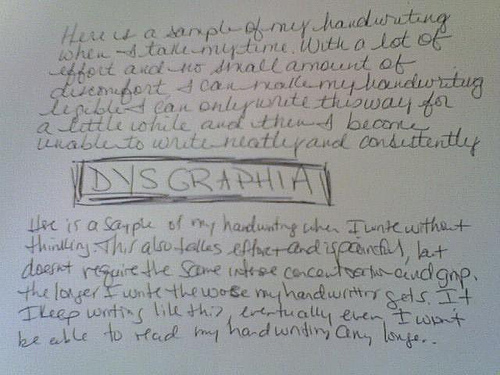
Furthermore, we must recognize that our learners process the world differently. Differentiated instruction requires planning multiple pathways for students to access the learning content. (For instance, providing an audiobook alongside a printed text). Conversely, differentiated instruction requires planning multiple pathways for students to demonstrate their acquired knowledge. If a student has severe dysgraphia, allow them to demonstrate mastery of a science concept through an oral presentation rather than a written essay.
How do you know if your beautiful lesson plan actually worked? You don't wait for the Friday test. Formative assessment must be embedded throughout the lesson plan to check for student understanding. Every whiteboard held up, every choral response, every quick turn-and-talk is a piece of formative data telling you to speed up, slow down, or reteach.
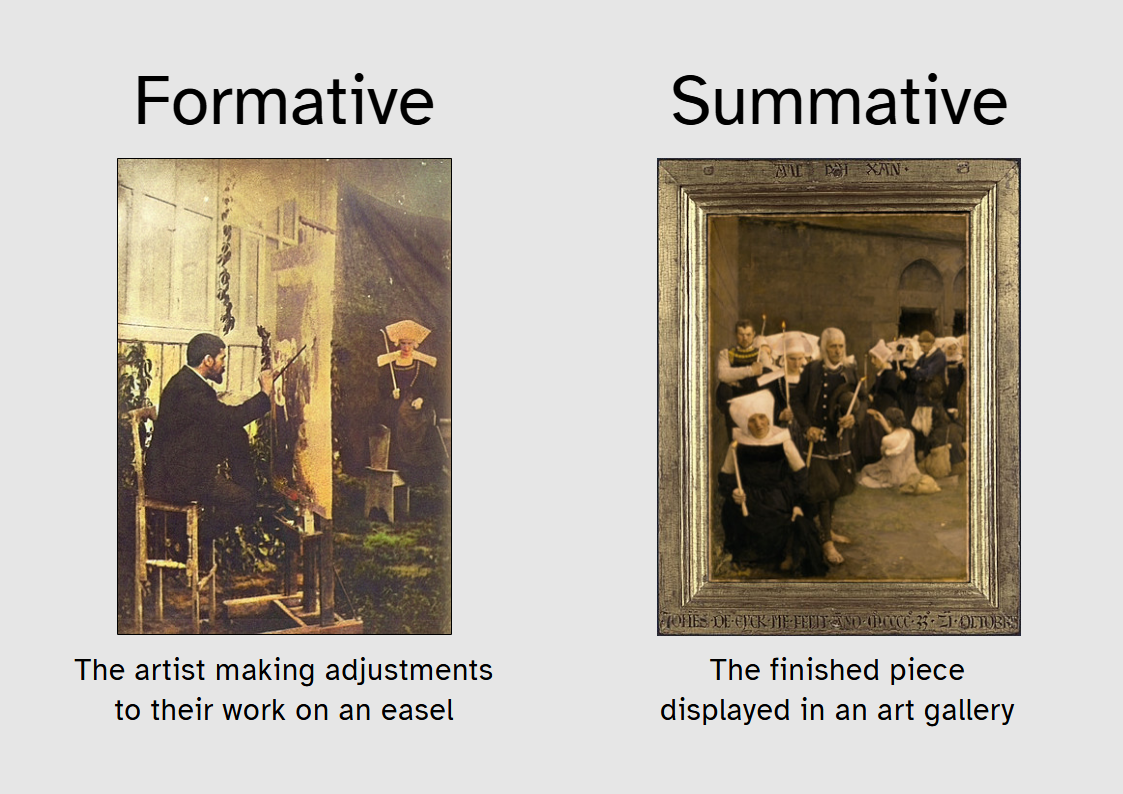
As the instructional block ends, do not let the bell dictate the finish. Lesson closure provides a structured review of the key concepts taught during the lesson. It is the cognitive bow tied around the day's learning, summarizing the "what" and the "why."
The Physics of Long-Term Memory
Teaching something once does not mean it is learned forever. To combat the forgetting curve, highly effective special education lesson plans utilize two specific practice techniques:
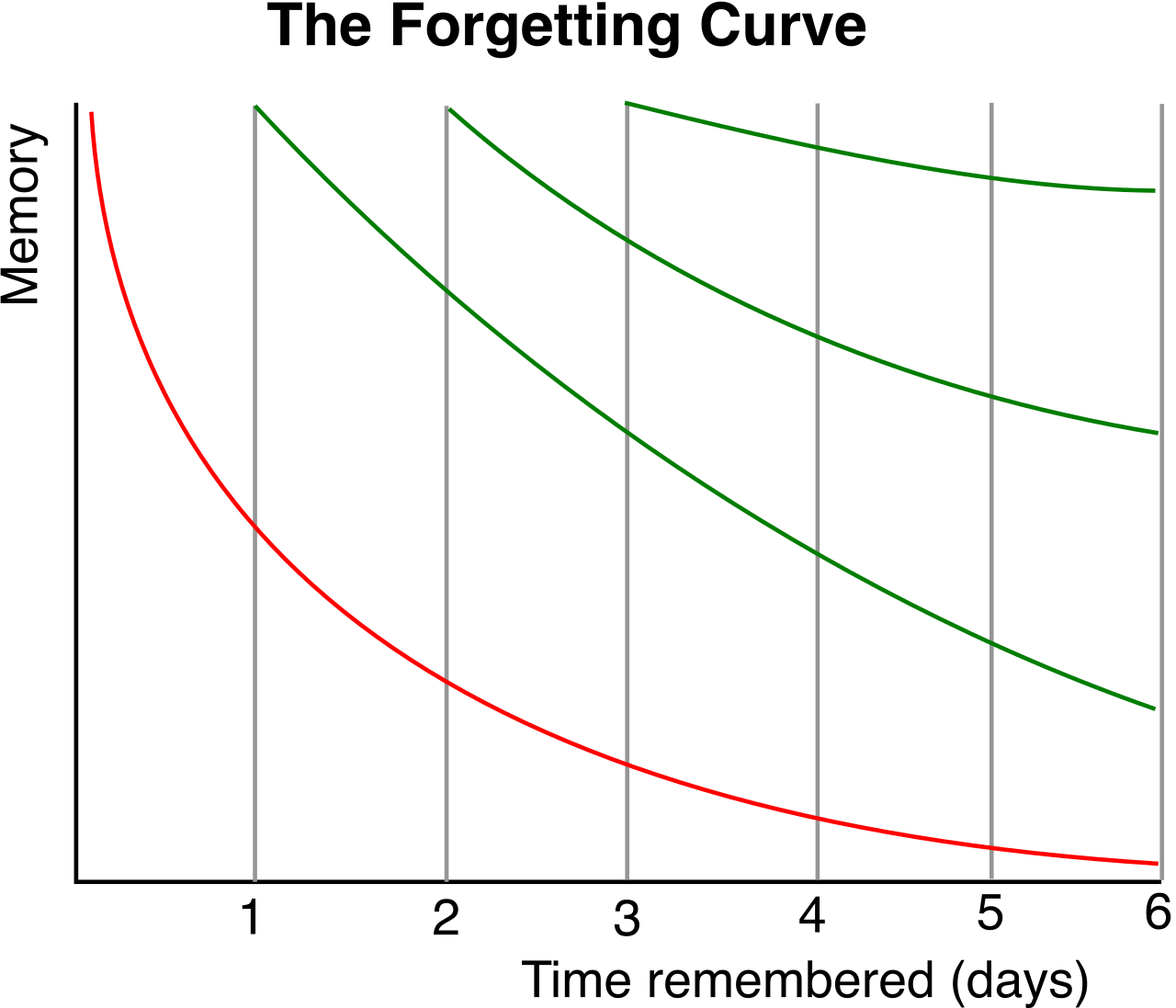
- Spaced Practice: Spaced practice involves reviewing material across multiple time periods to improve long-term retention. Instead of studying vocabulary for three hours on Monday, students study it for 20 minutes a day over nine days.
- Interleaved Practice: Interleaved practice involves mixing different types of problems within a single practice session. Instead of a worksheet with 20 addition problems followed by a worksheet of 20 subtraction problems, the worksheet scrambles addition, subtraction, and multiplication together.
Why interleave? Because the student has to actively decide which strategy to use for each problem. Interleaved practice improves problem-solving skills for students with learning disabilities more effectively than massed practice.
By treating a lesson plan not as a simple checklist, but as a dynamic, tightly engineered cognitive ecosystem, you ensure that students with mild to moderate disabilities don't just survive in your classroom—they achieve true, lasting mastery.