Measurable and Appropriately Challenging Objectives
Not sure you’re ready?
Take the ~3-minute readiness diagnostic and see where you stand.
In the physical sciences, an unmeasurable phenomenon is treated as a mere hypothesis; in special education, an unmeasurable learning objective is a disservice. When a student with a mild to moderate disability enters your classroom, their educational trajectory is no longer governed by vague hopes or institutional generalities. It is governed by precise, engineered expectations. Writing an Individualized Education Program (IEP) is an exercise in applied human development. You are defining the exact coordinates of where a student is today, deciding exactly where they need to be a year from now, and detailing the precise metrics that will prove they have arrived.
The fundamental requirement of special education is not merely to provide services, but to prove that those services are working. Under federal law, The Individuals with Disabilities Education Act (IDEA) requires Individualized Education Program goals to be measurable.
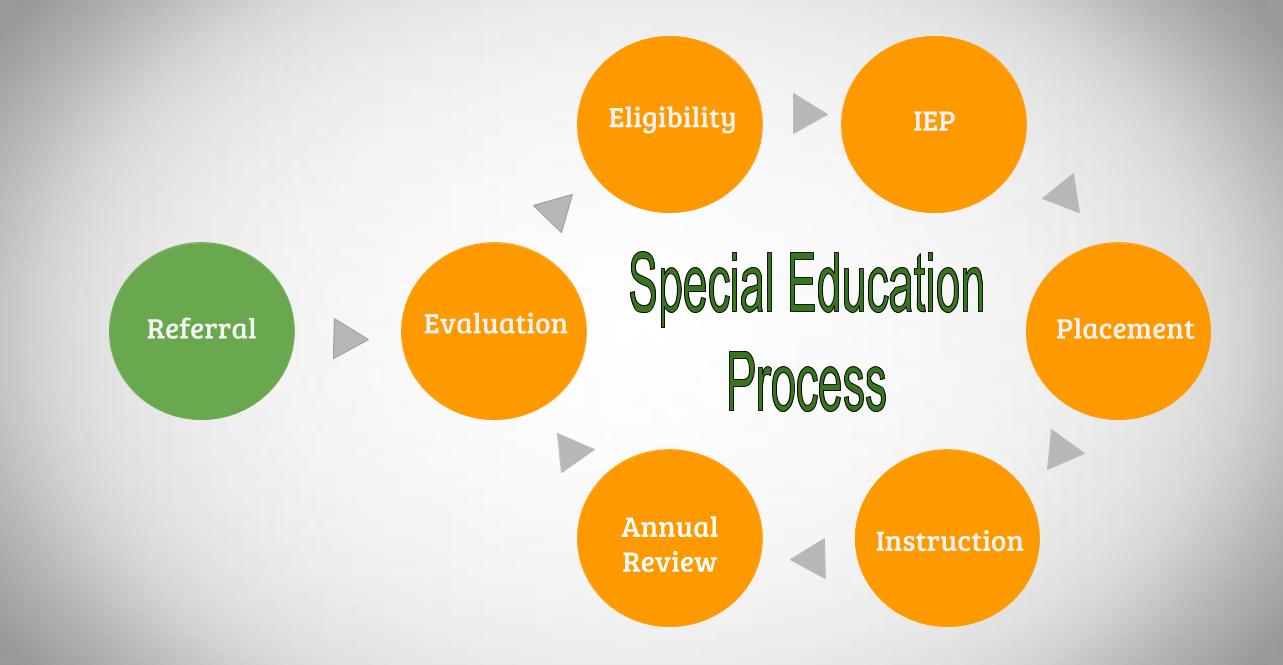
But what does "measurable" actually mean in a legal and practical sense? It means replacing guesswork with data. For decades, the standard for student progress was occasionally murky, sometimes settling for any forward momentum, no matter how slight. That changed profoundly with the United States Supreme Court's ruling in Endrew F. v. Douglas County School District.
The Endrew Standard The Supreme Court ruled that an Individualized Education Program must be calculated to enable a child to make progress appropriate in light of the child's circumstances.
Because of this ruling, you cannot set goals that aim for the bare minimum. Appropriately challenging objectives require performance expectations exceeding trivial or de minimis educational advancement. If a seventh-grade student with a specific learning disability in reading is reading at a third-grade level, aiming for three months of reading growth over an entire year is likely de minimis. It is not appropriately challenging in light of their circumstances.
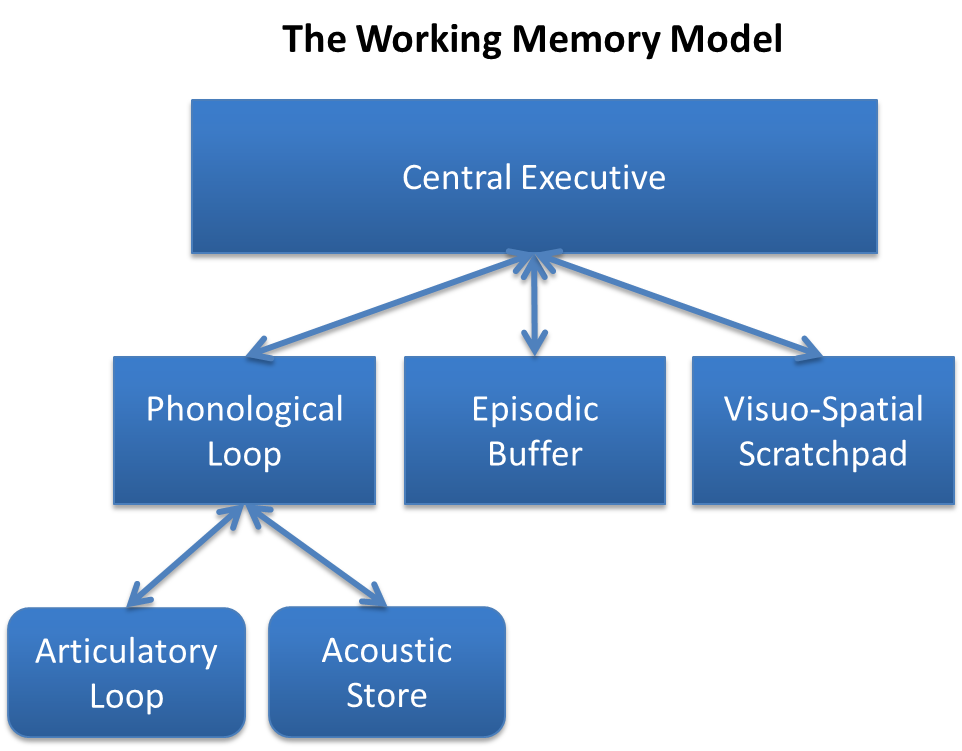
To determine what is appropriately challenging, you must first know exactly where the student stands. Present Levels of Academic Achievement and Functional Performance (PLAAFP) data establish the baseline for developing measurable objectives. This is your bedrock. You cannot build a bridge without surveying the ground first. Every measurable annual goal must correspond to a specific deficit identified in the student's Present Levels statement. If the PLAAFP does not document a deficit in working memory, you cannot legally write an IEP goal targeting working memory. The diagnosis creates the focus; the PLAAFP provides the baseline; the goal creates the destination.
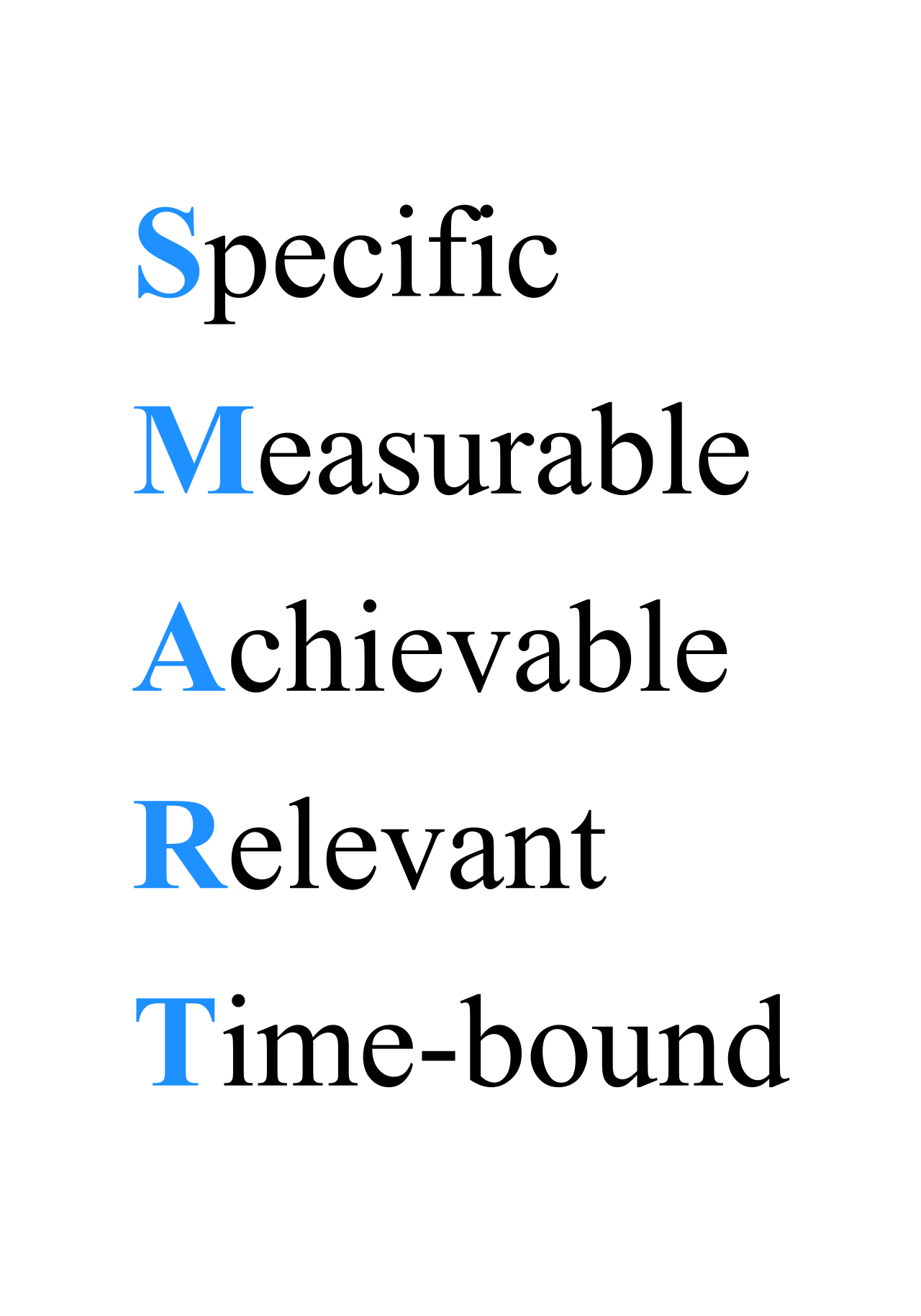
To guarantee that your objectives are legally compliant and practically useful, they must pass the SMART test. This is not just a corporate buzzword; it is a structural framework for instructional design.
| Component | Definition in Special Education |
|---|---|
| Specific | Specific learning objectives target a single clearly defined academic or behavioral skill. You cannot write a goal for "improving reading and math." You must isolate the variable (e.g., decoding consonant-vowel-consonant words). |
| Measurable | Measurable learning objectives describe educational outcomes capable of being directly observed and quantified. If another teacher walks into your room, they should be able to measure the student's performance using the same criteria you use. |
| Attainable | Attainable learning objectives represent skills a student can reasonably accomplish within one academic year. This prevents the frustration of setting a three-year goal in a one-year document. |
| Relevant | Relevant learning objectives directly address the educational needs resulting from a student's disability. If a student is on the autism spectrum and has documented deficits in peer-to-peer communication, the goals must directly target that resulting need. |
| Time-bound | Time-bound learning objectives specify the exact timeframe for achieving the targeted skill. Usually, this is by the end of the IEP year, but it forces a deadline for mastery. |
If the SMART framework is the blueprint, the actual sentence you write in the IEP is the machine itself. A well-engineered measurable objective consists of three interlocking gears: the Condition, the Behavior, and the Criterion.
1. The Condition
You must define the environment in which the student will perform the task. The condition component of a learning objective describes the context or materials provided to the student during assessment.
Will the student be given a graphic organizer? A calculator? A prompt from a teacher? It is critical to note that accommodations listed in the learning objective condition must match the accommodations the student uses during daily instruction. If you teach a student to solve algebra problems using a multiplication chart every single day, your objective's condition must state: "When provided with a multiplication chart..." You cannot assess a student under completely different conditions than those under which they were taught.
2. The Behavior
This is where many educators stumble. You cannot peer inside a student's brain to see a cognitive gear turn. The mind is a black box. You can only observe the output. Therefore, the behavior component of a learning objective must use action verbs indicating observable student actions.

There is an old rule in behavioral science known as the "Dead Man's Test." If a dead man can do it—like staying in a seat or being quiet—it is not a sufficiently active behavior. Furthermore, if you cannot capture it on a video camera, it is not observable.
- An observable objective avoids unmeasurable mental-state verbs like understand or learn. You cannot see a student "understand" fractions.
- Similarly, an observable objective avoids unmeasurable mental-state verbs like know or appreciate. You cannot calculate a student's "appreciation" of poetry.
- Instead, an observable objective uses explicit physical-action verbs like write or point. You can observe a student write an equation. You can observe a student point to a correct picture symbol.
3. The Criterion
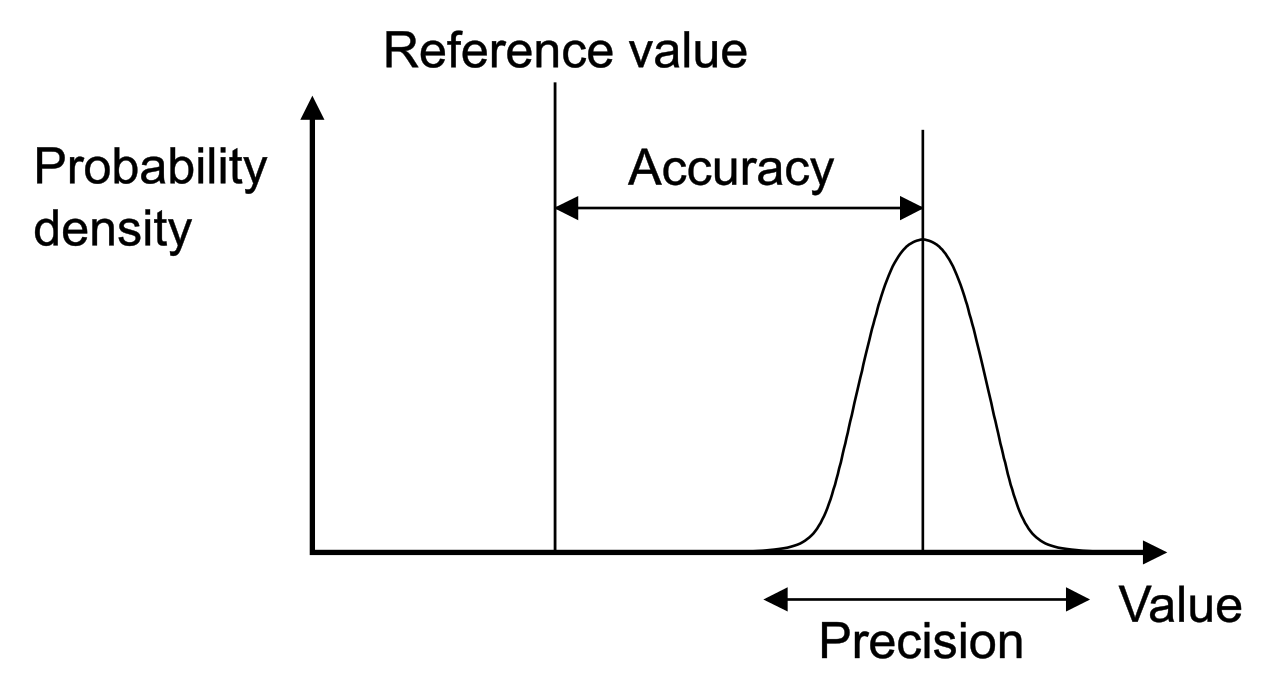
Once the student performs the observable behavior under the specified conditions, how do you know if they are actually successful? The criterion component of a learning objective defines the required level of performance for mastery.
Mastery is rarely determined by a single measurement. It is an amalgamation of accuracy, frequency, and consistency:
- Accuracy: The criterion component of a learning objective often includes a specific percentage of accuracy (e.g., with 80% accuracy on 8 out of 10 trials).
- Frequency: For behavioral or functional goals, accuracy might not make sense. Instead, the criterion component of a behavioral objective can specify a required frequency of occurrence (e.g., initiating a greeting 3 times per 30-minute recess period).
- Consistency: A student who correctly identifies a vowel sound once might have just gotten lucky. To prove learning has occurred, mastery criteria often specify the required number of consecutive successful data collection sessions (e.g., across 3 consecutive data collection sessions).
Putting it all together:
"When provided with a 3rd-grade level reading passage and a graphic organizer (Condition), Sarah will write a three-sentence paragraph summarizing the main idea (Behavior) with 80% accuracy according to a teacher-created rubric across 4 consecutive weekly probes (Criterion)."
Special education is not a separate place or a separate curriculum; it is a set of services designed to grant access to the general curriculum. To that end, modern best practices rely heavily on Standards-based Individualized Education Programs, which connect student learning goals directly to state grade-level content standards.
Why does this matter? Because aligning objectives with general education standards ensures access to the general curriculum for students with mild to moderate disabilities. If we do not anchor a student's goals to the general curriculum, we risk lowering the ceiling of their potential, placing them on an isolated track from which they can never return to their mainstream peers.
However, a student with a moderate intellectual disability might fundamentally lack the prerequisite skills to master a 7th-grade algebra standard as it is originally written. How do we resolve this tension? We adapt the measurement, not necessarily the standard's core intent. Individualized learning objectives adapt the mastery criteria of general education standards to match a student's current baseline performance.
If the state standard requires students to "solve multi-step word problems using linear equations," your adapted goal for a student with cognitive delays might provide heavy scaffolding in the Condition (e.g., "When provided with a color-coded visual formula and manipulatives...") and adjust the Criterion (e.g., "will solve one-step linear equations with 75% accuracy"). The student remains tethered to the general education standard, but the objective is appropriately challenging relative to their PLAAFP.

Sometimes, an annual goal represents too massive a leap to track effectively over twelve months without intermediate mile-markers. This is where short-term objectives come into play. Short-term objectives break down a broad annual goal into smaller discrete instructional steps.
If the annual goal is for a student to independently transition between classes within three minutes, the short-term objectives might look like this:
- Quarter 1: Transition with 2 verbal prompts.
- Quarter 2: Transition with 1 visual prompt.
- Quarter 3: Transition independently.
While short-term objectives are considered best practice for many students, it is vital for your exam and your professional knowledge to know when they are legally mandatory. The Individuals with Disabilities Education Act requires short-term objectives for students who take alternate assessments aligned to alternate achievement standards. Typically, these are students with the most significant cognitive disabilities. Because their annual progress might be subtle, breaking the goals into granular, observable, short-term benchmarks ensures that teachers can accurately monitor and report their learning trajectory throughout the year.
Writing measurable and appropriately challenging objectives transforms special education from a well-intentioned art into a rigorous science. By anchoring every objective in present level data, stripping away vague mental-state verbs, applying stringent mastery criteria, and aligning expectations to general education standards, you build an airtight roadmap for student success. You are no longer guessing if a student is learning. You, the student, and the parents will know they are learning, because you have meticulously engineered the proof.