Major Legislation
Not sure you’re ready?
Take the ~3-minute readiness diagnostic and see where you stand.
Every time you sit down at an IEP table, you are operating machinery built by decades of civil rights litigation. The individualized reading plans, the inclusive co-taught classrooms, the ramps at the school entrance—none of these simply evolved from pedagogical goodwill. They were engineered through hard-fought legal battles. To be a special educator is to be a steward of these civil rights. Understanding the distinction between a special education mandate and a civil rights accommodation is not just about passing an exam; it is the fundamental difference between knowing how to teach and knowing why your students have the right to be in your classroom in the first place.
To master this landscape, we must break it down into three distinct, overlapping legal frameworks: the historical precedents that pried the school doors open, the educational engine of IDEA, and the civil rights safety nets of Section 504 and the ADA.
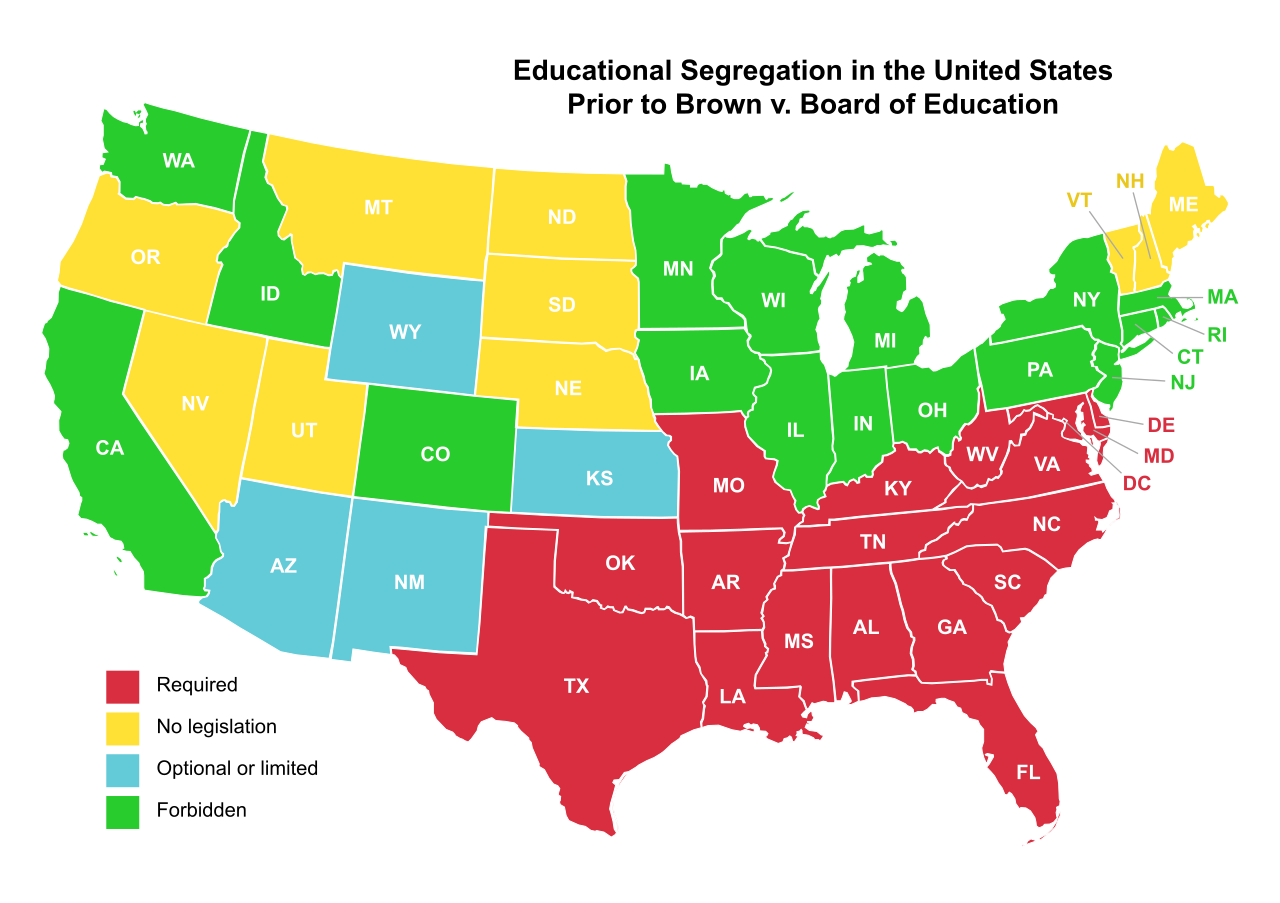
Before we can build an individualized education program, the state must first recognize that a student has a right to be educated at all. Historically, students with mild to moderate disabilities were routinely excluded from public education under the guise of being "unteachable" or "too expensive" to accommodate. The dismantling of this exclusion did not begin with special education law; it began with civil rights law.
Brown v. Board of Education (1954) established that segregation in public education violates the Equal Protection Clause of the 14th Amendment. While Brown was fought over racial segregation, its core premise—that separate is inherently unequal and that the state cannot deny education to a specific class of people—provided the legal foundation for the disability rights movement in education. Parents of children with disabilities looked at the Brown equal protection ruling and realized: If the state cannot exclude a child based on race, they cannot exclude a child based on neurology or physical ability.
This legal theory was put to the test in the early 1970s through two monumental cases:
- The Pennsylvania Association for Retarded Children (PARC) v. Commonwealth of Pennsylvania (1971): This ruling required the state to provide a free public education to children with intellectual disabilities, dismantling laws that allowed schools to turn away students deemed "unable to profit from public school attendance."
- Mills v. Board of Education of the District of Columbia (1972): The school district in Washington D.C. argued they simply did not have the money to educate students with disabilities. The court struck this down, establishing the absolute rule that financial burden is not a valid reason to deny students with disabilities a public education. If funds are tight, schools must cut back proportionally across all programs, not balance the budget on the backs of disabled students.
Why this matters to you: When a school administrator says, "We don't have the budget to hire a 1:1 paraprofessional for this student," your historical knowledge kicks in. Because of Mills, a school cannot use a lack of funds to deny a student what they need to access their education.
These court victories culminated in the passage of Public Law 94-142, the Education for All Handicapped Children Act, which was passed in 1975. This was the first federal law mandating a free appropriate public education for students with disabilities. In 1990, this monumental law was renamed the Individuals with Disabilities Education Act (IDEA).
If the historical court cases pried the school doors open, the Individuals with Disabilities Education Act (IDEA) is the engine that pulls the student through. Most recently reauthorized in 2004, the IDEA is not just a set of rules; it is a funding mechanism. The IDEA provides federal grant funding to states and school districts to support special education.
However, because the federal government is providing actual money, they place strict boundaries on who gets it. The Individuals with Disabilities Education Act (IDEA) focuses exclusively on providing specialized educational instruction to eligible students.
The Two-Pronged Eligibility Rule
To qualify for special education under IDEA, a student cannot just have a medical diagnosis. They must pass a two-pronged test:
- A student must have a disability that falls into one of thirteen specific federal categories (such as Specific Learning Disability, Autism, Other Health Impairment, etc.).
- The disability must adversely affect a student's educational performance to warrant special education services.
If a student has a mild physical disability that does not negatively impact their ability to learn and perform in school, they do not need specialized instruction under IDEA.
The Six Pillars of IDEA
When a student qualifies, IDEA protects them through several core mandates. Think of these as the structural beams of the law:
- Zero Reject: A core principle of IDEA that strictly prevents schools from excluding any student from public education due to a disability, regardless of severity.
- FAPE (Free Appropriate Public Education): The IDEA guarantees FAPE to all eligible students with disabilities. "Free" means at public expense; "Appropriate" means tailored to their unique needs.
- Nondiscriminatory Evaluations: Schools are required to conduct unbiased, culturally responsive, and comprehensive evaluations to determine special education eligibility. You cannot test an emergent bilingual student in English and label them learning disabled based on a language barrier.
- LRE (Least Restrictive Environment): This mandate requires students with disabilities to be educated with nondisabled peers to the maximum extent appropriate. Special education is a service, not a place. You only remove a student to a more restrictive setting (like a self-contained room) if they cannot succeed in the general education classroom even with supplementary aids.
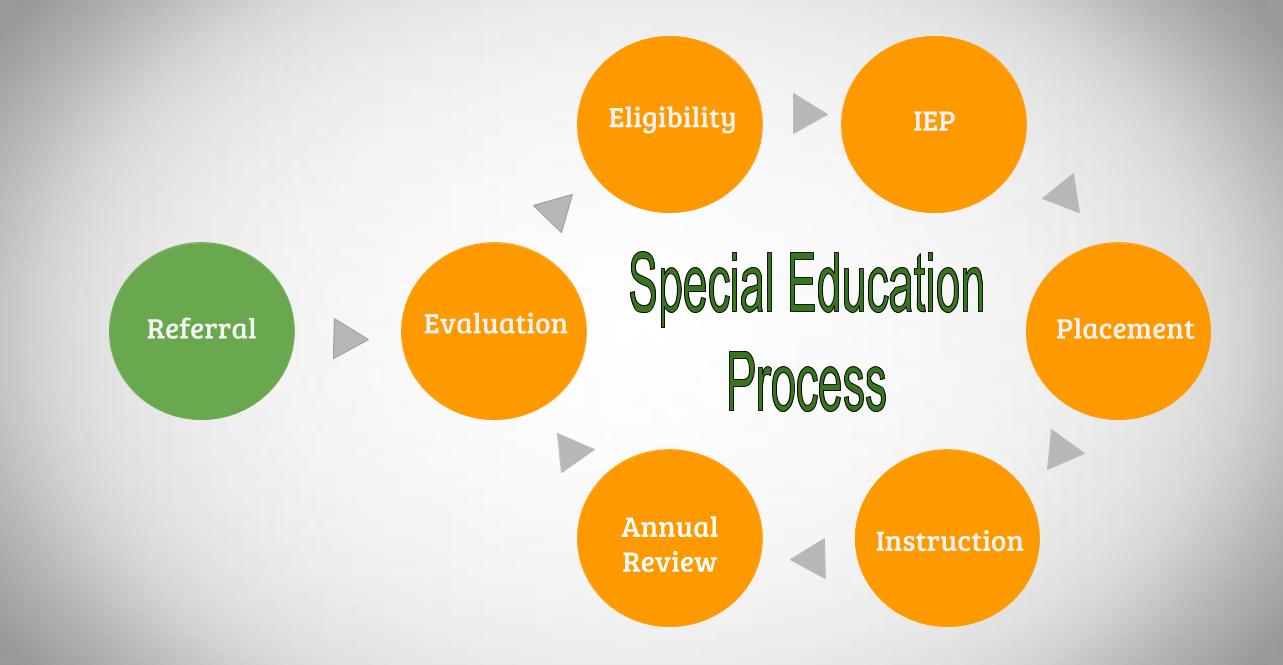
- IEP (Individualized Education Program): IDEA mandates the creation of a legally binding IEP document for every eligible student. This is the precise blueprint of their specialized instruction.
- Procedural Safeguards: These protect the rights of parents and students in special education decision-making. They guarantee parental participation, the right to review records, and the right to due process hearings if disagreements arise.
Age Spans Under IDEA
IDEA addresses the developmental continuum through specific sections:
- Part C: Covers early intervention services for infants and toddlers with disabilities from birth through age 2. This is highly family-centered, recognizing that early development happens at home.
- Part B: Covers special education services for children and youth ages 3 through 21 (or until they graduate with a standard diploma).
What happens to a student who has a disability, but it doesn't adversely affect their educational performance enough to require specialized instruction? Do they just fall through the cracks?
No. Enter the civil rights safety nets. While IDEA is an education law focused on specialized instruction, Section 504 and the Americans with Disabilities Act (ADA) focus primarily on providing equal access to the educational environment.
Section 504 of the Rehabilitation Act of 1973
Section 504 is a federal civil rights law. It strictly prohibits disability-based discrimination in any program or activity receiving federal financial assistance. Public schools must comply with Section 504 because public schools receive federal funding.
Here is the critical distinction: Section 504 defines a person with a disability as anyone who has a physical or mental impairment that substantially limits one or more major life activities.
This definition is vastly broader than the definition of a disability under IDEA. Therefore, a student who does not meet the criteria for one of the thirteen disability categories under IDEA may still qualify for a Section 504 plan. A Section 504 plan focuses on access to the learning environment rather than specialized educational instruction. It requires schools to provide reasonable accommodations to ensure students with disabilities have equal access to education (such as a wheelchair ramp, extra time on a test, or sitting near the teacher for focus).
Unlike IDEA, Section 504 does not provide federal funding to schools. It simply says, "If you take our federal money for your school, you cannot discriminate." As a result, it is enforced by the Office for Civil Rights (OCR) within the U.S. Department of Education, not the special education department.
The Americans with Disabilities Act (ADA)
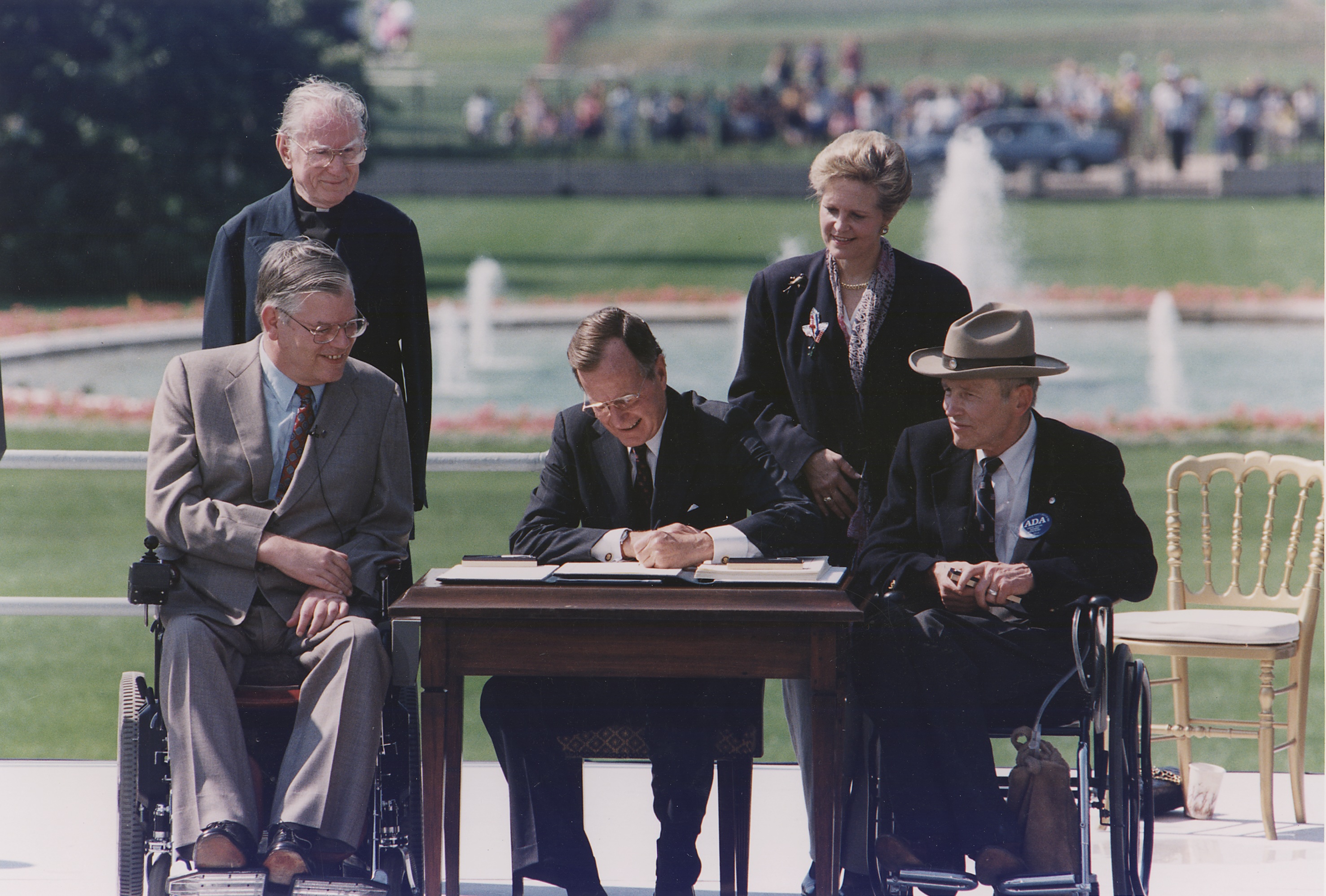
The Americans with Disabilities Act (ADA) was passed in 1990. It is a comprehensive civil rights law that prohibits discrimination against individuals with disabilities in all areas of public life.
If Section 504 already existed, why did we need the ADA? Because Section 504 only applies to places receiving federal funding. The ADA extends anti-discrimination protections to the private sector and entities that do not receive federal funding. Like Section 504, the ADA does not provide federal funding to schools; it merely demands equal access.
The ADA is divided into titles based on the sector:
- Title II applies to state and local government entities. Because they are government entities, public school districts must comply with Title II of the ADA.
- Title III mandates accessibility in places of public accommodation (businesses, restaurants, private entities). Therefore, private schools and daycares must comply with Title III of the ADA.
In 2008, Congress passed the Americans with Disabilities Act Amendments Act (ADAAA). The ADAAA expanded the legal interpretation of what constitutes a "major life activity" (adding things like concentrating, thinking, and major bodily functions). Because Section 504 borrows its definition of disability from the ADA, this expanded interpretation made it easier for students to qualify for protection under Section 504.
To succeed on your exam—and in your career—you must conceptualize these laws as concentric circles.
Because the definition of a disability under Section 504 and the ADA is so broad, all students eligible for special education under IDEA are simultaneously protected by Section 504 and the ADA. If a student has an IEP, their civil rights are inherently protected.
However, the reverse is not true. Not all students protected by Section 504 and the ADA are eligible for special education under IDEA. A student with severe asthma might be substantially limited in a major life activity (breathing) and need a 504 plan to use an inhaler during P.E. class, but they do not need specialized instruction to learn reading or math.

The Classroom Reality Test:
- Does the student need you to change what or how you teach them (specialized instruction)? They need IDEA / an IEP.
- Does the student just need a level playing field to access the standard curriculum (accommodations)? They need Section 504.
Accountability and Inclusion
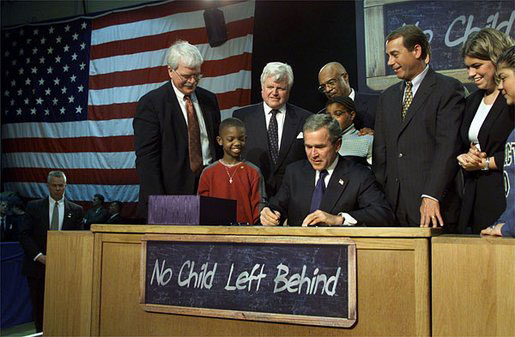
Finally, a word on how we measure the success of these laws. Opening the doors (Brown, PARC) and providing instruction (IDEA) is not enough if we don't ensure the instruction is actually working. The No Child Left Behind Act (NCLB) of 2001 fundamentally shifted special education accountability. NCLB mandated that students with disabilities be included in standardized state academic assessments. This forced schools to align special education instruction with the general education curriculum, ensuring that students with mild to moderate disabilities weren't just physically present, but were being held to high academic standards.
Summary Comparison Table
| Feature | IDEA | Section 504 | ADA |
|---|---|---|---|
| Type of Law | Educational funding / grant act | Civil rights law | Civil rights law |
| Provides Federal Funding? | Yes | No | No |
| Primary Focus | Specialized educational instruction | Equal access to the environment / Reasonable accommodations | Equal access in all areas of public life |
| Eligibility | Must fit one of 13 categories AND require specialized instruction due to adverse educational effect. | Physical/mental impairment that substantially limits a major life activity. | Same as 504. Extends protections beyond federally funded programs. |
| Coverage | Public schools. Part B (ages 3-21) and Part C (birth-2). | Any entity receiving federal funds (Public Schools). | Title II (Public schools/local govt), Title III (Private schools/daycares). |
By internalizing these frameworks, you are doing more than memorizing acronyms for an exam. You are learning the structural mechanics of equity. Every accommodation you provide and every IEP goal you write is the direct, living result of this legal history.