Supplementary and Functional Curriculum
Not sure you’re ready?
Take the ~3-minute readiness diagnostic and see where you stand.
A high school student sits in a resource room flawlessly balancing algebraic equations, yet freezes in panic at a local grocery store when a cashier hands back the wrong change. This cognitive dissonance highlights a critical boundary in special education: the line between academic abstraction and autonomous survival. Core academic curricula teach students how to interact with content, but for many students with mild to moderate disabilities, educators must explicitly teach them how to interact with the world itself. When a student leaves the educational system, society does not grade them on their ability to identify a dangling modifier; it grades them on their ability to hold a job, navigate their community, and manage their daily lives.
Bridging this gap requires the deliberate application of supplementary and functional curricula. These are not merely parallel tracks to standard academics; they are the fundamental architecture of independence.
Before we can teach a student how to navigate adulthood, we are legally and ethically bound to map out what their specific adulthood will look like. The Individuals with Disabilities Education Act (IDEA) requires formal transition planning to begin no later than the first Individualized Education Program (IEP) to be in effect when the child turns 16. This is not a casual conversation; it is a statutory mandate.
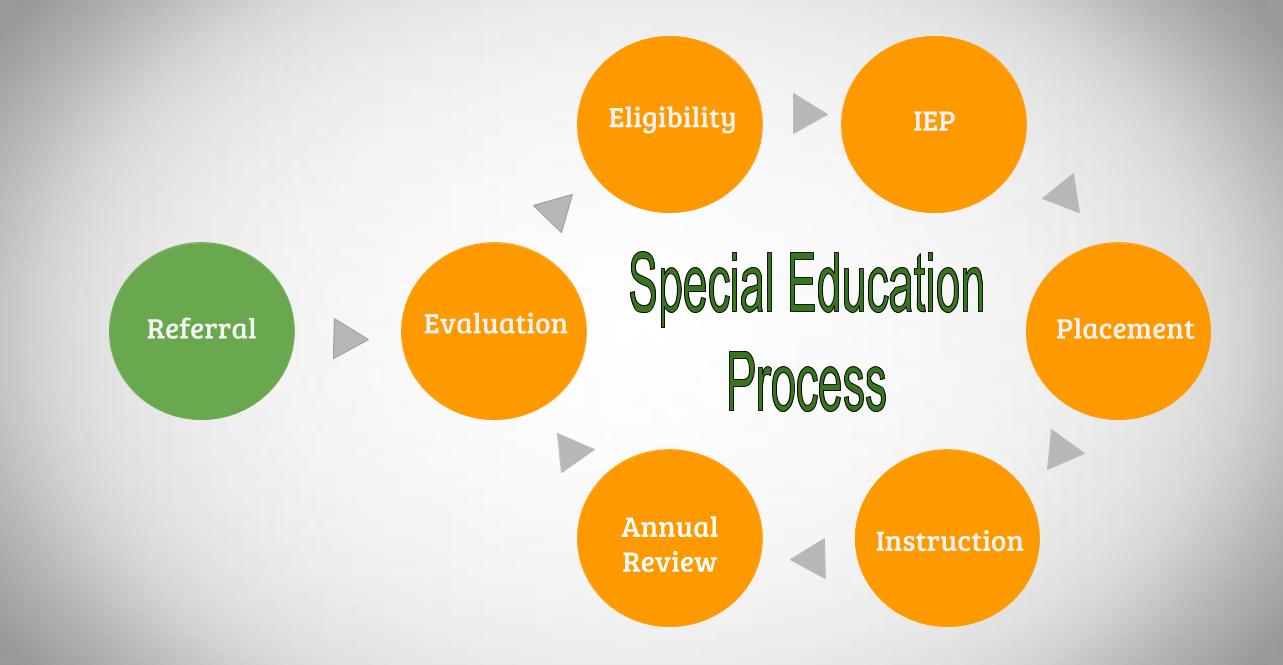
Transition planning under IDEA must include measurable postsecondary goals based on age-appropriate transition assessments. We cannot guess what a student needs; we must measure it.
Identifying Functional Deficits
How do we know what a student is missing? Developing a supplementary curriculum begins with identifying a specific functional deficit through direct observation. You watch the student in the cafeteria, the hallway, or the workplace. Once identified, developing a supplementary curriculum requires evaluating specific functional deficits through criterion-referenced assessments.
A prime example is the Brigance Transition Comprehensive Inventory, which is a criterion-referenced assessment tool used to evaluate a student's functional life skills. Rather than comparing a student to a national norm (as norm-referenced tests do), it measures whether the student can perform specific, necessary life tasks.
Furthermore, we utilize an ecological assessment, which evaluates the specific functional skills a student needs to succeed in a particular current or future environment. If a student's postsecondary goal is to work in a specific local bakery, an ecological assessment looks at the exact demands of that bakery—the layout of the kitchen, the social expectations of the breakroom, the noise level—and measures the student's current skills against those exact environmental demands.
Crucial Rule of Compliance: Any implemented supplementary curriculum must align directly with the measurable annual goals outlined in a student's Individualized Education Program (IEP). We do not teach skills on a whim; every instructional minute must be anchored to the legally binding IEP.
To build an independent adult, we rely on two distinct but overlapping frameworks: the Functional Curriculum and the Supplementary Curriculum.
The Functional Curriculum
A functional curriculum prioritizes skills that maximize a student's independence in daily living tasks (like cooking, personal hygiene, and household management) and prioritizes skills that maximize a student's independence in future employment environments. It answers the question: What skills does this human being need to survive and thrive without constant adult intervention?
The Supplementary Curriculum
A supplementary curriculum provides targeted instruction to address specific deficits not covered by the standard core academic curriculum. While the core curriculum covers math, science, and history, the supplementary curriculum targets the prerequisite human skills that make accessing those subjects—and life—possible.
Consider these highly specific supplementary frameworks:
- Expanded Core Curriculum (ECC): This is a widely recognized supplementary curriculum framework designed specifically for students with visual impairments, teaching them compensatory skills, orientation and mobility, and assistive technology use.
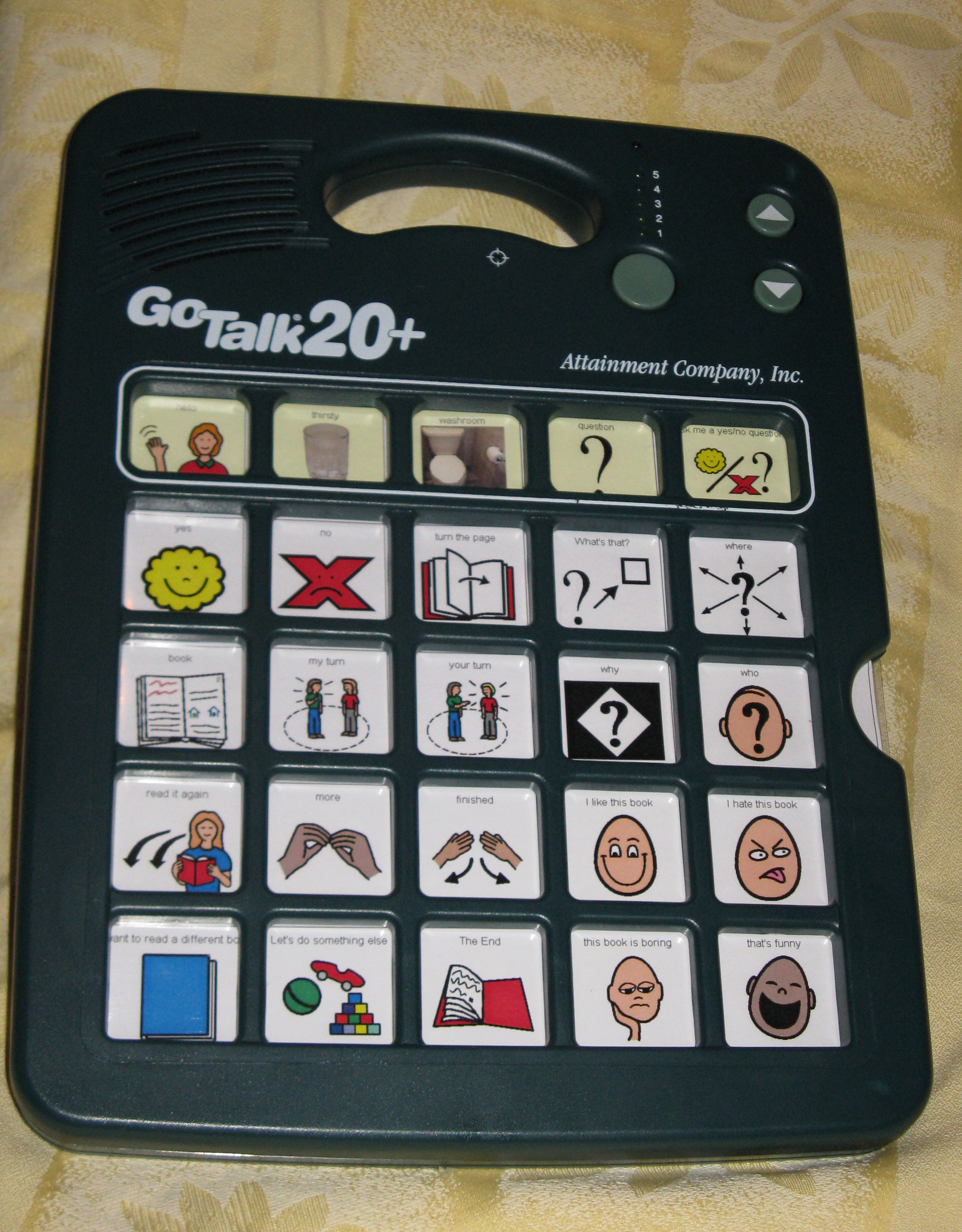
- Augmentative and Alternative Communication (AAC): AAC systems require specialized supplementary instruction to address functional communication deficits. Providing a student with a speech-generating tablet is useless if we do not systematically teach them how to use it to request, protest, and converse.
- Social Skills Training: This is a supplementary curriculum intervention used to improve peer interactions and social pragmatics for students with disabilities, teaching them the unwritten rules of human engagement that neurotypical peers often absorb passively.
You do not always need to stop teaching academics to teach functional skills. The most elegant special education seamlessly intertwines the two.
| Approach | Definition | Classroom Example |
|---|---|---|
| Functional Academics | Involves teaching core subject skills through practical real-world applications. | Teaching a student to calculate exact change during a mathematics lesson, or teaching a student to comprehend a public transit schedule during a literacy lesson. |
| Embedded Instruction | Integrates functional life skills practice directly into routine academic activities. | Having a student practice their fine-motor occupational therapy goals by zipping up their own backpack before leaving the science lab. |
Functional academics changes the content of the academic lesson to reflect real-world utility. Embedded instruction takes a life skill and sneaks the practice of it into the existing routine of the school day.
Imagine trying to teach a student how to do laundry. To you, it is one task. To a student with a moderate cognitive disability, it is an overwhelming mountain of micro-decisions. We must dissect the skill.
Task Analysis and Chaining
Task analysis is the process of breaking a complex functional skill into a sequence of smaller teachable steps. "Do laundry" becomes: 1) Sort lights and darks, 2) Open washer lid, 3) Measure detergent, 4) Pour detergent, 5) Load clothes, 6) Close lid, 7) Press start.
Once we have our task analysis, we must teach the chain of behaviors. We have two primary methods:
- Forward Chaining: A teaching strategy that requires the student to master the first step of a task analysis before introducing subsequent steps. You teach them to sort the clothes. Once they can do that independently, you teach them to open the washer lid.
- Backward Chaining: A teaching strategy that requires the educator to prompt the student through all steps of a task analysis except the final step. Why is this so powerful? Because backward chaining provides immediate natural reinforcement to the student by allowing the student to independently complete the final step of a task. The student presses "Start," the machine roars to life, and the student feels the immediate satisfaction of completing the job, even if you did the heavy lifting on steps 1 through 6.
Prompting and Errorless Learning
When a student is learning a new functional skill, failure can be deeply discouraging. Errorless learning strategies utilize immediate prompting to prevent a student from making mistakes during the initial acquisition phase of a functional skill. By guiding them to the correct answer immediately, we build "muscle memory" for success rather than reinforcing errors.
To achieve this, we use systematic prompting, which provides structured instructional assistance to help a student correctly perform a targeted functional skill. Prompts can be physical (hand-over-hand), visual (pointing), or verbal.

As the student learns, we must get out of their way. Prompt fading involves the gradual removal of instructional assistance as a student gains independence with a functional skill. A highly effective fading technique is time delay, an instructional strategy that inserts a brief pause between a task direction and an instructional prompt to encourage independent responding. You say, "Turn on the washer," and instead of immediately pointing to the button, you wait three seconds. In that brief, silent window, the student's brain is challenged to retrieve the information independently.
Many students with mild to moderate disabilities possess the cognitive ability to perform a job, but lose employment due to deficits in "soft skills"—time management, emotional regulation, and social appropriateness.
Executive functioning curricula supplement core academic instruction by explicitly teaching organizational skills and time management skills. We cannot just tell a student to "be organized"; we must teach organization as a concrete, algorithmic process.
To reinforce these routines, self-monitoring checklists are supplementary tools utilized to help students independently track their own completion of daily functional routines. Instead of a teacher hovering and nagging, the checklist becomes the authority, fostering internal accountability.

Navigating the Social World
Social pragmatics must be modeled, practiced, and generalized.
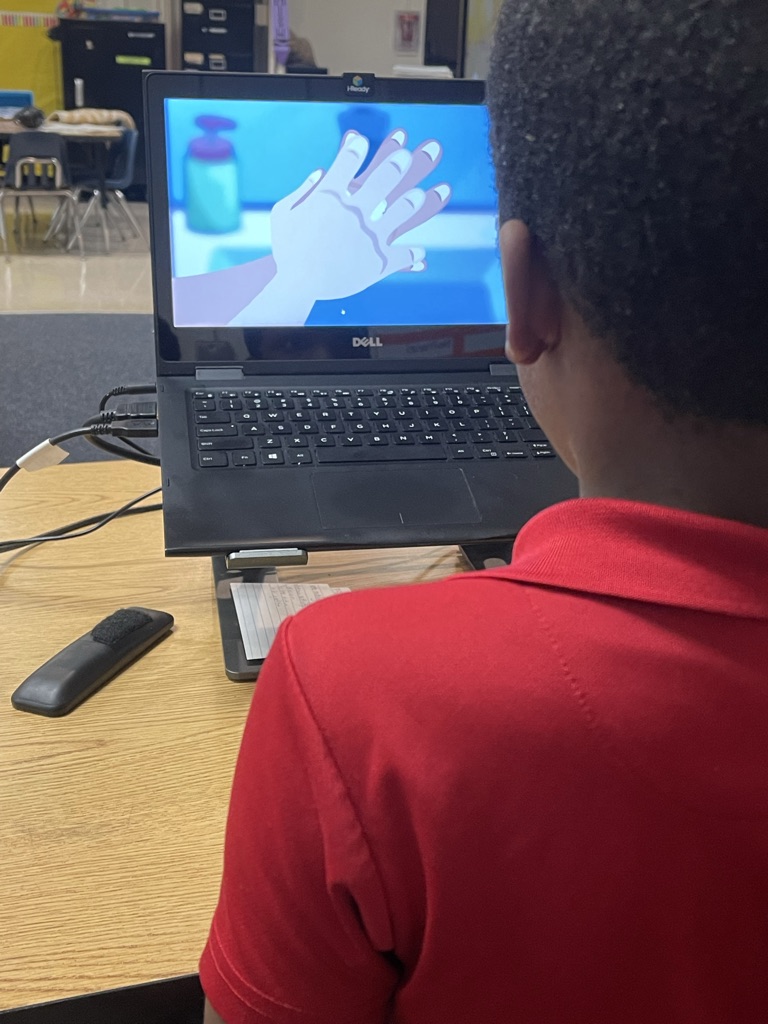
- Video Modeling: Utilizes recorded demonstrations to teach target students specific functional life skills and specific social behaviors. A student can watch a 30-second clip of a peer appropriately asking to join a cafeteria table, rewinding and studying the nuances of eye contact and body language.
- Role-Playing: Allows students to practice functional social interactions in a controlled classroom environment prior to community application. It is the simulator where students can safely crash before flying the real plane.
- Peer-Mediated Instruction: Involves training classmates without disabilities to model functional social skills for students with disabilities. This leverages natural social dynamics; a teenager is far more likely to mimic the behavior of a 16-year-old peer than a 45-year-old special educator.
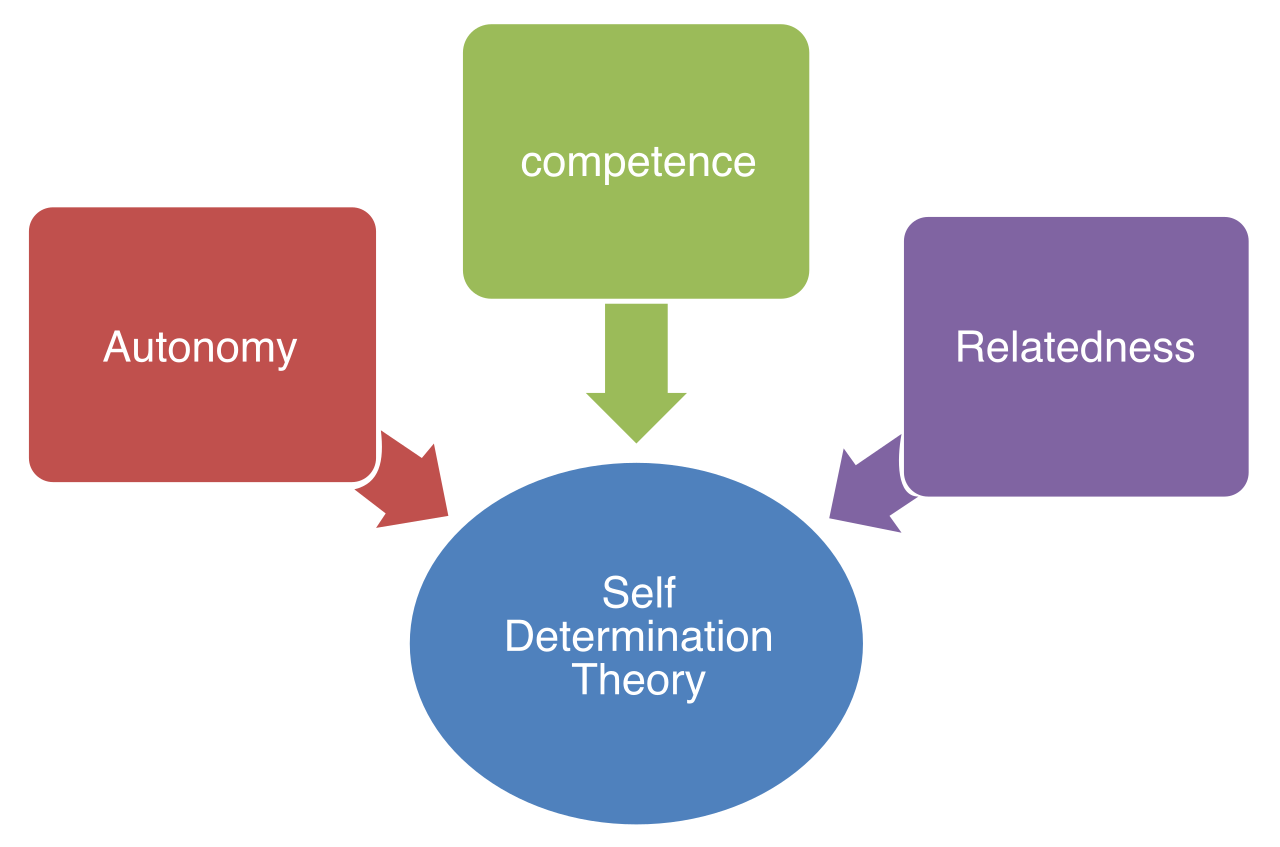
If a student leaves our classroom completely dependent on our prompts, we have failed. The ultimate objective is autonomy.
Self-determination curricula are essential. These programs systematically teach students to:
- Set personal academic and functional goals.
- Advocate for their own disability-related needs.
- Make independent choices regarding their daily routines.
Self-determination is the engine of adulthood. A student who can clearly articulate, "I have a processing delay and need written instructions," is infinitely more employable than a student who passively waits for someone to notice they are struggling.
The Ultimate Test: Generalization and the Community
Skill mastery in the resource room is merely an illusion if it stays in the resource room. Generalization of a functional skill occurs when a student successfully performs the learned skill in novel environments and using novel materials. If they can only count exact change using the plastic coins on your kidney table, they have not generalized the skill. They must be able to count real currency, crumpled up, handed to them by an impatient barista in a loud coffee shop.
Because generalization is so difficult for this population, we rely on community-based instruction (CBI). CBI involves teaching functional skills in the actual natural environments where the skills will ultimately be used. We take the math lesson out of the classroom and into the aisles of the grocery store. We take the literacy lesson to the public transit depot.
By anchoring our supplementary curricula to rigorous assessments, breaking complex realities down into teachable chains, and pushing our instruction out into the natural world, we transform special education from a system of academic accommodation into a launchpad for lifelong independence.