Calculating Perimeter, Area, and Volume
Not sure you’re ready?
Take the ~3-minute readiness diagnostic and see where you stand.
When a child looks at a cardboard box, they do not initially see length, width, and height. They perceive a unified object—a fortress, a spaceship, or a drum. Our task as educators is to guide them to see the hidden mathematical scaffolding of their physical world. We must help them translate the tangible reality of edges, surfaces, and spaces into the quantifiable abstractions of perimeter, area, and volume. Teaching spatial measurement is not merely about handing out formulas to memorize; it is about cultivating profound spatial reasoning. We must help students transition from running a finger along the edge of a desk to understanding linear boundary units, from covering a floor with rugs to calculating square footage, and from stacking blocks to grasping the continuous nature of three-dimensional geometry.
To teach this effectively, you must understand not only the geometry itself, but the specific cognitive leaps—and stumbles—your students will make as they learn to measure their world.
Before we can calculate space, we must enclose it. Perimeter is the total length of the continuous line forming the boundary of a closed two-dimensional figure. It is fundamentally a measure of distance—a one-dimensional concept. Therefore, perimeter is measured in one-dimensional linear units such as centimeters, meters, or inches.
Imagine walking a tightrope exactly along the outer edge of a shape until you return to your starting point. The distance walked is the perimeter.

Calculating Perimeter
For figures made of straight lines, this calculation is highly intuitive. The perimeter of a polygon is calculated by adding the lengths of all its exterior sides.
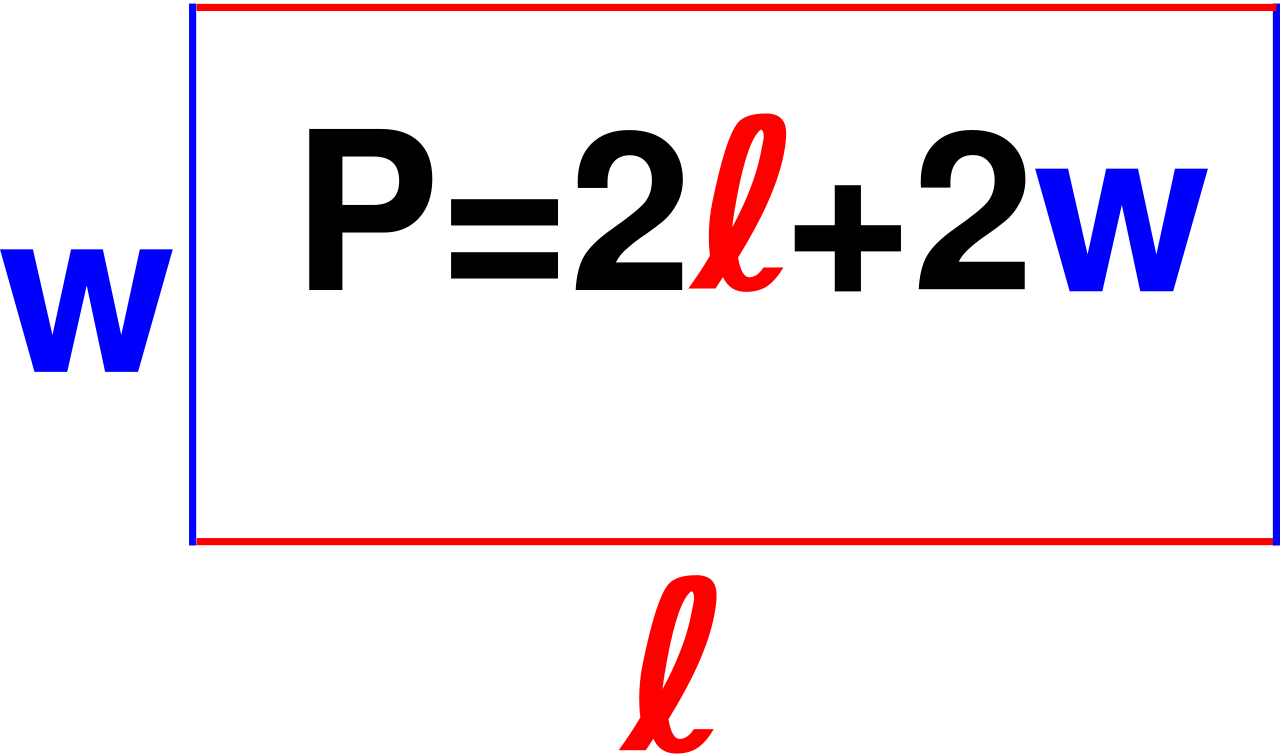
Because a rectangle has pairs of equal opposite sides, we can simplify its calculation. The perimeter of a rectangle can be calculated by adding twice the length to twice the width (P=2l+2w).
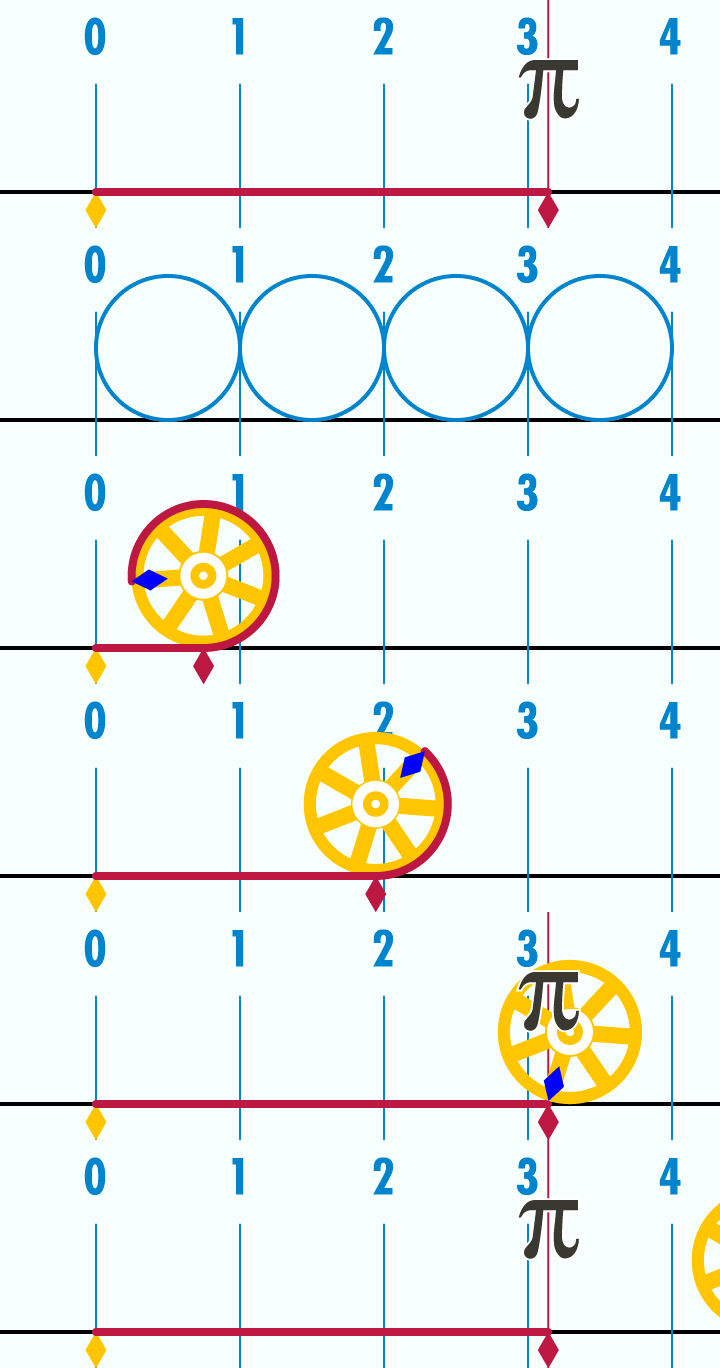
When dealing with circles, we use a specific vocabulary. Circumference is the specific geometric term used for the perimeter of a circle. To find it, we map the relationship between the distance across the circle (the diameter) and the distance around it. The circumference of a circle is calculated by multiplying the mathematical constant pi (π) by the diameter of the circle (C=π×d). Because the diameter is twice the radius, you will often see this expressed as C=2πr.
Once a boundary is drawn, it captures a surface. Area is the measure of the two-dimensional space enclosed within a flat boundary. Because we are measuring a surface extending in two directions, area is measured in two-dimensional square units such as square centimeters or square miles. We are no longer walking a tightrope; we are laying down square tiles.
Fundamental Area Calculations
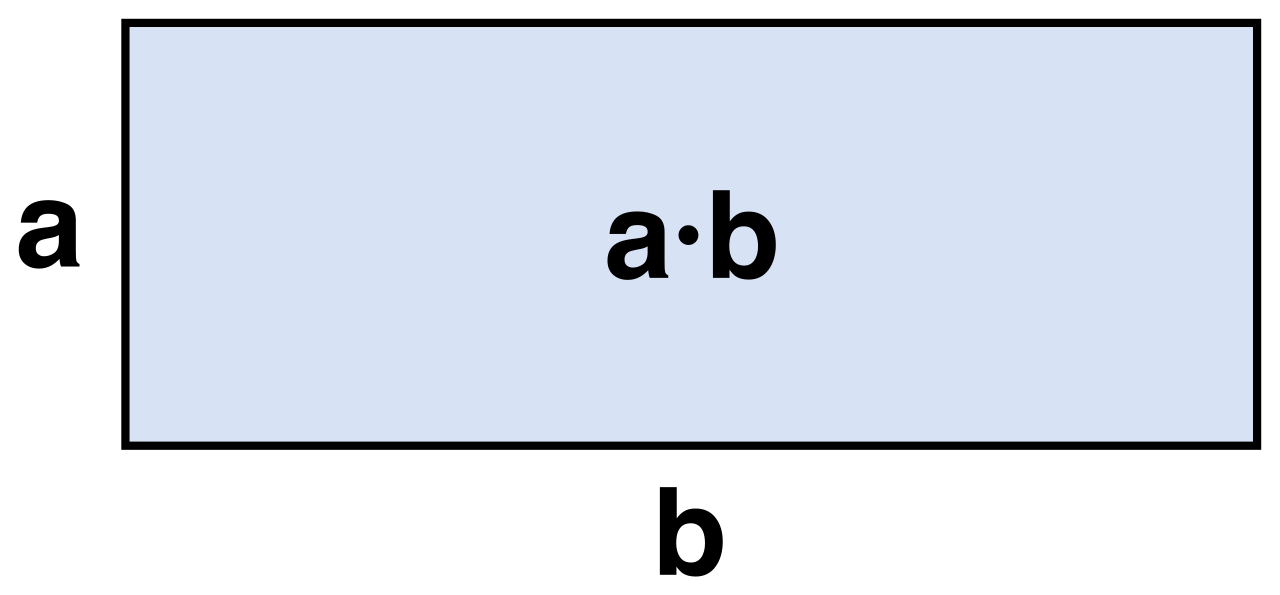
The foundational building block of area is the rectangle. The area of a rectangle is calculated by multiplying its length by its width (A=l×w). If you have a grid of tiles 4 units wide and 3 units long, you simply multiply 4×3 to find the total 12 squares.
From the rectangle, we can derive the area of other shapes:
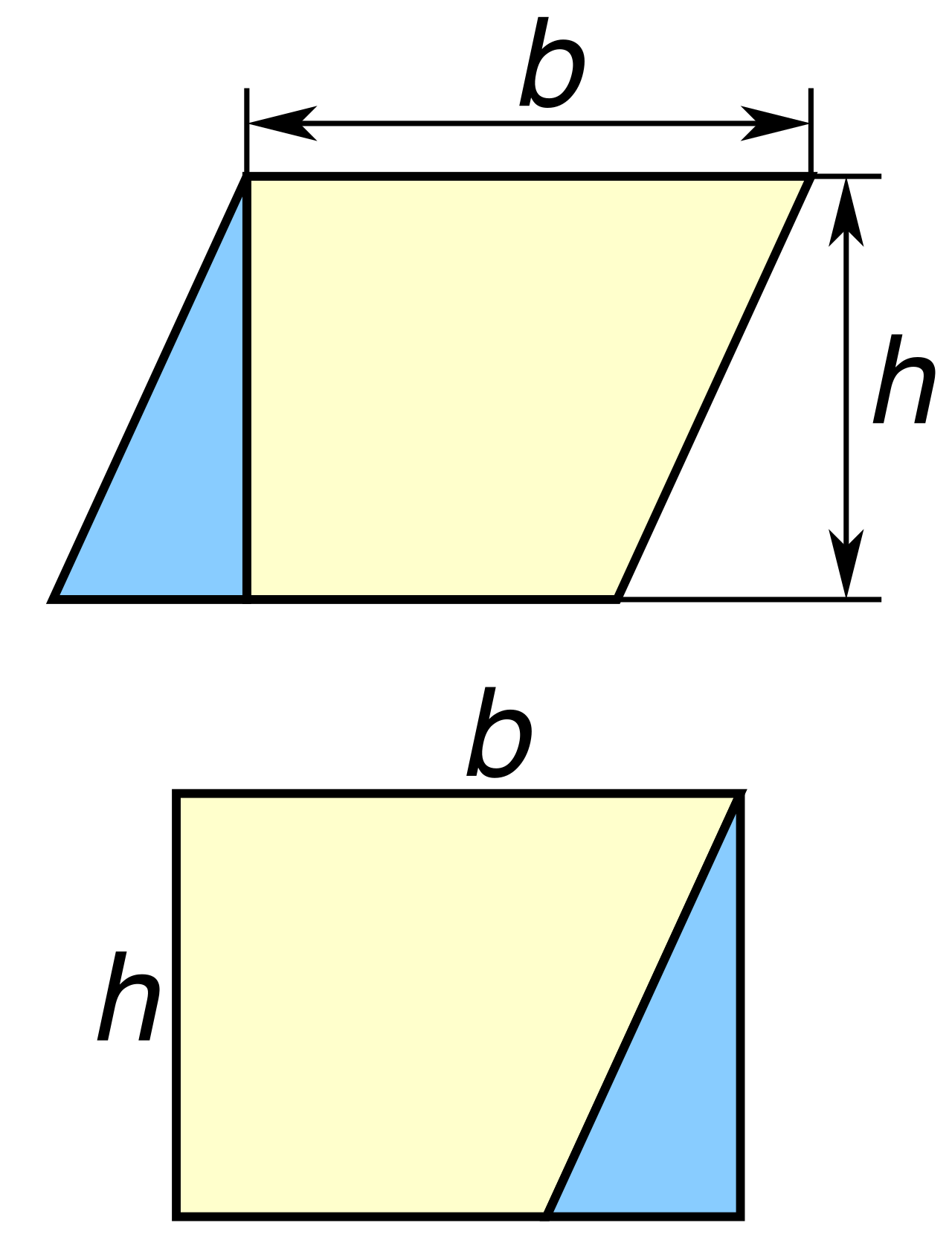
- The area of a parallelogram is calculated by multiplying its base by its perpendicular height (A=b×h). Imagine snipping a right triangle off one leaning side of a parallelogram and moving it to the other side—it forms a perfect rectangle.
- The area of a triangle is calculated as one-half the product of its base and its corresponding perpendicular height (A=21×b×h). Every triangle is exactly half of a parallelogram with the same base and height.
- The area of a circle is calculated by multiplying the mathematical constant pi by the square of the circle's radius (A=π×r2).
Instructional Strategy: Not all shapes are perfect polygons. The area of irregular two-dimensional shapes can be estimated by counting full and partial unit squares on an overlaid grid. This exercise is crucial for students; it reinforces the concept that area is about covering surface, not just blindly plugging numbers into a formula. Furthermore, subdividing a complex two-dimensional polygon into simpler constituent rectangles or triangles allows for calculating the total area of the polygon.
Pedagogical Pitfall: The Slanted Side Misconception
When teaching area, you will inevitably encounter the "Slanted Side" trap. In a rectangle, the side length is identical to the perpendicular height. Because students learn rectangles first, they overgeneralize.
When presented with a triangle or a parallelogram, a common student misconception is using a slanted side length instead of the perpendicular height when calculating the area.
Think of a leaning ladder. The length of the ladder itself (the slanted side) is longer than the actual height it reaches up the wall (perpendicular height). If a student multiplies the base of a parallelogram by its slanted side, they are calculating the area of a much larger, imaginary rectangle. You must explicitly teach students to look for the right-angle symbol that denotes true perpendicular height.
Pedagogical Pitfall: The Perimeter/Area Illusion
Perhaps the most widespread cognitive hurdle in elementary geometry is the conflation of perimeter and area. Because both measurements often grow together (if you inflate a balloon, both its boundary and surface expand), students assume they are proportionally locked.
- Elementary students often incorrectly assume that two rectangles with the same perimeter must have the exact same area.
- Conversely, they often incorrectly assume that two rectangles with the exact same area must have the same perimeter.
You must shatter this illusion with concrete counter-examples.
- Same Perimeter, Different Area: Give students a 24-foot fence. If they build a long, skinny rectangle (1×11), the perimeter is 24, but the area is 11 square feet. If they build a nearly square rectangle (5×7), the perimeter is still 24, but the area balloons to 35 square feet!
- Same Area, Different Perimeter: Imagine a rug covering 36 square feet. A 6×6 square rug has a perimeter of 24 feet. A 2×18 hallway runner rug has the exact same 36 square foot area, but a perimeter of 40 feet.
Our universe is not flat. Volume is the measure of the three-dimensional space occupied by a solid figure. Because it spans length, width, and depth, volume is measured in three-dimensional cubic units such as cubic centimeters or cubic inches.
Calculating Volume
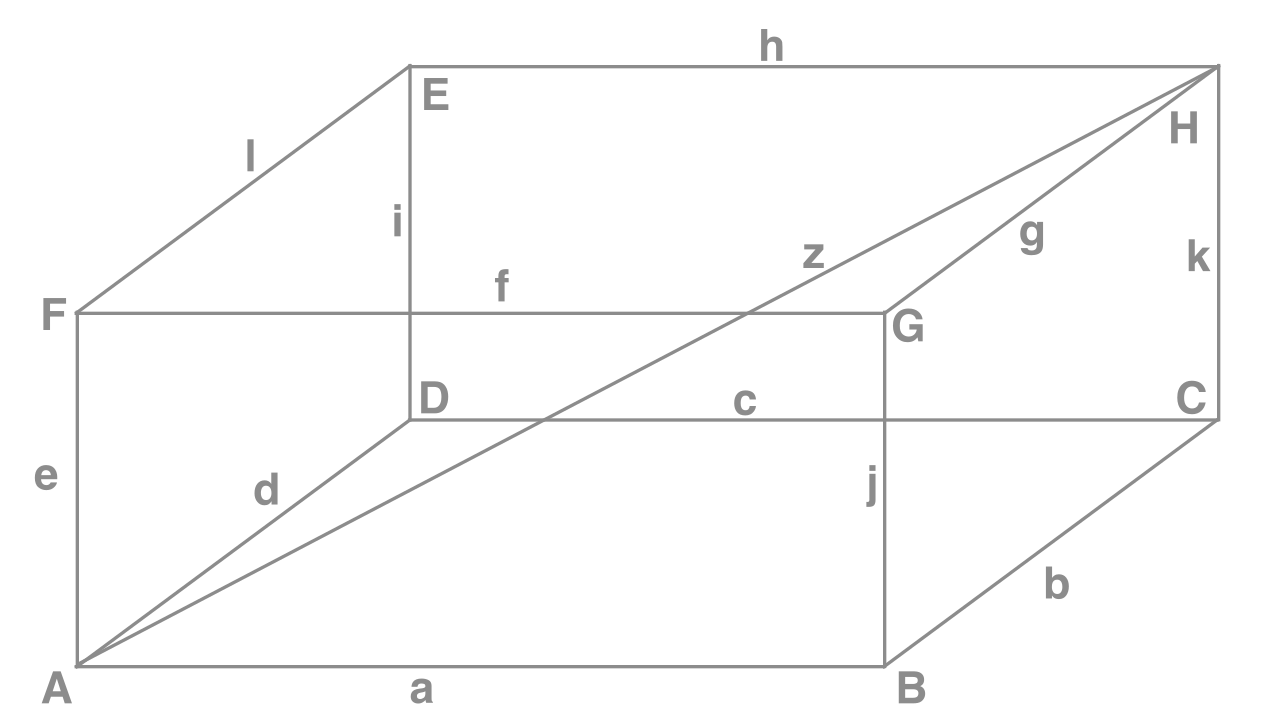
At the elementary level, volume instruction begins with rectangular prisms (box shapes). The volume of a rectangular prism is calculated by multiplying its length, width, and height (V=l×w×h).
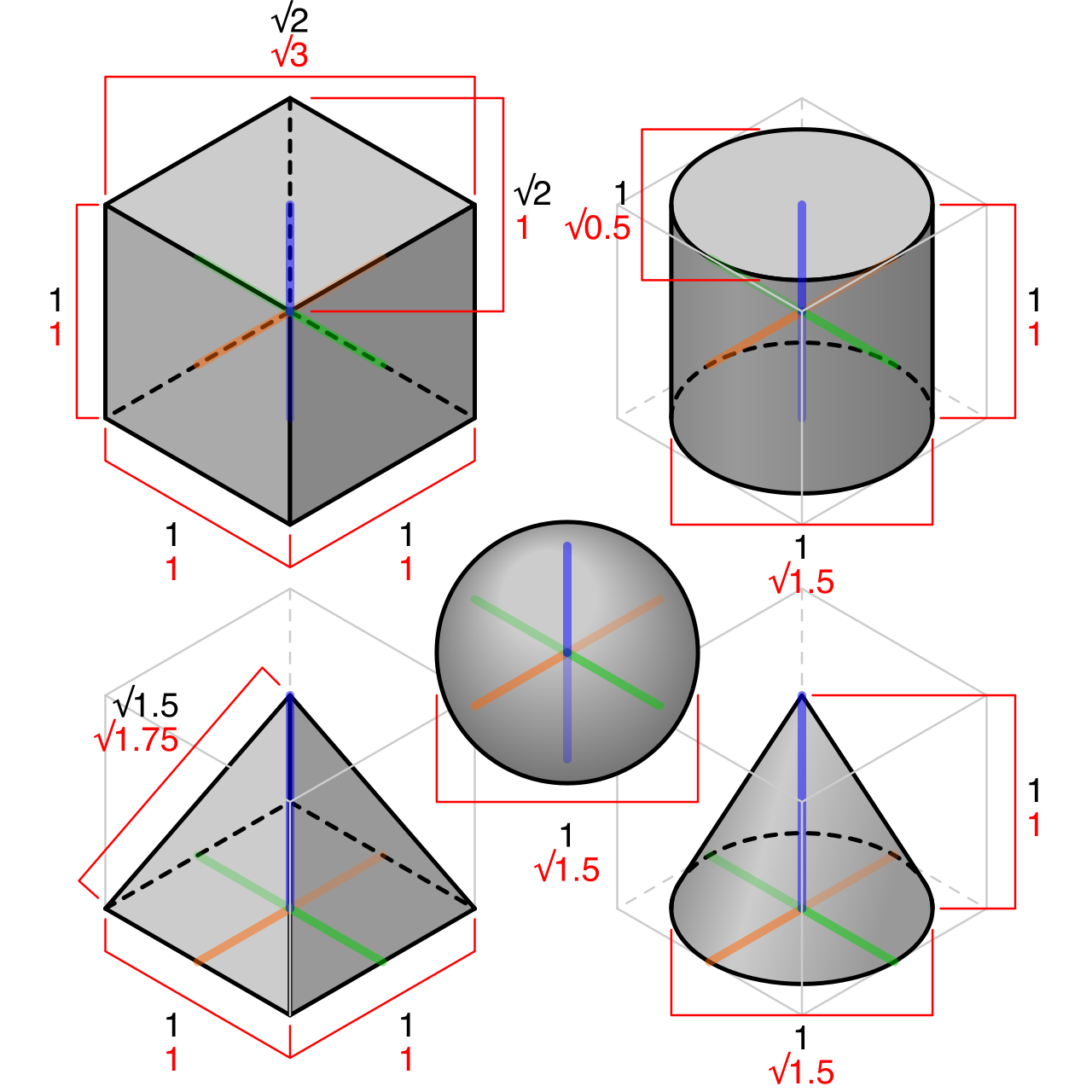
However, there is a more elegant, generalized "master key" formula that will serve your students far better as they advance. The volume of any right geometric prism can be calculated by multiplying the area of its two-dimensional base by its height (V=B×h, where B is the base area).
If you have a cylinder, a triangular prism, or a hexagonal prism, the logic is identical. Calculate the area of the flat base, and then imagine dragging that flat base straight up through the height of the object. It is like slicing a loaf of bread: find the area of one slice (the base), and multiply it by how many slices make up the loaf (the height).
Just as we break apart complex flat shapes, we can apply decomposition to volume. Decomposing a complex three-dimensional figure into non-overlapping rectangular prisms allows for calculating its total volume by adding the volumes of the parts.
Pedagogical Pitfall: The Hidden Block Illusion
Volume estimation involves visualizing how many standard cubic units can fit inside a given solid figure. To practice this, textbooks frequently show two-dimensional isometric drawings of three-dimensional block structures. This creates a profound perceptual challenge.
Students often struggle with volume concepts by only counting the visible blocks in a two-dimensional drawing of a three-dimensional shape. Because they cannot physically see the interior or rear of the drawn structure, students often ignore hidden interior blocks when estimating the volume of a block structure from a picture.
If a drawing shows a tower three blocks high, a student might only count the faces they see. They fail to mentally construct the invisible "pillars" supporting the visible top blocks. As a teacher, you must bring out actual physical blocks (like unit cubes) and have students build the shapes printed on the page. Only by physically disassembling the structure will they realize, "Ah, there had to be a block underneath holding this one up!"
Pedagogical Pitfall: Surface Area vs. Volume
A solid shape possesses both volume (the space inside) and surface area (the skin outside). The surface area of a solid figure is the total area of all its exposed two-dimensional faces.
A common error when calculating the surface area of a solid is confusing the surface area calculation with the volume calculation. Students will reflexively multiply length × width × height when asked for surface area. To fix this, use the analogy of a birthday present. Surface area is the amount of wrapping paper needed to cover the box outside; volume is the amount of cake you can stuff inside it. They are measuring two entirely different realities.
Measurement is not just about distances and spaces; it is also about rotation.
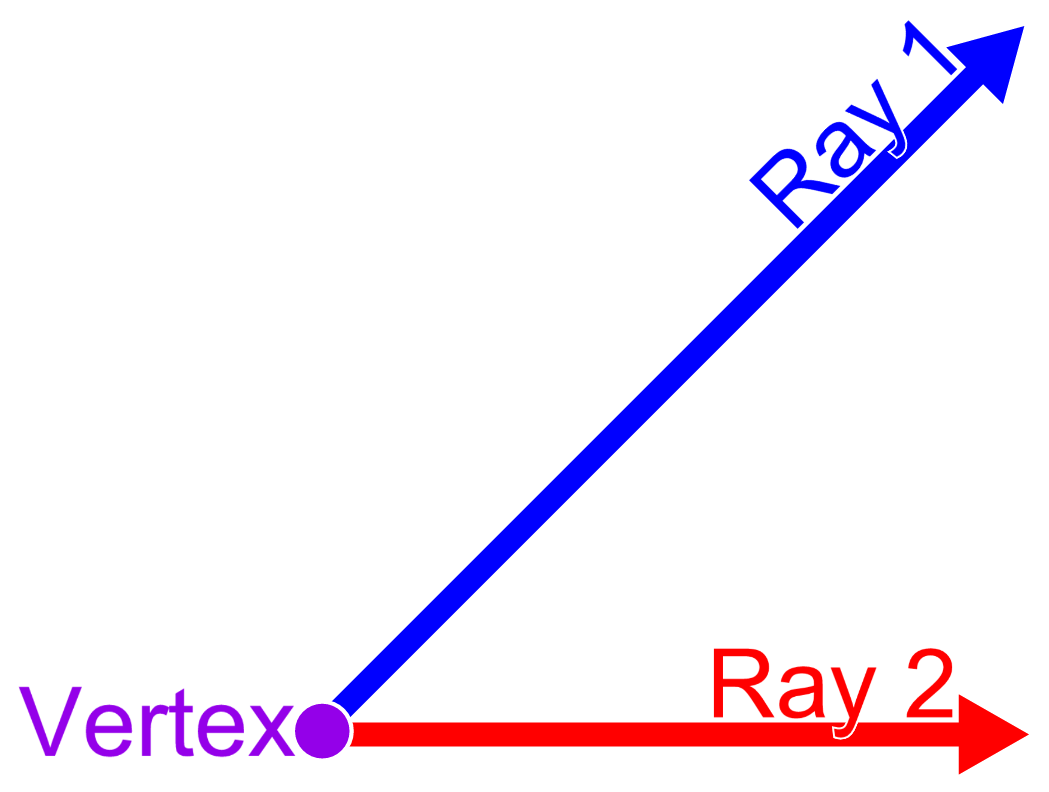
An angle is a geometric figure formed by two rays sharing a common endpoint called a vertex. When you open a door, the hinge is the vertex, and the door's edge and the doorframe act as the two rays. The space the door sweeps through is the angle.
Angles are typically measured in a geometric unit called degrees. To understand degrees, we start with a circle.
- A full circular rotation measures exactly 360 degrees.
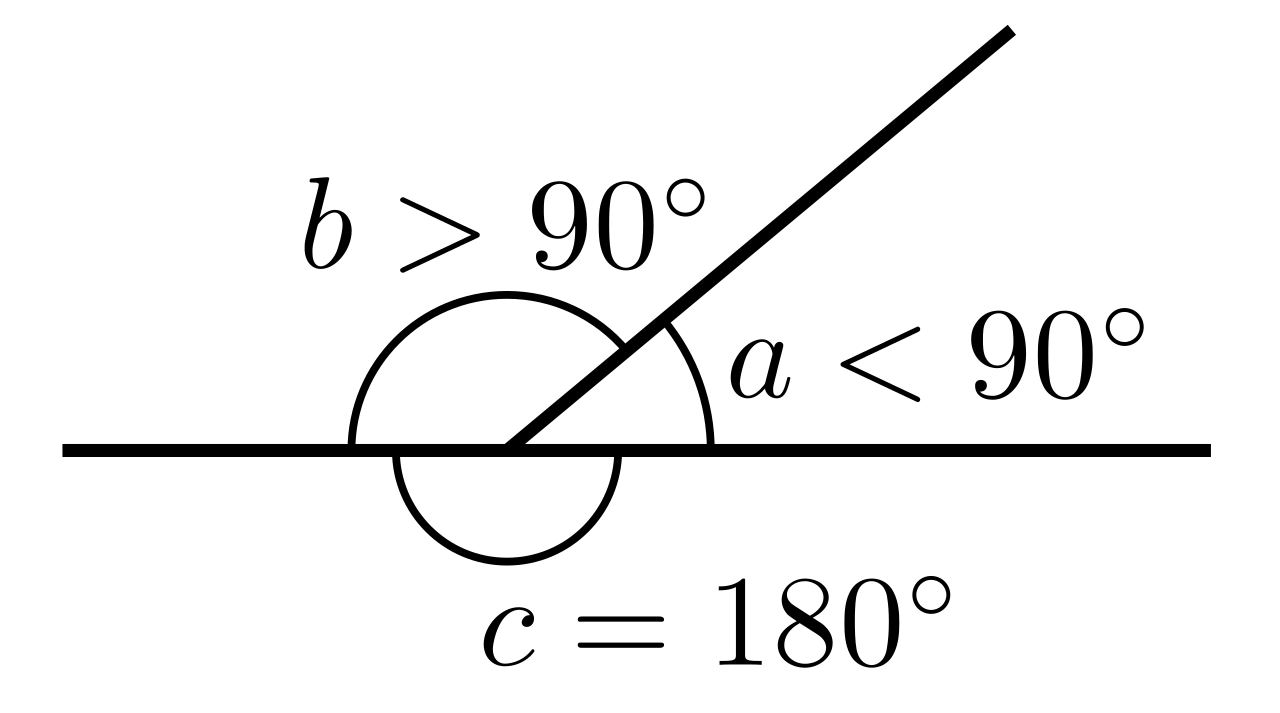
- A straight angle forms a line and measures exactly 180 degrees. (Half of a rotation).
- A right angle forms a square corner and measures exactly 90 degrees. (A quarter of a rotation).
We categorize other angles relative to these strict benchmarks:
- An acute angle is an angle that measures strictly between zero degrees and ninety degrees. (Sharper than a square corner).
- An obtuse angle is an angle that measures strictly greater than ninety degrees and less than one hundred eighty degrees. (Wider than a square corner, but not yet flat).
Pedagogical Pitfall: The "Long Ray" Illusion
When students look at an angle drawn on paper, they are highly distracted by the physical ink. A common elementary student misconception is believing the physical length of the drawn rays affects the degree measure of the angle.
If you draw a tiny, narrow 30∘ angle but draw the rays out to six inches long, and next to it draw a wide 120∘ angle with short, one-inch rays, a novice student will confidently tell you the 30∘ angle is "bigger."
You must teach them that rays are theoretically infinite lines. An angle measures the amount of turn or rotation at the vertex, not the reach of the lines. A flashlight beam opening up creates the same angle whether it shines on a wall one foot away or against a mountain a mile away.
Estimating and Adding Angles
Because angles represent rotation, they behave predictably when stacked together. Angle measures are additive when adjacent angles share a common vertex and a common ray without overlapping.
If a student knows this, they realize that the measure of a larger angle can be calculated by summing the internal degrees of its non-overlapping adjacent component angles. If a 40∘ angle sits flush against a 50∘ angle, together they form a perfect 90∘ right angle.
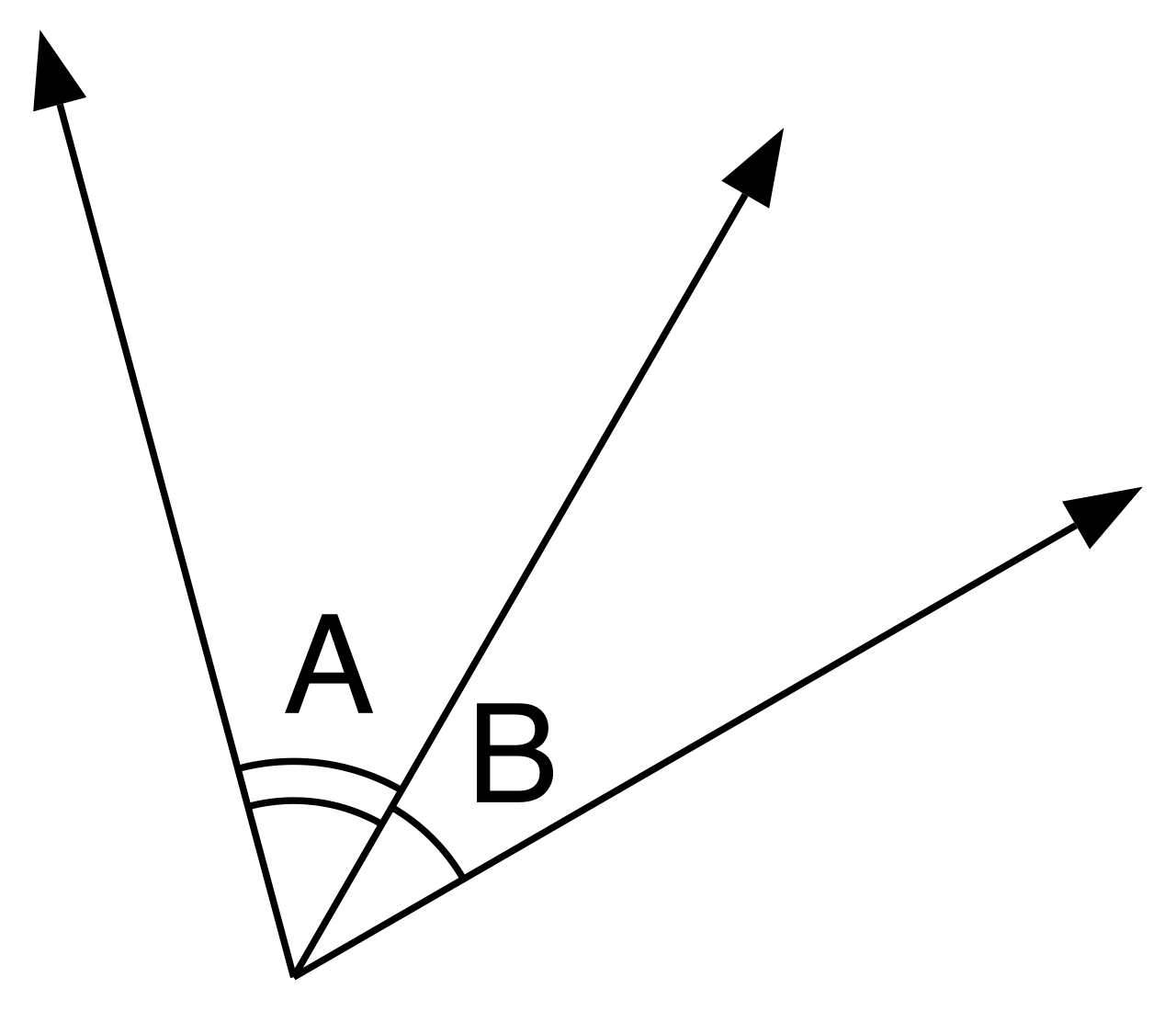
This additive property makes estimation highly practical. Unknown angles in real-world scenarios can be estimated by comparing them to known benchmark angles like 90 degrees or 180 degrees. If a piece of pizza looks like it perfectly splits a 90∘ square corner in half, the student can confidently estimate the pizza slice has a 45∘ angle.
Summary for the Educator
When you step into the classroom, you are the guide translating the physical world into mathematical reality. Anticipate that students will confuse the length of a line with the wideness of a turn, or the perimeter of a fence with the area of the yard. By grounding these abstract measurements in concrete realities—counting tiles, building hidden block structures, and explicitly comparing shapes that break their intuitive assumptions—you transform spatial measurement from a list of confusing formulas into a powerful toolkit for understanding the universe.