Comparing and Operating with Fractions
Not sure you’re ready?
Take the ~3-minute readiness diagnostic and see where you stand.
When a child first encounters the mathematical symbol 43, they do not automatically perceive a single numeric entity possessing a distinct magnitude. Instead, they see a 3, a 4, and a horizontal bar separating them. For their entire lives, their mathematical universe has been governed by the predictable behavior of whole numbers, where larger digits invariably indicate larger quantities, where multiplication always results in a bigger pile of things, and where division always shrinks that pile down. Fractions shatter this reality.

Suddenly, an 8 in the denominator signifies a smaller slice than a 4. Multiplying two numbers together might yield a product smaller than either starting factor. As educators, our task is not merely to hand students a new set of algorithmic rules to memorize, but to rebuild their foundational understanding of what numbers can be and how they behave.
Before students can manipulate fractions, they must understand their structural anatomy. We must clearly define the distinct roles of the top and bottom numbers, not just as symbols, but as physical actions taken upon a quantity.
The Anatomy of a Fraction
- Denominator: The denominator of a fraction represents the total number of equal parts that make up a whole. It dictates the size of the pieces.
- Numerator: The numerator of a fraction represents the specific number of fractional parts being counted or considered. It dictates the quantity of those pieces.
When we introduce the unit fraction—a fraction that has a numerator of exactly one (such as 31 or 51)—we are handing students the fundamental building blocks of rational numbers. Every fraction is simply a collection of unit fractions. The fraction 43 is nothing more than three iterations of the unit fraction 41.
The Great Misconception of Magnitude
Because a fraction is written with two distinct digits, a common student misconception when comparing fractions is evaluating the numerators and denominators as entirely separate whole numbers. A student operating under this illusion will insist that 83 is larger than 21 simply because the digits 3 and 8 are larger than 1 and 2.
To break this illusion, we cannot rely on abstract rules. Visual models like number lines help students establish that fractions possess specific magnitudes located between whole numbers. When a student places 21 and 83 on a number line that stretches from 0 to 1, the fraction ceases to be two separate numbers and becomes a single coordinate in space.

One of the most profound leaps in elementary mathematics is the realization that a single quantity can be represented by infinitely many names. Equivalent fractions represent the exact same quantity despite having different numerators and denominators.
How do we prove this to a child? We start physically. Fraction circles are concrete manipulative tools frequently utilized in elementary education to demonstrate the concept of equivalent fractions. By physically overlaying two 41 pieces on top of a single 21 piece, the student feels the equivalence before they calculate it.
Once the physical reality is established, we introduce the arithmetic mechanics:
- Scaling Up: Multiplying the numerator and denominator of a fraction by the same non-zero number produces an equivalent fraction. This works mathematically because multiplying by 22 or 33 is identical to multiplying the underlying quantity by 1.
- Scaling Down (Simplifying): Dividing the numerator and denominator of a fraction by a common factor simplifies the fraction. We are essentially merging smaller pieces back into larger, more mathematically digestible chunks.
How do we equip students to compare fractions quickly and accurately? We teach them to look for common ground.
Strategy 1: The Common Denominator
Finding a common denominator allows for the direct mathematical comparison of fraction numerators. If we are comparing fifths to fifths, the fraction with the larger numerator is universally larger. To achieve this, finding the least common multiple of the denominators is a standard mathematical method for establishing a common denominator.
Strategy 2: The Same Numerator
What if the numerators are identical, but the denominators differ? When fractions share the exact same numerator, the fraction with the smaller denominator represents the larger quantity.
Why? Because a larger denominator in a fraction signifies that the whole quantity has been divided into smaller individual pieces. If you have 3 slices of a cake cut into 4 pieces (43), you have far more cake than if you have 3 slices of a cake cut into 10 pieces (103).

Strategy 3: Benchmarking
We can bypass tedious calculations by orienting fractions around familiar landmarks.
- Comparing fractions to the benchmark number of one-half helps determine the relative size of the fractions. For example, comparing 94 to 85. Since 4 is less than half of 9, 94 is less than 21. Since 5 is more than half of 8, 85 is greater than 21.
- Comparing fractions to the benchmark number of one whole helps determine the relative size of the fractions. We can easily identify an improper fraction—which is a fraction with a numerator that is greater than or equal to its denominator—as being exactly one or greater than one.
You cannot add three inches to four centimeters and claim you have "seven inch-meters." The units must match. The exact same logic governs fractions.
Adding fractions requires establishing a common denominator to guarantee that the parts being combined are of equal size. Likewise, subtracting fractions requires establishing a common denominator to ensure the mathematical operations involve parts of equal size.
Common Additive Misconceptions
If we fail to explain why common denominators are necessary, students will invent their own logic.
- A frequent student error in fraction addition is incorrectly adding the numerators together and adding the denominators together. (e.g., claiming 21+31=52).
- A common student misconception in fraction subtraction is subtracting the smaller denominator from the larger denominator regardless of mathematical order. If asked to calculate 87−41, a student might confidently subtract the numerators (7−1=6) and then subtract the smaller denominator from the larger one (8−4=4), arriving at 46.
Operating with Mixed Numbers
When dealing with whole numbers attached to fractions, we have options. Mixed numbers can be converted into improper fractions prior to performing addition operations, which cleanly sidesteps the cognitive load of handling wholes and parts simultaneously.
However, subtraction often introduces a specific hurdle: the need to borrow. Consider 441−143. A student cannot subtract three-fourths from one-fourth. Here, regrouping one whole unit into an equivalent fraction is sometimes a necessary step when subtracting mixed numbers. The student must intentionally break one of the 4 whole units into 44, transforming 441 into 345. Only then can the subtraction proceed.
We now arrive at a critical cognitive leap. For their entire academic careers, students have operated under a specific paradigm regarding multiplication.
| Whole Number Paradigm | New Fractional Paradigm |
|---|---|
| Multiplication always makes things bigger. | Students frequently exhibit the misconception that multiplication always results in a mathematical product larger than the initial factors. |
| Division always makes things smaller. | Students frequently exhibit the misconception that division operations always result in a mathematical quotient smaller than the dividend. |
We must directly attack these misconceptions. It is an immutable mathematical fact that multiplying a positive number by a proper fraction always results in a final product smaller than the original positive number.
Redefining "Groups Of"
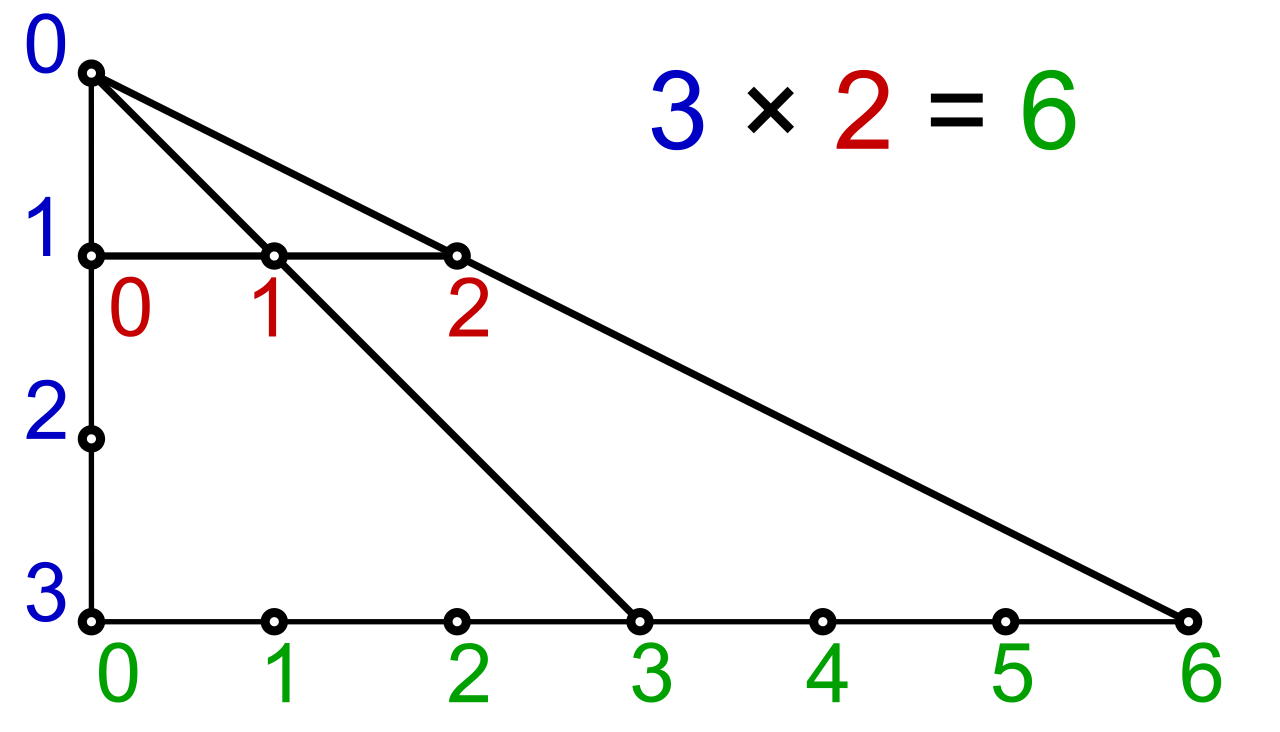
To understand why multiplication makes things smaller when fractions are involved, students must realize that the word 'of' in elementary mathematical word problems involving fractions typically indicates a multiplication operation.
When we ask for 21×8, we are asking for "one-half of eight." Therefore, multiplying a whole number by a fraction is conceptually equivalent to calculating a fractional portion of that whole number.
The Algorithms of Multiplication
- Fraction by a Whole Number: Because 8 can be written as 18, when multiplying a fraction by a whole number, the denominator of the fraction remains completely unchanged. (e.g., 43×5=415).
- Fraction by a Fraction: Multiplying two fractions involves calculating the product of the two numerators to establish the new numerator, and subsequently, calculating the product of the two denominators to establish the new denominator.
To prevent this from becoming blind memorization, we must use geometry. Rectangular area models are effective pedagogical tools for visually representing the multiplication of two fractions. By drawing a rectangle, shading 43 of it vertically, and shading 21 of it horizontally, the overlapping double-shaded region perfectly visually demonstrates 83.
If multiplication by a proper fraction shrinks a number, division by a proper fraction does the opposite. Dividing a positive number by a proper fraction always results in a mathematical quotient larger than the original positive dividend.
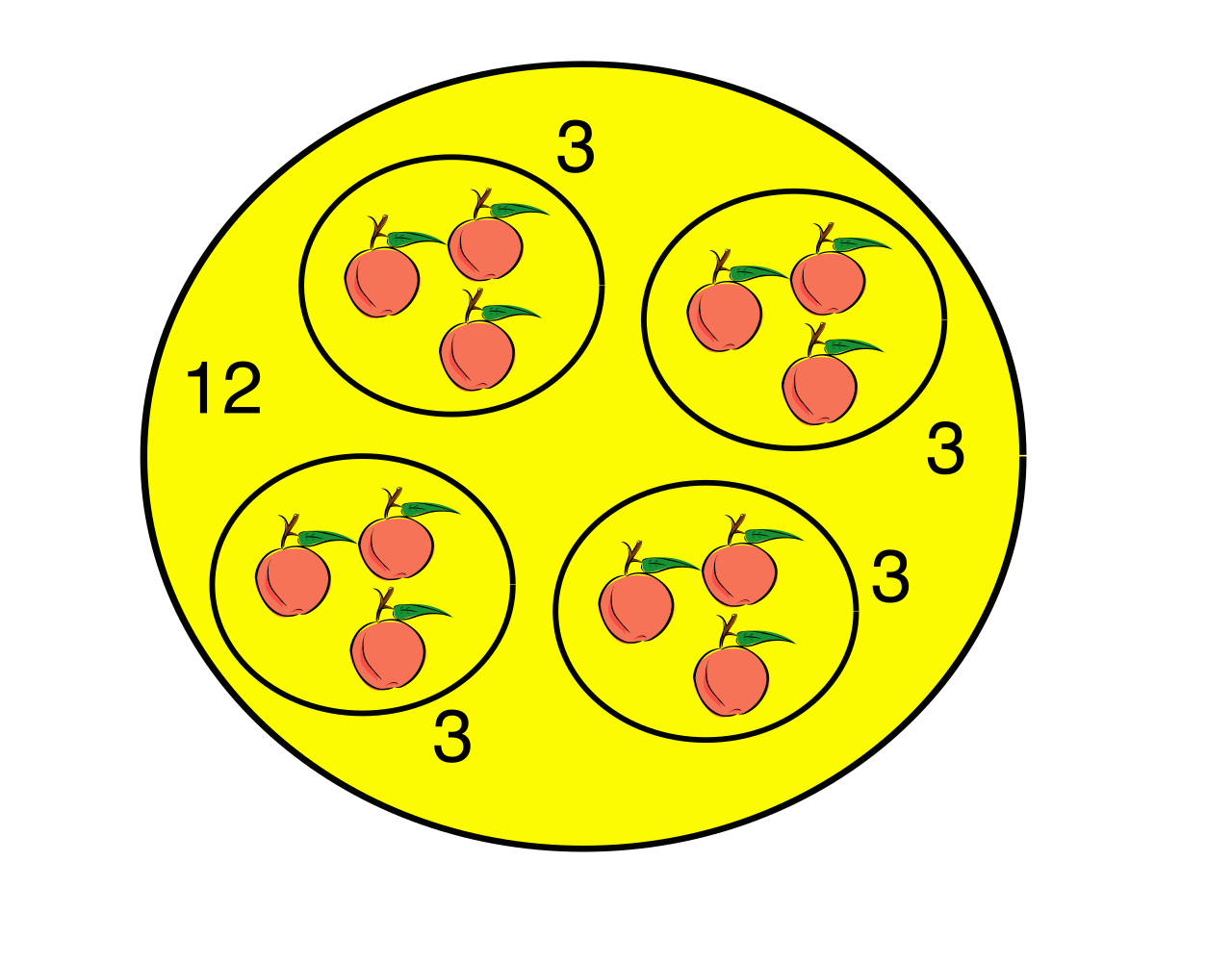
How is it possible that 4÷21=8? It comes back to redefining our terms. Division is fundamentally a question of capacity: How many of these fit into that?
Dividing a whole number by a unit fraction determines the total count of those unit fractions that fit inside the whole number. If you have 4 whole pizzas, and you want to know how many 21 pizza servings you can create, you simply count them. Two halves per pizza, four pizzas: eight servings. Visual fraction models are used to demonstrate exactly how many times a divisor fraction physically fits into a dividend fraction.
The 'Invert and Multiply' Shortcut
Eventually, drawing pizzas becomes mathematically inefficient, and we must teach the algorithm. Dividing by a fraction is mathematically identical to multiplying the dividend by the reciprocal of that divisor fraction.
The Mechanics of the Reciprocal
- The reciprocal of a fraction is created by directly swapping the positions of the numerator and the denominator. (The reciprocal of 43 is 34).
- The mathematical product of any fraction and its corresponding reciprocal is always exactly one. (43×34=1212=1).
Unfortunately, the standard 'invert and multiply' algorithm for dividing fractions is frequently memorized by students without underlying conceptual understanding. They learn to "keep, change, flip" like a magic spell, completely detached from the logical reality that finding how many quarters fit into a whole is the exact same mathematical action as multiplying that whole by four.
The Pedagogical Sequence
This brings us to the ultimate mandate of teaching elementary mathematics. Teaching fraction operations proceeds most effectively from the use of concrete visual models to abstract mathematical algorithms.
When you stand before your classroom, resist the urge to immediately write the standard algorithm on the whiteboard. Start with the fraction circles. Move to the number lines and the area models. Let the students physically see the denominators matching, the fractional pieces multiplying, and the divisors fitting into the dividends. Once the physical logic is undeniable to them, the abstract algorithms will not be arbitrary rules to memorize, but logical tools they actually understand.