Fraction Operations and Ratios
Not sure you’re ready?
Take the ~3-minute readiness diagnostic and see where you stand.
A child who enthusiastically accepts half of a large pizza but feels cheated when handed half of a grape has implicitly grasped one of the most profound truths of mathematics: a fraction is entirely meaningless without its context. Fractional reasoning requires identifying the referent whole for every given fraction in a problem. Without knowing "half of what," the number 21 floating in the ether tells us nothing about the physical reality it describes. For aspiring educators, mastering how to teach fractions and proportional reasoning means unlearning the mechanical algorithms memorized in grade school and peering under the hood of these numbers. It is about understanding the architecture of rational numbers and anticipating exactly how and why a young mind might misinterpret them.

When a student looks at a fraction, they often see two distinct whole numbers separated by a line. Our first job as educators is to train them to see a single magnitude.
At its core, a fraction represents a part-whole relationship. The physical anatomy of the fraction dictates how we interact with this relationship:
- The denominator of a fraction represents the total number of equal parts in the whole. It is the "denomination" or the name of the pieces (e.g., thirds, fourths).
- The numerator of a fraction represents the number of parts being considered. It is the count of those pieces.
To build a deep understanding of fractions, we must start with the mathematical atom: the unit fraction. A unit fraction is a fraction with a numerator of exactly one (such as 31 or 51). Why are they so important? Because any non-unit fraction can be mathematically understood as a multiple of a unit fraction. When a student understands that 43 is simply 3×41—just as 3 apples is three units of one apple—they stop viewing fractions as mysterious stacked numbers and start viewing them as measurable quantities.
The Illusion of Equivalence
One of the great cognitive leaps in elementary mathematics is grasping that numbers can look different but hold the exact same value. Equivalent fractions represent the exact same point on a number line. They are not just related; they are identical in magnitude.
Mechanically, equivalent fractions are generated by multiplying the numerator and denominator by the same non-zero value. But why does this work? Because multiplying the numerator and denominator by 2 is mathematically identical to multiplying the entire fraction by 22, which is 1. We are changing the size of the pieces (denominator) and the number of the pieces (numerator) in perfect harmony, leaving the total amount unchanged.
This conceptual grounding is vital when introducing addition. A common student misconception when adding fractions is adding the numerators together and the denominators together. A student might write 21+31=52. If they understand the number line, they will immediately see the absurdity here: 52 is less than 21, which means their sum is smaller than their starting amount! To add pieces, they must be the same size. Thus, finding a common denominator requires identifying a common multiple of the given denominators, unifying the units before combining them.
When we move into multiplication, we confront some deeply ingrained assumptions. In the world of whole numbers, students develop a stubborn intuition: multiplication makes things bigger.
However, in the fractional world, we introduce scaling, which is the mathematical process of enlarging or reducing a quantity by a constant multiplier. The specific number we use to do this is called a scale factor, which specifies the precise multiplier used to enlarge or reduce a given quantity.
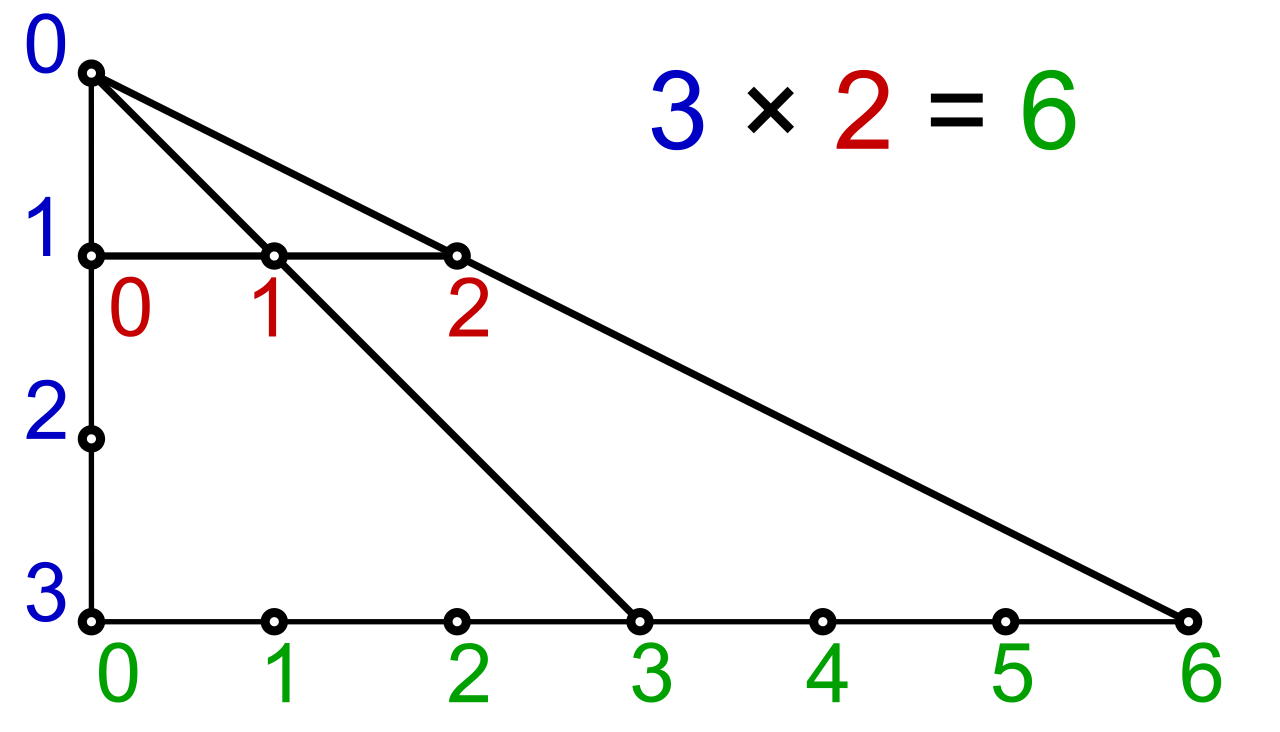
Because students are so accustomed to whole numbers, a common student misconception is believing multiplication always results in a larger product. You must actively dismantle this. The behavior of the product depends entirely on the nature of the scale factor:
- Multiplying a positive quantity by a proper fraction results in a product smaller than the original quantity. (e.g., 12×21=6)
- Multiplying a positive quantity by an improper fraction results in a product larger than the original quantity. (e.g., 12×23=18)
The Shifting Referent Whole
Fraction multiplication introduces a beautiful but confusing cognitive shift. The referent whole changes during the mathematical operation of fraction multiplication.
Imagine you have 21 of a pan of brownies left. You decide to eat 31 of what remains. The math is 31×21. Notice what happened to the whole! For the 21, the referent whole was the original pan. But for the 31, the referent whole is the leftover half.
To teach this visually, we do not rely on rote rules. Instead, an area model visually demonstrates the multiplication of two fractions by showing intersecting shaded regions. By drawing a rectangle, shading half vertically, and then shading a third of the whole horizontally, the intersection reveals 61 of the original whole. The area model proves the changing whole using geometry.
If multiplication shifts the whole, division fractures it. First, we must clarify a notational truth: The fraction bar symbol serves as a direct mathematical representation of the division operation. The expression 43 literally means 3÷4.
Just as with multiplication, students carry whole-number baggage into division. A common student misconception is believing division always results in a smaller quotient. But if you have 2 pizzas and divide them into 41-sized slices (2÷41), you end up with 8 slices. The quotient is larger than the dividend!
To explain why, you must understand the two distinct conceptual models of division:
| Division Type | Conceptual Meaning | Classroom Example |
|---|---|---|
| Measurement Division | Measurement division of fractions calculates how many groups of the divisor fit into the dividend. | "I have 6 cups of flour. A recipe calls for 43 cup per batch. How many batches can I make?" |
| Partitive Division | Partitive division of fractions calculates the size of one whole group when the dividend is partitioned by the divisor. | "If 21 of a bucket holds 4 gallons of water, how many gallons does the whole bucket hold?" |
Pedagogical Warning: Generations of students have been taught to "Ours is not to reason why, just invert and multiply." The invert-and-multiply algorithm for fraction division relies on multiplying by the reciprocal of the divisor. While efficient, teaching fraction division solely through the invert-and-multiply algorithm often masks the underlying concept of grouping from students. Teach the visual grouping (measurement division) first before revealing the algorithm as a convenient shortcut.
Fractions are profound, but they are just one way to relate numbers. As students mature mathematically, we introduce a broader tool: the ratio. The Common Core State Standards introduce formalized ratio concepts to students in the sixth grade, recognizing that students are finally ready for abstract comparative thinking.
A ratio is a multiplicative comparison of two distinct quantities. Unlike a fraction, which is written with a fraction bar, the colon symbol is commonly used in mathematics to denote a ratio between two numbers (e.g., 3:2).
While fractions typically represent part-whole relationships, ratios offer more flexibility. Ratios can represent either part-to-part or part-to-whole relationships depending on the context.
- A part-to-part ratio compares distinct subsets within a single overall set. (e.g., The ratio of red apples to green apples is 3:2).
- A part-to-whole ratio compares a specific subset to the entire set. (e.g., The ratio of red apples to all apples is 3:5).
The Reality of Rates
When ratios step out of the abstract and into the physical world, they often become rates. Rates are specific types of ratios comparing two quantities measured in entirely different units—such as miles and hours, or dollars and ounces.
When you go to the grocery store, you look for a very specific type of rate. A unit rate is a ratio in which the second quantity in the comparison is exactly one unit. If you buy 5 pounds of coffee for $60, the unit rate is $12 per pound. Linguistically, the word 'per' is frequently used in word problems to indicate a rate. When your students see "miles per hour" or "cost per item," their mathematical alarms should immediately ring: a unit rate is present.

Ratios and rates are the language of proportions. Proportional reasoning requires recognizing multiplicative relationships between quantities.
This is where the grand finale of elementary math misconceptions rears its head. A common student misconception in proportional reasoning is applying an additive difference instead of a multiplicative factor. Imagine a 4x6 photograph. A student is asked to enlarge it so the short side is 8 inches. An additive thinker says, "4 + 4 = 8, so I'll add 4 to the long side: 6 + 4 = 10." The result is an 8x10 photo, which looks distorted. A multiplicative thinker says, "The scale factor is 2 (4×2=8), so I must multiply the long side by 2 as well (6×2=12)." The correct proportional enlargement is 8x12.
To steer students away from the additive trap, we must use strong visual scaffolds. Let them see the proportions before asking them to compute them:
- Tape diagrams are visual models used to represent part-to-part ratio relationships. (e.g., Drawing 3 literal boxes for red apples and 2 boxes for green apples, showing how the parts compare).
- Furthermore, tape diagrams are visual models used to represent part-to-whole ratio relationships, by drawing a bracket across all the boxes to represent the total sum.
- Double number line diagrams are visual models used to represent equivalent ratios. By drawing two parallel number lines (e.g., one for distance in miles, one for time in hours), students can track how both quantities scale up in tandem.
The Danger of the Cross-Multiplication Crutch
Eventually, students must solve missing-value proportion equations (e.g., 43=12x). Cross-multiplication is a procedural algorithm for solving proportions. It is famously fast.
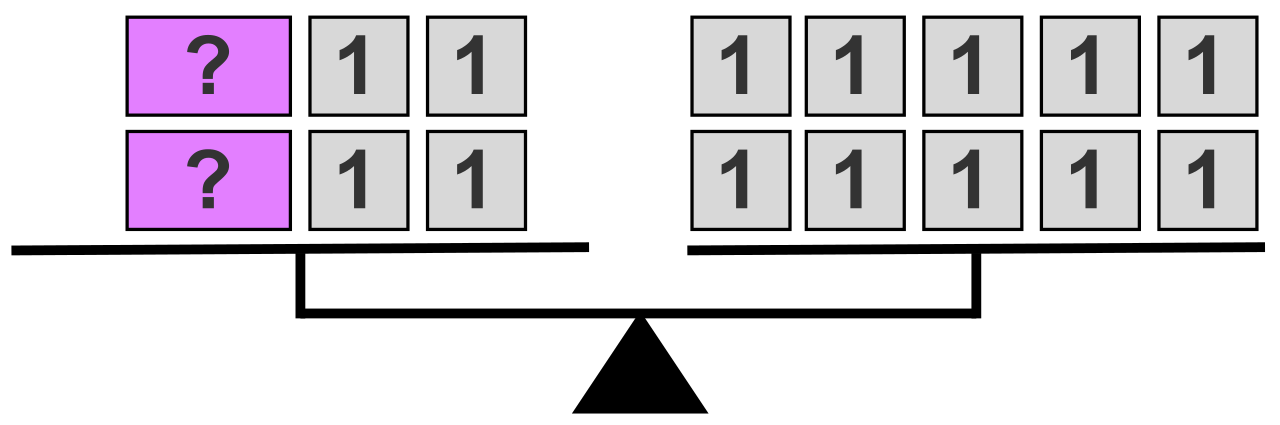
However, as an elite educator, you must handle this algorithm with extreme caution. Relying strictly on cross-multiplication can obscure the underlying proportional relationship for young learners. It treats mathematics like a magic trick—moving numbers diagonally across an equal sign with no logical justification. Teach students to find the equivalent fraction scale factor first (multiplying 43 by 33 to get 129). Reserve cross-multiplication only for messy decimals or algebra where mental scaling fails.
By replacing blind procedures with visual models, scale factors, and an obsession with the referent whole, you transform fractions and ratios from arbitrary hurdles into the elegant tools they actually are. You teach your students not just how to calculate, but how to see the quantitative fabric of the world.