Comparing and Rounding Numbers
Not sure you’re ready?
Take the ~3-minute readiness diagnostic and see where you stand.
The base-ten number system assigns value to a digit based on the position of the digit relative to the decimal point. It is not merely a collection of arbitrary symbols, but a highly structural framework of magnitude. For a young mind first encountering multidigit mathematics, this concept is entirely abstract. A “4” written on a page always looks like a 4, regardless of whether it represents four units, four thousand units, or four-tenths of a unit. As an educator, your task is to unveil the hidden architecture behind these digits. You must translate symbolic digits into physical realities of magnitude, teaching students not just how to manipulate numbers, but how to accurately evaluate and estimate their weight in the real world.
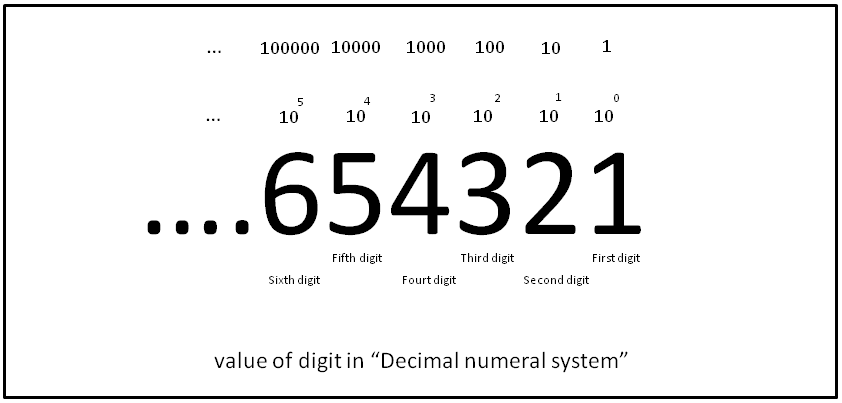
Comparing numbers is the fundamental act of evaluating magnitude. To do this accurately, we must read numbers based on their mathematical weight rather than their visual length.
Comparing multidigit numbers requires evaluating the value of digits starting from the greatest place value on the far left. We look at the largest "buckets" first because they hold the most value. If you are comparing 4,521 and 3,999, the thousands place immediately settles the debate; four thousands represent a greater magnitude than three thousands, rendering the remaining digits entirely irrelevant to the final comparison.
However, mathematical tension arises when the largest buckets match. When comparing numbers, if the digits in the greatest place value are identical, the comparison moves to the next highest place value to the right. We sweep from left to right, inspecting each descending magnitude until a difference emerges to break the tie.
The Illusion of Length in Decimals
While left-to-right comparison holds true across all real numbers, the introduction of the decimal point creates one of the most persistent cognitive traps in elementary mathematics.
Cognitive Bug: A common student misconception when comparing decimals is assuming a decimal with more digits has a greater mathematical value.
Because whole-number logic dictates that a three-digit number (150) is inherently larger than a two-digit number (99), students logically, but incorrectly, apply this heuristic to decimals. They look at 0.35 and 0.4, count the digits, and assume the longer number is larger.
To break this illusion, we must prove to the student that the decimal 0.35 has two digits but is mathematically smaller than the single-digit decimal 0.4.
How do we prove this? By manipulating the structure of the numbers without changing their value. Appending a zero to the rightmost end of a decimal number does not change the mathematical value of the decimal number. Therefore, we can transform 0.4 into 0.40. Adding placeholder zeros to the end of decimal numbers helps students correctly align matching place values for accurate comparison. Once 0.4 becomes 0.40, the student can visually align the tenths and hundredths places and clearly see that 40 hundredths is greater than 35 hundredths.
To build a deep, physical intuition for why appending a zero works, students must understand the fluid nature of base-ten units. This is governed by two inverse operations: grouping and ungrouping.
- Grouping refers to combining ten smaller place value units to form a single adjacent larger place value unit (e.g., gathering ten ones to forge a single ten).
- Ungrouping refers to breaking down a single larger place value unit into ten adjacent smaller place value units (e.g., shattering a hundred into ten tens).
Using base-ten blocks is an effective instructional strategy to visually demonstrate the grouping and ungrouping required to compare multidigit numbers. When a student physically trades one "long" block (a tenth) for ten "small cubes" (hundredths), the abstract math becomes a tangible reality.
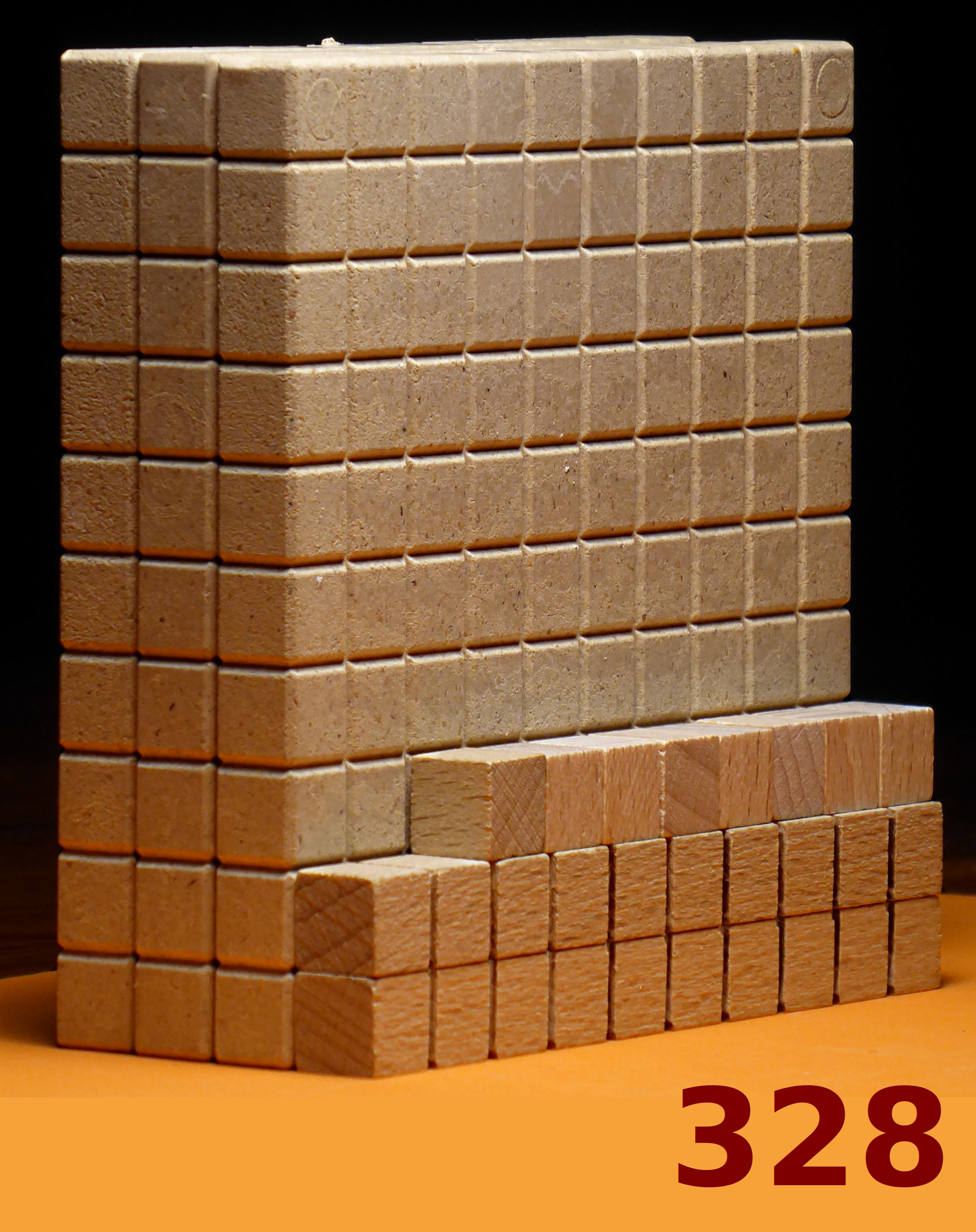
Ungrouping decimal numbers allows students to compare two distinct numbers by expressing both numbers entirely in the same smallest place value unit. Returning to our earlier decimal dilemma: expressing the decimal 0.4 as 40 hundredths is an example of ungrouping to facilitate a direct comparison with 0.35. When both quantities speak the shared language of "hundredths," the comparison relies on solid logic rather than visual trickery.
Once students can accurately compare magnitudes, they must learn to approximate them. Rounding a number simplifies the number's written form while keeping the new value mathematically close to the original value.
The Evaluation Protocol
Rounding is a strict algorithmic protocol driven by place value logic. To round a number to a specific target place value, the digit immediately to the right of that target place value must be evaluated. The digit to the right acts as the "judge," determining the fate of the target digit.
The rules are binary:
- When rounding, if the evaluating digit to the right of the target place value is less than 5, the digit in the target place value remains unchanged.
- When rounding, if the evaluating digit to the right of the target place value is 5 or greater, the digit in the target place value increases by one.
Why 5? Because 5 represents the exact mathematical midpoint in a base-ten system.
To prove this to a student, do not rely on rules alone. A number line is an effective visual pedagogical model to help students understand whether a specific number is physically closer to one rounded value or another. Plotting 73 on a number line bounded by 70 and 80 makes it physically obvious why 73 rounds down to 70. It eliminates the mystery. Teaching rounding strictly through rote memorization of rules often masks a student's lack of underlying conceptual place value understanding. If they only memorize "five or more, raise the score," they are doing a parlor trick, not mathematics.

The Ripple Effect: Grouping During Rounding
Rounding is usually straightforward until the target digit is a 9 and the evaluating digit demands it increase. Here, the concepts of rounding and grouping collide.
Grouping is necessary during rounding when increasing a target digit of 9 forces a rollover into the next highest place value unit. Because a single place value slot can only hold the digits 0 through 9, forcing a 9 to become a 10 shatters the container, spilling value into the next column to the left.
Consider a complex rollover. Rounding the number 3,996 to the nearest ten requires grouping tens into hundreds and also grouping hundreds into thousands.
- Target: Tens place (9). Evaluating digit: Ones place (6).
- The 6 forces the 9 (tens) to increase by one, making it 10 tens.
- We must group those ten tens into one hundred, forcing the hundreds place (9) to increase to 10 hundreds.
- We must group those ten hundreds into one thousand, forcing the thousands place (3) to increase to 4.
- The simplified result is 4,000.
Once the target digit has been resolved, students must clean up the "tail" of the number. The rules for this cleanup depend entirely on whether they are dealing with whole numbers or decimals, and this divergence is a major source of classroom error.
Whole-Number Cleanup
After rounding a whole number, all digits to the right of the target rounded place value are changed to zeros. If you round 4,281 to the nearest hundred, the 8 and 1 must become zeros, resulting in 4,300. Those place-value slots must be filled to maintain the magnitude of the thousands and hundreds places.
Cognitive Bug: A common student misconception in whole-number rounding is successfully changing the target digit while failing to turn the subsequent smaller digits into zeros. A student might round 4,281 to the nearest hundred and write 43, collapsing a value in the thousands down to a value in the tens.
Decimal Cleanup
Decimals obey a different spatial logic. After rounding a decimal number, all digits to the right of the target rounded place value are dropped from the number entirely. If you round 6.782 to the nearest tenth, it becomes 6.8.
Cognitive Bug: A common student misconception in decimal rounding is appending extra zeros after the target rounded decimal digit instead of dropping the subsequent digits. A student might round 6.782 to the nearest tenth and write 6.800.
While 6.800 is mathematically equivalent to 6.8, it is structurally incorrect in the context of rounding. Appending those zeros actively communicates a false level of precision. By leaving the zeros, the student implies the number was precisely measured to the thousandths place, effectively defeating the purpose of rounding, which is to simplify the number's written form.
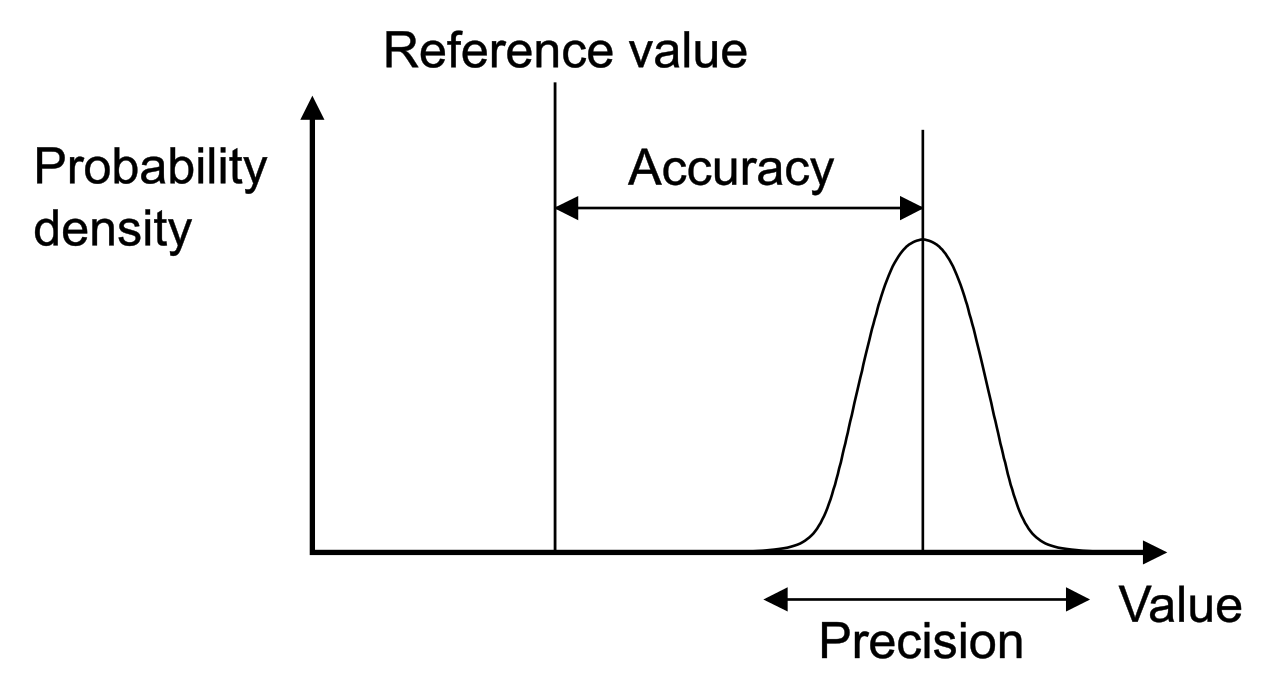
We do not teach rounding in a vacuum. We round so that we can estimate. Estimating arithmetic operations involves rounding multidigit or decimal numbers before calculating a final approximate result.
If a student needs to multiply 48×31, calculating the exact product mentally is arduous. But if the student understands place value, rounding, and magnitude, they can quickly round to 50×30 and estimate the product as 1,500. Estimation is the true test of number sense. When a student can look at a complex mathematical interaction, strip away the excess precision through rounding, and quickly arrive at a logical approximation, they have transitioned from simply reading symbols to truly speaking the language of mathematics.