Concepts of Family, Community, and Government
Not sure you’re ready?
Take the ~3-minute readiness diagnostic and see where you stand.
A child’s understanding of authority begins with the immediate and physical—who dictates bedtime, who provides dinner—and only gradually expands outward to the abstract mechanisms of society, such as who paves the roads or prints the currency in their pocket. For an early elementary student, the distinction between a classroom rule and a federal law is practically non-existent; both are simply environmental constraints handed down by powerful adults. Your profound task as an educator is to guide students through these expanding concentric circles of human organization. You are not just teaching a list of civic vocabulary words; you are narrating the fundamental story of how human beings organize themselves to share resources, resolve disputes, and survive together.
To teach this effectively, you must possess an inflexible grasp of the architecture of American society—from the smallest social unit to the highest constitutional authorities.
Before children can understand the abstraction of a government, they must understand the groups to which they already belong. Social organization begins at the most local level possible.
A family acts as the primary social unit of society. This is ground zero for a child's understanding of the world. Long before a child ever interacts with a state institution, families help socialize children by teaching cultural norms and values. When you see a student share a crayon or raise their hand, you are witnessing the output of socialization that began within the family unit.

As families interact with one another, the circle expands. A community is formed when individuals and families live in the same geographic area or share common interests. A community is the recognition that we cannot thrive in total isolation. Because a community is an interdependent group, communities establish shared public resources like libraries and parks to benefit all community members.
Instructional Insight: When teaching community resources, anchor the concept in efficiency and shared benefit. Ask your students: "Could every single family afford to buy 10,000 books for their own house? No. So, what is the community's solution?" This instantly illuminates why public libraries exist.

The Boundary Lines: Rules vs. Laws
A major conceptual hurdle for young learners is differentiating between a rule and a law. Students often conceptualize laws simply as "really important rules." You must refine this.
- Rules are guidelines established for specific groups such as individual families or individual schools. If a student breaks a rule (e.g., running in the hallway), the consequence is limited to that specific group's authority.
- Laws are binding rules created by a recognized government for all citizens within a specific jurisdiction.
The critical distinction lies in who creates them and who they apply to. A school principal can change a school rule tomorrow, but they cannot pass a law.
Once students grasp why communities need laws, you must introduce them to who creates and enforces those laws. The United States government operates at local, state, and federal levels.
A common student misconception is the "Russian Nesting Doll" or "Corporate Ladder" model of government. A third-grader often assumes the President is simply the "boss" of the Governor, who is the "boss" of the Mayor. This is fundamentally incorrect. The United States does not operate a top-down monarchy; it operates on the principle of Federalism, which is the system of sharing and dividing power between a national central government and individual state governments.

To explain why the states have their own distinct power, you must look to the United States Constitution. The Tenth Amendment to the United States Constitution reserves powers not delegated to the federal government for the states. If the Constitution does not explicitly hand a job to the federal government, that job belongs to the states or the people.
However, what happens when a state law and a federal law clash? The Constitution provides a tiebreaker: The Supremacy Clause of the United States Constitution dictates that federal law overrides state law in cases of direct conflict.
One of the most effective ways to build Content Knowledge for Teaching in civics is to master why certain powers belong to specific levels of government. If you understand the logic, you can guide students through sorting activities rather than asking them to memorize lists.
1. Federal Powers (The National Voice)
The federal government handles issues that require a single, unified national voice. It would be chaos if all fifty states operated as independent countries on the world stage. Therefore:
- The federal government holds the exclusive authority to declare war and maintain a national military.
- The federal government negotiates treaties with foreign nations.
- The federal government holds the exclusive power to print and coin money. (Imagine the economic nightmare of trading Texas dollars for Ohio dollars).
- The federal government is solely responsible for regulating interstate commerce (business and trade that crosses state lines).

2. State Powers (The Keepers of the Tenth Amendment)
State governments handle the major structural systems that govern our daily civic lives. Because of the Tenth Amendment, states possess vast authority:
- State governments hold primary responsibility for establishing public school systems and educational standards. (This is why teacher certification requirements and state testing vary wildly depending on where you live).
- State governments hold the authority to issue driver licenses and marriage licenses.
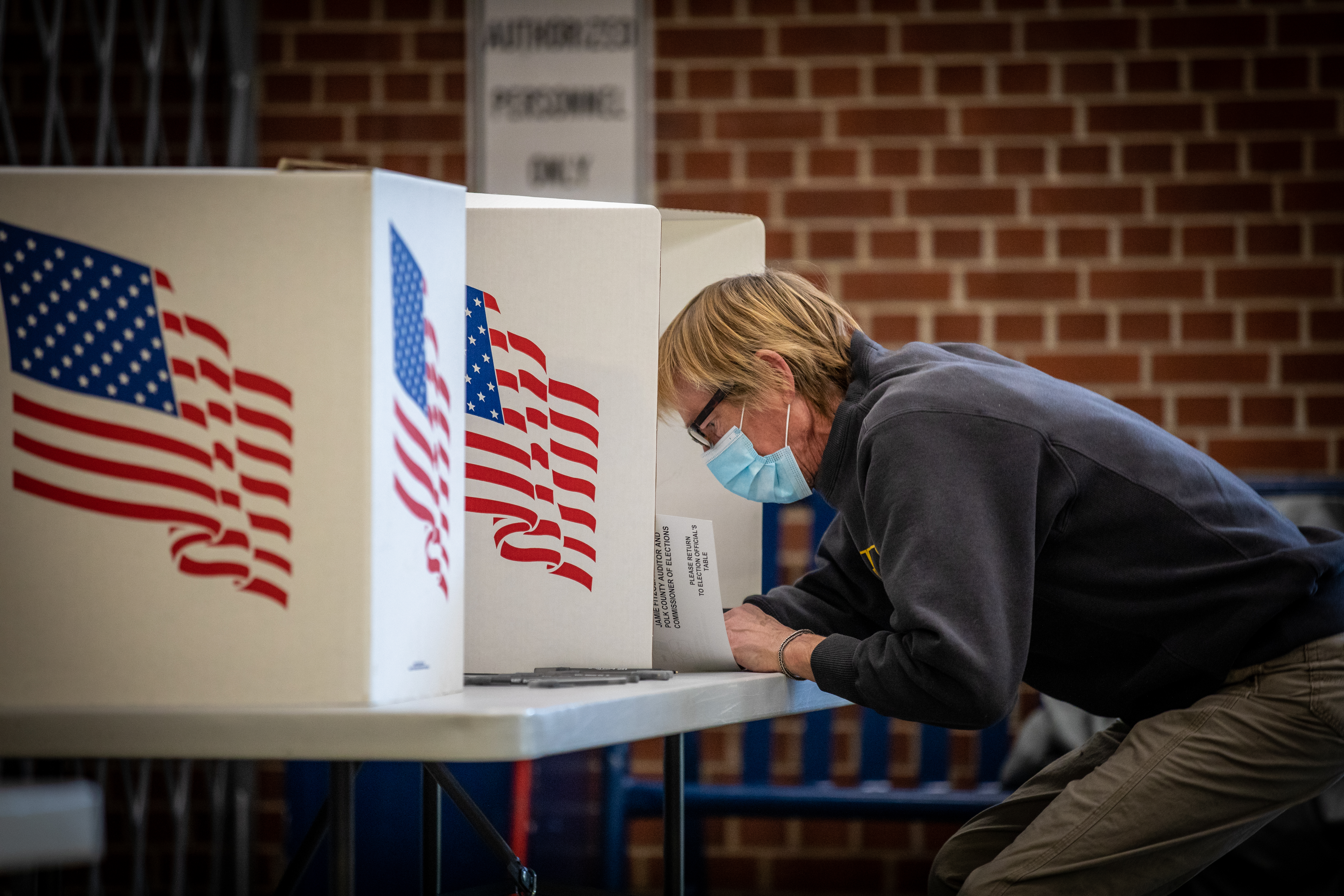
- State governments are responsible for conducting local and national elections. (Even when we vote for a federal President, the state government runs the voting booths).
3. Local Powers (The Daily Municipal Reality)
Local governments (cities, towns, counties) handle the immediate, physical realities of a community. If a student looks out their front window, almost everything they see is managed locally:
- Local governments oversee daily municipal services like garbage collection and water processing.
- Local governments are responsible for organizing municipal police and municipal fire departments.
- Local governments manage local zoning laws and maintain municipal parks.

4. Concurrent Powers (The Shared Responsibilities)
Sometimes, different levels of government must perform the same type of task simultaneously to function. Concurrent powers are specific government responsibilities shared simultaneously by both state and federal governments.
- The power to levy taxes is a concurrent power held by both state and federal governments. (Citizens pay federal income tax and state/local taxes to fund the different services each provides).
- The power to establish court systems is a concurrent power held by both state and federal governments. (There are federal courts for federal crimes, and state courts for state crimes).
- The power to build and maintain roads is a concurrent power shared by local, state, and federal governments. (A neighborhood cul-de-sac is local; a state highway is state; the Interstate Highway System involves federal funding and oversight).

We have divided power vertically (Local, State, Federal). Now, we must divide power horizontally.
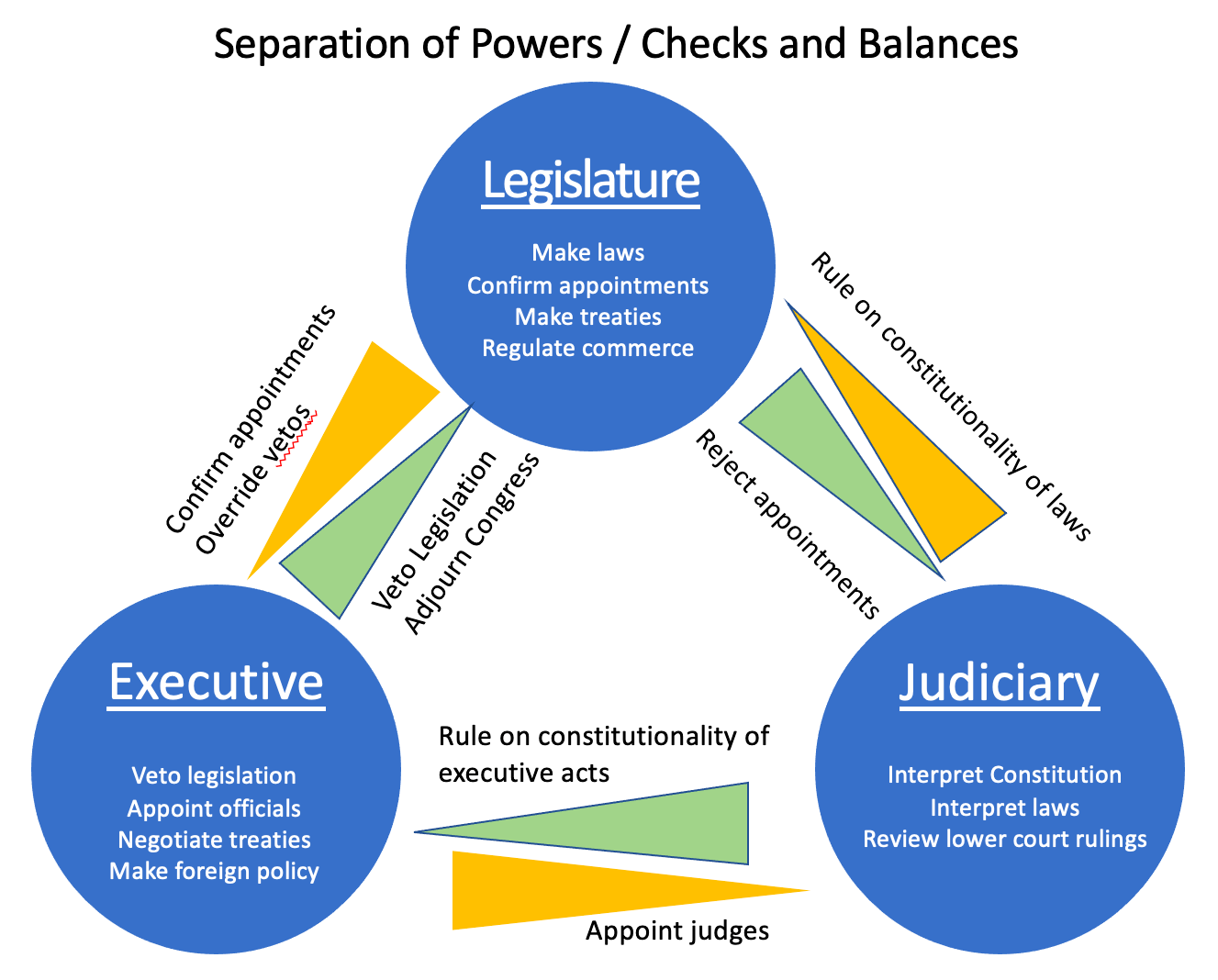
To prevent tyranny, the United States Constitution divides the federal government into the legislative, executive, and judicial branches.
Think of this like an intricate game on the recess playground.
- The legislative branch of government holds the primary responsibility for creating new laws. (The kids who invent the rules of the game).
- The executive branch of government holds the primary responsibility for enforcing laws. (The kids who make sure everyone is actually playing by the rules).
- The judicial branch of government holds the primary responsibility for interpreting laws and determining constitutionality. (The referee who settles an argument over what a specific rule actually means).
Why make it so complicated? Because humans are inherently prone to abusing power.
- Separation of powers ensures that no single branch of government gains absolute control over the entire system.
- Checks and balances allow each branch of government to limit the actions of the other two branches. (For example, the legislature can pass a law, but the executive can veto it. The executive can enforce a law, but the judicial can declare it unconstitutional).
As an educator, you must be able to seamlessly map the three branches of government across the three levels of government. If a student asks, "Who is the President of our city?", you need to translate that misconception into accurate civic vocabulary.
| Level of Government | Executive Branch (Enforces) | Legislative Branch (Creates) | Judicial Branch (Interprets) |
|---|---|---|---|
| Federal | The President of the United States leads the federal executive branch. | The United States Congress serves as the legislative branch of the federal government. | The United States Supreme Court is the highest court in the federal judicial branch. |
| State | A governor leads a state executive branch. | A state legislature serves as the legislative branch of a state government. | State supreme courts serve as the highest judicial authority within an individual state system. |
| Local (Municipal) | A mayor or city manager typically leads a local municipal executive branch. | A city council or town board serves as the legislative branch of a local municipal government. | Local and municipal courts handle local ordinances and minor infractions. |
Bringing It Back to the Classroom
When you stand before a classroom of young learners, you are their guide to the broader world. When you teach these concepts, avoid dry memorization.
When you teach about the mayor or city manager, ask the students who they would complain to if the garbage collection stopped working. When you teach about the President and the federal government, show them the unified national military or let them hold a quarter to physically touch the exclusive power to print and coin money.
By weaving the intimate reality of the family and community with the vast mechanisms of federalism, concurrent powers, and the separation of powers, you give your students a profound gift: the ability to understand, and eventually participate in, the society they will one day inherit.