Conventions of Standard Academic English
Not sure you’re ready?
Take the ~3-minute readiness diagnostic and see where you stand.
Language is not merely a collection of words; it is a system of physics governing how human thoughts are transferred from one mind to another. When a second grader places a period before a thought is finished, or spells "jumped" as "jumpt," they are not simply breaking arbitrary rules. They are experimenting with the structural mechanics of Standard Academic English. As an educator, your role goes beyond wielding a red pen to correct these variations. You must understand the underlying anatomy of the language to diagnose exactly why a student writes "the dogs tail" instead of "the dog's tail," or why they logically—yet incorrectly—assume the past tense of "go" must be "goed." By mastering the invisible architecture of grammar, punctuation, and morphology, you shift from simply demanding compliance to teaching students how to purposefully construct meaning.
To teach students how to build clear sentences, you must first understand the raw materials of syntax. Words combine into larger structural units, much like atoms forming molecules.
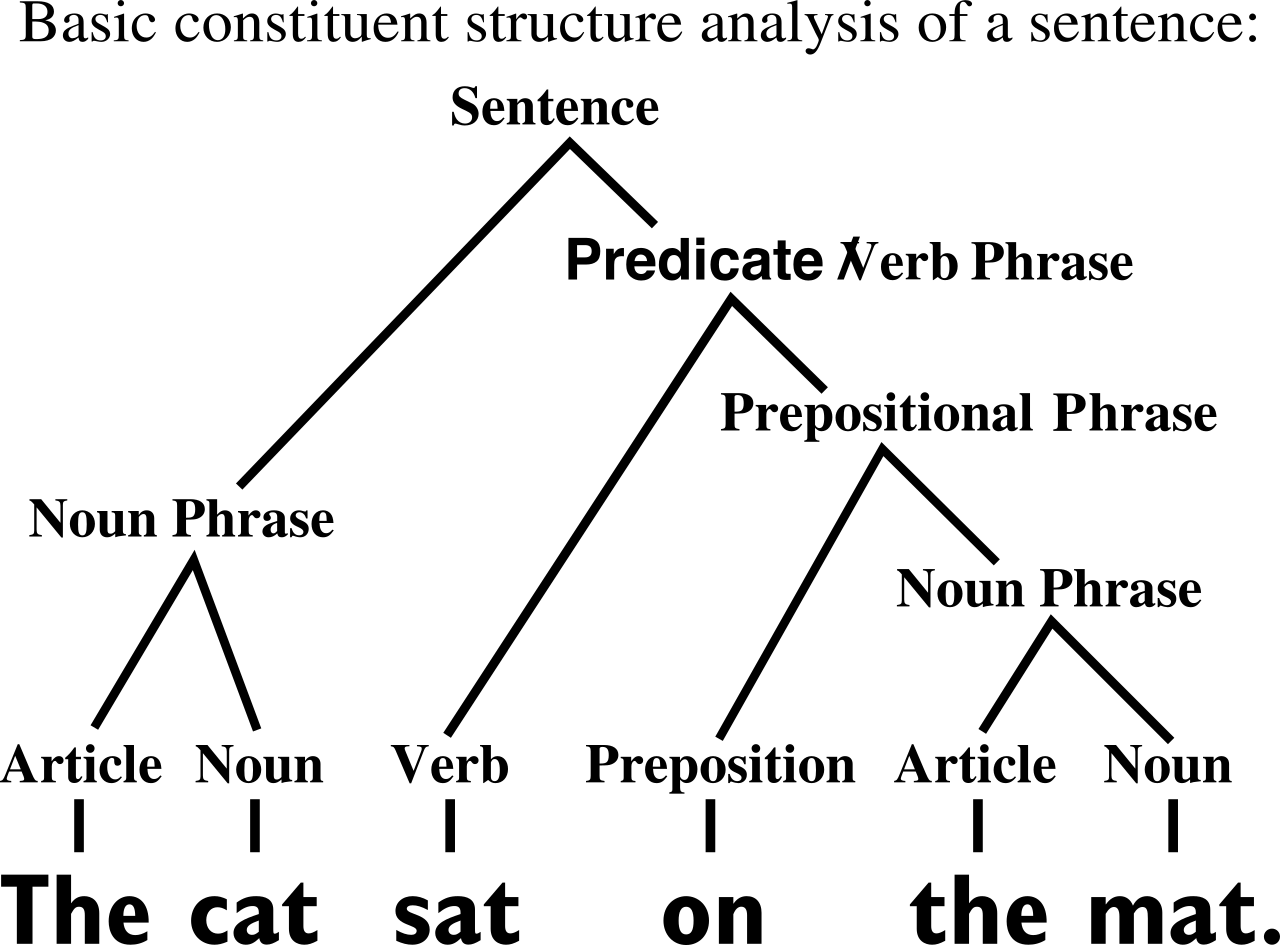
A phrase is a group of related words lacking a subject-verb combination. (e.g., in the classroom, running quickly)
If phrases are the atoms, clauses are the molecules.
An independent clause contains a subject and a verb, and importantly, it expresses a complete thought. Because of this, it can stand entirely on its own.
A dependent clause contains a subject and a verb, but it does not express a complete thought. It relies on being attached to an independent clause to make sense.
When a student writes, "Because it was raining," they have supplied a subject (it) and a verb (was raining). However, the word because creates a dependent clause. It leaves the reader hanging.
The Four Sentence Structures
Students intuitively use complex sentence structures when they speak, but written discourse requires deliberate engineering. There are four distinct sentence structures you will teach and encounter:
- A simple sentence consists of exactly one independent clause and contains no dependent clauses.
- Example: "The students read books."
- A compound sentence contains two or more independent clauses but contains no dependent clauses.
- Example: "The students read books, and the teacher graded papers."
- Independent clauses in a compound sentence are often joined by a coordinating conjunction. You can teach students to remember coordinating conjunctions using the acronym FANBOYS: for, and, nor, but, or, yet, and so.
- A complex sentence contains exactly one independent clause and at least one dependent clause.
- Example: "While the students read books, the teacher graded papers."
- A compound-complex sentence contains two or more independent clauses and at least one dependent clause.
- Example: "While the students read books, the teacher graded papers, and the principal observed the class."
Diagnosing Structural Breakdown
When students experiment with sentence boundaries, they frequently generate three classic structural errors. Understanding the anatomy of clauses allows you to target your instruction.
- A run-on sentence incorrectly fuses two independent clauses without appropriate punctuation. The boundary between two complete thoughts is erased.
- A comma splice occurs when two independent clauses are joined with only a comma. Commas are too weak to hold two independent clauses together without a coordinating conjunction.
- A sentence fragment is an incomplete sentence punctuated as a complete sentence. Sentence fragments often occur when a dependent clause is punctuated as a standalone sentence (e.g., "Which was why the boy ran.").
Verbs are the engines of sentences—they dictate time, completion, and continuity. To help students narrate their experiences, you must understand both tense and aspect.
Moving Through Time: Tense and Aspect
- Present tense verbs describe an action happening currently.
- Past tense verbs describe an action that has already occurred.
- Future tense verbs describe an action that will happen at a later time.
But time is not just past, present, and future. We also need to describe the status of an action—whether it is ongoing or finished.
- The progressive verb tense indicates an ongoing continuous action. The progressive verb tense uses a form of the "be" verb along with a present participle ending in "-ing" (e.g., is running, was running).
- The perfect verb tense describes completed actions. The perfect verb tense uses a form of the auxiliary verb "have" along with a past participle (e.g., has finished, had finished).
The Subject-Verb Agreement Trap
The fundamental rule of grammatical harmony is subject-verb agreement, which requires a singular subject to be paired with a singular verb form, and a plural subject to be paired with a plural verb form.
However, students (and adults) are frequently tricked by cognitive proximity. Intervening prepositional phrases between a subject and verb frequently cause subject-verb agreement errors among students.
- Student error: "The box of crayons are empty."
- Why it happens: The student hears the plural noun "crayons" right next to the verb and reflexively chooses the plural verb "are." As an educator, you must teach them to locate the true subject ("box") and look past the intervening prepositional phrase ("of crayons") to pair the singular subject with the singular verb ("is").
Punctuation marks and capital letters are the visual signposts of written language. They manage the reader's cognitive load, telling them when to pause, what is uniquely important, and who owns what.
The Logic of Capitalization
Capital letters shout to the reader, "Pay attention, this is a boundary or a specific entity!"
- Capitalization is required for the first word of every sentence.
- Capitalization is required for all proper nouns, which designate specific names of people, places, and organizations (e.g., Eleanor Roosevelt, Mount Everest, United Nations).
When capitalizing titles of books, essays, or movies:
- The first and last words of a title must be capitalized.
- Important words within a title must be capitalized.
- Articles (a, an, the), short prepositions (in, on, of), and coordinating conjunctions in the middle of a title are typically not capitalized.
The Architecture of the Comma
Commas serve as structural hinges in a sentence. They organize lists, join major clauses, and set off supplementary information.
- A comma separates items in a series of three or more items.
- A comma precedes a coordinating conjunction linking two independent clauses.
- A comma follows an introductory phrase or dependent clause at the beginning of a sentence.
The Apostrophe: Possession vs. Contraction
The apostrophe has two highly specific, completely distinct jobs, and conflating them is one of the most common errors in elementary writing.
- An apostrophe indicates possession (e.g., the dog's bone).
- An apostrophe indicates omitted letters in a contraction (e.g., don't, couldn't).
The Pedagogical Pitfall: Students frequently misapply apostrophes to make regular nouns plural (e.g., writing apple's instead of apples). You must explicitly teach that pluralization requires only an "s" or "es," while an apostrophe signals ownership or missing letters.
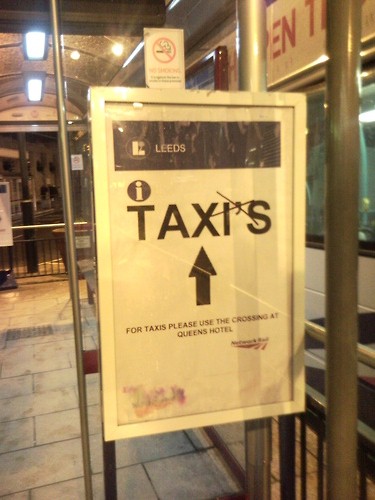
Furthermore, students often confuse the possessive pronoun "its" with the contraction "it's".
- The pronoun "its" does not use an apostrophe to show possession (e.g., The cat licked its paw).
- The contraction "it's" represents the phrase "it is" or "it has" (e.g., It's raining).
Giving Voice: Quotation Marks
Quotation marks enclose the exact words spoken by someone in direct speech. As a matter of formatting convention, commas and periods are placed inside closing quotation marks in standard American English.
- Correct: "I want to read that book," she said.
When young readers look at an unfamiliar word, they are not looking at a random assortment of letters; they are observing layers of historical rules and structural logic. We divide this logic into two domains: Orthography (sound-symbol spelling rules) and Morphology (meaning-based word structures).
Unlocking Orthography
Orthography is the conventional spelling system of a language. For early readers, deciphering English orthography begins with predictable vowel patterns:
- A CVC word consists of a consonant, a vowel, and a consonant (e.g., cat, hop). CVC words typically contain a short vowel sound.
- The CVCe spelling pattern involves a consonant, a vowel, a consonant, and a final silent "e" (e.g., make, hope). The final silent "e" in a CVCe word usually signals the preceding vowel to represent a long vowel sound.
- Vowel teams consist of two or more consecutive vowels representing a single vowel sound (e.g., boat, rain).
- An r-controlled vowel represents a sound heavily influenced by the consonant "r" immediately following the vowel (e.g., car, bird), changing it so that it is neither strictly short nor long.
When students begin adding endings (suffixes) to these words, they must master three critical spelling rules to preserve the original vowel sounds:
- Doubling the final consonant before adding a vowel suffix is a common spelling rule for CVC words (e.g., hop becomes hopping). This prevents the word from accidentally looking like a CVCe word.
- Changing a final consonant "y" to "i" before adding a suffix is a common English spelling rule (e.g., happy becomes happiness).
- The final silent "e" is typically dropped before adding a suffix beginning with a vowel (e.g., hope becomes hoping).
The Power of Morphology
As students advance, spelling shifts from primarily sound-based rules to meaning-based structures. Morphology is the study of the internal structure of words.
A morpheme is the smallest unit of meaning in a language. The word "unbreakable" has three morphemes: un- (not), break (shatter), and -able (capable of).
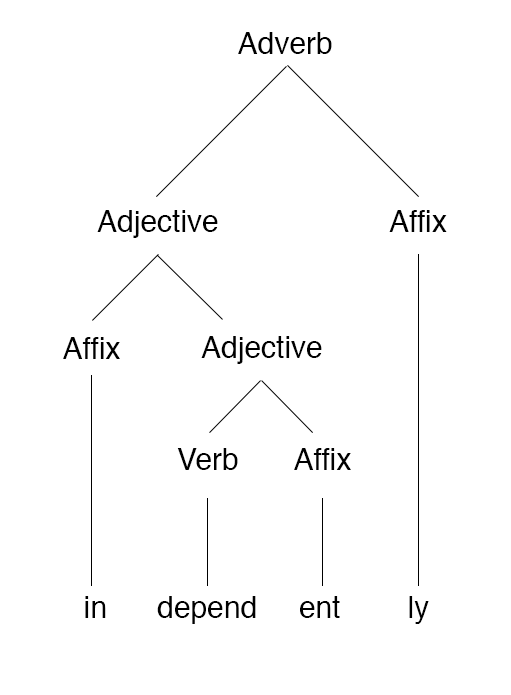
To teach morphology, you must distinguish between the core of a word and the pieces attached to it.
- A base word functions as a standalone meaningful word (e.g., act).
- A root word carries the primary meaning of a word. However, English root words often require affixes to function as complete words (e.g., the Latin root ject means "throw," but requires affixes like re- to become the word reject).
We modify these bases and roots using affixes:
- A prefix is an affix attached to the beginning of a base word or root.
- A suffix is an affix attached to the end of a base word or root.
The Two Types of Affixes: Inflectional vs. Derivational
For Content Knowledge for Teaching (CKT), distinguishing between the two categories of suffixes is critical because they serve entirely different grammatical functions.
| Feature | Inflectional Suffixes | Derivational Affixes |
|---|---|---|
| Purpose | Indicate grammatical features such as tense, number, or degree (e.g., -s, -ed, -ing, -er, -est). | Create new words by altering the core meaning of the base word (e.g., -ful, -ness, un-, re-). |
| Part of Speech | Inflectional suffixes never change the core part of speech of the base word. A noun stays a noun (boy → boys); a verb stays a verb (jump → jumping). | Derivational affixes often change the part of speech of the base word. (e.g., teach [verb] → teacher [noun]; happy [adj] → happiness [noun]). |
"Goed" and "Runned": The Genius of Overgeneralization
When grading papers, you will inevitably encounter sentences like, "I goed to the store and runned home."
It is vital to understand that the words "goed" and "runned" represent common student errors of overgeneralizing the "-ed" past tense suffix. Elementary students frequently overgeneralize the "-ed" suffix to form the past tense of irregular verbs.
This is not a sign of carelessness. From a pedagogical perspective, it is a sign of brilliant cognitive pattern recognition! The child has successfully internalized the inflectional morphological rule: To place an action in the past, attach "-ed." They are simply applying a regular rule to irregular verbs. Your instructional response is not to teach them the "-ed" rule—they already know it—but to explicitly introduce the concept of irregular verbs that do not conform to standard morphological patterns.
By understanding the rules of clauses, verb tense, mechanics, and morphology, you will no longer just point out errors. You will see exactly how your students are processing the blueprint of the English language, allowing you to meet them precisely where their understanding ends and their next breakthrough begins.