Vocabulary Acquisition and Use
Not sure you’re ready?
Take the ~3-minute readiness diagnostic and see where you stand.
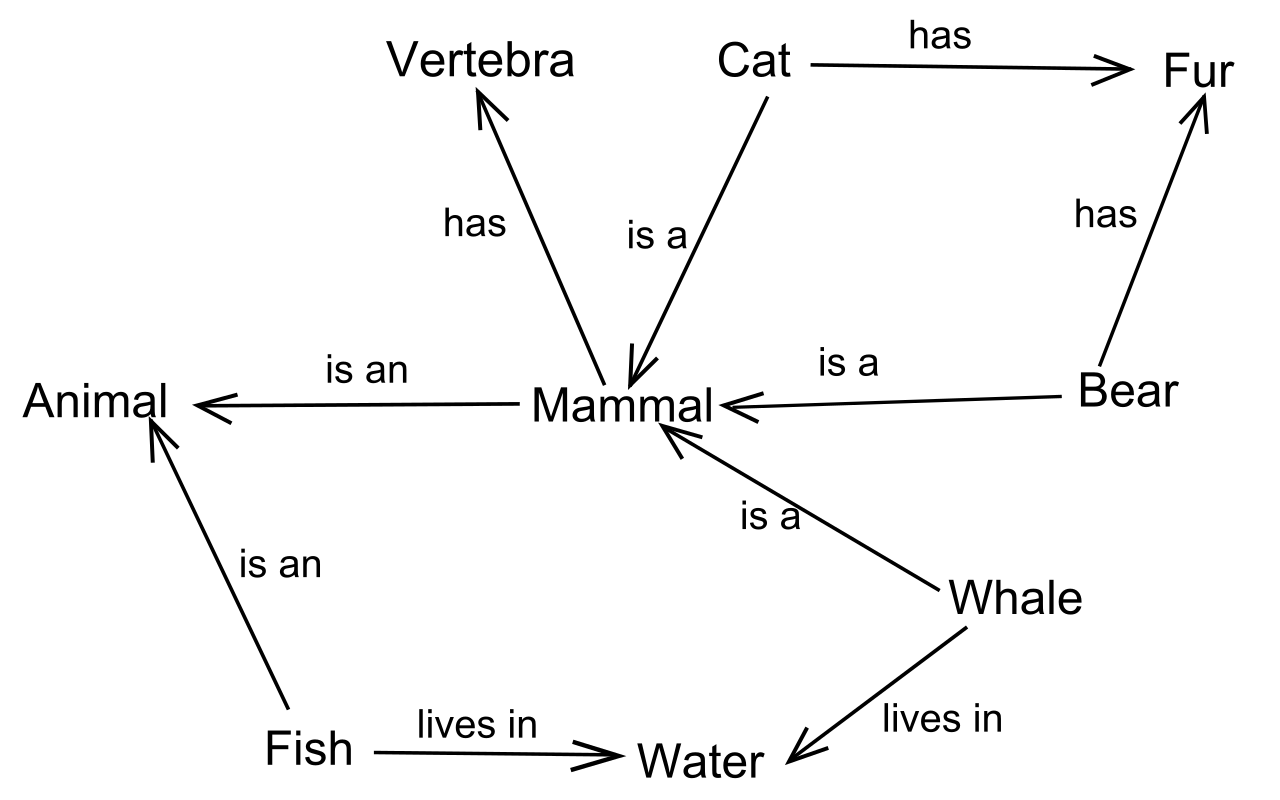
Language acquisition is not the mere stockpiling of isolated definitions; it is the construction of a vast, interconnected semantic network. When a young reader encounters an unfamiliar word, they do not consult a mental dictionary. Instead, they search for structural familiarities within the word itself, cast about for contextual anchors in the surrounding text, and draw relational ties to concepts they already understand. For the elementary educator, teaching vocabulary goes far beyond assigning a list of words on Monday and testing them on Friday. It requires an architectural understanding of how words are built, how their meanings shift across contexts, and how to systematically guide students from literal interpretations to nuanced, abstract comprehension.
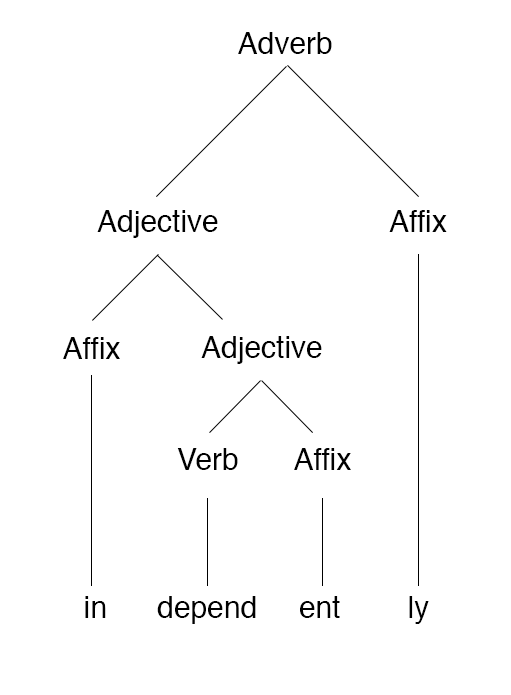
To teach vocabulary effectively, we must first recognize that many words are not solitary monoliths. They are composites. Morphology is the linguistic study of the internal structure of words and their distinct meaningful parts. By teaching students the mechanics of morphology, we hand them a master key to unlock thousands of unknown words.
A morpheme constitutes the smallest indivisible unit of meaning within a language.
Consider the word unbreakable. It contains three distinct morphemes: un- (not), break (to shatter), and -able (capable of).
At the core of a complex word sits the root word, which forms the primary lexical base containing the word's core meaning (e.g., break). Attached to these roots are affixes—bound morphemes that cannot stand alone but are attached to a root word to alter its meaning or grammatical function.
Affixes come in two primary physical positions:
- Prefixes: Affixes attached to the beginning of a root word (e.g., re-, pre-, un-).
- Suffixes: Affixes attached to the end of a root word (e.g., -ly, -tion, -ed).
The Grammatical Power of Suffixes
As a teacher, you must distinguish between two types of suffixes, as they behave entirely differently in a student's cognitive framework:
- Derivational Suffixes: Adding a derivational suffix to a base word frequently changes the base word's part of speech. If a student knows the verb educate, adding the derivational suffix -tion magically transforms it into a noun (education). Adding -ive turns it into an adjective (educative).
- Inflectional Suffixes: These do not change the fundamental grammatical category or primary meaning of the base word. Instead, inflectional suffixes indicate grammatical features like verb tense, plurality, or possession. For example, adding -s to cat (plurality) or -ed to jump (tense) leaves the core meaning and part of speech completely intact.
Why Morphology Matters in the Classroom
Why do we teach this? Because explicit morphological instruction assists students in systematically decoding and deriving the meanings of complex multisyllabic words. When you teach a child that the Latin root spect means "to look," you aren't just teaching one word; you are providing a generative tool. Knowledge of common Greek and Latin roots provides a generative tool for deducing the meanings of many unfamiliar academic English words (e.g., spectator, inspect, perspective, spectacle).
Words are precise instruments, but they also carry emotional weight. To read deeply, students must distinguish between the literal and the implied.
- Denotation refers to the literal, objective dictionary definition of a word.
- Connotation represents the emotional or cultural associations attached to a specific word beyond its literal definition.
Words with identical denotations can possess entirely different connotations. Imagine a student writing about a character who saves their money. They could describe the character as thrifty (positive connotation: wise, careful) or stingy (negative connotation: greedy, ungenerous). The denotation—holding onto money—is identical, but the flavor is entirely different.
Teaching this distinction is critical for advanced reading comprehension, because understanding connotative meanings allows readers to accurately identify an author's tone and bias.
Navigating Multiple Meanings
English is famously rife with words that look or sound alike but mean entirely different things. We classify these into two distinct traps for the young reader:
- A homophone is a word that shares the same pronunciation as another word but possesses a different meaning and spelling (e.g., bare vs. bear; their, there, they're).
- A homograph is a word that shares the same spelling as another word but possesses a different meaning and potentially a different pronunciation (e.g., a bow in your hair vs. taking a bow on stage).
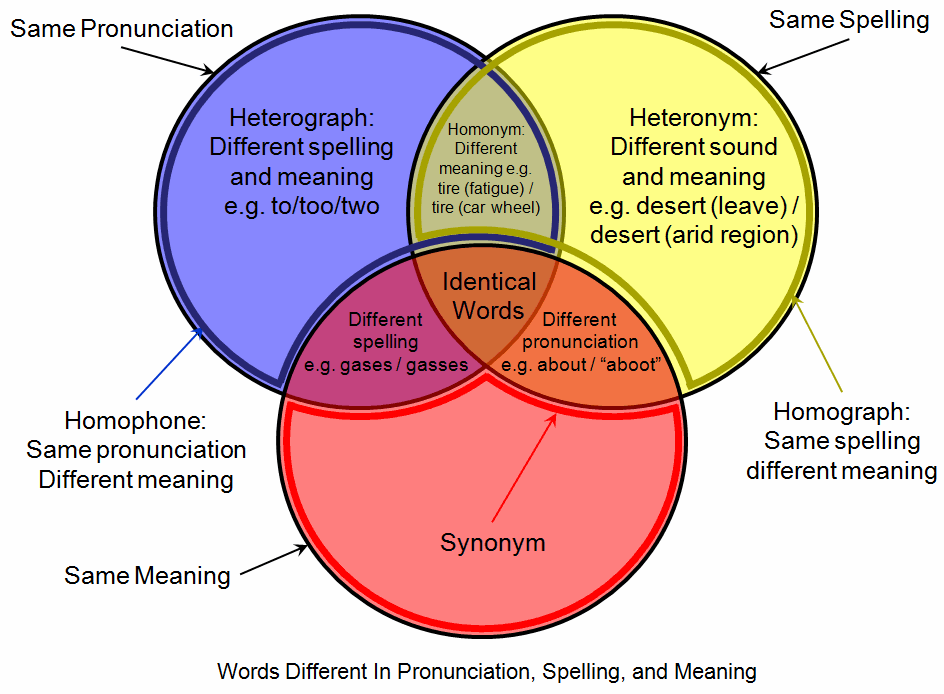
Because of homographs, multiple-meaning words require students to actively utilize surrounding context clues to determine the correct applied definition. A word like bat is semantically empty until the surrounding sentence tells the student whether to imagine a baseball game or a dark cave.
When a student hits a word they do not know, their first line of defense is often the surrounding text. Context clues are textual hints embedded within a sentence or paragraph that assist readers in deciphering the meaning of unfamiliar words.
We can teach students to look for four specific types of context clues:
- Definition Context Clues: The author takes pity on the reader and provides the explicit meaning of an unfamiliar word directly within the surrounding text. (Example: "The entomologist, a scientist who studies insects, carefully examined the beetle.")
- Synonym Context Clues: These offer a word with a similar meaning near an unfamiliar word to help reveal the unfamiliar word's definition. (Example: "The monarch was a benevolent, or kind, ruler.")
- Antonym Context Clues: These utilize contrast to reveal an unfamiliar word's meaning by presenting a word with an opposite meaning nearby. Look for signal words like but, however, or unlike. (Example: "Unlike his gregarious brother, Paul was entirely withdrawn.")
- Inference Context Clues: The hardest of the bunch. These require a reader to apply logical reasoning and prior background knowledge to deduce an unknown word's meaning based on the overall scenario.
The Limitation of Context Clues While incredibly useful, you must teach students not to over-rely on context alone. A critical pedagogical reality is that context clues frequently lack sufficient information to provide a precise or complete definition of an unknown word. If a sentence reads, "The chupacabra walked through the forest," the context only tells the student that a chupacabra is something capable of walking. They might guess it's a dog, a person, or a monster—the context simply isn't robust enough.

As texts become more complex, authors increasingly rely on figurative language, which involves using words in ways that deviate from their literal definitions to achieve a specific descriptive effect. Elementary students must learn to map these abstract comparisons.
- A simile is a figure of speech that compares two different things using the words 'like' or 'as'. ("Her smile was as bright as the sun.")
- A metaphor is a figure of speech that makes a direct comparison between two unrelated things without using comparative words. ("The classroom was a zoo.")
- Personification is a literary device that assigns human qualities and behaviors to non-human entities or inanimate objects. ("The wind whispered through the trees.")
- Hyperbole is a figure of speech utilizing extreme exaggeration to make a point or show emphasis. ("I have a million pages of homework tonight.")
The Challenge of Idioms
An idiom is a culturally specific phrase possessing a figurative meaning that cannot be deduced from the literal definitions of its individual words. Examples include "spill the beans," "kick the bucket," or "under the weather."
Elementary students frequently misinterpret idioms due to a developmental tendency toward literal thinking. A second grader told it is "raining cats and dogs" will likely look up at the sky expecting a horrifying meteorological event. As educators, we must explicitly teach idioms as single units of cultural meaning, rather than letting students try to parse the individual words.
Humans do not store words alphabetically like a dictionary; we store them relationally. We understand a concept based on what it is like, what it is opposite to, and what category it belongs within.
- Synonyms are distinct words that share identical or highly similar meanings (e.g., happy and joyful).
- Antonyms are distinct words that possess diametrically opposite meanings (e.g., hot and cold).
For English Language Learners (ELLs), there is a powerful relational bridge across languages: Cognates. Cognates are words across two different languages that share similar meanings, spellings, and pronunciations due to shared linguistic roots. For instance, the English word family and the Spanish word familia. Leveraging native-language cognates provides a highly effective vocabulary acquisition strategy for English Language Learners, instantly validating their prior linguistic knowledge and accelerating English comprehension.
However, warn students about false cognates—words across different languages that appear visually or phonetically similar but possess entirely different meanings. For example, a Spanish-speaking student might encounter the English word embarrassed and assume it means pregnant (embarazada in Spanish).
Visualizing Word Relationships
To move vocabulary instruction from rote memorization to deep conceptual understanding, we employ visual strategies:
- Semantic Mapping: A visual graphic organizer strategy employed to illustrate the associative relationships and categories between different words. Think of a web with "Transportation" in the center, branching out to "Vehicles" (cars, buses) and "Infrastructure" (roads, bridges).
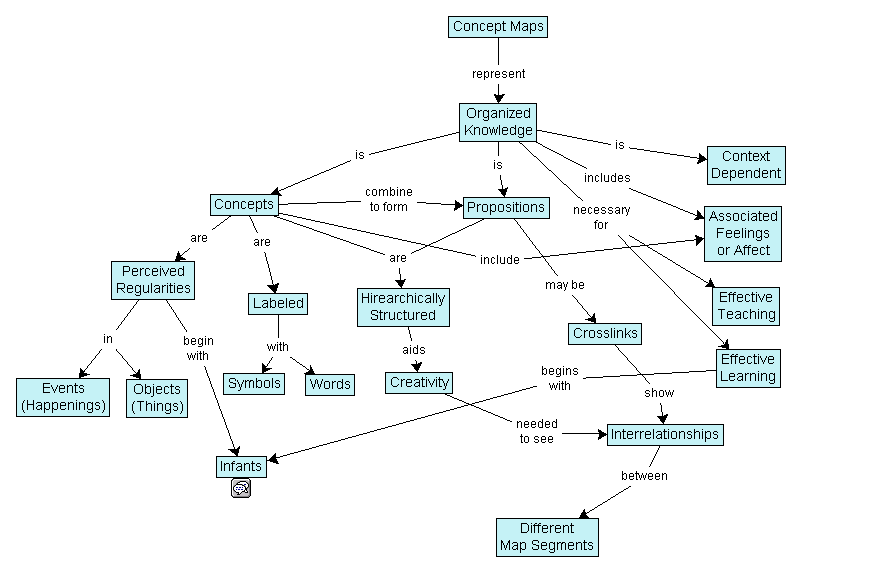
- Semantic Feature Analysis: This utilizes a visual matrix to guide students in exploring the precise similarities and differences within a set of related words.
| Word | Has Wheels? | Motorized? | Transports Many People? |
|---|---|---|---|
| Bicycle | Yes | No | No |
| Bus | Yes | Yes | Yes |
| Train | Yes | Yes | Yes |
By checking the boxes, students learn the nuanced boundaries that separate related concepts.
Students learn thousands of words a year, far more than any teacher could ever explicitly define. This is because incidental vocabulary learning occurs naturally and gradually through extensive independent reading and rich oral language experiences. A language-rich classroom environment is the bedrock of vocabulary growth.
However, incidental learning is not enough for academic success. Teachers must also engage in direct vocabulary instruction, which involves explicitly teaching carefully selected words alongside independent word-learning strategies.
But which words do we select? Educational researchers divide vocabulary into three tiers:
- Tier 1 Vocabulary: Consists of basic, everyday words that native speakers typically acquire informally without direct instruction (e.g., clock, happy, baby).
- Tier 2 Vocabulary: Consists of high-frequency, multiple-meaning words utilized across various academic text domains (e.g., analyze, contrast, predict, evaluate).
- Tier 3 Vocabulary: Consists of low-frequency, domain-specific terminology usually introduced within specific content area instruction (e.g., photosynthesis, isotope, legislature).
Where should an elementary teacher spend their precious instructional minutes? Evidence-based direct vocabulary instruction prioritizes the explicit teaching of Tier 2 vocabulary words to maximize reading comprehension. You do not need to teach Tier 1 (they already know them), and Tier 3 words are best taught specifically during the science or social studies lesson they belong to. Tier 2 words are the critical academic verbs and descriptive terms that unlock the entire curriculum.
The Mechanics of Mastery
Finally, when you do teach these Tier 2 words explicitly, remember two golden rules of vocabulary acquisition:
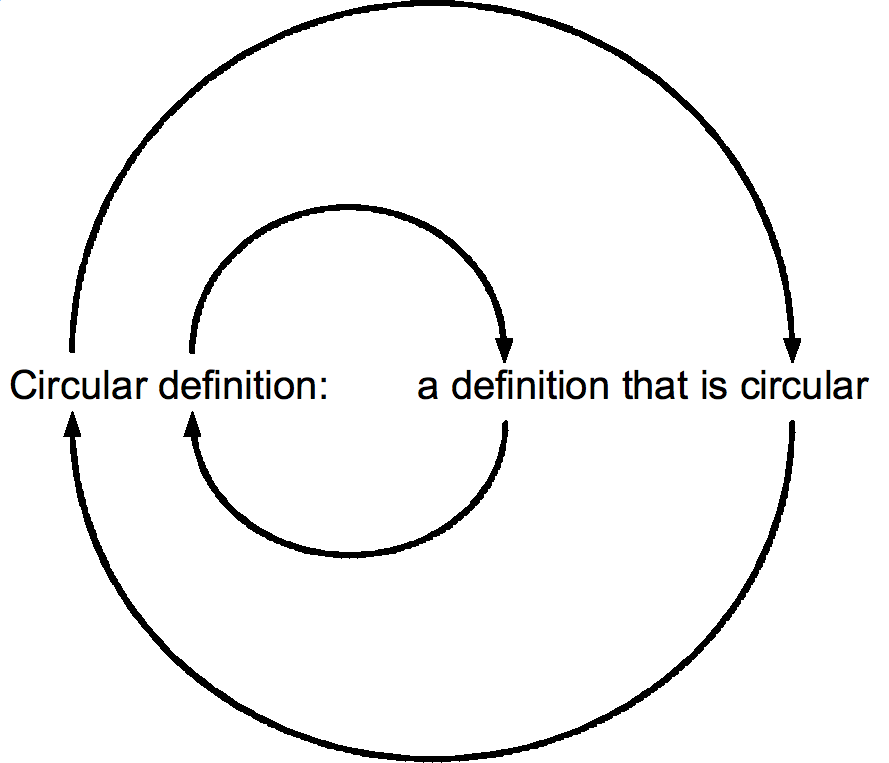
First, discard the dictionary. Dictionaries are written for adults to settle bets, not for children to learn concepts. Instead, use student-friendly definitions, which explain word meanings using accessible, everyday language rather than complex or circular dictionary phrasing. Instead of defining benevolent as "characterized by or expressing goodwill," tell the student, "If someone is benevolent, they enjoy doing kind things for other people."
Second, repetition is the engine of memory. A single worksheet will not suffice. Providing multiple exposures to a new vocabulary word across varied spoken and written contexts is necessary for deep word mastery. Students need to read the word in a story, use the word in a sentence, act the word out in a skit, and hear the teacher use the word in conversation. Only through this dynamic, multifaceted exposure does a string of letters transform into a permanent node in the child's rich semantic network.