Counting Concepts
Not sure you’re ready?
Take the ~3-minute readiness diagnostic and see where you stand.
The human mind does not inherently know that three apples, three claps of thunder, and three passing thoughts share an underlying mathematical property. To uncover this property, we rely on a profound abstraction: counting. As educators, observing a child learn to count is observing them map an invisible, highly structured logical system onto the chaotic physical reality around them. Counting is not merely reciting a memorized poem of number words; it is the construction of a quantitative scaffolding that will eventually support all arithmetic, algebra, and higher mathematics.
To teach this architecture, we must decompose exactly what happens when a student points at a pile of scattered blocks and successfully determines the total quantity. By breaking down the cognitive mechanisms, identifying where they break, and selecting the correct pedagogical interventions, we transition from merely demonstrating math to engineering a student's numerical cognition.

In 1978, cognitive psychologists Rochel Gelman and Randy Gallistel formally introduced the five fundamental counting principles. These principles serve as the diagnostic bedrock for early childhood mathematics. When a student struggles with counting, they are almost always violating one of these five specific rules.
Principle 1: Stable Order
The stable order principle requires number words to always be recited in the exact same conventional sequence when counting any group of items.
Before children attach numbers to objects, they often engage in rote counting, which is the verbal recitation of number names in sequence from memory without attaching the numbers to physical quantities. If a student consistently counts objects using an incorrect sequence like "one, two, four, five," they demonstrate a lack of the stable order principle. Similarly, a child counting objects as "one, two, three" and then later counting objects as "two, one, three" violates the stable order principle because they treat the sequence as fluid rather than fixed.
Principle 2: One-to-One Correspondence
The one-to-one correspondence principle states that each item in a set must receive exactly one distinct number word during the counting process.
When a student successfully coordinates their physical pointing with the spoken sequence, they transition from rote counting to rational counting, which is the act of assigning exactly one number name to each object in a group to mathematically determine the total quantity.
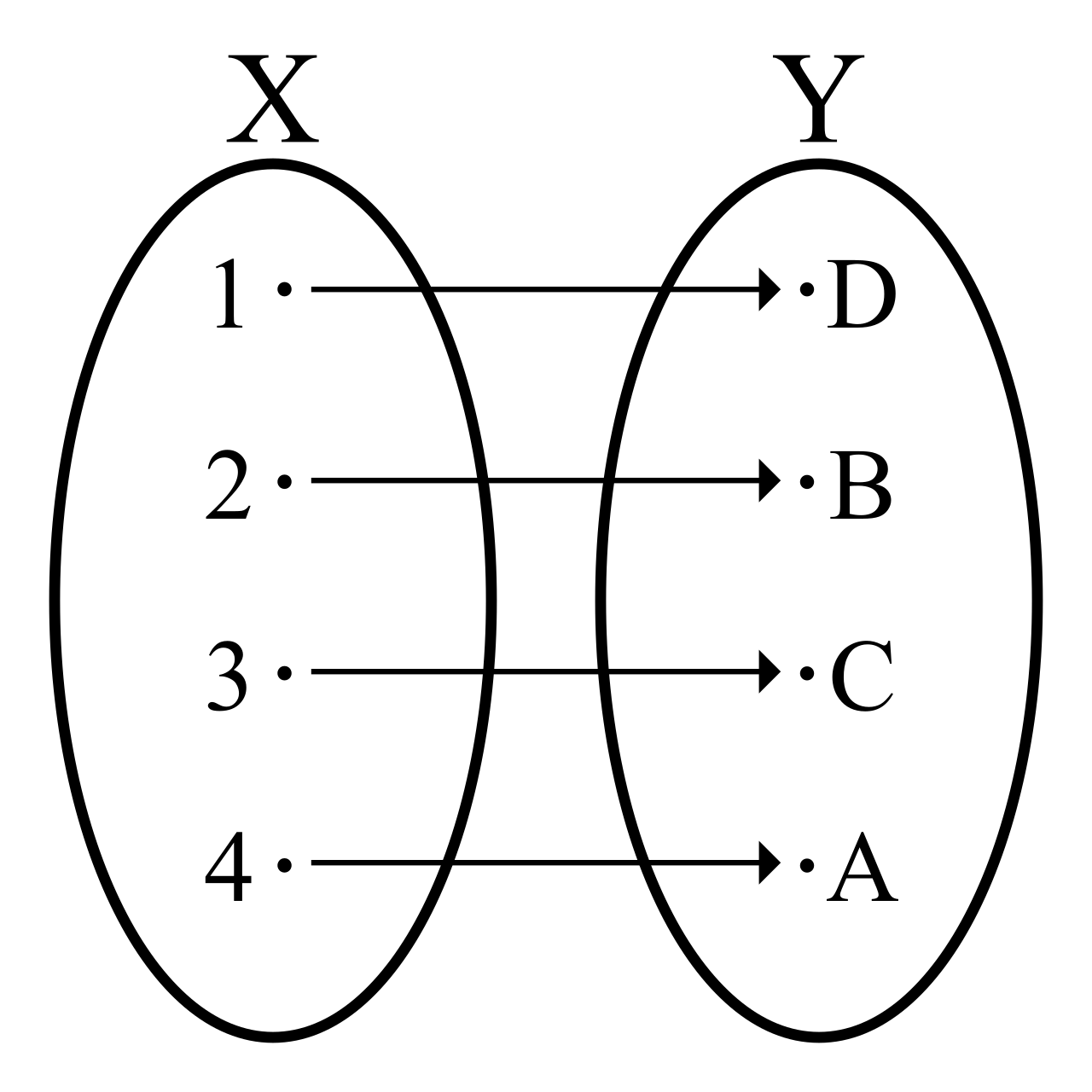
However, mastering this coordination is physically and mentally demanding. A common student counting error occurs when a student's verbal recitation of number words rapidly outpaces their physical pointing to objects. Students lacking strict one-to-one correspondence often mistakenly assign multiple verbal number words to a single physical object.
Furthermore, young counters frequently fail to mentally partition counted items from uncounted items during a sorting task. Failing to track uncounted items directly causes skipped objects or double-counted objects during an oral counting task.
Pedagogical Intervention: Moving physical objects into a completely separate pile during the counting process is an effective instructional strategy to prevent accidental double-counting. Additionally, counting collections of items arranged in circular patterns requires the student to remember the starting object to avoid infinite looping.
Principle 3: Cardinality
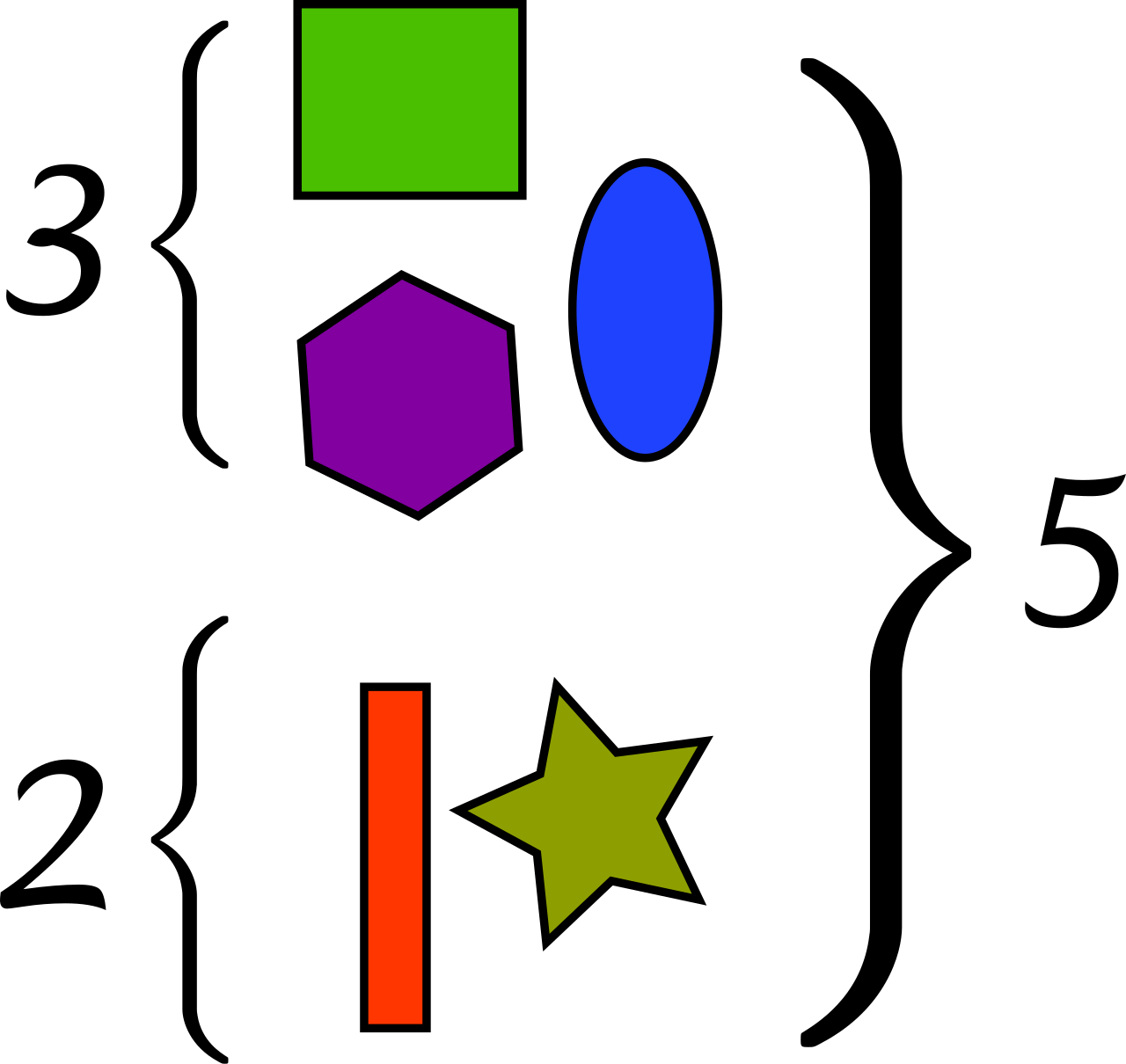
The cardinality principle establishes that the final number word spoken in a count represents the total number of items in the entire set.
It is entirely possible that a student may successfully count a group of objects out loud using proper one-to-one correspondence, yet still fail to grasp what they have just accomplished. A student who successfully counts objects out loud may still fail to answer a "how many" question about the targeted set. Failing to answer a "how many" question after a successful count directly indicates a lack of understanding of the cardinality principle. They view counting as an isolated performance, not as a tool for measuring total quantity.
This is fundamentally related to the distinction between number types:
- Cardinal numbers explicitly represent the total exact quantity of discrete items contained within a defined set (e.g., "I have five blocks").
- Ordinal numbers indicate the relative physical or temporal position of an item within an ordered sequence (e.g., "This is the fifth block").
Principle 4 & 5: Abstraction and Order Irrelevance
The abstraction principle dictates that the rules of counting apply identically to any collection of discrete entities. The abstraction principle allows physical objects, invisible sounds, and abstract imaginary concepts to be counted using identical mathematical procedures. A thought can be counted exactly like a physical marble.
The order irrelevance principle states that the total number of items in a set remains constant regardless of the sequence used to point to the items. Whether a student counts a row of objects from left-to-right, right-to-left, or randomly skipping around the group, the resulting cardinal number is mathematically guaranteed to be identical.
While sequential counting is highly reliable, the human brain has an alternative, more efficient mechanism for determining quantity. Subitizing allows students to determine small set sizes instantly by visual recognition. Subitizing entirely bypasses the need for the sequential one-to-one counting of individual mathematical objects.
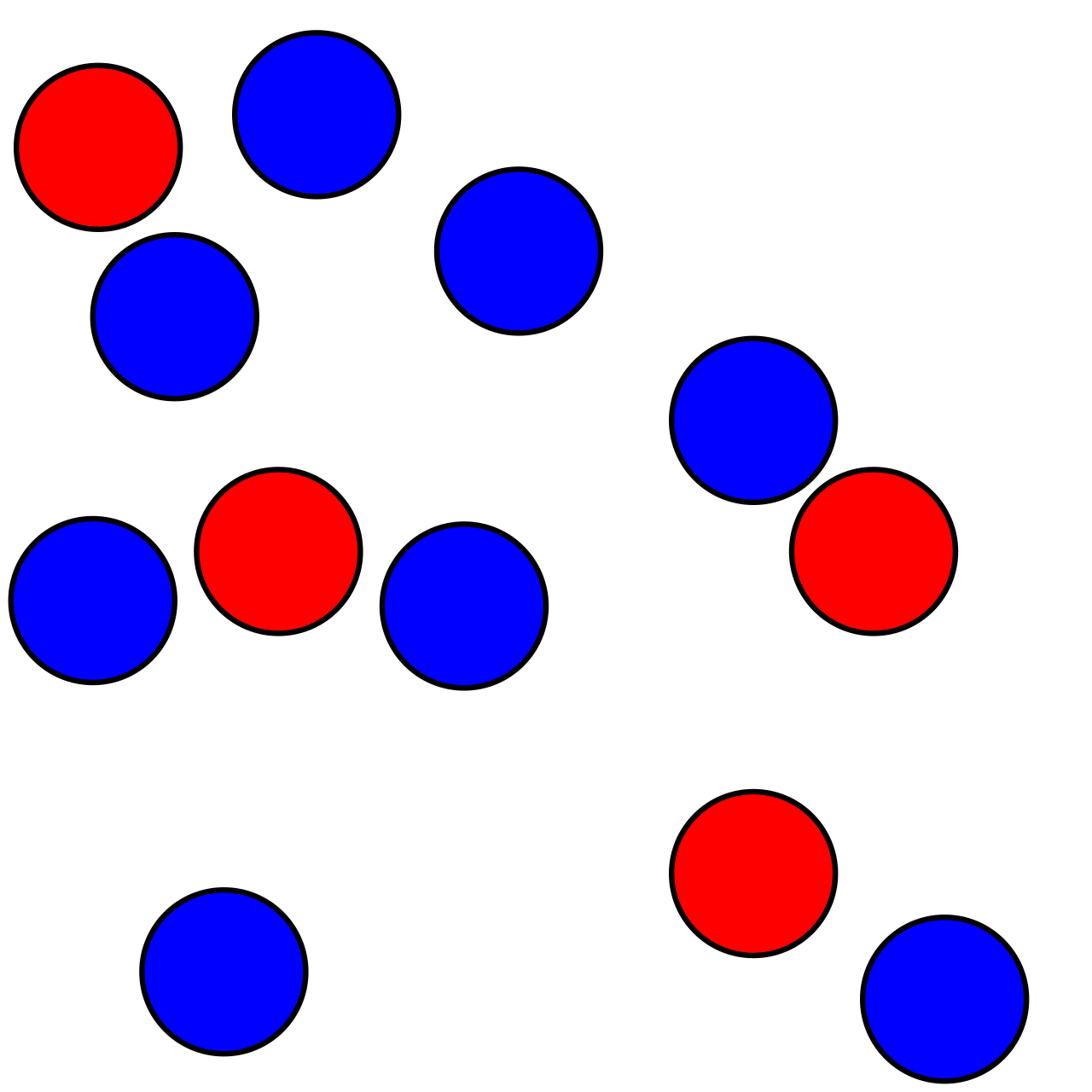
There are two primary levels of this skill:
| Subitizing Type | Definition |
|---|---|
| Perceptual Subitizing | The ability to instantly recognize the quantity of small sets up to five items without counting. (e.g., instantly seeing three dots on a die). |
| Conceptual Subitizing | The ability to recognize smaller groups within a larger set and mentally combine the smaller groups to find the total quantity. |
Students conceptually subitize by mentally decomposing a larger scattered quantity into smaller familiar visual patterns. Visualizing smaller recognizable patterns within a larger set accelerates accurate quantity determination for early learners.
Pedagogical Intervention: A ten-frame tool visually anchors scattered mathematical quantities to the benchmark numbers of five and ten. Using a ten-frame facilitates conceptual subitizing by forcing scattered objects into recognizable, structured grid patterns.
Before relying purely on symbolic numbers, students can use physical one-to-one matching between two separate sets to visually determine which set contains more items without using any number words. For example, connecting interlocking counting cubes into long physical trains provides a concrete physical representation of linear magnitude. Comparing the physical lengths of two separate interlocking cube trains allows young students to visualize numerical equality.
Understanding that numbers generated later in the standard counting sequence represent larger physical quantities is a fundamental component of number sense. But to truly master numbers, students must comprehend their internal physical logic.
Conservation of number dictates that the total quantity of a set remains identical even if the physical arrangement of the items changes drastically. A student lacking conservation of number might incorrectly state that a spread-out line of five blocks contains more items than a compressed line of five blocks. If you observe a student who physically recounts an entire set from the beginning after the physical arrangement changes, that student demonstrates a lack of the conservation of number.

Similarly, students must conceptualize hierarchical inclusion, which is the mathematical concept that every exact number quantity completely contains all smaller whole number quantities within it. The number seven is not just a point on a line; it physically contains the quantities of six, five, four, three, two, and one inside it.

Once hierarchical inclusion is established, a student is ready for the mathematical "counting on" strategy, which begins the verbal counting sequence from a previously established known quantity. The "counting on" strategy eliminates the need to restart counting from the number one when combining two separate sets, vastly improving computational efficiency.
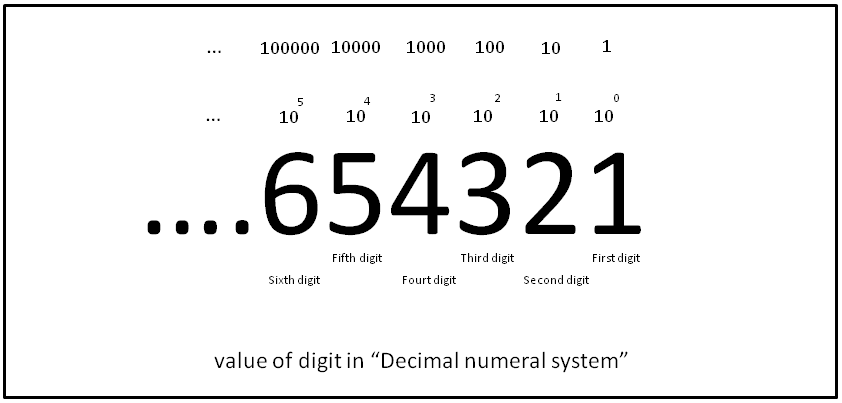
As students progress from isolated sets into the broader numeral system, they must decode the repeating patterns of base-ten mathematics. Rote counting up to one hundred requires a student to memorize the repeating sequence of digits one through nine within each separate decade. Early elementary students frequently struggle with crossing decade boundaries during continuous oral counting tasks. An example of a decade boundary oral counting struggle is a student skipping from the number twenty-nine directly to the number forty.
To organize this system visually, educators utilize a hundred chart, which is a ten-by-ten mathematical grid displaying whole numbers from one to one hundred in sequential numerical order. This grid visually exposes the predictable loops of our base-ten system.
The Mechanics of Skip Counting
Once sequential progression is mastered, students learn skip counting, which involves adding a consistent, fixed value to the previous number to generate the next number in a sequence. Skip counting trains the brain to recognize the modular rhythms of the number line.
- Skip counting by tens builds the initial foundational understanding of base-ten place value concepts. Skip counting by tens from any whole number predictably changes the tens digit of the resulting sequence of numbers, while simultaneously, skip counting by tens from any whole number leaves the ones digit of the resulting sequence of numbers perfectly constant.
- Crossing the Century Mark: A student skip counting by tens from eighty must recognize that crossing the one-hundred boundary requires shifting to a three-digit number structure (80, 90, 100).
- Skip counting by fives starting from zero exclusively generates numbers ending in either the digit zero or the digit five.
- Skip counting backward from a given number establishes a foundational understanding of subtraction and decreasing numerical magnitude.
- Scaling Up: As numbers expand, the rules scale logically. Skip counting by hundreds from any given number changes only the hundreds digit of the resulting numerical sequence. Furthermore, skip counting over one hundred requires an understanding that the sequence of decades predictably repeats within every new hundred. The numbers 121, 122, and 123 echo exactly the same cadence as 21, 22, and 23.
By anchoring instruction in these principles—from the strict cognitive constraints of one-to-one correspondence and stable order, to the visual fluency of conceptual subitizing and the rhythmic patterns of skip counting—educators equip students with far more than rote memory. They construct a robust, flexible mathematical mind capable of decoding the quantitative universe.