Discussion and Collaboration
Not sure you’re ready?
Take the ~3-minute readiness diagnostic and see where you stand.
A classroom of twenty-five eight-year-olds talking simultaneously is not a discussion; it is a collision of monologues. True academic discourse requires transforming a room full of individual speakers into a collaborative cognitive engine. When students engage in genuine dialogue, they do not merely exchange words—they test hypotheses, dismantle misconceptions, and construct shared meaning. For the elementary educator, this transformation does not happen by accident. It is engineered through the explicit teaching of how to converse, how to question, and how to tether fleeting thoughts to concrete evidence. We must examine the mechanics of conversation not as mere etiquette, but as the foundational architecture of learning itself.
Conversation in a classroom is a highly unnatural act. Left to their own devices on a playground, children communicate fluidly, but academic discussions require adherence to a specific set of rules. Discourse conventions are the accepted social rules and practices that govern conversation and communication in a specific setting.
When you ask students to collaborate on a math problem or debate a character's motivation, you are demanding they navigate complex social terrain. If we want them to succeed, we cannot keep the map a secret.
Structuring the Physical and Verbal Space
To build a productive environment, we must explicitly teach the mechanics of interaction. First among these is turn-taking, a crucial discourse convention that ensures all participants have an opportunity to speak without interruption. Without enforced turn-taking, a discussion rapidly devolves into a hierarchy of the loudest voices.
Similarly, students must be taught to regulate the physical energy of their voices. Using an appropriate speaking volume for the setting is a fundamental social convention of group discourse. A volume that works for a whole-group debate will completely shatter the focus of a classroom engaged in small-group stations.
But talking is only half the equation. The reception of the signal is just as critical. Active listening involves giving full attention to the speaker and providing non-verbal cues like nodding. In many Western classroom contexts, maintaining eye contact with the speaker is taught as a primary physical cue of active listening.
Pedagogical Imperative: Modeling You cannot just tell students to "listen well." Teachers explicitly model active listening behaviors to prevent side conversations during group work. You must physically demonstrate what it looks like to turn your body toward a speaker, to nod, and to track the conversation, proving to students that listening is an active, not a passive, state.
Scaffolding Academic Language
For young learners, having a thought and having the vocabulary to express that thought respectfully are two different things. This is where we provide linguistic scaffolding.
Sentence frames provide structured language to help students express agreement or disagreement respectfully. By giving students the structural "bones" of a sentence, we reduce their cognitive load, allowing them to focus entirely on the content of their argument.
For example, a sentence stem such as "I respectfully disagree because..." helps students practice polite debate. It separates the friction of conflicting ideas from personal conflict.
Furthermore, we must teach students the mechanics of elaboration strategies, which help students expand on a peer's comment during a discussion rather than just stating isolated thoughts. A highly effective elaboration sentence stem is: "Building on what my classmate said, I also think..." This explicitly wires one student's thought to the next, weaving individual statements into a continuous intellectual thread.
If discourse conventions are the engine of discussion, questions are the steering wheel. The types of questions you and your students ask dictate the depth of the learning.
Categorizing Questions
| Question Type | Function in Classroom Discourse |
|---|---|
| Open-ended questions | These require detailed responses rather than a simple yes or no. Because they lack a single "correct" dead-end, open-ended questions promote deeper group discussions by encouraging elaboration. |
| Clarifying questions | These are asked to ensure accurate understanding of a speaker's previously stated point. They are the conversational equivalent of adjusting the focus on a microscope before analyzing the specimen. |
| Probing questions | These prompt a speaker to provide more specific details or reasoning about an initial statement. If a student says, "The protagonist was brave," a probing question asks, "What specific action did he take that showed bravery?" |
The Physics of the Pause: Wait Time
The most brilliant question in the world is useless if you do not allow the brain time to process it. Wait time is the pedagogical practice of pausing for several seconds after asking a question.
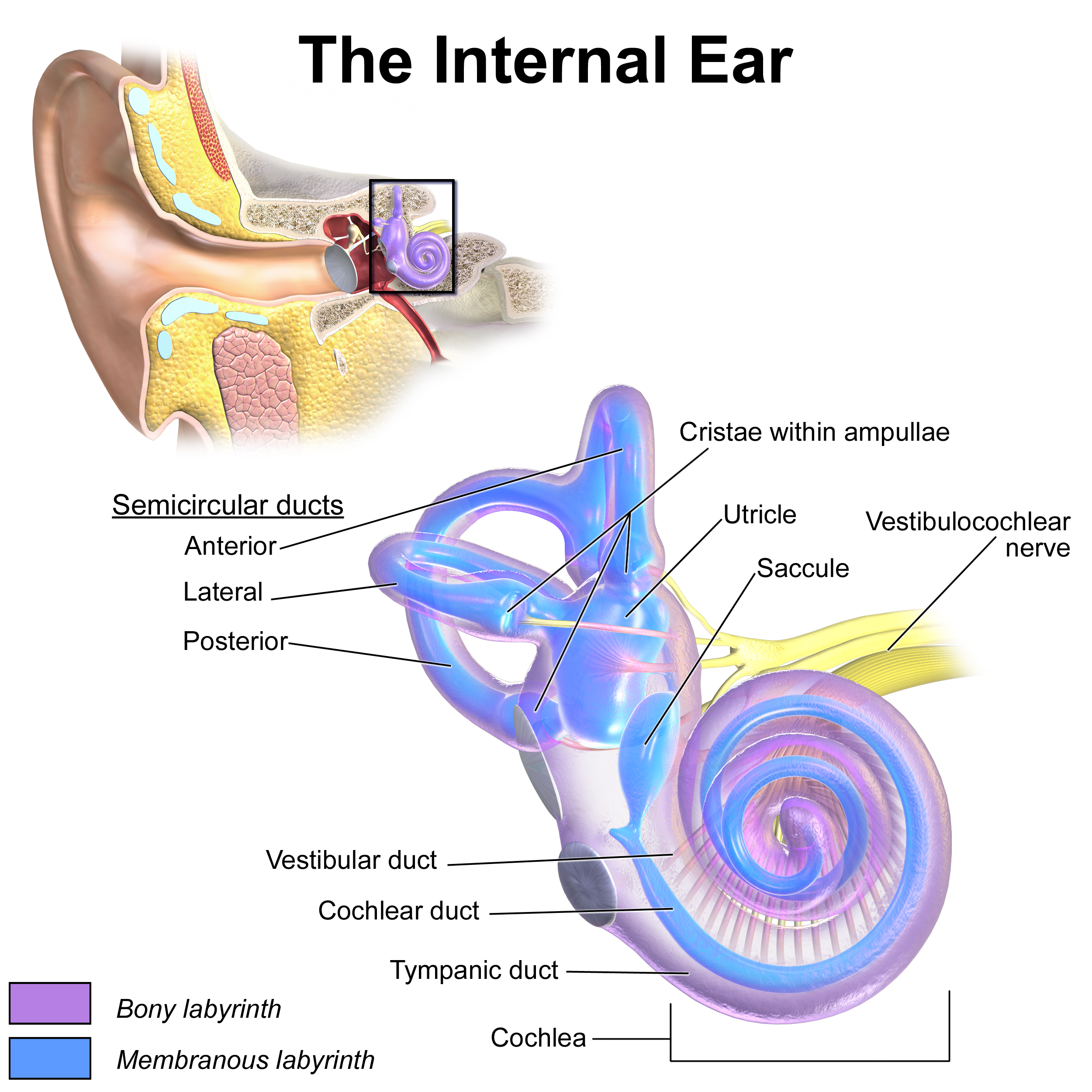
This sounds incredibly simple, yet it is profoundly difficult for novice teachers to execute. Three seconds of silence in a classroom can feel like an eternity. However, sound waves must enter the ear, be decoded by the brain, trigger a search through memory, and be reassembled into a verbal response. Implementing wait time increases the quality and length of student responses during discussions. It shifts the dynamic from a race of the fastest hand-raisers to a thoughtful deliberation of the deepest thinkers.
In academic discourse, an opinion without evidence is merely a rumor. To participate effectively, students must learn to tether their spoken claims to objective reality.
Accountable Talk
To operationalize this, educators rely on Accountable talk, an instructional framework that requires students to support their claims with text-based evidence. Under this framework, it is not enough for the teacher to demand proof; Accountable talk requires students to actively ask each other for evidence to support claims. When a student says, "The character was actually the villain," the trained peer response should immediately be, "Where in the text did you find evidence to support that?"
Integrating evidence requires students to explicitly connect a text detail to their discussion argument. This means locating text-based evidence, which consists of specific facts or quotes pulled directly from the reading material.
Common Student Misconception: A very common elementary student misconception is confusing a personal anecdote with text-based evidence. If the discussion is about how plants survive in the desert, and you ask for evidence, a young student will frequently say, "I went to Arizona once and it was really hot!" You must explicitly teach them the boundary between their lived experience (anecdote) and the author's printed words (text-based evidence).
The Cognitive Translation: Paraphrasing vs. Summarizing
When students bring text into a discussion, they must know how to handle the author's words. We teach them two distinct operations: paraphrasing and summarizing.
Summarizing condenses a large text into its most important main points. It is taking a ten-page chapter and turning it into a three-sentence overview.
Paraphrasing, conversely, focuses on translating a specific passage into new words rather than condensing an entire text. Accurate paraphrasing retains the original meaning of the source material, but crucially, paraphrasing involves restating a text or a speaker's idea using entirely different words.
Common Student Misconception: Because elementary students have limited vocabularies, they find paraphrasing exceptionally difficult. Young elementary students frequently struggle to distinguish between paraphrasing and direct plagiarism. If you ask them to put a sentence in their own words, they will often change a single adjective and leave the rest of the author's sentence entirely intact. Teaching paraphrasing requires modeling how to absorb the idea of a sentence, look away from the text, and explain it to a partner as if the text no longer existed.
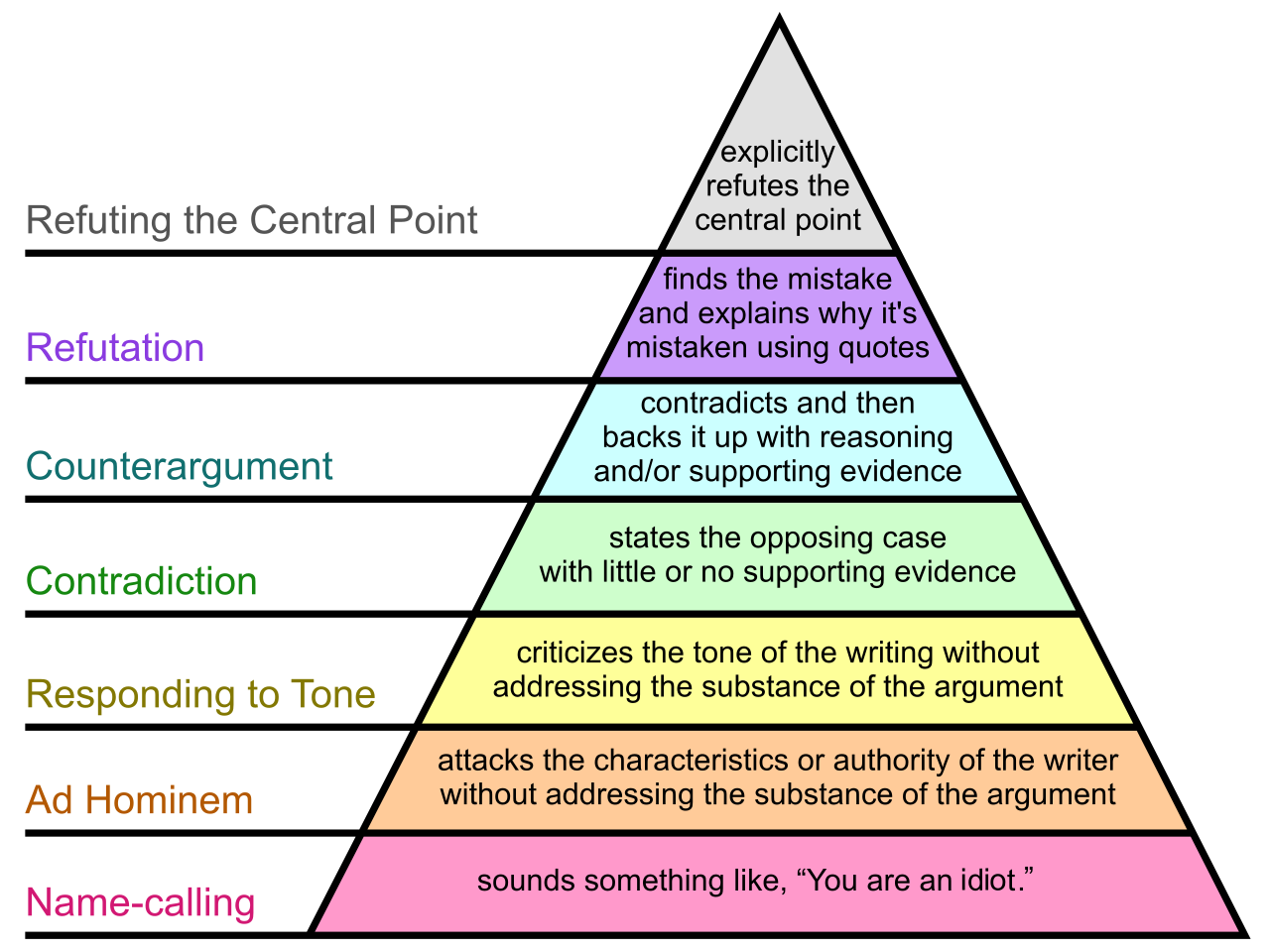
Once students can listen, question, and cite evidence, they can begin the high-level work of evaluating competing ideas. Persuasive communication relies on tailoring the spoken message and tone to suit the intended audience. A student trying to convince a peer in a small group will use different tactics than a student presenting a formal argument to the school principal. A key component of this persuasive communication is adapting vocabulary to match the formality of a discussion.
To persuade, students use logical evidence to persuade peers during academic discussions, rather than relying purely on emotion.
Evaluating Claims
During debates, students will encounter conflicting viewpoints. Evaluating a perspective involves analyzing the reasoning and evidence behind a speaker's claim.
To do this accurately, students must be taught to differentiate between the types of statements they hear:
- A fact is an objective statement that can be proven true or false.
- An opinion is a statement of personal belief that cannot be objectively proven.
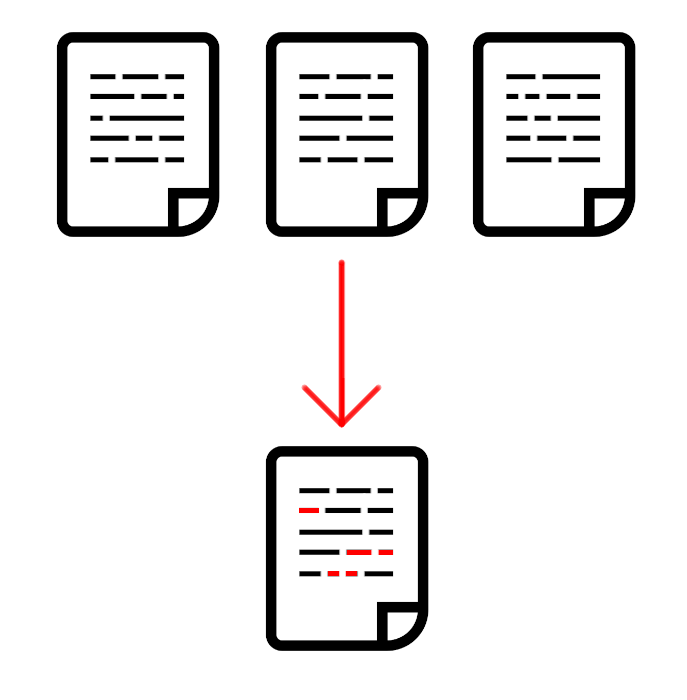
Furthermore, students must learn that human communication is rarely neutral. Identifying speaker bias is a necessary step in evaluating different perspectives during a debate. Bias occurs when a speaker presents a disproportionately favorable or unfavorable view of a topic.
The ultimate goal of all this discourse is cognitive growth. Through reflecting on peer contributions, it allows students to modify their own initial viewpoints based on new information. If a student leaves a discussion with the exact same mental schema they entered with, the discussion failed.
How do we structure the classroom to make all of this happen? We use specific, engineered pedagogical formats designed to facilitate different types of interaction.
1. Think-Pair-Share
Think-pair-share is a collaborative strategy where students ponder a question before discussing their thoughts with a partner. Why it matters: It builds in mandatory wait time (the "think" phase), lowers the social risk by letting students test their ideas on just one person (the "pair" phase), and polishes the idea before it hits the whole group (the "share" phase).
2. The Fishbowl Discussion
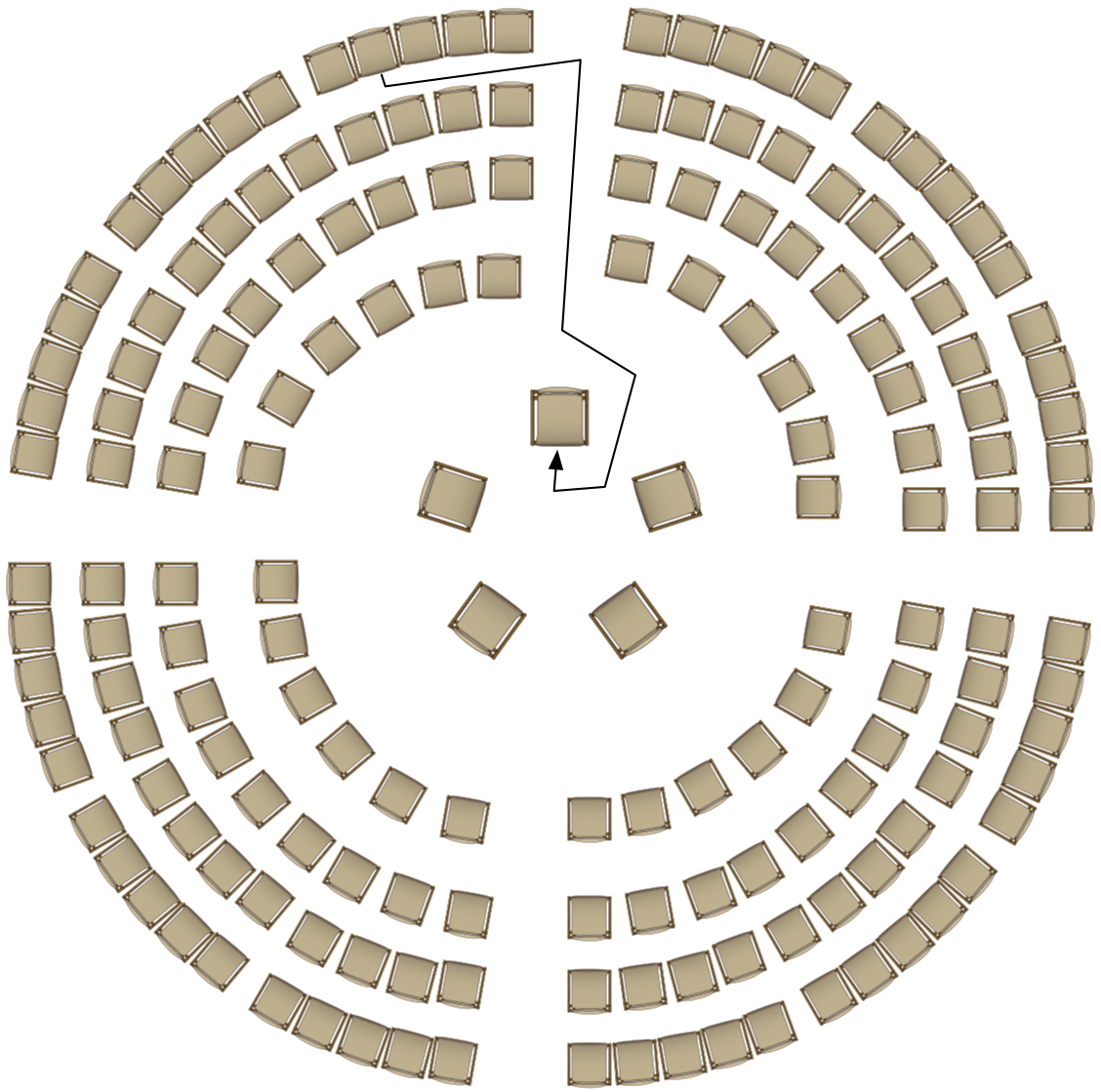
A fishbowl discussion involves a small group conversing in the center of the room while the rest of the class observes and takes notes. Why it matters: This is a brilliant way to teach discourse conventions. The outer circle isn't just watching; they are evaluating. You might assign an outer-circle student to track how often an inner-circle student uses text-based evidence, or how well they maintain eye contact.
3. Literature Circles
Literature circles assign specific discussion roles to students in a small collaborative reading group. (e.g., The "Questioner," the "Summarizer," the "Connector"). Why it matters: By gamifying the discourse conventions into specific "jobs," literature circles ensure that all the necessary functions of a good discussion—probing questions, identifying main points, linking to outside knowledge—actually happen, even without the teacher sitting at the table.
4. Socratic Seminars
A Socratic seminar is a formal student-led discussion format focused on asking and answering open-ended questions about a text. Why it matters: This is the apex of classroom discourse. In a true Socratic seminar, the teacher removes themselves from the center of the room. The students must rely entirely on their mastery of turn-taking, accountable talk, text-based evidence, and probing questions to sustain the intellectual momentum of the room.
When you see a Socratic seminar functioning flawlessly in an elementary classroom, you are not witnessing magic. You are witnessing the result of a teacher who understood that collaboration is not an innate talent, but a profound, teachable skill.