Early Equations and Expressions
Not sure you’re ready?
Take the ~3-minute readiness diagnostic and see where you stand.
Imagine a beautifully calibrated, antique brass pan balance resting on a laboratory table. If you place a solid iron weight on the left pan, the pan crashes downward. To restore the elegant equilibrium, you must place an object of the exact same mass on the right pan. This physical reality is the precise foundation of elementary algebra. Yet, when young students look at a mathematical equation, they rarely see a balanced scale. Instead, they see a one-way processing machine: a set of instructions on the left, a crank to turn in the middle, and a blank space on the right where the product drops out.
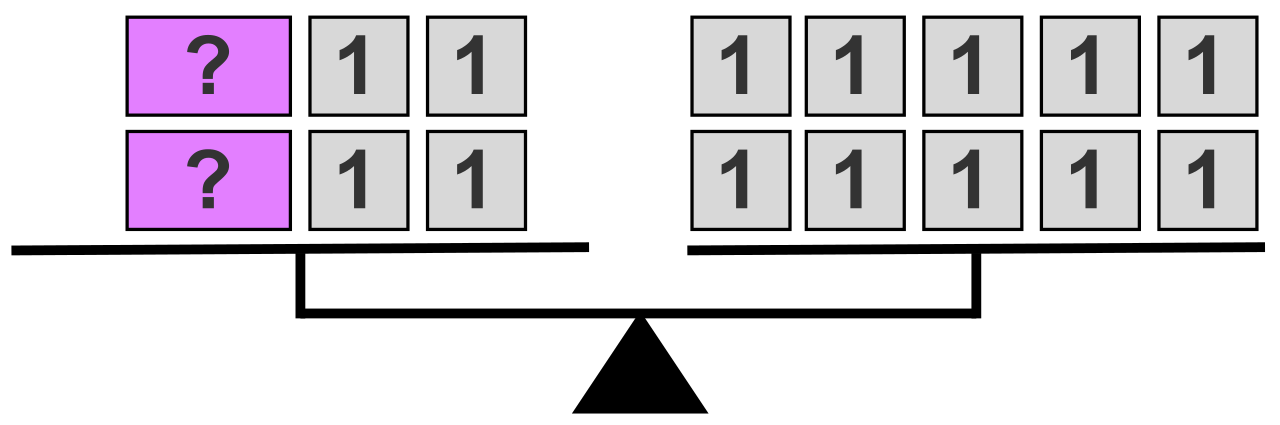
As an educator, your profound task is to rewire this fundamental perception. You are not merely teaching children how to manipulate numbers; you are teaching them the structural grammar of mathematical equivalence. The transition from arithmetic computation to algebraic thinking relies entirely on understanding that equations are statements of enduring balance, not just demands for an answer.
To build this mathematical intuition in your students, you must first master the deep, underlying architecture of expressions, equations, and equivalence.
Mathematics is a language, complete with nouns, verb phrases, and complete sentences. Before a student can write poetry in this language, they must understand its basic syntax.
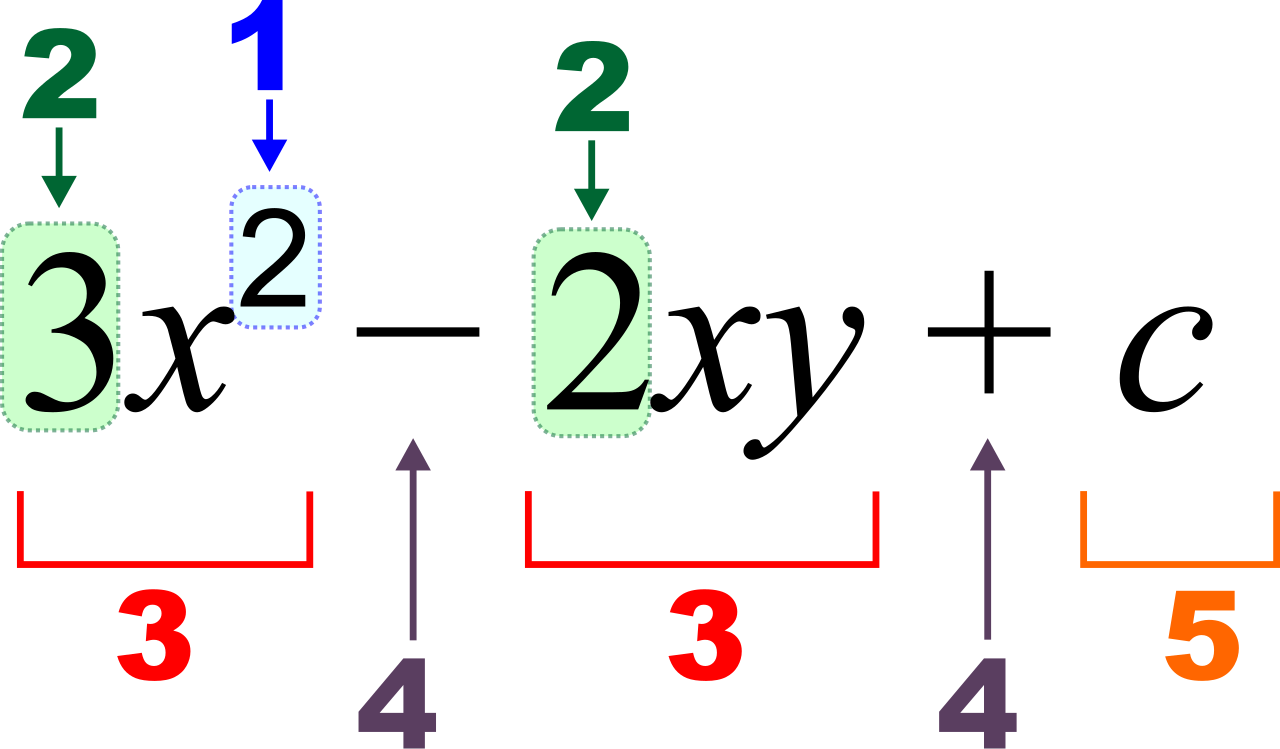
An expression is a mathematical phrase containing numbers, variables, and operations without an equals sign. Think of an expression as a fragment—a concept waiting to be related to something else. For instance, 3x+4 is an expression. It holds a potential value, but it makes no claim about the universe.
Within these expressions, we encounter specific components:
- A variable is a letter or symbol that represents an unknown numerical value (like the x in 3x).
- A coefficient is a numerical factor that multiplies a variable within an algebraic expression (the 3 in 3x).
An equation, by contrast, is a complete mathematical sentence stating that two expressions are equal. It contains an equals sign. The moment you write 3x+4=19, you have made a definitive claim: the expression on the left possesses the exact same mathematical weight as the expression on the right.
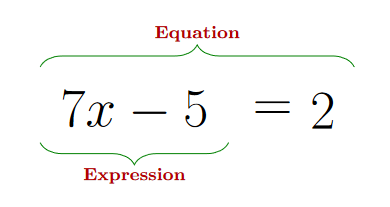
When an equation contains one or more variables, it is known as an open sentence. It is "open" because its truth depends entirely on the value hiding behind the variable.
If there is a single, towering hurdle in early algebra, it is the student's perception of the equals sign (=).
A common elementary student misconception is interpreting the equals sign exclusively as a command to compute an answer. Because years of early math worksheets condition them to see 4+5=_, they subconsciously translate the equals sign to mean "and the answer is..."
In mathematical reality, the equals sign represents a relationship of equivalence between two mathematical expressions. The equals sign simply means "is the same value as."

Diagnosing the Misconception
How do you know if your students view the equals sign as a balance or a computation button? Write this on the board: 8=3+5
Students often struggle with equations like 8=3+5 because the isolated number appears before the operation. A student trapped in a computational mindset will argue this is written "backwards" or will instinctively want to write 8=3+5=13.
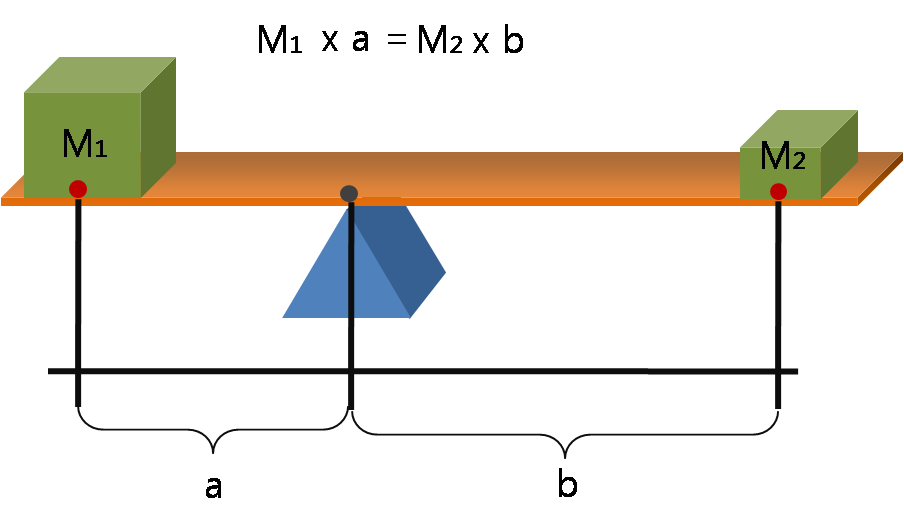
Instructional Strategy: Writing equations with a single number on the left side of the equals sign helps students build a relational understanding of equality. By breaking the standard [operation] = [answer] format, you force the brain to see the equals sign as a fulcrum.
True and False Number Sentences
To actively test and develop this conceptual leap, teachers use a powerful instructional tool: true and false number sentences.
- A true equation contains expressions of equal mathematical value on both sides of the equals sign (e.g., 4+3=5+2).
- A false equation contains expressions of different mathematical values on opposite sides of the equals sign (e.g., 4+3=8+1).
Presenting a sentence like 7+2=5+4 and asking, "Is this true?" pushes students toward relational thinking. Relational thinking involves looking at the entire equation as a balance rather than blindly computing each side separately. A student using relational thinking might notice, "Well, 5 is two less than 7, and 4 is two more than 2, so the scale must be perfectly balanced without me even having to add them up!" That is the essence of algebraic intuition.
Once students understand that an equation is a balanced scale, they can begin manipulating that scale. The golden rule of algebra is elegantly simple: An equation remains balanced when the exact same mathematical operation is applied to both sides.
If you alter the weight on the left pan, you must symmetrically alter the weight on the right.
- Addition: Adding the identical number to both sides of an equation maintains the equality of the relationship.
- Subtraction: Subtracting the identical number from both sides of an equation maintains the equality of the relationship.
- Multiplication: Multiplying both sides of an equation by the identical number maintains the equality of the relationship.
- Division: Dividing both sides of an equation by the identical non-zero number maintains the equality of the relationship. (We specify non-zero because dividing by zero shatters the logical foundation of arithmetic).
Teachers must be highly precise with terminology. We do not "solve" expressions, and we do not "evaluate" equations.
Evaluating Expressions via Substitution
Substitution is the mathematical process of replacing a variable with a specific numerical value. Evaluating an expression requires substituting any variables with numbers and performing the indicated mathematical operations to find a single resulting value.
If we have the expression 5y−2 and we substitute y=3, we evaluate it: 5(3)−2=13.
Sometimes, two entirely different-looking expressions will yield the identical result no matter what number you plug in. We call these equivalent expressions. Equivalent expressions have the same mathematical value for any substituted value of their variables. For example, 2(x+3) and 2x+6 are universally equivalent.
Solving Equations via Inverse Operations
Solving an equation, conversely, requires finding the specific numerical value of the variable that makes the equation true. We are acting as mathematical detectives, working backward to discover the identity of the unknown.
To do this, we rely on inverse operations—mathematical operations that reverse the mathematical effect of another operation. Think of them as mathematical undo buttons.
- Addition is the mathematical inverse operation of subtraction. If someone subtracted 4, you add 4 to reverse it.
- Multiplication is the mathematical inverse operation of division. If someone divided by 3, you multiply by 3 to reverse it.
Inverse operations are used to isolate a specific variable on one side of an equation.
Teacher's Perspective: Imagine the equation x+7=12. The x is trapped by a +7. To isolate the variable, we apply the inverse operation (subtracting 7) to the left side. But to obey the properties of equality and keep the scale balanced, we must subtract 7 from the right side as well. x+7−7=12−7 x=5
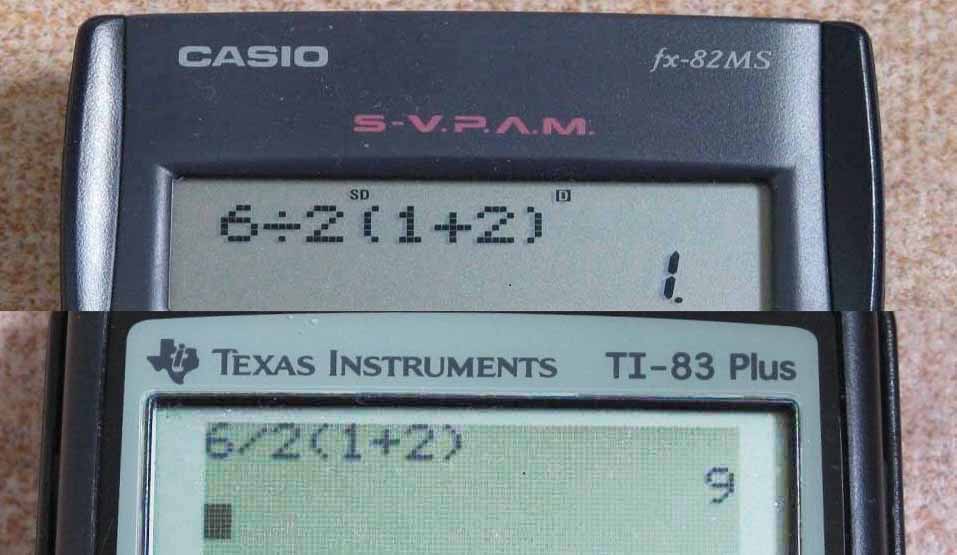
Consider the mathematical phrase: 10−2×3. If an ambitious 4th grader computes from left to right, they subtract 2 from 10 to get 8, then multiply by 3 to get 24. Another student multiplies 2 by 3 to get 6, then subtracts that from 10 to get 4.
Math cannot tolerate this ambiguity. Without a standardized sequence, the world's bank accounts, engineering schematics, and architectural blueprints would collapse into chaos. Therefore, we use the standard order of operations, which determines the sequence for performing multiple operations within a single mathematical expression.
The Hierarchy of Operations
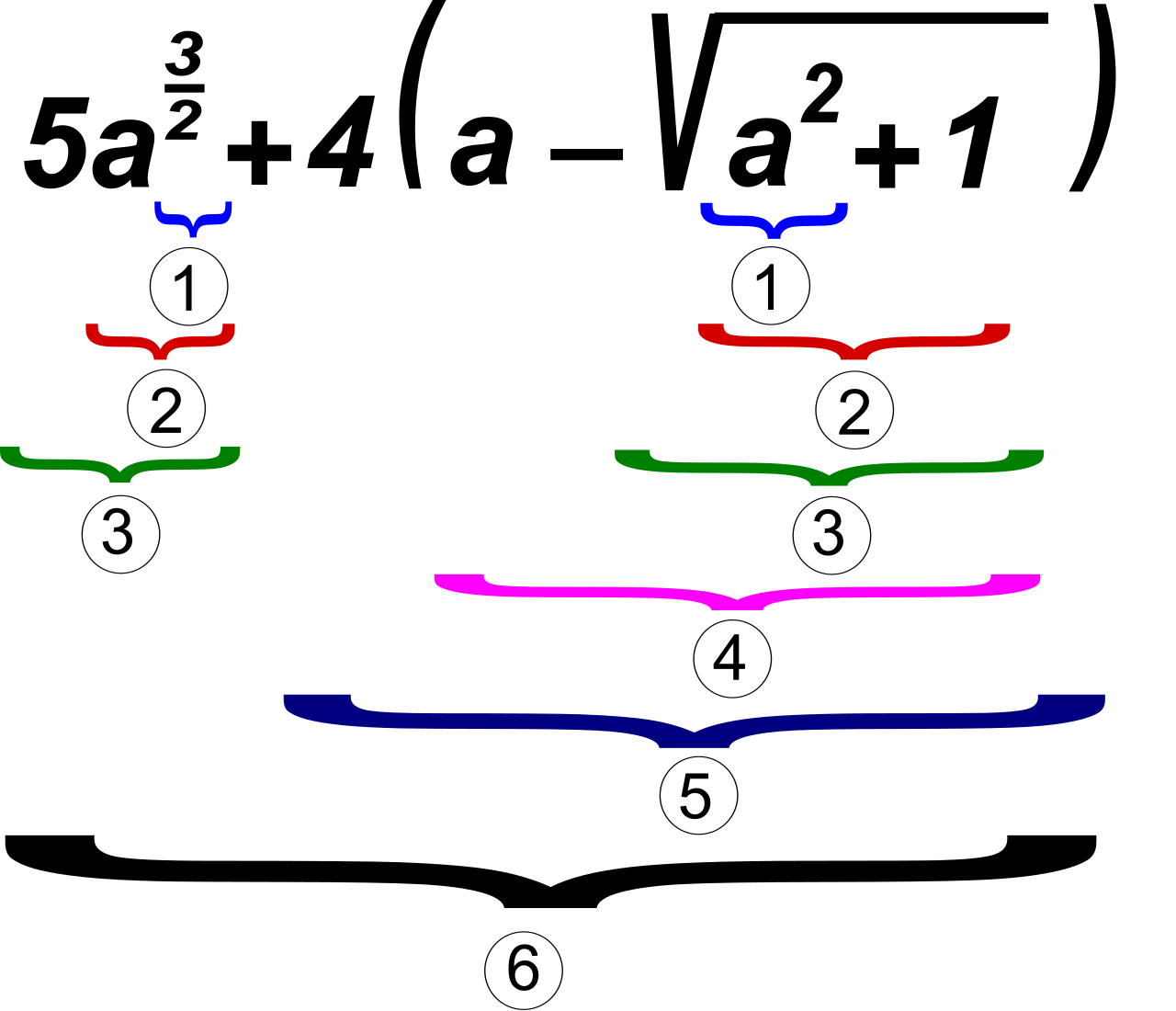
1. Parentheses (and Grouping Symbols) Mathematical operations located inside parentheses must be evaluated before operations located outside the parentheses. They act as a VIP pass, pushing whatever is inside to the very front of the line.
2. Exponents (Orders / Roots) Once grouping symbols are cleared, exponents and roots are evaluated.
3. Multiplication and Division Here is a critical area for teacher intervention. Many students erroneously believe multiplication always precedes division. This is false. Multiplication and division hold the exact same level of precedence in the order of operations.
- When evaluating an expression, consecutive multiplication and division operations are resolved from left to right.
- However, if no parentheses are present, multiplication operations must be completed before addition operations, and division operations must be completed before subtraction operations.
4. Addition and Subtraction Similarly, addition does not inherently outrank subtraction. Addition and subtraction hold the exact same level of precedence in the order of operations.
- When evaluating an expression, consecutive addition and subtraction operations are resolved from left to right.
The Acronyms: PEMDAS and BODMAS
To help students remember this hierarchy, educators globally use mnemonic acronyms.
| Acronym | Stands For | Region Commonly Used |
|---|---|---|
| PEMDAS | Parentheses, Exponents, Multiplication, Division, Addition, Subtraction | United States |
| BODMAS | Brackets, Orders, Division, Multiplication, Addition, Subtraction | UK, Australia, India |
A pedagogical warning: While PEMDAS is helpful, its rigid, linear spelling frequently reinforces the misconception that Multiplication always precedes Division, and Addition always precedes Subtraction. As a highly skilled educator, you must explicitly teach that the 'MD' and the 'AS' are side-by-side siblings, not a hierarchy, moving strictly left to right when they appear together.
The Beauty of the Structure
When you teach early algebraic concepts, you are doing far more than preparing students for middle school math. You are teaching them how to perceive deep, structural truth. By showing them that the equals sign is a perfectly balanced scale, that equations remain true through symmetrical manipulation, and that universal rules govern our mathematical phrasing, you empower them to make sense of a complex world. You are teaching them not just to compute, but to think.