Properties of Operations and Variables
Not sure you’re ready?
Take the ~3-minute readiness diagnostic and see where you stand.
Arithmetic is the science of finding a specific answer; algebra is the science of understanding the structure of all possible answers. When a second-grader realizes that calculating 3+4 yields the exact same total as 4+3, they are not merely performing addition—they are observing a fundamental symmetry in the universe of numbers. As an elementary educator, your task is not just to teach children how to compute, but how to recognize, decode, and manipulate these underlying mathematical structures.
Transitioning students from concrete arithmetic to abstract mathematical reasoning requires a deep understanding of the properties of operations and the concept of a variable. This guide explores the architecture of algebraic thinking, unpacking how variables function, how operational properties allow us to bend numbers to our will, and how we establish magnitude.
To teach mathematical structure, we must first establish a precise language. Mathematics is built on grammatical rules, much like English.
An algebraic expression is a mathematical phrase that can contain ordinary numbers, variables, and operational symbols (like +, −, ×, ÷). It represents a value, but it makes no claim about what that value is equivalent to. Thus, unlike an algebraic equation, an algebraic expression does not contain an equals sign (=).
Key Distinction
- Expression: 4x+7 (A phrase)
- Equation: 4x+7=15 (A complete sentence stating a fact)
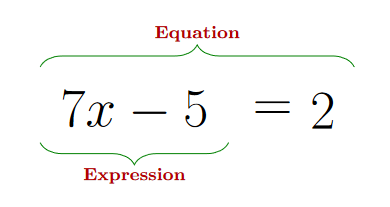
Evaluating an algebraic expression involves a two-step process: substituting a specific number for the variable, and then performing the arithmetic operations according to the standard order of operations.
As students manipulate these expressions, they rely on foundational properties of numbers that govern how terms can be rearranged:
- The Commutative Property: This property states that changing the sequence of numbers being added or multiplied does not change the final sum or product. Mathematically, a+b=b+a and a×b=b×a.
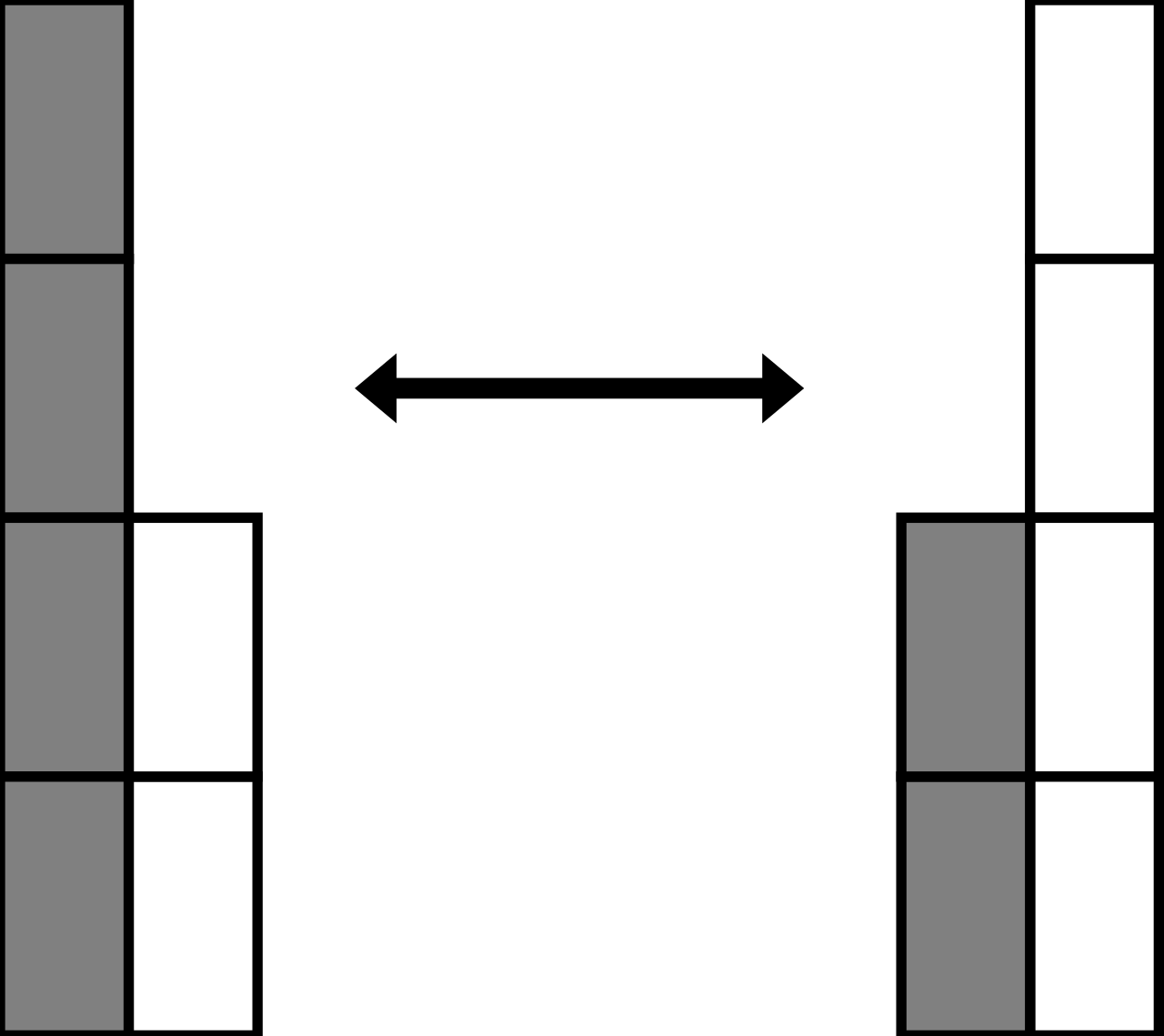
- The Associative Property: This property states that changing the parenthetical grouping of numbers being added or multiplied does not change the final sum or product. Mathematically, (a+b)+c=a+(b+c).
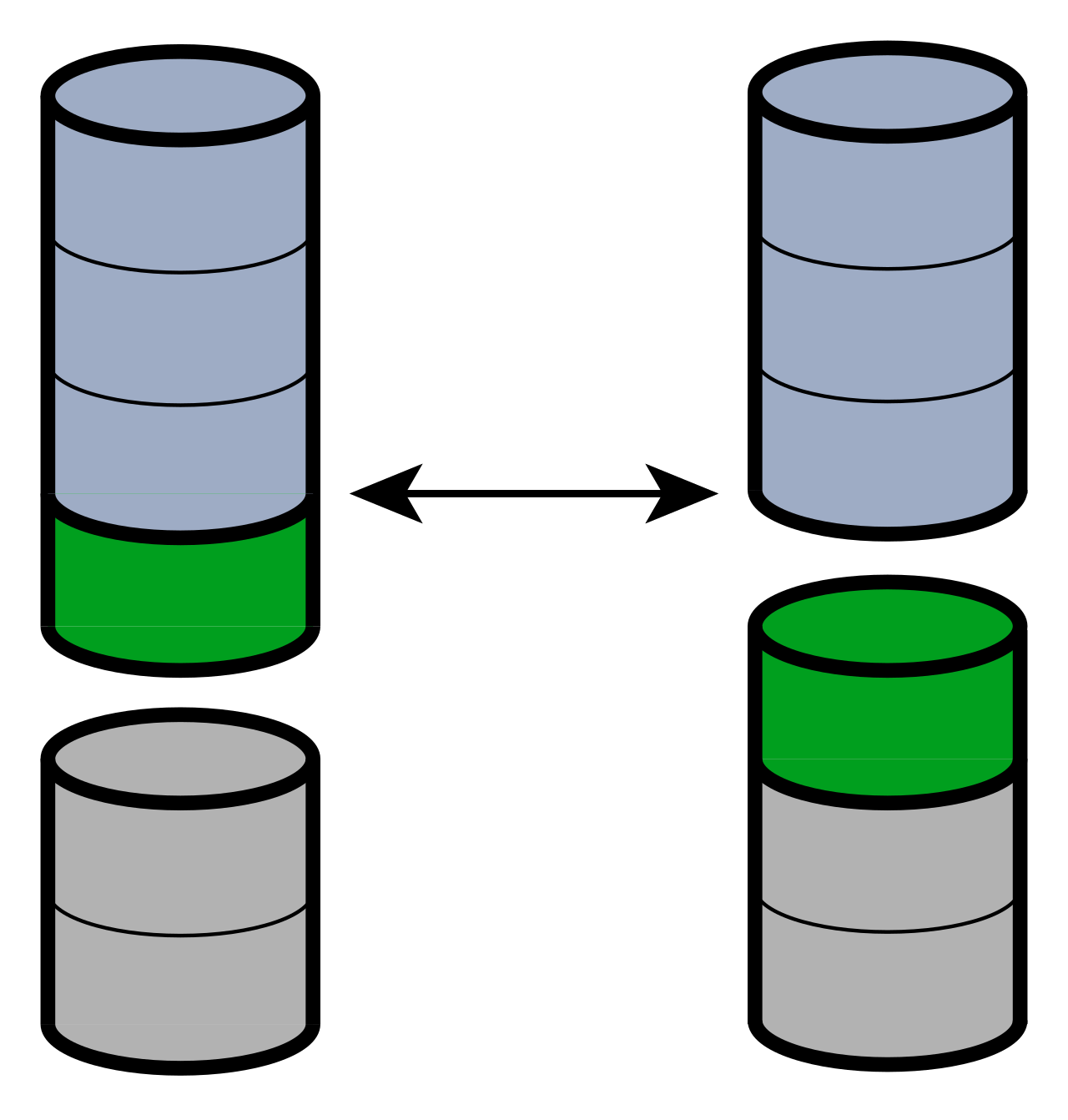
These properties are not arbitrary rules to be memorized; they are the flexible joints of mathematics that allow students to mentally reconfigure problems into simpler forms.
To adults, a variable is simply a letter representing a number. To a young learner, the introduction of a letter into a math problem can be profoundly disorienting. Students must come to understand variables in two distinct, equally important ways.
1. Variables as Specific Unknowns
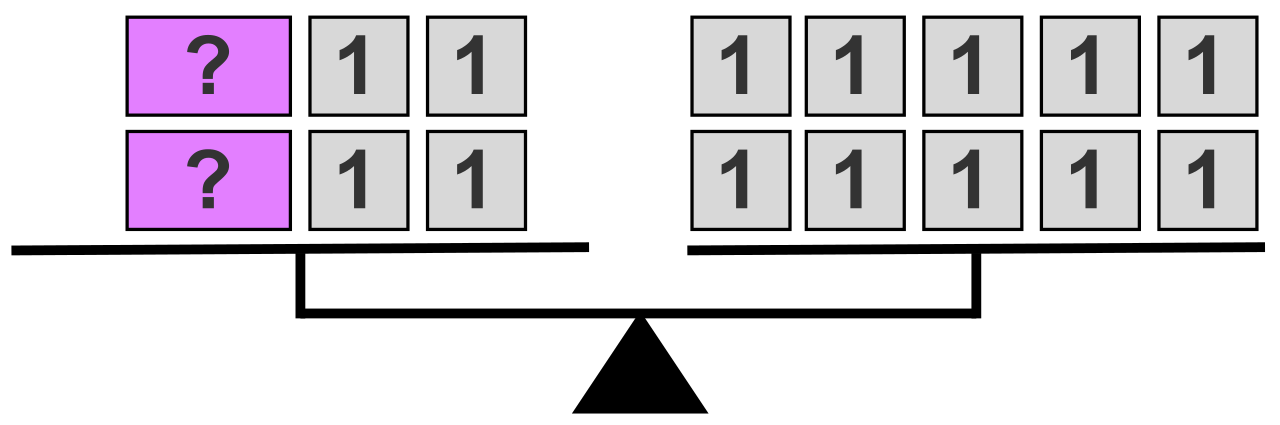
Initially, a variable can represent a specific but currently unknown numerical value in an algebraic equation. Long before you introduce the letter x, your students will encounter this concept. An unknown quantity in early elementary math is often initially represented by an empty box (□) or a question mark (?).
When a first grader solves 5+□=8, they are solving an algebraic equation. The □ is a placeholder for a specific number (3) that makes the statement true.
2. Variables as Varying Quantities
As students progress, the variable takes on a more dynamic role. A variable can represent a quantity that continuously changes in relation to another quantity within a mathematical pattern.
If a student is building a sequence of squares out of toothpicks, they might notice that the number of toothpicks (T) depends on the number of squares (S). Here, variables are utilized to write generalized mathematical rules for numeric and geometric patterns. Using a variable to represent a changing quantity helps students build foundational mathematical thinking for later functional relationships, laying the exact groundwork they will need for high school calculus.
The Pedagogical Trap: Variables as Labels
A common elementary misconception is treating variables as literal labels for objects rather than placeholders for numerical values.
If you ask a student to write an expression for "three apples and four bananas," a student might write 3a+4b. If you ask them what a stands for, they will often say, "a stands for apple." This is a severe conceptual error. If a means "apple," then what does 2a mean? "Two apple?"
You must consistently reinforce that variables represent numbers, never things. In the expression 3a, the variable a represents the price of an apple, or the weight of an apple, or the number of apples—always a numerical value.
If the commutative and associative properties are the joints of mathematics, the distributive property is its engine. It is the core mechanical rule that makes multi-digit arithmetic and advanced algebra possible.
The distributive property states that multiplying a sum by a number gives the same result as multiplying each addend by the number and adding the products.
The Mathematical Definitions
- Over Addition: The equation a(b+c)=ab+ac mathematically represents the distributive property of multiplication over addition.
- Over Subtraction: The distributive property of multiplication can also be applied over subtraction. The equation a(b−c)=ab−ac mathematically represents the distributive property of multiplication over subtraction.
Why does this matter for a nine-year-old? Because the distributive property allows a complex multiplication problem to be decomposed into simpler partial products.
Consider the problem 4×37. Most elementary students cannot calculate this instantly. However, if they understand the distributive property, they can decompose 37 into (30+7). The problem becomes 4(30+7). They distribute the 4, multiplying 4×30=120 and 4×7=28. Adding the partial products (120+28) yields 148.
Teaching the Distributive Property: Concrete to Abstract
To build this intuition, effective educators do not start with the formula a(b+c). They start with physical space.
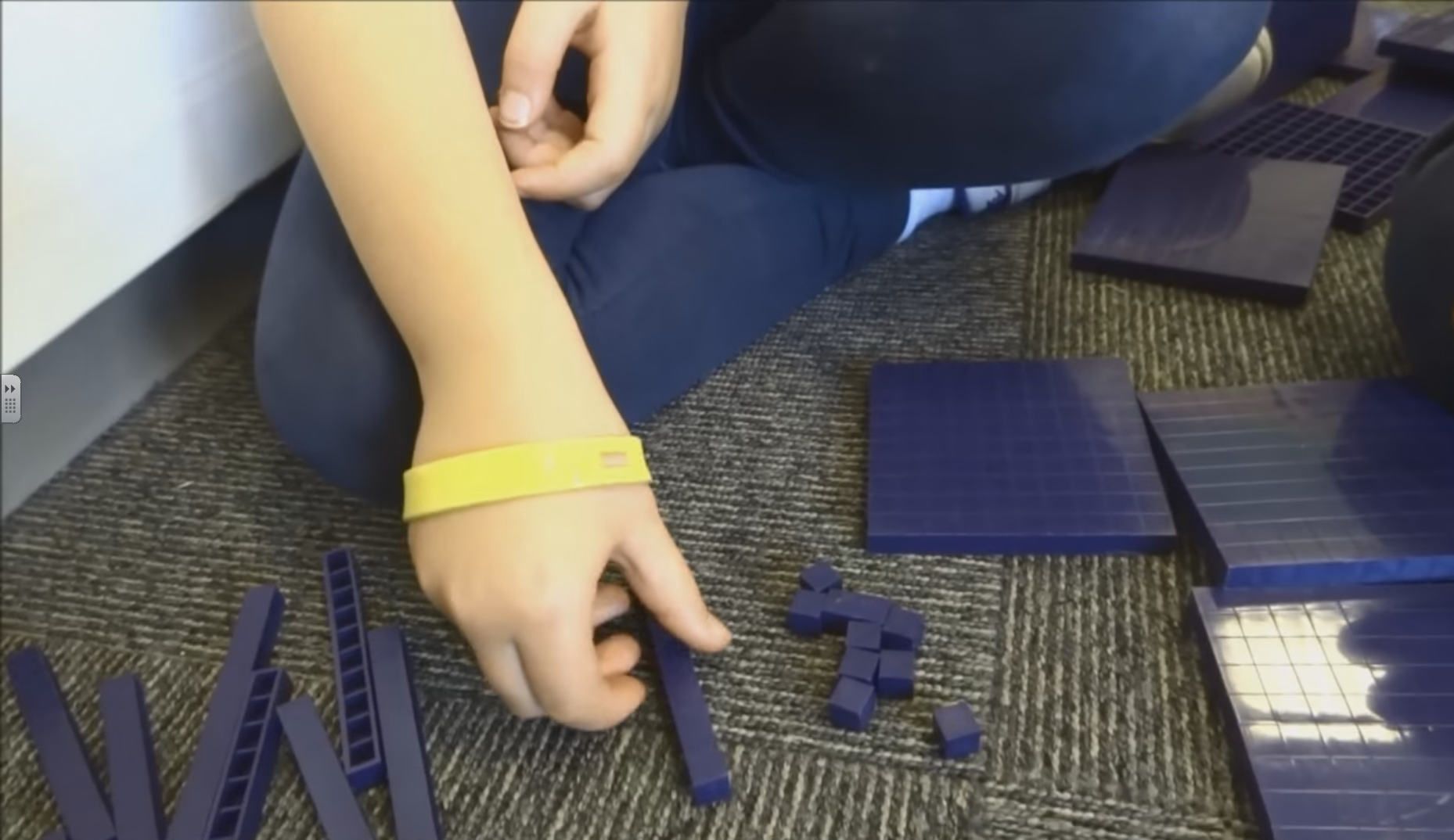
1. Base-Ten Blocks (Concrete) Base-ten blocks are a physical manipulative commonly used to demonstrate the decomposition of numbers required for the distributive property. A student sets out 4 groups of 3 tens and 7 ones. By physically physically pushing the tens together and the ones together, they experience the reality of partial products in their own hands.
2. The Area Model (Pictorial) Once the physical reality is established, we abstract it. Area models using divided rectangles are visually used to demonstrate the distributive property to elementary students. To model 4×37, you draw a rectangle with a width of 4 and a length of 37. You then split the length into two segments: 30 and 7. The single large rectangle is now two smaller rectangles. The area of the first is 4×30; the area of the second is 4×7. The visual geometry perfectly mirrors the algebraic formula a(b+c)=ab+ac.
Beyond calculating exact equivalencies, mathematics is deeply concerned with magnitude. Comparing two quantities mathematically determines if the quantities are equal, strictly greater than one another, or strictly less than one another.
To document these relationships, we use specific symbolic notation:
- The less-than symbol (<) indicates that the numerical value on its left is strictly smaller than the numerical value on its right.
- The greater-than symbol (>) indicates that the numerical value on its left is strictly larger than the numerical value on its right.
Mathematical inequality expressions are standardly read from left to right, exactly like English text.
- 5<8 is read: "Five is less than eight."
- 12>4 is read: "Twelve is greater than four."
Resolving the Visual Symmetry Misconception
Because these symbols are exact mirror images of each other, a frequent student misconception is confusing the less-than and greater-than symbols due to their visual symmetry. A student might correctly identify that 9 is larger than 6, but mistakenly write 9<6 simply because they cannot recall which direction the chevron should face.
To circumvent this hurdle, educators rely on vivid visual analogies. The alligator mouth mnemonic is a common pedagogical tool used to help students remember that inequality symbols always open toward the larger number. By drawing teeth inside the < or > symbol and explaining that a hungry alligator always wants to eat the larger pile of food, teachers provide a cognitive bridge.
| Concept | Symbol | Reading Direction | Alligator Mnemonic |
|---|---|---|---|
| Greater Than | > | Left to Right | Mouth opens to the larger quantity on the left (8>3). |
| Less Than | < | Left to Right | Mouth opens to the larger quantity on the right (2<7). |
However, as an expert educator, your goal is to eventually transition students away from the alligator. Once the student understands the directionality, explicitly reinforce the language. When a student writes 4<9, ask them to read the mathematical sentence aloud: "Four is less than nine." Connecting the symbol to the precise verbal phrasing cements the mathematical vocabulary.
Teaching properties of operations and variables is the act of handing students the master keys to mathematics. When you teach a child the distributive property via an area model, you are actively wiring their brain to factor quadratic polynomials in a few years. When you help a child see a variable as a shifting pattern rather than a static label, you are pouring the foundation for their understanding of calculus and physics. Every concrete block they stack, and every algebraic expression they evaluate, builds the structural logic they will use to comprehend the world.