Earth and the Solar System
Not sure you’re ready?
Take the ~3-minute readiness diagnostic and see where you stand.
To teach a child that the solid ground beneath their feet is actually spinning through the void of space at immense speeds is to ask them to discard everything their own senses tell them. An elementary student looks up and sees the Sun move across the sky; they see the stars wheel overhead at night. Their intuitive, observational universe is strictly geocentric. The profound cognitive leap required in elementary science is transitioning a student from this observational illusion to a heliocentric reality. As an educator, your task is not merely to dictate astronomical facts, but to provide the physical evidence—the shadows, the angles of light, the patterns of stars—that proves to them the Earth is in constant motion.
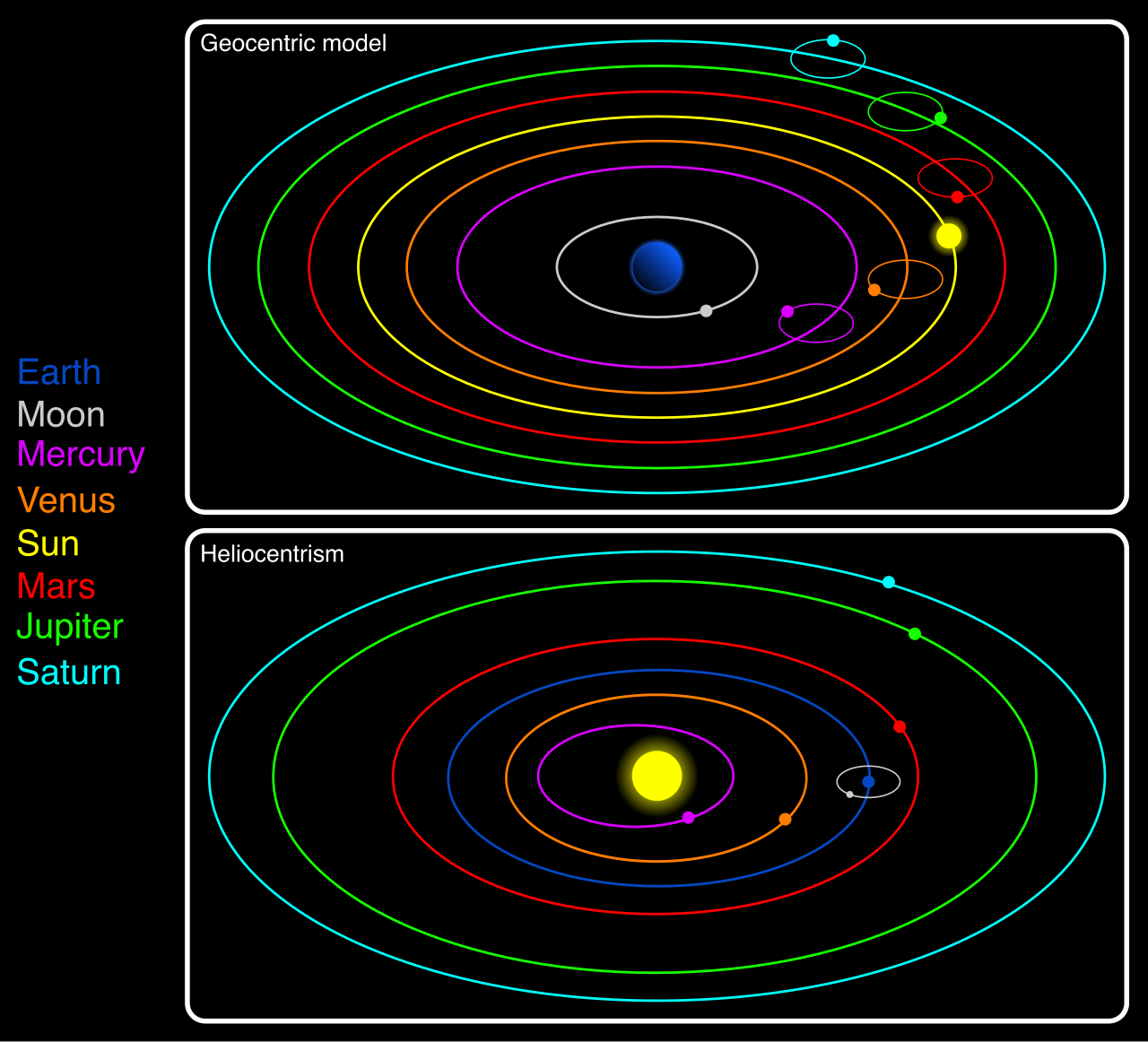
When a student observes the Sun "rising" and "setting," they are witnessing a grand optical illusion. Earth rotates on an invisible axis once every 24 hours. It is this rotation—not the movement of the Sun—that dictates our daily reality.
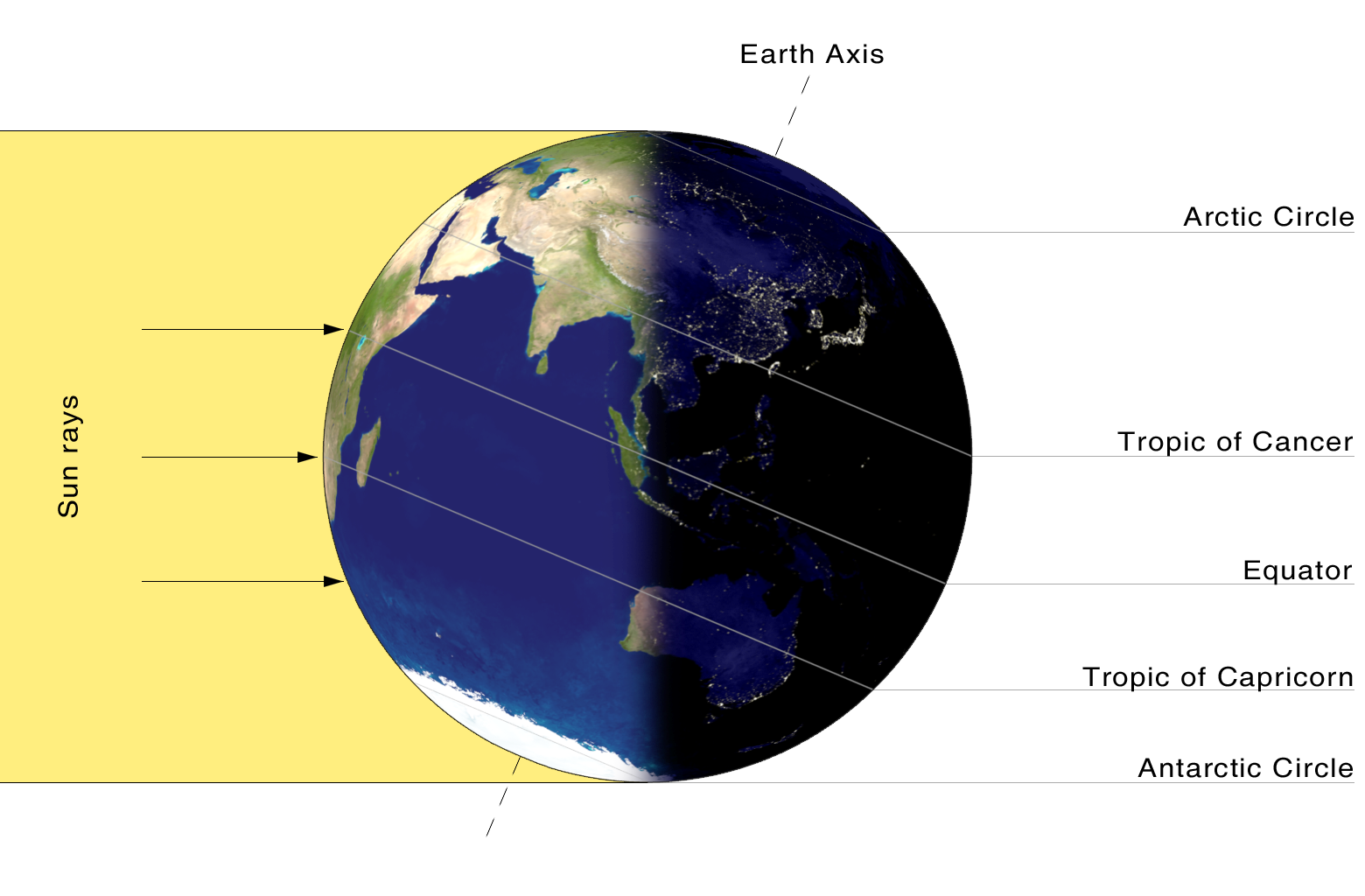
Earth's rotation on its axis causes the cycle of day and night. Picture the Earth as an apple held up to a single lightbulb in a dark room. The side of Earth facing the Sun experiences daylight, illuminated by the bulb. Conversely, the side of Earth facing away from the Sun experiences nighttime, cast into the shadow of its own bulk.
To bridge the gap between abstract space and classroom reality, teachers must rely on physical representation. Physical models using a stationary light source and a rotating globe effectively help elementary students visualize day and night patterns. When a student turns the globe themselves, they instantly comprehend that a city does not "lose" the Sun; rather, it simply rotates into the shadow of the planet.
Directionality and the Apparent Motion of the Heavens
Why does the Sun rise in the east and set in the west? The answer lies in the direction of our spin. Earth rotates on its axis from west to east. Because we are spinning eastward, new features on the horizon emerge from the east. Consequently, Earth's rotation from west to east causes the Sun to appear to move across the sky from east to west.
Teaching Connection: Have students stand and slowly spin to their left (west to east). Ask them to keep their eyes on a stationary object on the wall (representing the Sun). As they spin leftward, the object will appear to travel across their field of vision to their right (east to west). This is kinesthetic learning at its finest.
Students cannot feel the Earth rotating, but they can measure its effects on the ground. Shadows cast by objects change direction throughout the day due to Earth's rotation. They also sweep out a predictable change in size; shadows cast by objects change length throughout the day due to Earth's rotation.
Consider the geometry of a shadow. When the light source is low on the horizon, the blocked light stretches far out across the ground. Thus, an object's shadow is longest at sunrise and sunset. As the Earth rotates and the Sun climbs higher in the sky, the angle of incoming light steepens.
The turning point of the day is solar noon, the exact moment the Sun reaches its highest apparent point in the sky for the day. Because the light is shining down from its steepest angle at this moment, an object's shadow is shortest at solar noon.
Outdoor shadow tracking activities with a vertical stick help students accurately represent the apparent daily motion of the Sun. By placing a vertical stick (a gnomon) in the dirt and marking the tip of its shadow every hour, students create a sundial. They are no longer taking your word for Earth's rotation; they are plotting its mathematical curvature in the dirt.

While rotation gives us our 24-hour day, our orbital journey gives us our year. Earth revolves around the Sun in an elliptical orbit, taking precisely the time needed to experience a full cycle of seasonal changes. Earth completes one full revolution around the Sun in approximately 365.25 days (that extra quarter of a day is why we insert a Leap Year into our calendars every four years).
Addressing the Great Distance Misconception
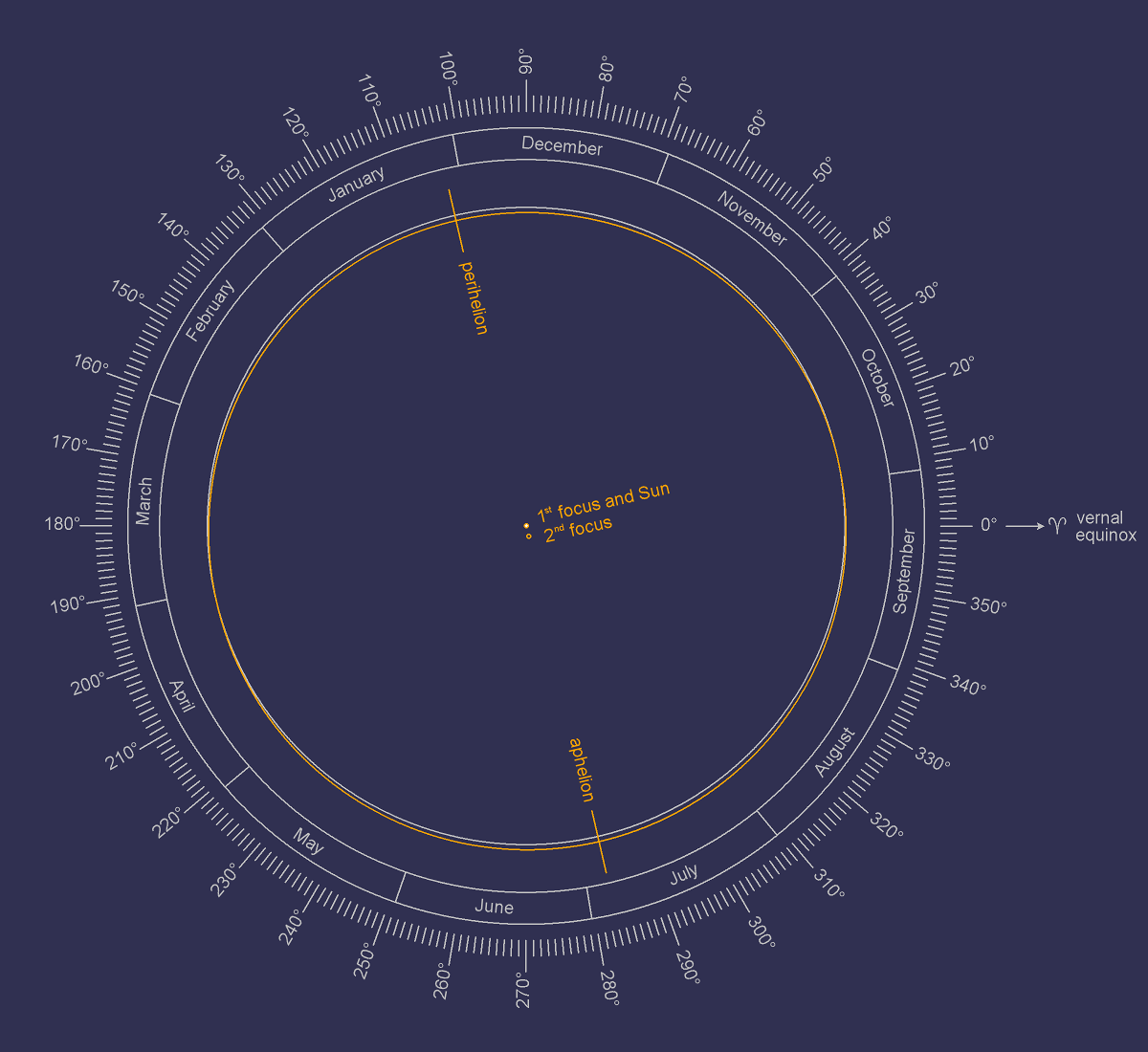
Ask an average adult why it is hotter in the summer than in the winter, and many will confidently tell you it is because Earth is physically closer to the Sun. A common student misconception is that Earth's seasons are caused by Earth's varying physical distance from the Sun.
You must dismantle this fallacy with empirical data:
- Earth's orbit is closest to the Sun in early January during the Northern Hemisphere's winter.
- Earth's orbit is farthest from the Sun in early July during the Northern Hemisphere's summer.
If distance caused the seasons, July in the Northern Hemisphere would be freezing.
The Real Engine of the Seasons: Axial Tilt
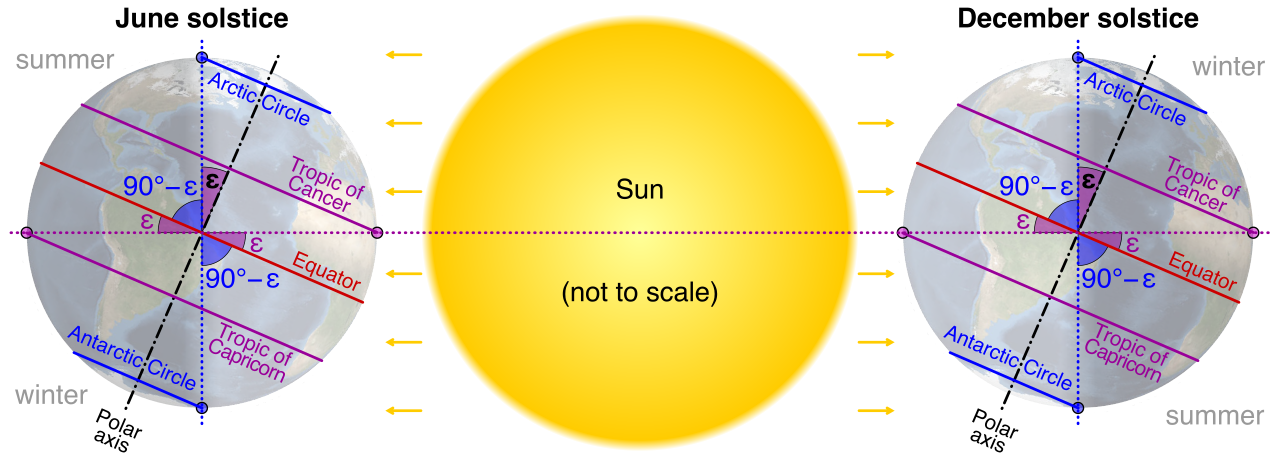
If distance does not govern our seasons, what does? Geometry. Earth's axis of rotation is tilted at an angle of 23.5 degrees relative to its orbital plane. This invisible slant, maintained like a spinning gyroscope as we travel through space, changes everything. Earth's axial tilt is the primary cause of the seasons.
However, the tilt alone isn't enough; the Earth must move. Earth's revolution around the Sun contributes to the cycle of the seasons by continually changing which hemisphere is tilted toward the Sun.
- When the Northern Hemisphere is tilted toward the Sun, the Northern Hemisphere experiences summer.
- When the Northern Hemisphere is tilted away from the Sun, the Northern Hemisphere experiences winter.
Why does tilting toward the Sun result in summer? It is a matter of energy concentration. The Earth hemisphere tilted toward the Sun receives sunlight at a more direct, perpendicular angle. When you shine a flashlight straight down at the floor, the light is concentrated in a tight, bright circle. More direct sunlight results in more concentrated thermal energy reaching Earth's surface, leading to massive heat absorption and the soaring temperatures of summer.
Conversely, the Earth hemisphere tilted away from the Sun receives sunlight at a shallower, oblique angle. If you tilt that flashlight so the beam hits the floor at an angle, the same amount of light smears out over a much larger oval. The energy is dispersed, resulting in less thermal energy per square meter, which yields the freezing temperatures of winter.
The Cyclical Pattern of Daylight
The tilt also dictates the amount of time we spend in the Sun's light versus its shadow.
- An Earth hemisphere tilted toward the Sun experiences more hours of daylight than darkness.
- An Earth hemisphere tilted away from the Sun experiences fewer hours of daylight than darkness.
At the midpoint of the globe, the geometry stabilizes. Locations on Earth's equator experience approximately equal hours of daylight and nighttime year-round.
How do we teach this abstraction? By analyzing the data. Graphing sunrise and sunset times over a complete year reveals a cyclical pattern of daylight duration. When students graph this data, a beautiful sine wave emerges. They can visually see daylight expanding toward the summer solstice and collapsing toward the winter solstice.
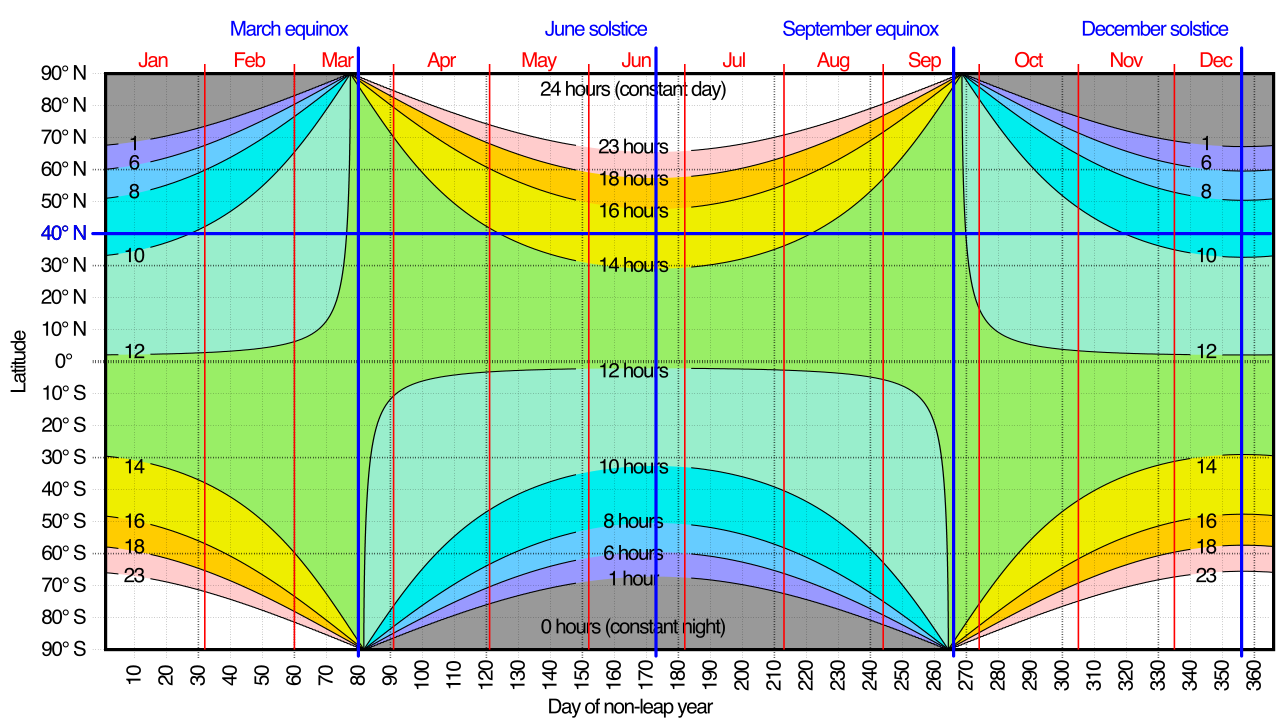
The concepts of daily rotation and annual revolution interact in ways that alter the daily environment and the night sky.
Seasonal Shadows
Because the hemisphere tilts away from the Sun in the winter, the Sun's path across the sky appears much lower on the horizon. Therefore, at solar noon, winter shadows are longer than summer shadows in the same geographic location.
Why? Because winter shadows at solar noon are comparatively long because the Sun's maximum daily altitude is lower in the winter sky. Even at its highest point in December, the Sun is striking the Northern Hemisphere at a shallow angle compared to June.
The Shifting Canvas of the Night Sky
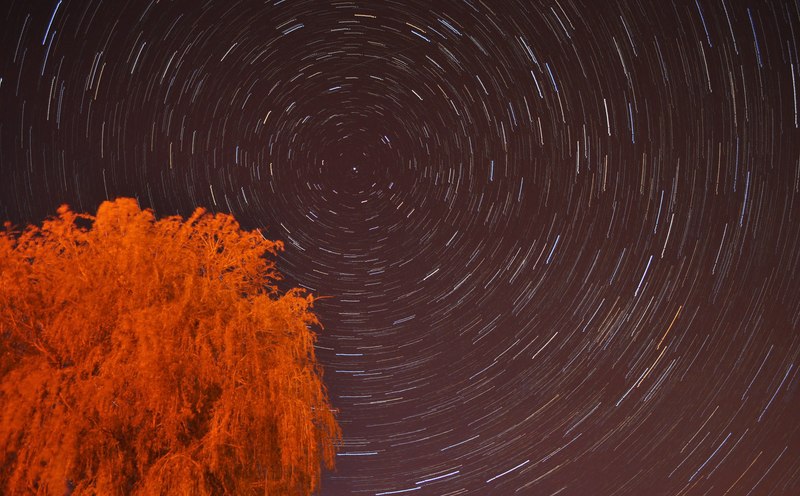
As the Earth rotates, stars appear to rise and set just like the Sun. The apparent daily motion of stars across the night sky is caused by Earth's daily rotation.
Yet, there is one profound exception to this daily motion. The North Star appears nearly stationary in the Northern Hemisphere's night sky. While all other stars wheel in vast arcs across the sky, Polaris sits pinned in place. This is not because the star itself is special, but because of our geometry: The North Star appears stationary because the North Star closely aligns with Earth's axis of rotation. If you stood at the precise North Pole and looked straight up, Polaris would be directly overhead. As the Earth spins on that axis, the point directly above the axis does not appear to move.
But what about the stars that do change? If a student looks up on a summer night, they will see the constellation Scorpius. If they look up six months later on a winter night, Scorpius is nowhere to be found, replaced instead by Orion.
Different constellations are visible in the night sky at different times of the year. This grand, slow shift has nothing to do with Earth's daily spin. Seasonal changes in visible constellations are caused by Earth's revolution around the Sun. As we travel in our orbit, the dark side of the Earth—the side facing away from the Sun—looks out into completely different sectors of the Milky Way galaxy. As Earth orbits the Sun, the nighttime side of Earth faces entirely different directions in space.
By mastering these interactions, you ensure your students see the sky not merely as a ceiling of lights, but as a dynamic map of their own movement through the cosmos. Teaching these concepts is an exercise in building spatial intuition—equipping students with the observational skills to prove, using only shadows and stars, that they are citizens of a spinning, orbiting world.