Energy Conservation and Transfer
Not sure you’re ready?
Take the ~3-minute readiness diagnostic and see where you stand.
Nature keeps a perfect, unbreakable ledger, and the currency of that ledger is energy. When a child drops a heavy textbook onto a desk, when a kicked soccer ball eventually rolls to a halt in the grass, or when a classroom door opens on a snowy morning, nature is constantly balancing its accounts. As an educator, your task is not merely to teach students the vocabulary of this ledger, but to help them see the invisible transactions happening all around them. To a child, the world often appears to be a place where motion magically begins, where energy is simply "used up" until it vanishes, and where "cold" sweeps into a room like an invading army. These are highly intuitive, entirely logical assumptions based on daily observation—and they are fundamentally wrong. To teach energy effectively, you must understand not just the mechanics of the universe, but the architecture of your students' misconceptions.
To understand energy, we must first look at objects. Children intuitively understand that a moving object has the power to do something—to knock over a block, to ring a bell, to cause a bruise.
Kinetic Energy An object in motion possesses kinetic energy. The amount of kinetic energy an object holds depends entirely on two factors: how fast it is moving, and how heavy it is.
If a student rolls a tennis ball down a hallway, an object possesses more kinetic energy when moving at a faster speed than when moving at a slower speed. If that same student rolls a bowling ball at the exact same speed as the tennis ball, the bowling ball will do considerably more damage to whatever it hits. Why? Because a heavier object possesses more kinetic energy than a lighter object moving at the exact same speed.
But what happens before the ball rolls? This is where your students will stumble.
Crucial Misconception: The "Dead" Object A common elementary student misconception is that stationary objects cannot possess any form of energy. Children assume energy is synonymous with visible action.
You must help them see that stationary objects can possess potential energy due to spatial position or internal structure. A bowling ball resting on the edge of a high shelf is teeming with gravitational potential energy because of its spatial position. A stretched rubber band lying motionless on a desk possesses elastic potential energy because of its internal structure. The energy is not missing; it is waiting.
Energy rarely stays in one place. It is a restless traveler, and it uses several specific vehicles to get around. It is vital to distinguish between transferring energy (moving it from location A to location B) and transforming energy (changing it from one type to another).
Energy transfers from place to place through the movement of physical objects. When you throw a baseball, the energy goes where the physical object goes. But energy can also travel without carrying the object along with it.
Transfer via Waves: Sound and Light
Energy travels outward from a source through waves, but not all waves obey the same rules.
- Sound Waves: Energy transfers from one location to another through sound waves. However, sound is highly dependent on its environment. Sound energy requires a physical medium like a solid, liquid, or gas to travel. It is a mechanical vibration. If there are no molecules to bump into one another, sound cannot move.
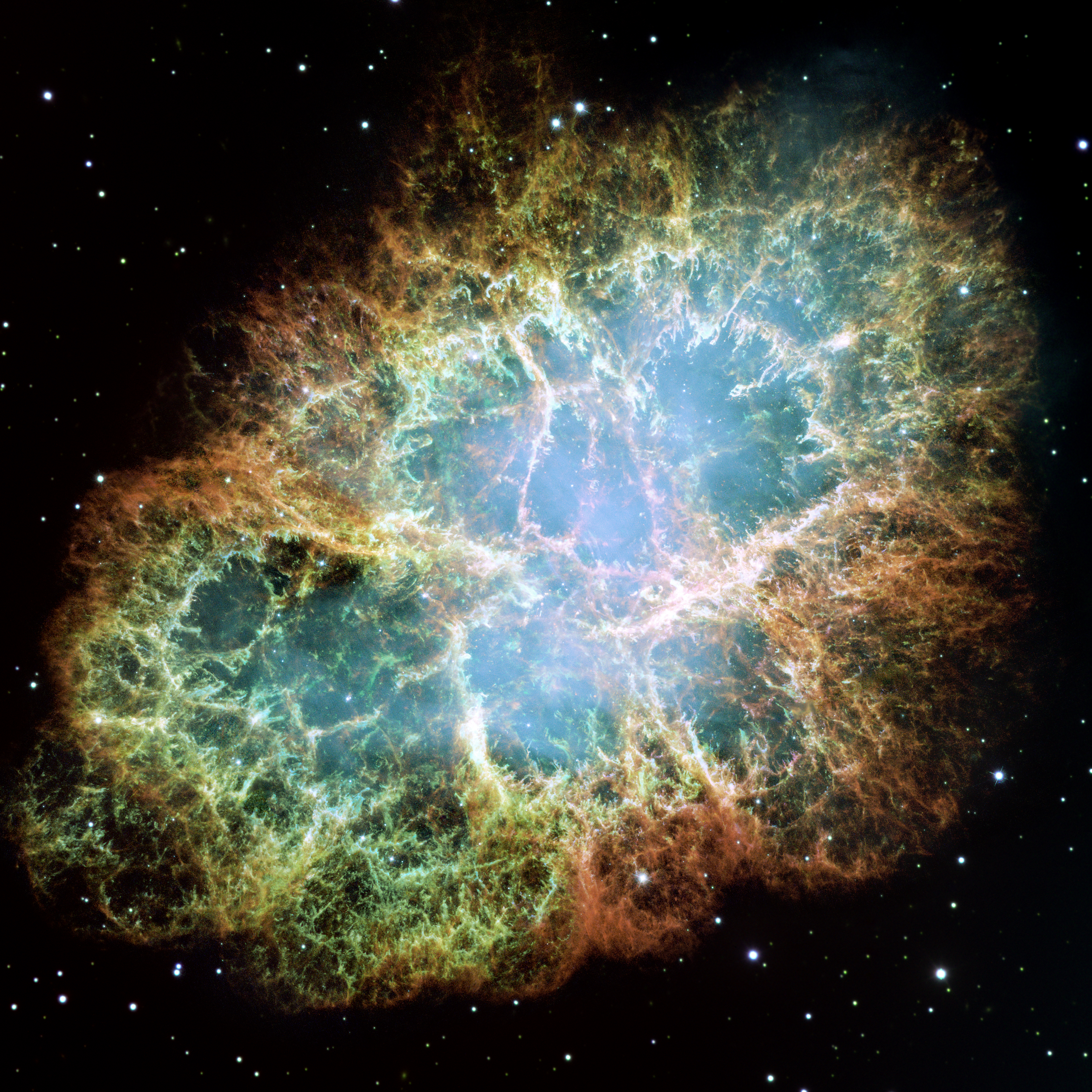
- Light Waves: Energy transfers from one location to another through light waves, but light is fiercely independent. Light energy does not require a physical medium to travel. This is why we can see distant stars; light energy can travel through the vacuum of space, whereas the explosions of dying stars happen in total silence.

Transfer via Physical Collisions
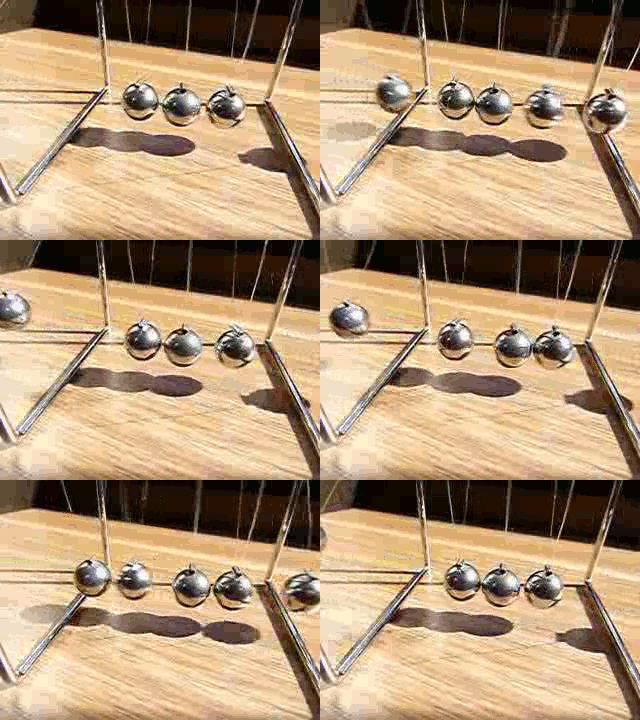
When physical objects meet, an exchange occurs. Energy transfers between objects upon physical impact during a collision.
Imagine two marbles colliding on a track. The students will see that a physical collision alters the speed or direction of the colliding objects due to the transfer of energy. The first marble slows down; the second speeds up. But the kinetic energy does not transfer perfectly. The universe always takes a "tax" on the transaction.
- A physical collision often converts some kinetic energy into sound energy (the clack of the marbles).
- A physical collision often converts some kinetic energy into thermal energy (the marbles are ever-so-slightly warmer at the point of impact).
Transfer via Thermal Dynamics
Thermal transfer is a one-way street in nature. Thermal energy always transfers naturally from a warmer object to a cooler object. The heat from a mug of hot cocoa transfers into the cooler surrounding air, and into the cool hands of the student holding it.
Crucial Misconception: The Invasion of "Cold" A common elementary student misconception is that cold moves into a warm room when a door opens.
Students talk about "letting the cold in." You must reframe this reality for them: Cold is a lack of thermal energy rather than a transferable physical substance. When you open the classroom door to the winter air, the cold does not rush in. Rather, the thermal energy inside your classroom rushes out. You are not gaining cold; you are losing heat.
Transfer via Electricity
Energy transfers from one location to another through electric currents. To teach this, you will likely have students build simple circuits. The rule of the circuit is absolute: An electrical circuit must form a continuous, closed loop to transfer electrical energy from a source to a device.
A circuit is not like a water hose that sprays everywhere if you cut it; it is like a bicycle chain. An open break in an electrical circuit completely prevents the transfer of electrical energy. If the loop is broken, the flow stops entirely.

While energy transfers from place to place, energy transforms from one form to another form during many physical and chemical processes.
This is where science meets human ingenuity. Engineering design processes involve creating devices that intentionally convert energy from one form to a more useful form to solve human problems. Your students need to recognize the specific energy transformations happening inside everyday devices.
| Device | Energy Transformation | Pedagogical Note |
|---|---|---|
| Battery | A battery transforms stored chemical energy into electrical energy. | Note that a battery stores chemical energy, not electrical energy. The electricity is generated via a chemical reaction inside. |
| Solar Cell | A solar cell transforms light energy directly into electrical energy. | Excellent for demonstrating transformations without moving parts. |
| Generator | A generator transforms mechanical motion energy into electrical energy. | Think of wind turbines or hand-crank flashlights. Motion creates the current. |
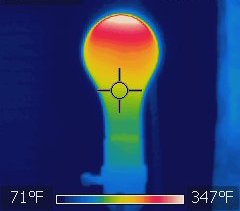
| Incandescent Light Bulb | An incandescent light bulb transforms electrical energy into visible light energy and into thermal energy. | This dual-transformation is why old bulbs burn your fingers. They are highly inefficient, turning much of their electrical energy into unwanted heat rather than just light. |
As an elementary teacher, part of your curriculum will require students to design, test, and refine devices that convert energy from one form to another. When a student builds a little wind-up car, they are engineering a device that transforms elastic potential energy into kinetic motion. If the car struggles to move, they must refine the design to reduce friction—which leads us directly to the great law of the universe.
All of these transfers and transformations are governed by an inescapable rule. The Law of Conservation of Energy states that energy can neither be created nor destroyed.
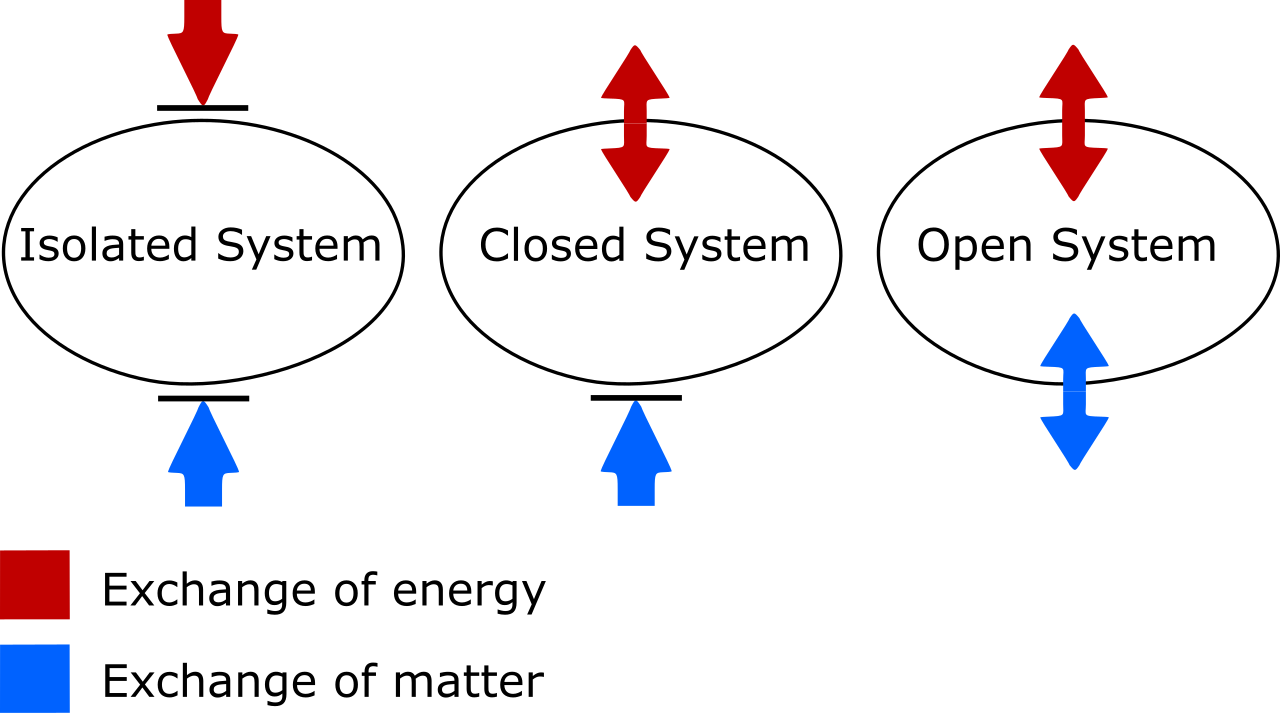
If you draw a boundary around a situation so nothing can get in or out, you have a closed system. The total amount of energy in a closed system remains constant during energy transfers and transformations. The ledger must always balance.
Yet, this law directly contradicts a child's lived experience.
Crucial Misconception: The "Death" of Energy A common elementary student misconception is that energy gets completely destroyed or used up when a moving object eventually stops.
If a student pushes a wooden block across the carpet, it eventually slides to a halt. The kinetic energy is gone. The student concludes that the energy was "used up" and destroyed. How do you explain the conservation of energy when the evidence of their own eyes tells them otherwise?
You must teach them to look for the invisible tax. Energy dissipation into the surrounding environment as invisible heat often makes energy appear to vanish. The kinetic energy of the sliding block was not destroyed; it was transformed into thermal energy through the friction of the carpet. The carpet and the block are now incredibly slightly warmer. The energy dissipated, spreading out into the environment so thinly that we can no longer harness it, but every single fraction of it still exists.
When you step in front of your students, remember that you are asking them to believe in something invisible.
- When they observe a physical collision, ask them: "Where did the speed go? Did you hear a sound? Sound is energy!"
- When they build a circuit that won't light up, don't just fix the wire. Remind them: "Electricity only runs on a closed track. Where is the bridge out?"
- When they tell you to shut the window because the cold is coming in, correct their phrasing: "We have to shut the window to keep our thermal energy from escaping!"
By grounding these high-level principles in their tangible, everyday reality, you do more than just prepare them for a science test. You fundamentally alter how they view the universe.