European Exploration and Colonization
Not sure you’re ready?
Take the ~3-minute readiness diagnostic and see where you stand.
When you unfurl a physical map of North America in your future classroom, you are displaying the end result of the most dramatic geographic, economic, and biological collision in human history. To teach European exploration and colonization is not merely a matter of having students memorize dates and the names of ships; it is a study of causality. It is a study of how human desires fundamentally rewired the globe, displacing indigenous populations, forging new societies, and laying the complex, often brutal groundwork for modern nations. As an educator, your task is to help young minds see that history is not a series of isolated events, but a continuous chain of environmental, economic, and human reactions.
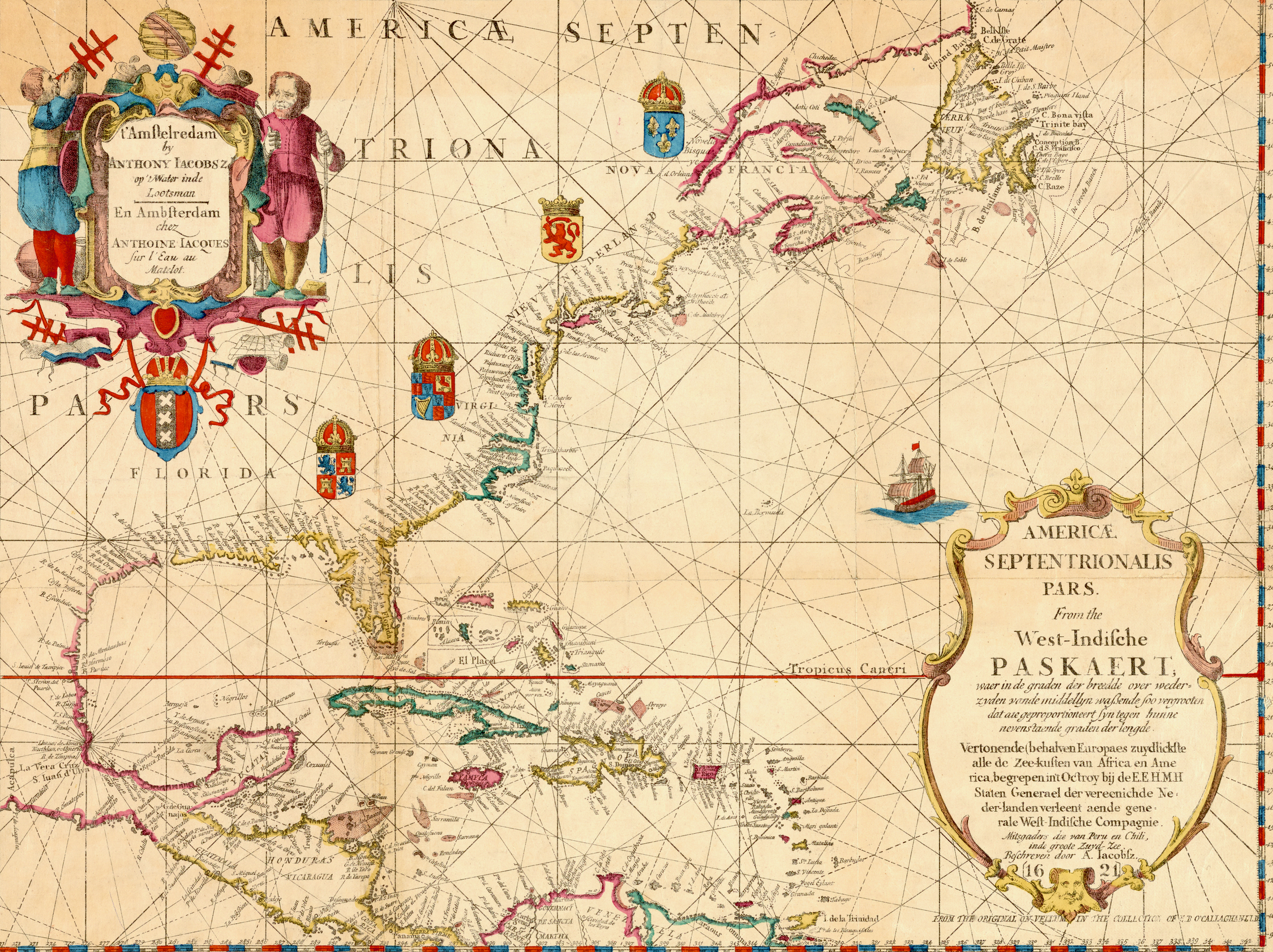
To understand why thousands of people crossed a terrifying ocean in wooden ships, we must strip away modern romanticism. The primary motivations for early European exploration of the Americas are best summarized by the historical phrase "God, Gold, and Glory." Explorers sought to spread Christianity, acquire vast wealth, and secure national prestige.
But underlying this trio of desires was a powerful economic engine: mercantilism. Think of mercantilism as a giant, one-way conveyor belt of wealth. It is an economic system where a mother country extracts raw materials from its colonies to build national wealth. European nations used mercantilist policies to justify maintaining strict control over colonial trade and manufacturing. The colonies existed solely to enrich the mother country.
The Illusion of Asia and the Great Obstacle
When Christopher Columbus reached the Americas in 1492, he was not looking for a "New World." He was seeking a western sea route to Asia to bypass the monopoly of trade routes dominated by other powers. He ran into the Americas by accident.
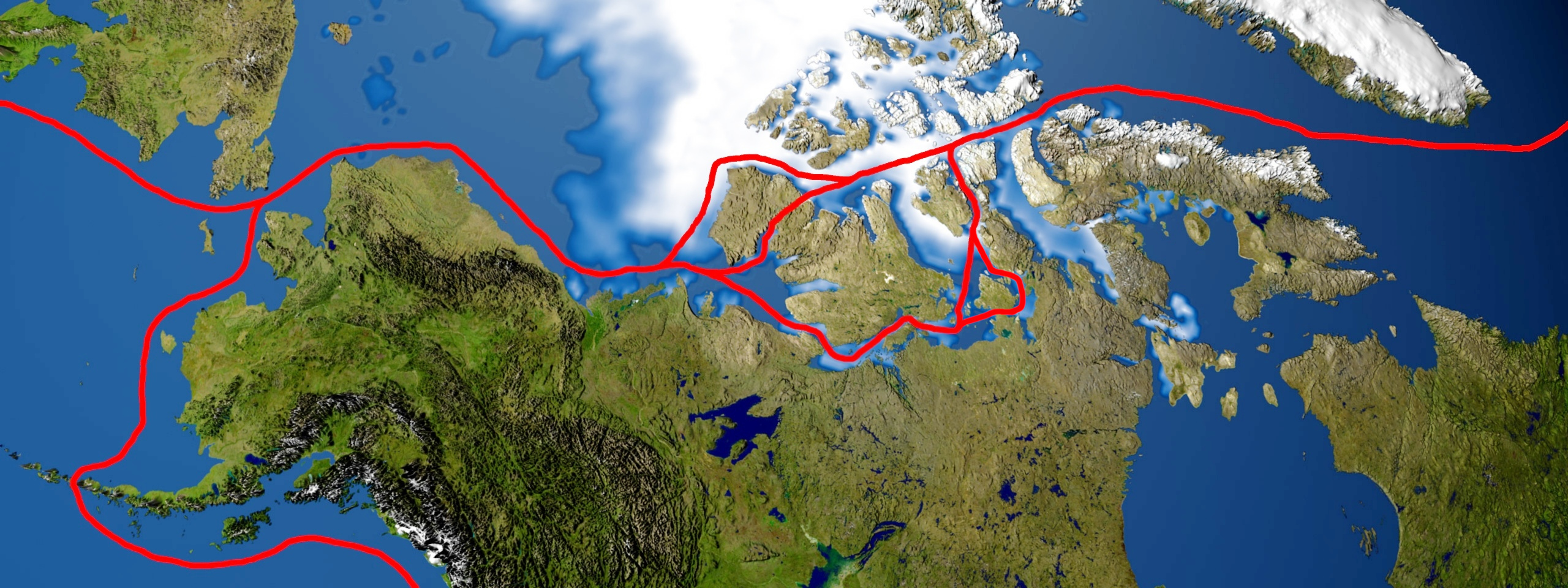
Once European powers realized this landmass was an entirely separate continent, it was initially viewed as an obstacle. This led to the relentless search for the Northwest Passage—a theorized sea route across North America connecting the Atlantic and Pacific Oceans. The obsessive search for the Northwest Passage drove much of the early French, Dutch, and English exploration of North America. They wanted a shortcut to Asia, but they ended up mapping a continent.
Before the English arrived in force, other powers were already shaping the continent. As a teacher, you will constantly need to disabuse students of the notion that the English "got here first."
Spain: Conquest and Extraction
The Spanish were the first to establish a permanent foothold. In fact, the Spanish established the settlement of St. Augustine in Florida in 1565. You must emphasize this fact to your students: St. Augustine is the oldest continuously occupied European-established settlement within the borders of the continental United States, predating Jamestown by over 40 years.
Spain's approach to colonization was highly extractive. To maximize wealth, the Spanish utilized the encomienda system to extract forced agricultural and mining labor from Native Americans. This system, combined with a devastating biological factor, reshaped the hemisphere.
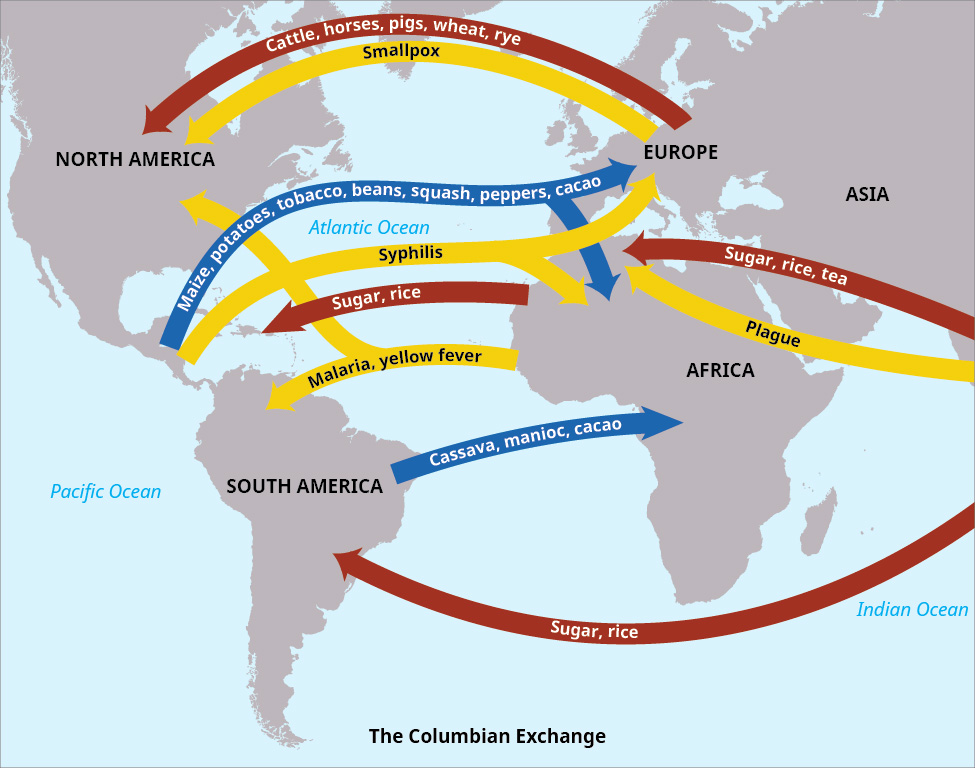
Pedagogical Note: The Columbian Exchange When teaching early encounters, the Columbian Exchange is your most vital concept. This was the widespread transfer of plants, animals, culture, and diseases between the Americas and the Old World. While Europe gained potatoes, tomatoes, and corn (which led to a European population boom), the exchange was catastrophic for Indigenous peoples. European diseases introduced through the Columbian Exchange decimated Native American populations due to a lack of natural immunity.
France and the Netherlands: Rivers and Commerce
While Spain conquered the South, France and the Netherlands looked North.
- France: Jacques Cartier explored the St. Lawrence River region for France in the 1530s, laying the groundwork. By 1608, Samuel de Champlain founded Quebec, establishing the first permanent French settlement in North America. Unlike the Spanish encomienda system, French colonists established cooperative relationships with Native Americans primarily centered around the lucrative fur trade. They needed Indigenous expertise to navigate the rivers and trap beaver.
- The Netherlands: In 1609, Henry Hudson explored the Hudson River area for the Dutch East India Company, establishing a robust, trade-focused foothold in what is now New York.
Meanwhile, John Cabot had already claimed land in North America for England much earlier, in 1497. However, it would take nearly a century for England to successfully act on that claim.
England’s early attempts at colonization were marked by disaster and desperation. Roanoke was the first English attempt at a colony in North America, established in 1585, but it infamously vanished.
It wasn't until 1607 that Jamestown was established in Virginia, becoming the first permanent English settlement in North America. Jamestown nearly collapsed due to starvation, disease, and conflict. The colony was quite literally saved by a weed: John Rolfe introduced a successful strain of tobacco to the Jamestown settlement. Because of Europe's growing addiction to it, tobacco became the primary cash crop that ensured the economic survival of the Virginia colony.
The Year 1619: A Turning Point in American History
For an educator, 1619 is arguably one of the most critical years to teach regarding early America, as it contains the seeds of both American democracy and American slavery.
- The Virginia House of Burgesses was established in 1619. It served as the first democratically-elected legislative body in British North America, setting a precedent for self-rule.
- In that exact same year, the first enslaved Africans were brought to the English colony of Virginia in 1619.
The Shift in Labor
Initially, much of the grueling work in the tobacco fields was done by indentured servants—poor Europeans who signed contracts to work for a set number of years in exchange for passage to the Americas.
However, as land became scarce and former indentured servants grew frustrated by a lack of opportunity and protection, violent unrest erupted. Bacon's Rebellion occurred in Virginia in 1676, led by angry frontiersmen. This rebellion deeply terrified the wealthy planter class. Consequently, Bacon's Rebellion accelerated the shift in Virginia from relying on white indentured servants to relying on enslaved African laborers, whom the planters believed could be more easily controlled and permanently subjugated.
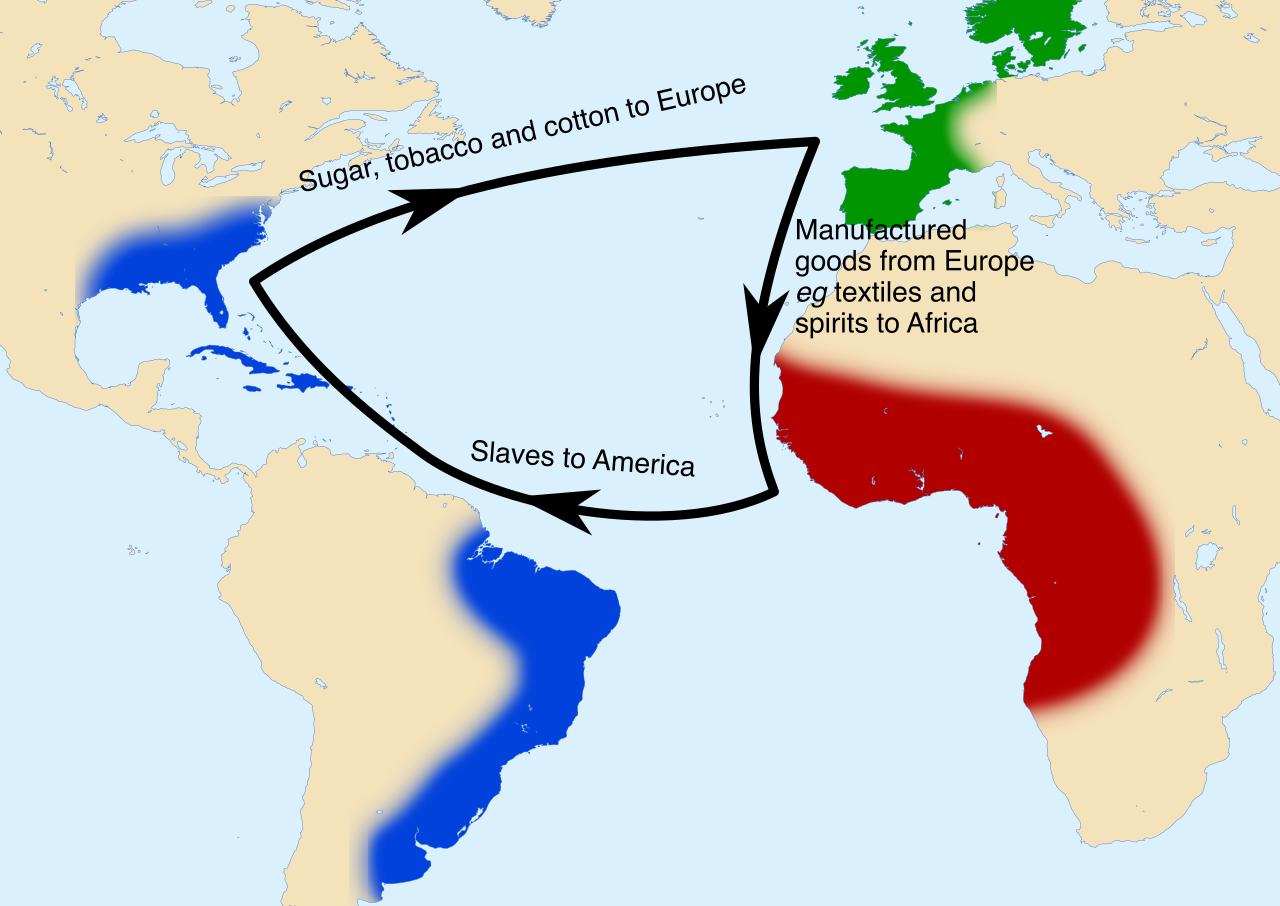
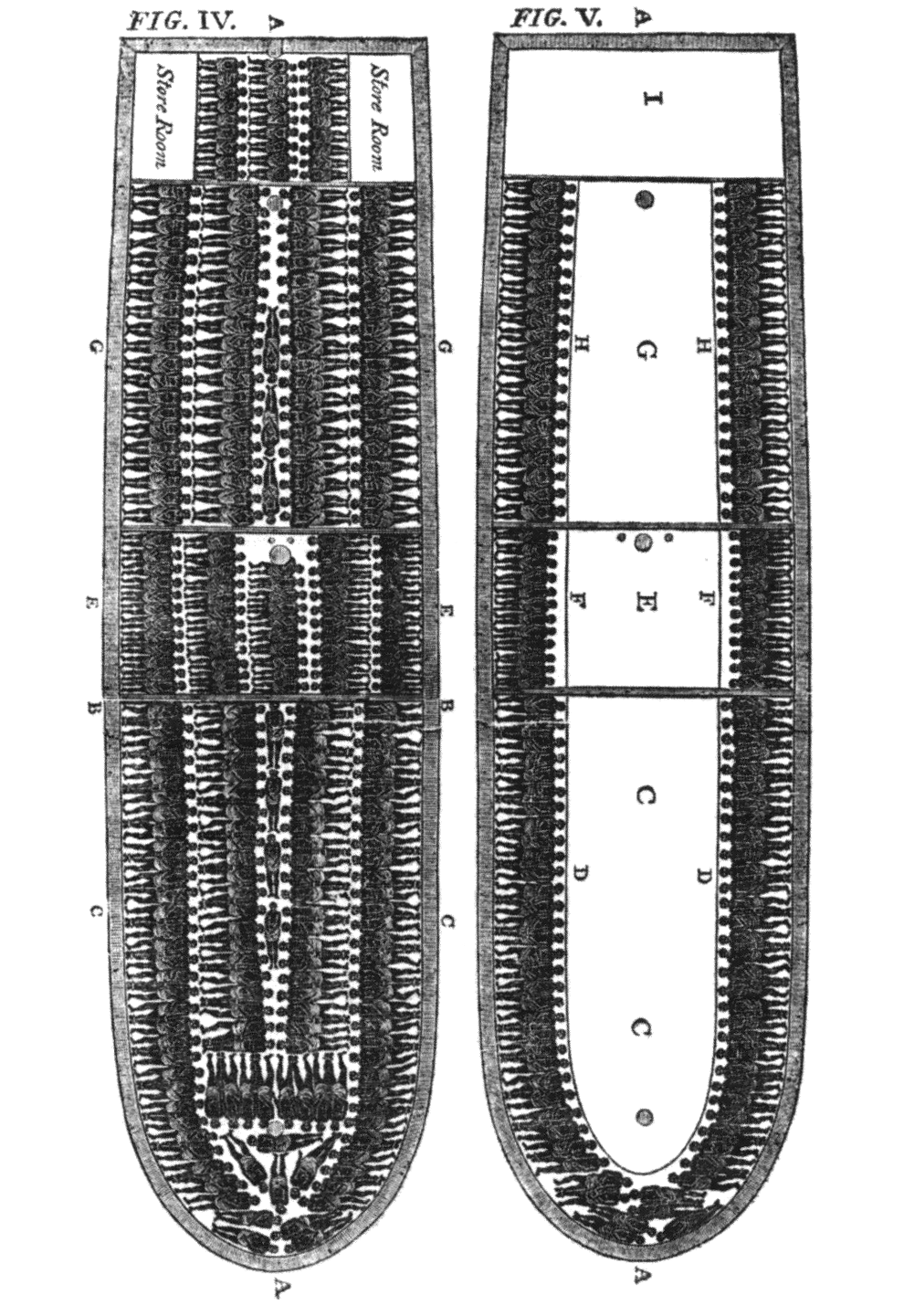
This growing reliance on slavery fueled the Triangular Trade, a multilateral system of trading connecting Europe, Africa, and the Americas. The most horrific leg of this system was the Middle Passage, the brutal sea journey undertaken by enslaved people from West Africa to the Americas.
While Virginia was founded primarily for profit, the New England colonies were founded primarily by those seeking ideological control and refuge.
The Pilgrims founded the Plymouth Colony in Massachusetts in 1620. Before they even disembarked their ship, they recognized they were outside the jurisdiction of their charter. To prevent anarchy, the Pilgrims signed the Mayflower Compact in 1620. You should teach this document as a marvel of civic engineering: The Mayflower Compact established a foundational model for self-government and majority rule in the English colonies.
Ten years later, the Puritans established the Massachusetts Bay Colony in 1630.
Misconception Alert: Pilgrims vs. Puritans Elementary students (and many adults) conflate these two groups. Teach the difference clearly: Puritans sought to reform the Church of England from within, whereas Pilgrims sought to separate from the Church of England entirely.
The Puritans were notoriously strict, which paradoxically led to the founding of other colonies by dissidents:
- Thomas Hooker founded Connecticut after leaving Massachusetts due to religious disagreements with Puritan leaders. Under his influence, the Fundamental Orders of Connecticut, adopted in 1639, is considered one of the first written constitutions in the Western tradition.
- Roger Williams founded Rhode Island on the principle of religious freedom and separation of church and state, making it a sanctuary for those cast out by Puritan orthodoxy.
As New England expanded, tensions over land with Indigenous populations reached a boiling point. King Philip's War was a devastating conflict between Native Americans and English settlers in New England spanning 1675 to 1676. The conclusion of King Philip's War effectively ended major Native American military resistance to English expansion in southern New England.
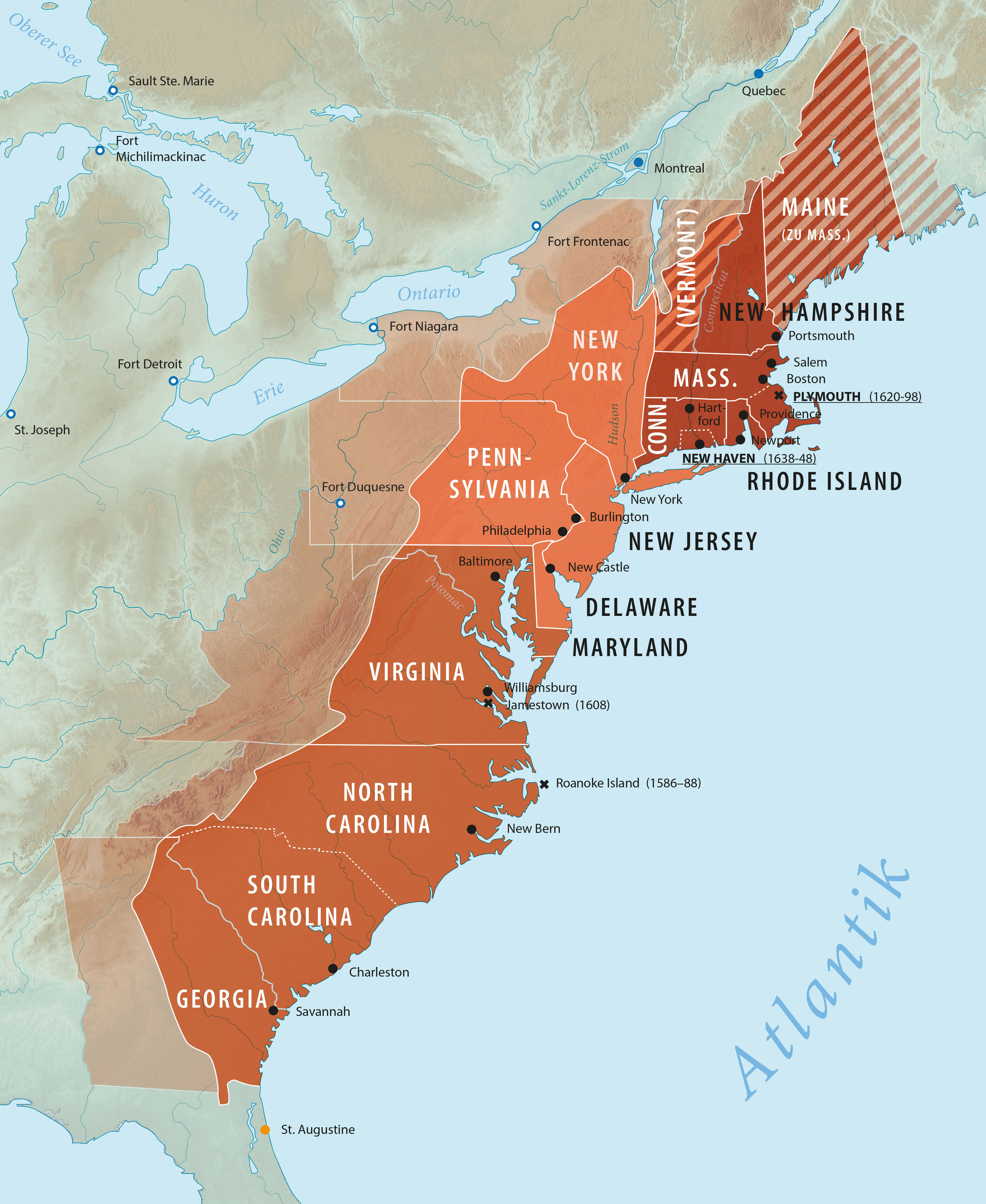
As the colonies stabilized, they grouped into three distinct regions. If there is one overarching concept your students must grasp, it is this: Geography and climate determined the distinct economic development of the three major English colonial regions.
1. The New England Colonies
- Who: Massachusetts, Connecticut, Rhode Island, and New Hampshire.
- Geography: The New England Colonies possessed rocky soil and a short growing season that made large-scale agriculture difficult.
- Economy: Because they could not rely on cash crops, the New England colonial economy relied heavily on fishing, shipbuilding, and timber extraction.
2. The Middle Colonies
- Who: New York, New Jersey, Pennsylvania, and Delaware.
- Geography: The Middle Colonies possessed fertile soil and a moderate climate suitable for growing grain crops.
- Economy & Culture: Because of this agricultural output, the Middle Colonies were known as the "Breadbasket Colonies" due to high wheat and grain production. Culturally, they were unique; they exhibited the highest level of religious and ethnic diversity among the English colonial regions. This was largely due to tolerant founding visions, such as when William Penn founded Pennsylvania as a safe haven for members of the Quaker religion.
3. The Southern Colonies
- Who: Maryland, Virginia, North Carolina, South Carolina, and Georgia.
- Geography: The Southern Colonies possessed rich soil and a long growing season ideal for cultivating labor-intensive crops.
- Economy: Tobacco, rice, and indigo were the primary cash crops of the Southern Colonies. Because these crops required massive amounts of grueling labor, the plantation economy of the Southern Colonies created a heavy reliance on enslaved African labor.
- Notable Founders: Beyond Virginia, Lord Baltimore founded Maryland as a refuge for English Catholics. Much later, James Oglethorpe founded Georgia in 1732 to serve as a buffer against Spanish Florida and a haven for English debtors.
By the mid-1700s, the colonies were growing up, and their distinct regional cultures began to experience shared, unifying events. The most notable was the First Great Awakening, a period of intense religious revivalism in the American colonies during the 1730s and 1740s.
Fiery preachers like Jonathan Edwards and George Whitefield traveled the colonies, drawing massive crowds. Why does this matter for a history class? Because the First Great Awakening encouraged an individualistic approach to religion that challenged traditional church authority. If colonists were learning to question the ultimate authority of their church leaders and establish a personal relationship with their faith, they were simultaneously laying the psychological groundwork to eventually question the authority of their King.
When you teach this content, you are giving your students the blueprint of the American house. They will see how the geography shaped the economies, how the economies shaped the labor systems, and how the ideals of self-governance constantly warred with the realities of subjugation and extraction. This is how you transform a lesson on colonization from a list of facts into a profound understanding of how our modern world was built.