Forms and Functions of Language
Not sure you’re ready?
Take the ~3-minute readiness diagnostic and see where you stand.
Language is not a single, rigid tool but a vast, adaptable wardrobe. A student does not use the same linguistic garments to negotiate rules on the playground as they do to answer a mathematics question, or to write a persuasive letter to the principal. To teach language arts effectively, we must understand how humans manipulate language forms to achieve specific functions. We are not merely teaching children how to follow arbitrary grammatical rules; we are showing them how to shape meaning, establish their voice, and navigate different social and academic spheres with precision.
To teach a child how to write and speak effectively, you must first understand the language they bring into your classroom. Often, teachers mistakenly view standard academic English as "correct" and any deviation as "broken." This is a fundamental misunderstanding of how language works.
A dialect is a variety of a language characteristic of a particular regional or social group. When a student speaks a dialect—whether it is Appalachian English, African American Vernacular English (AAVE), or Chicano English—they are not making errors. In fact, all linguistic dialects are strictly rule-governed systems of communication. They have deep, logical syntactic structures. Because of this, linguists agree that no single dialect is inherently linguistically superior to any other dialect.
How does this shape your pedagogical decision-making? Teachers support language development by treating students' home dialects as valid communication systems. When we teach the conventions of academic writing, Standard English instruction should frame Standard English as an addition to a student's linguistic repertoire. It is a new tool for a specific job. Consequently, Standard English instruction should never frame Standard English as a replacement for a student's home dialect. Stripping a child of their home dialect strips them of their cultural identity; adding Standard English empowers them to navigate broader academic and professional spaces.
This flexibility is most visible in code-switching, which is the practice of alternating between two or more language varieties in a single conversation. You will hear students code-switch constantly: speaking one way to their peers, and shifting instantly when they address you.
Language Registers
If dialects are the different "languages" we speak, registers are the "volumes" and "tones" we use. A language register is the specific level of formality a speaker uses in a given context.
Linguists generally classify communication into five categories. The five primary language registers are frozen, formal, consultative, casual, and intimate.
| Register | Definition & Example |
|---|---|
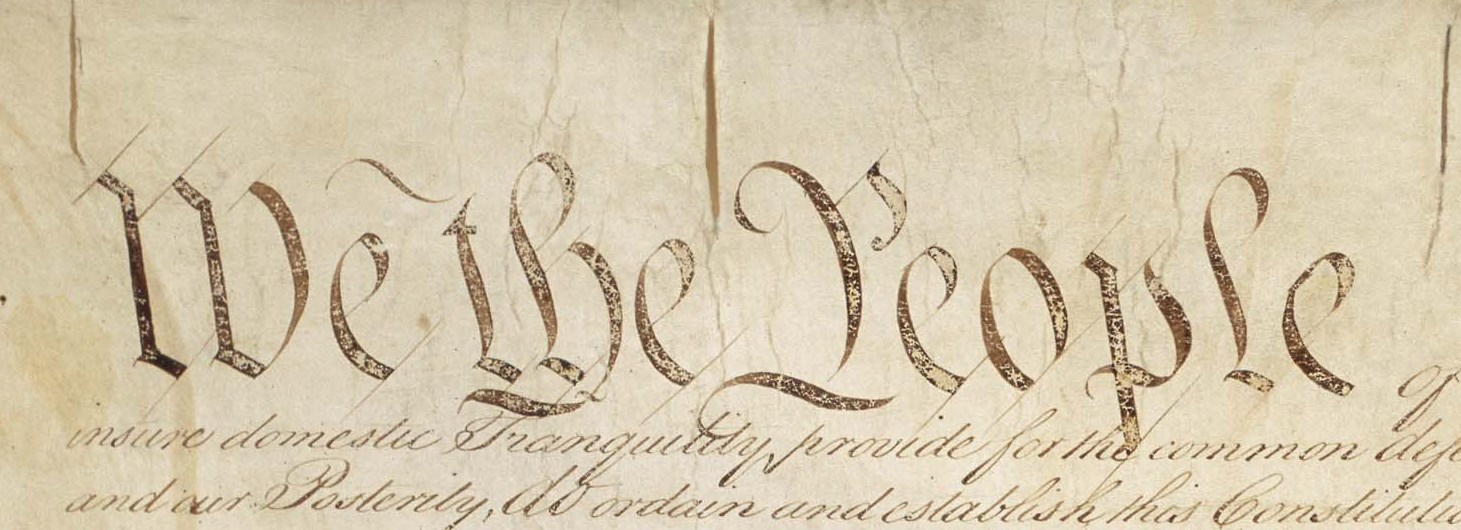
| Frozen | Language that never changes. Examples: The Pledge of Allegiance, the preamble to the Constitution. |
| Formal | Standard academic or professional communication. One-way communication, strict syntax. Examples: A keynote speech, an academic essay. |
| Consultative | Professional two-way dialogue. Respectful but interactive. Examples: A teacher-student conference, a doctor speaking to a patient. |
| Casual | Conversational language used with peers and friends. Examples: Playground chatter, text messages. |
| Intimate | Highly private language reserved for close family or partners. Includes inside jokes and non-verbal cues. |
How do we teach students to choose the right one? The choice is not arbitrary. The required level of formality in communication is dictated by the target audience and is dictated by the specific purpose of the message.
When students write essays, they operate in the formal register. Therefore, academic writing typically avoids colloquialisms to maintain a formal register. What exactly are these? A colloquialism is a word or phrase that is not formal or literary (e.g., saying "gonna" instead of "going to," or "bamboozled" instead of "deceived"). Furthermore, formal registers avoid slang. Slang consists of very informal vocabulary typically restricted to a particular context or group of people (e.g., current generational slang like "sus" or "bet").
Once a student has selected the appropriate register, they must select the exact words to convey their thought. In the formal register, precise vocabulary reduces ambiguity in written communication.

To teach word choice, you must help students distinguish between the two layers of a word's meaning:
- Denotation is the literal dictionary definition of a word.
- Connotation refers to the emotional or cultural associations attached to a specific word.
Imagine a student writes, "The scientist was being nosy." The denotation of "nosy" is "showing an interest in others' affairs." But the connotation is highly negative and informal. A more precise choice—like "inquisitive"—maintains the denotation while offering a positive, scholarly connotation.
As students advance, they must also acquire domain-specific vocabulary, which demonstrates expertise in a particular academic subject. Calling a shape a "box" is fine on the playground, but using the domain-specific term "rectangular prism" demonstrates mastery of mathematical concepts.
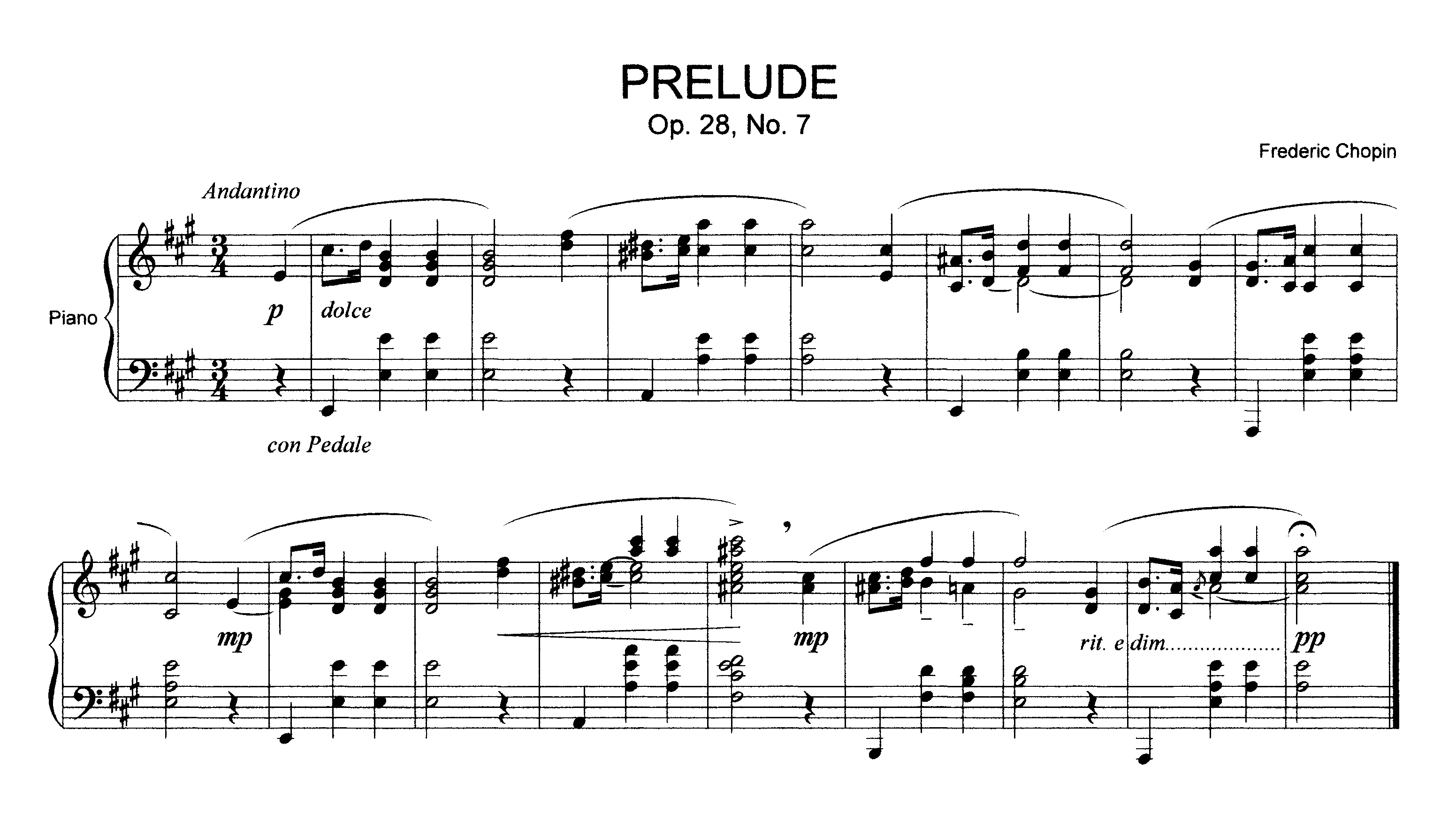
Punctuation is not just a traffic cop ensuring sentences don't crash into each other; it is the musical notation of language. Punctuation marks guide the reader's pacing through a text. As a teacher, you will show students how to use punctuation for intentional rhetorical effect.
- The Semicolon (;) Many students (and adults!) are terrified of semicolons. Explain it to them this way: A semicolon joins two independent clauses to emphasize a close thematic relationship between those clauses. Instead of a full stop with a period, the semicolon acts as a bridge. (Example: "The storm raged outside; the classroom remained a quiet sanctuary.")
- The Em Dash (—) An em dash indicates a sudden break in a writer's thought. It is vibrant and interrupting. Furthermore, an em dash provides greater emphasis to a phrase than a standard comma provides. (Example: "The experiment—which had taken three weeks to design—was ruined in seconds.")
- The Ellipsis (...) In narrative writing, an ellipsis can indicate a trailing off of a character's thought. But it is also a powerful tool for pacing because an ellipsis can create suspense by intentionally delaying the end of a sentence. (Example: "He slowly turned the doorknob, pushed the door open, and saw...")
Young writers often write like they are laying bricks: a series of short, identical, blocky sentences. "The dog ran. The dog was big. The dog chased the ball." Our job is to teach them syntactic manipulation.
Expanding and Reducing Sentences
We teach students to expand sentences to add color and precision. Expanding sentences involves adding descriptive modifiers to provide greater detail. A practical way to achieve this is by teaching students that expanding sentences can be achieved by attaching prepositional phrases to the core clause. (From "The dog ran" to "The massive dog ran across the muddy field.")
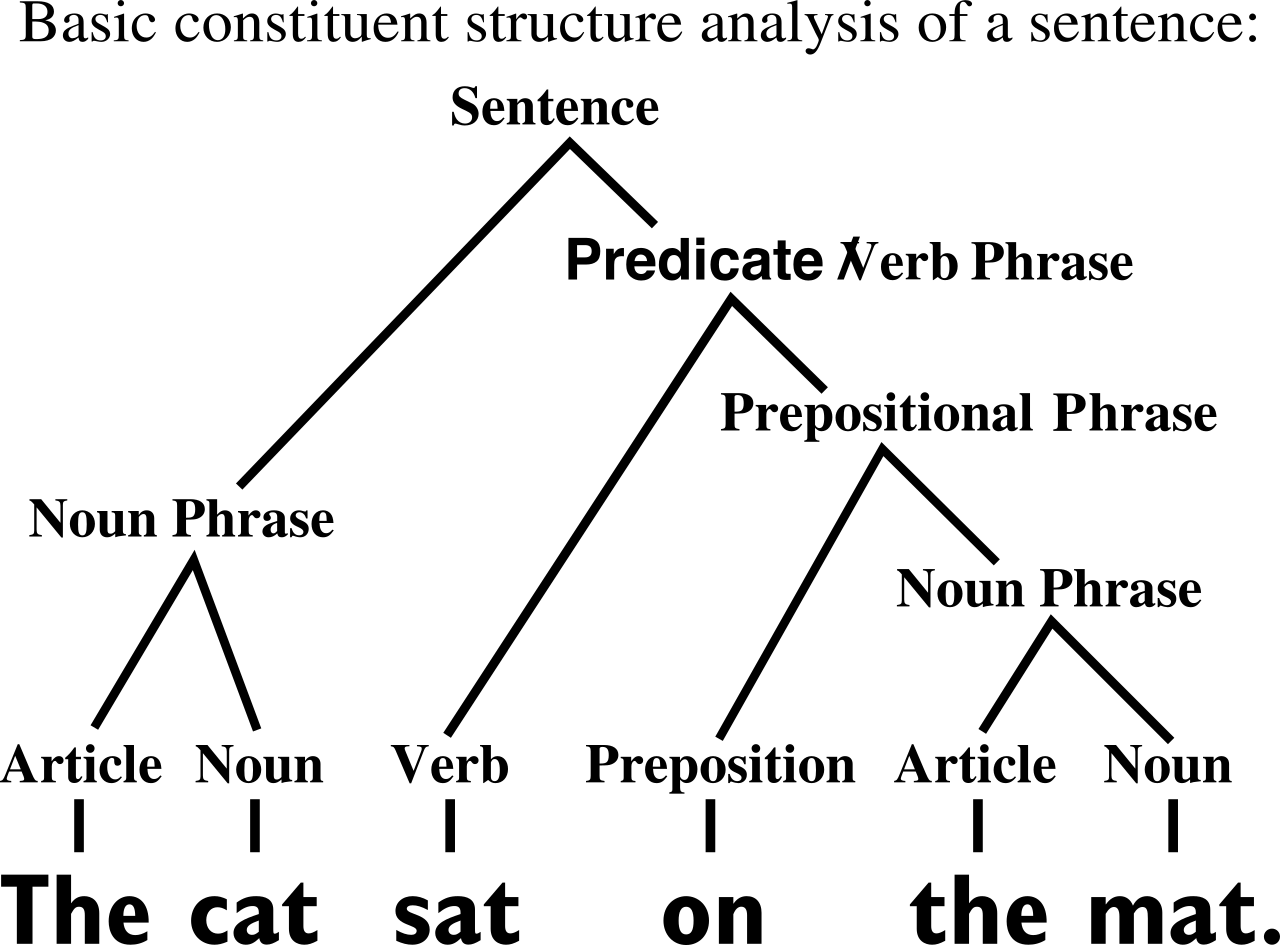
Conversely, sometimes writing is bogged down by clutter. Reducing sentences eliminates wordiness to increase textual clarity. As teachers, we must point out that removing redundant phrases directly streamlines student writing. (From "The dog who was brown in color ran fast in a quick manner" to "The brown dog sprinted.")
Sentence Combining
When we ask students to merge those "brick" sentences, we are teaching sentence combining. Sentence combining merges two related sentences using appropriate conjunctions. This is not just an editing trick; sentence combining explicitly demonstrates the logical relationship between two distinct ideas.
The conjunction a student chooses entirely changes the logic of the sentence:
- Coordinating conjunctions (For, And, Nor, But, Or, Yet, So) give equal weight to multiple ideas within a combined sentence. (Example: "The bell rang, and the students lined up.")
- Subordinating conjunctions (Although, Because, Since, Unless) establish unequal importance between two combined ideas. (Example: "Because the bell rang, the students lined up." Here, the ringing bell is framed as the cause, subordinating it to the effect).
Why this matters for your classroom: Sentence combining exercises directly improve a student's syntactic maturity. Research shows that regular practice with sentence combining exercises improve overall writing fluency, helping students move from disjointed thoughts to cohesive, flowing paragraphs.
Finally, we must teach students how to manipulate the voice and rhythm of their sentences to control their reader's attention.
Active vs. Passive Voice
By default, we encourage the active voice. Active voice generally creates more concise and direct sentences than passive voice. (Example: "The scientist poured the chemical.")
However, the passive voice is not grammatically "wrong"—it serves a specific function. A passive voice sentence places the recipient of the action as the grammatical subject. (Example: "The chemical was poured by the scientist.") Why do this? Passive voice is sometimes used deliberately to shift focus away from the actor. If a student is writing a science lab report, the chemical reaction is more important than who poured it, making the passive voice the ideal rhetorical choice.

Controlling the Rhythm
If every sentence in a paragraph is the exact same length, the reader will be lulled to sleep. Varying sentence lengths prevents written text from sounding monotonous.
You can teach students to use sentence length to shock the reader into paying attention. Placing a short sentence immediately after a series of long sentences creates dramatic rhetorical emphasis.
The wind howled through the ancient trees, tearing the remaining autumn leaves from their branches and sending them spinning violently into the dark, churning waters of the river below. The storm had arrived. And it was angry.
When you sit down with a student to review their writing, remember that you are not just hunting for comma splices or correcting their slang. You are helping them master a complex, rule-governed system of forms and functions. You are teaching them how to choose the right tools—from dialects and registers to punctuation and syntax—so that their words have the power to change the world.