Congruence and Similarity of Geometric Figures
Not sure you’re ready?
Take the ~3-minute readiness diagnostic and see where you stand.
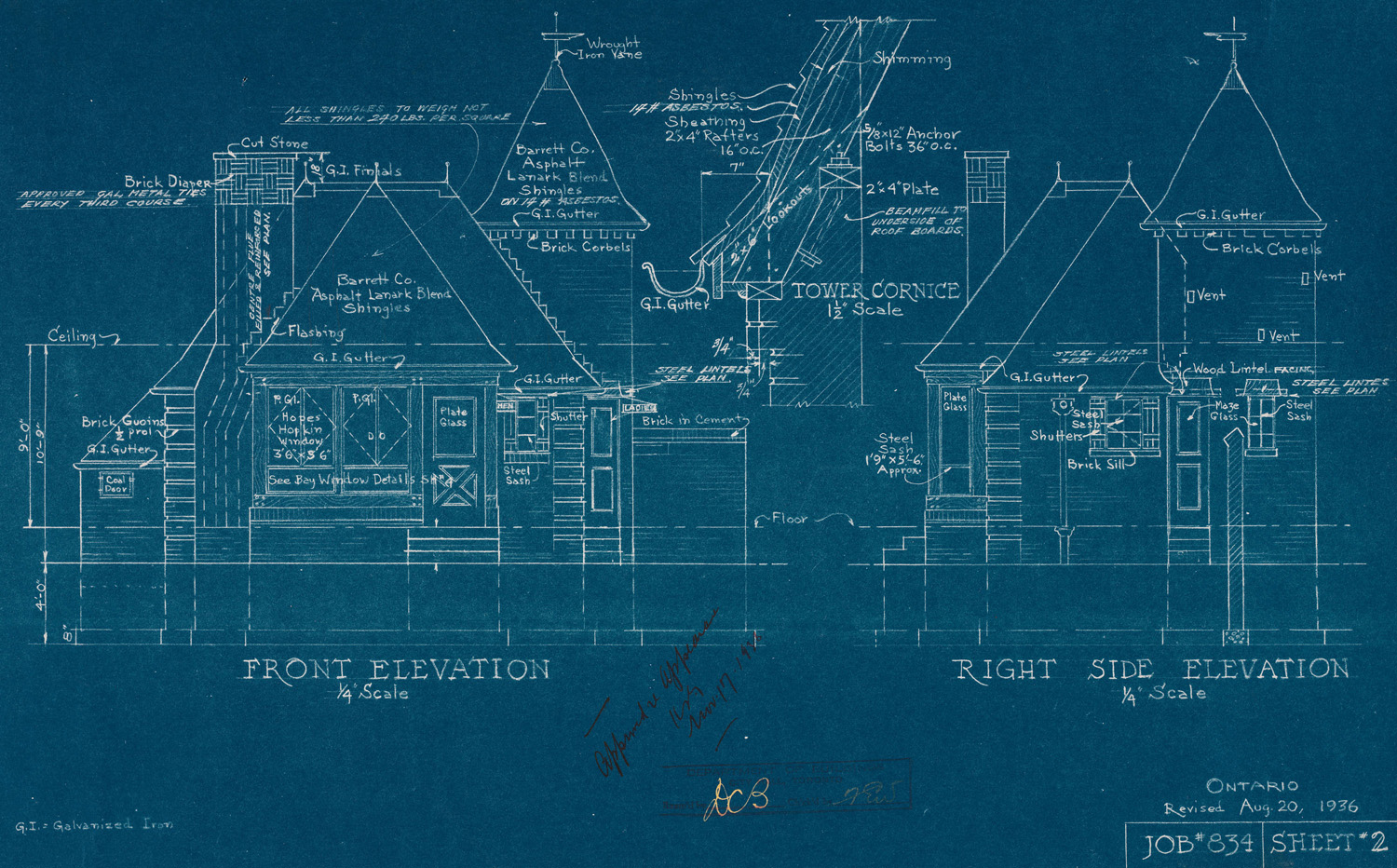
When an architect drafts a blueprint for a skyscraper, the lines on the paper do not possess the same physical dimensions as the final steel beams, yet they harbor the exact same geometric relationships. If the angles on the blueprint were even fractionally different from those of the constructed building, the structure would collapse. This fundamental translation of shape—preserving the essence of a form while manipulating its size—is the beating heart of geometric congruence and similarity. By understanding these concepts, we gain the ability to measure the inaccessible. We can calculate the height of a distant mountain, the width of a river, or the missing dimensions of a triangular truss without ever picking up a physical measuring tape.
Let us begin with the strictest geometric relationship: congruence. Congruent geometric figures have the exact same shape and the exact same size. If you were to cut one congruent figure out of a piece of paper, you could place it perfectly over the other so that their edges align without any overlap or shortfall.
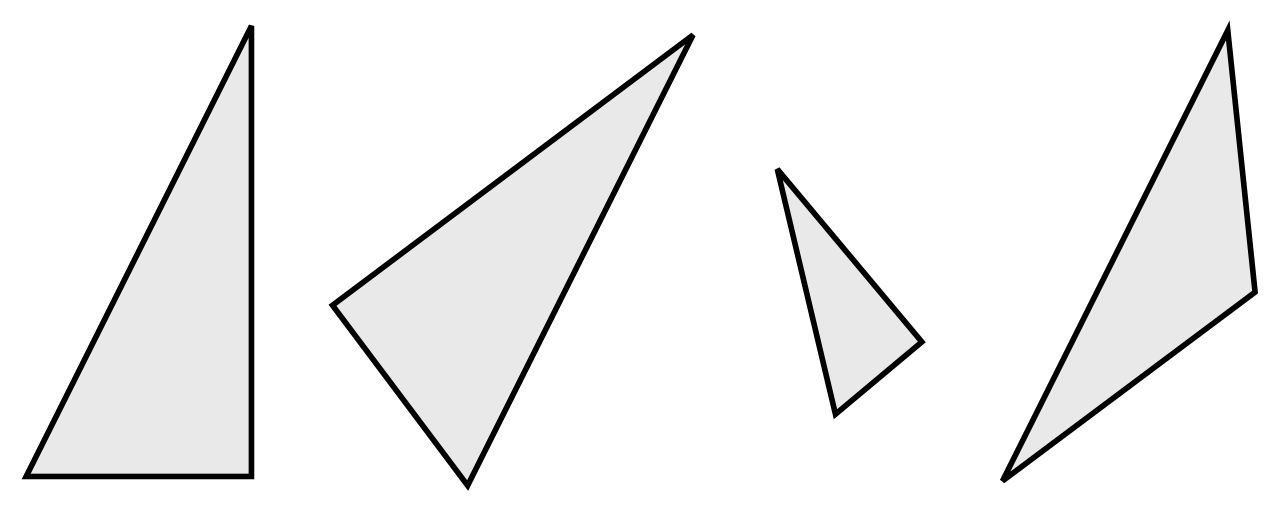
To denote this perfect equivalence in mathematics, we use a specific notation. The mathematical symbol for congruence is an equals sign with a tilde above it (≅). The equals sign represents the identical size, and the tilde represents the identical shape.
Because congruent figures are exact duplicates, their anatomical parts operate by absolute equivalence. For any two congruent polygons:
- Corresponding side lengths of congruent polygons are exactly equal in length.
- Corresponding angles of congruent polygons are exactly equal in measure.
This gives us a brilliant tool for solving geometry problems. If you are examining two congruent figures and one has an unknown dimension, a missing side length in a geometric figure can be found by identifying the length of the corresponding side in a congruent figure. Likewise, a missing angle measure in a geometric figure equals the corresponding angle measure in a congruent figure. The geometry effectively solves itself through matching.
The Rigidity of Triangles: Congruence Rules
Polygons with many sides are wobbly; a square can be pushed into a rhombus without altering its side lengths. Triangles, however, are structurally rigid. Once certain parts of a triangle are fixed, the entire triangle is locked into a single, inescapable shape and size.
Because of this rigidity, we do not need to measure all three sides and all three angles to prove two triangles are congruent clones. We only need specific combinations of three measurements. These are the definitive rules of triangle congruence:
- Side-Side-Side (SSS): Two triangles are congruent if all three corresponding sides are equal in length. If the lengths are locked, the angles have no choice but to be locked as well.
- Side-Angle-Side (SAS): Two triangles are congruent if two corresponding sides and their included angle are equal. Imagine two hinged sticks; if you lock the angle of the hinge, the distance between the unattached endpoints is fixed.
- Angle-Side-Angle (ASA): Two triangles are congruent if two corresponding angles and their included side are equal.
- Angle-Angle-Side (AAS): Two triangles are congruent if two corresponding angles and a non-included side are equal.
- Hypotenuse-Leg (HL): This is a special case for right triangles. Two right triangles are congruent if their hypotenuses and one pair of corresponding legs are equal. Because the angle is locked at 90 degrees, the Pythagorean theorem guarantees the third side must also be equal.
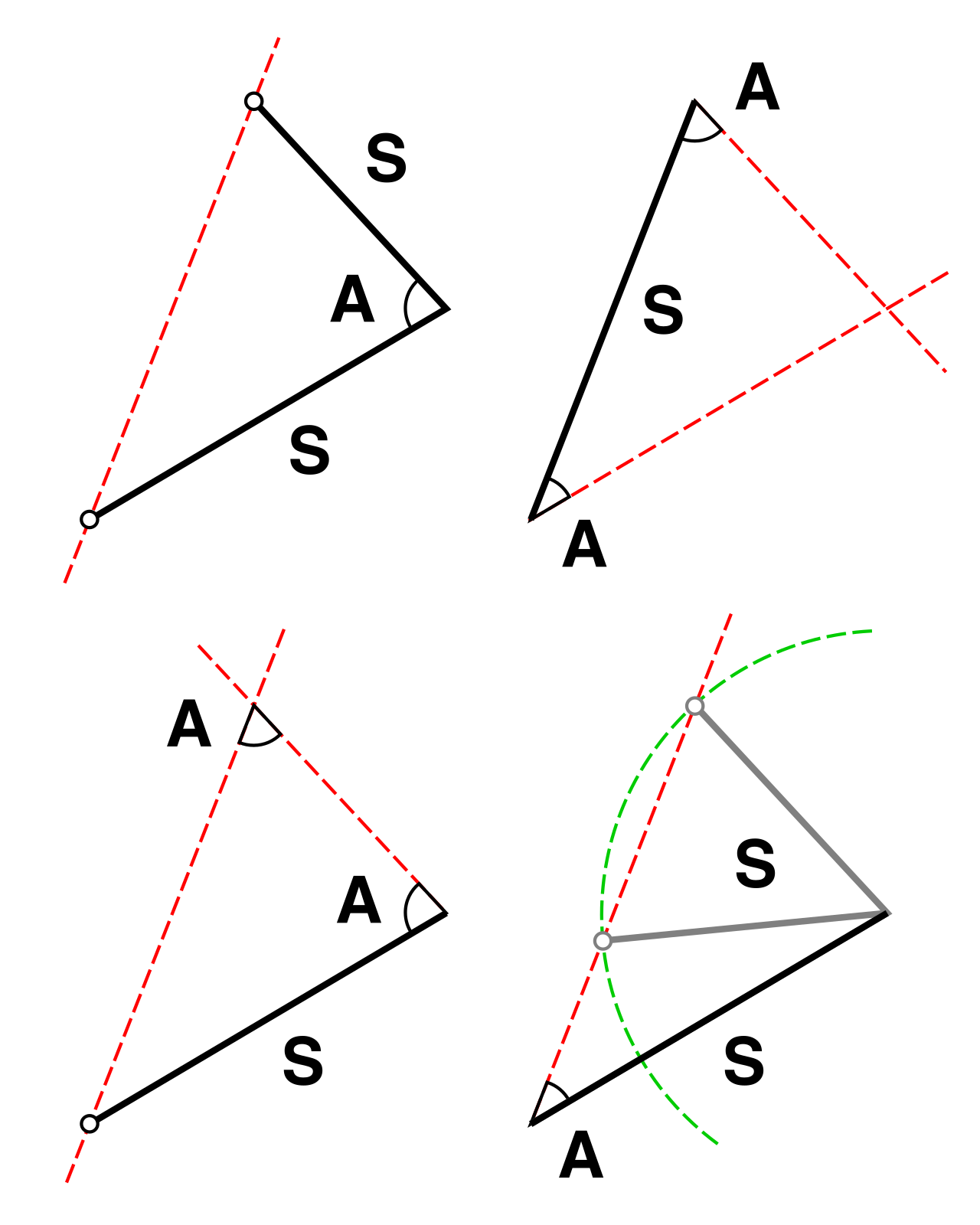
Warning on "Assumed" Congruence: Notice that Angle-Angle-Angle (AAA) is missing from this list. Knowing only the angles tells you the shape of the triangle, but nothing about its size. This brings us directly to the concept of similarity.
If congruence is about creating exact clones, similarity is about projecting shadows or scaling blueprints. Similar geometric figures have the exact same shape, but critically, similar geometric figures are not required to have the same size.
Because they share a shape but not necessarily a size, the mathematical notation drops the equals sign. The mathematical symbol for similarity is a single tilde (∼).
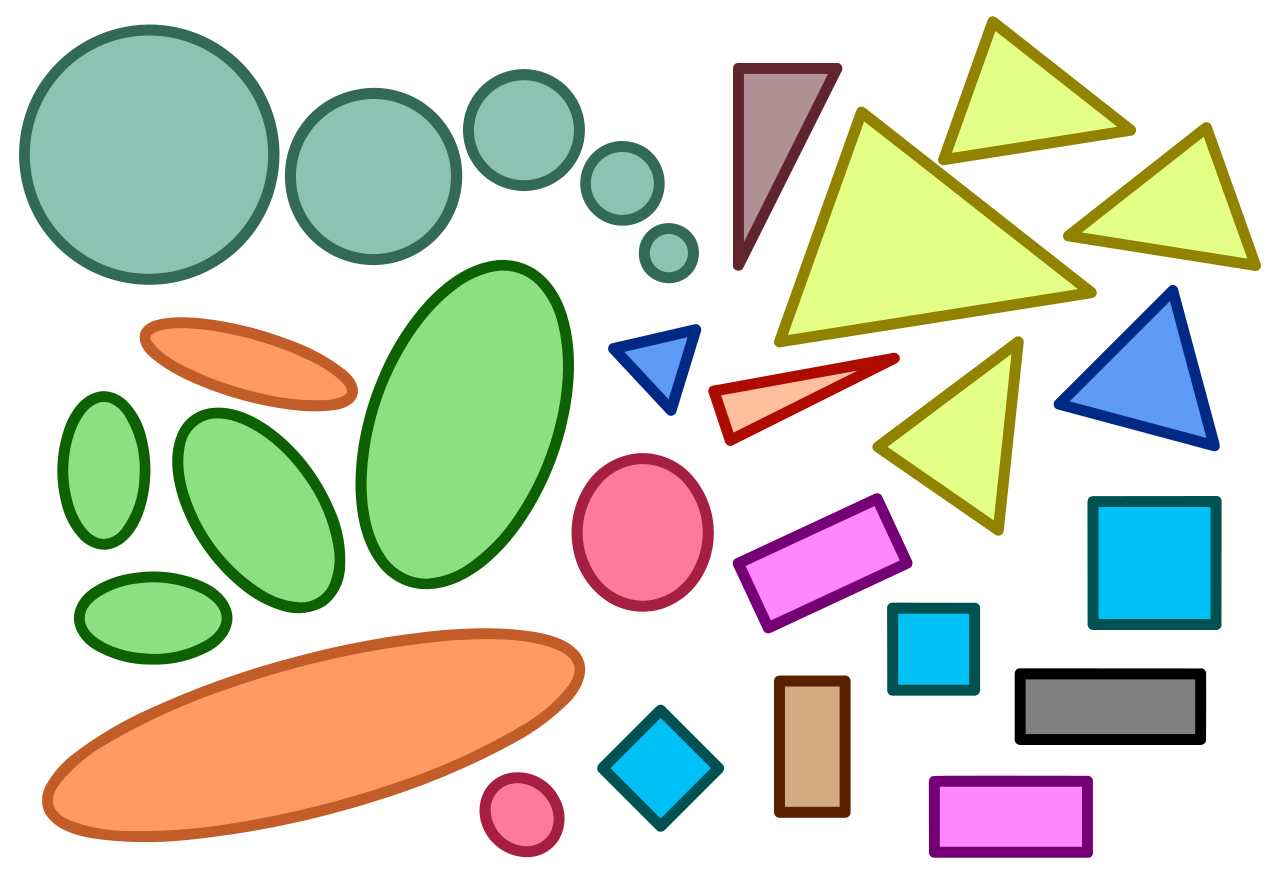
What does it mathematically mean to have the "same shape"? For polygons, it requires two conditions to be met simultaneously:
- Corresponding angles of similar polygons are exactly equal in measure. (This preserves the "sharpness" or "openness" of the corners).
- Corresponding side lengths of similar polygons are strictly proportional. (This ensures the figure is stretched or shrunk uniformly in all directions).
Some shapes are fundamentally constrained by their definitions, meaning they cannot help but be similar to their peers. Because a circle's entire shape is defined purely by a radius sweeping 360 degrees, all geometric circles are similar to one another. Likewise, because squares must have four equal sides and four equal 90-degree angles, all geometric squares are similar to one another.
Triangle Similarity Rules
Just as with congruence, triangles do not require us to check every single side and angle to prove similarity.
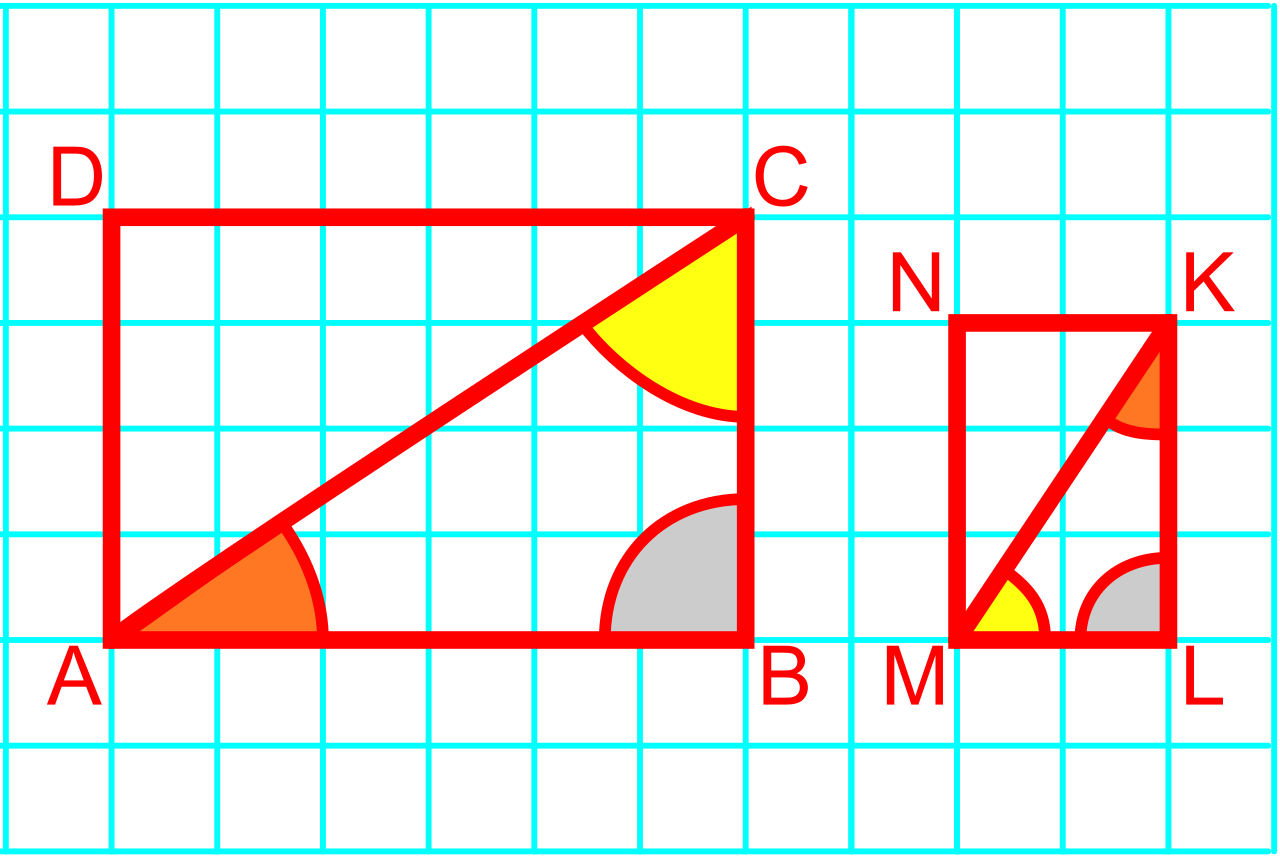
- Angle-Angle (AA) similarity rule: Two triangles are similar if two angles of one triangle are equal to two corresponding angles of the other triangle.
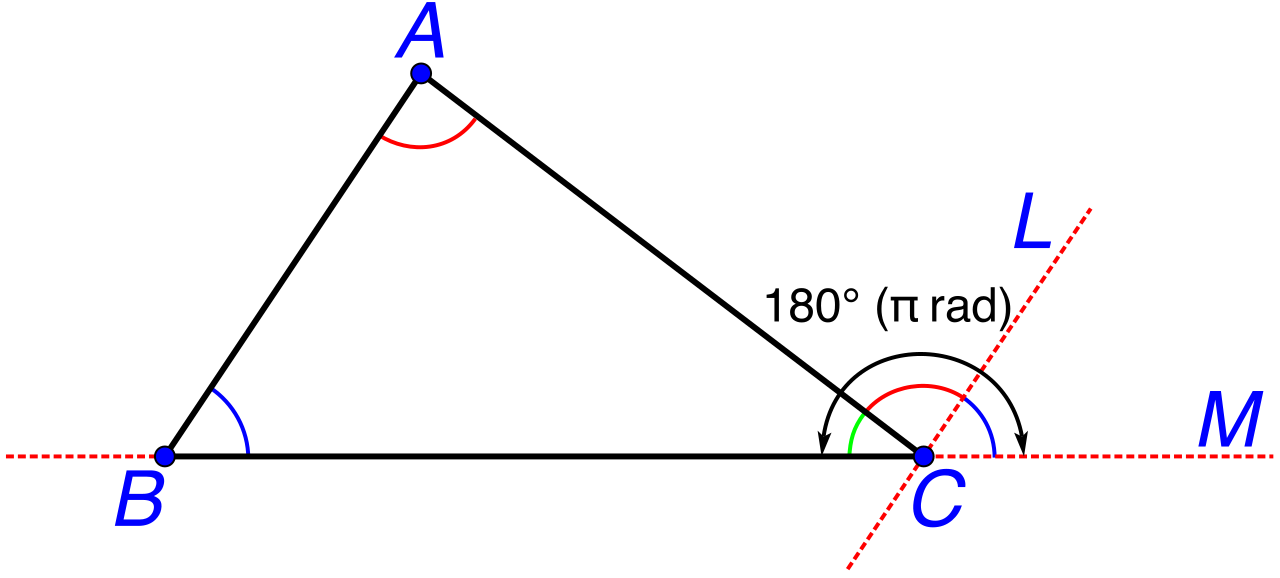
- Why just two? We must recall a fundamental truth of Euclidean geometry: The sum of the interior angles of any planar triangle is always exactly 180 degrees. If you know two angles, the third is mathematically locked. Therefore, knowing two angles actually means you know all three!
- Side-Side-Side (SSS) similarity rule: Two triangles are similar if all three pairs of corresponding sides are proportional.
- Side-Angle-Side (SAS) similarity rule: Two triangles are similar if two pairs of corresponding sides are proportional and their included angles are equal.
The true power of similar figures lies in the mathematical engine that links them: the scale factor.
Definition: A scale factor is the constant ratio of the length of a side on one geometric figure to the length of the corresponding side on a similar geometric figure.
Think of the scale factor as a multiplier. If you have an original shape and a similar shape, how much did you have to multiply the original by to get the new one?
- A scale factor greater than one indicates an enlargement of the original geometric figure. (e.g., multiplying by 3 makes a figure three times as wide and three times as tall).
- A scale factor strictly between zero and one indicates a reduction of the original geometric figure. (e.g., multiplying by 0.5 shrinks the figure to half its linear size).
Congruence is a Subset of Similarity
Armed with the concept of the scale factor, we can now precisely define the relationship between congruence and similarity. They are not entirely separate ideas. In fact, congruent figures are a specific type of similar figures with a scale factor of exactly one. If you scale a figure by 1, you have changed neither its shape nor its size.
Finding Unknown Dimensions
If you know the scale factor between two similar figures, calculating unknown dimensions becomes trivial. A missing side length in a similar figure can be calculated by multiplying the corresponding side length of the original figure by the scale factor.
Alternatively, we can harness the power of algebraic proportions. Because corresponding side lengths of similar polygons are strictly proportional, setting up a proportion between corresponding side lengths allows for solving unknown side lengths in similar figures using cross-multiplication.
There are two primary ways to write a valid proportion for similar figures. You can compare the corresponding parts between the two figures, or you can compare the internal ratios of the figures themselves.
A valid proportion for similar triangles compares the ratio of two side lengths in one triangle to the ratio of the corresponding two side lengths in the second triangle.
For example, imagine a small triangle (Triangle A) with a base of 3 and height of 4. We have a similar large triangle (Triangle B) with a base of 9 and an unknown height (x).
- Method 1 (Between figures): Small Base / Large Base = Small Height / Large Height →93=x4
- Method 2 (Within figures): Small Base / Small Height = Large Base / Large Height →43=x9
Both valid proportions, when cross-multiplied, yield the exact same result: 3x=36, meaning x=12.
One of the most fascinating—and frequently tested—aspects of similar figures is how scaling affects dimensions beyond simple side lengths.
When you enlarge a geometric figure by a scale factor, what happens to the distance entirely around it? Because perimeter is simply a one-dimensional measure of total length (the addition of all sides), it scales exactly identically to the sides. The ratio of the perimeters of two similar polygons is exactly equal to the scale factor between the two similar polygons. If you triple the side lengths of a triangle, the amount of fencing needed to enclose that triangle is also exactly tripled.

Area, however, behaves fundamentally differently. Area measures two-dimensional space. If you enlarge a figure, you are stretching it in two directions simultaneously—horizontally and vertically.
To visualize this, imagine a 1×1 square. Its area is 1 square unit. If we apply a scale factor of 2, the square becomes 2×2. What is the new area? It is 4 square units. By doubling the linear dimensions, the area quadrupled. Therefore: The ratio of the areas of two similar polygons is equal to the square of the scale factor between the two similar polygons.
Summary Comparison of Geometric Scaling
| Characteristic | Congruent Figures (≅) | Similar Figures (∼) |
|---|---|---|
| Shape | Exact same shape | Exact same shape |
| Size | Exact same size | Not required to have the same size |
| Angles | Corresponding angles exactly equal | Corresponding angles exactly equal |
| Sides | Corresponding sides exactly equal | Corresponding sides strictly proportional |
| Scale Factor | Exactly 1 | Any positive number |
Mastering the mechanics of congruence and similarity liberates you from the confines of direct measurement. When you look at the world through the lens of proportionality, a tiny shadow on the ground becomes the key to unlocking the heights of the physical world. For the Praxis Core Mathematics exam, internalize these proportional relationships—they are the underlying grammar of geometry.