Triangles: Types, Angles, and Inequality Property
Not sure you’re ready?
Take the ~3-minute readiness diagnostic and see where you stand.
Take three rigid rods, pin them together at their ends, and you have created a structure whose shape cannot be altered without bending or breaking the rods themselves. This unique geometric rigidity makes the triangle the simplest possible polygon, yet the foundational building block of both theoretical geometry and real-world engineering. A triangle is a polygon with exactly three sides and three interior angles; it is the atomic unit of flat space. To understand the properties of a triangle is to understand the fundamental rules that govern two-dimensional reality.
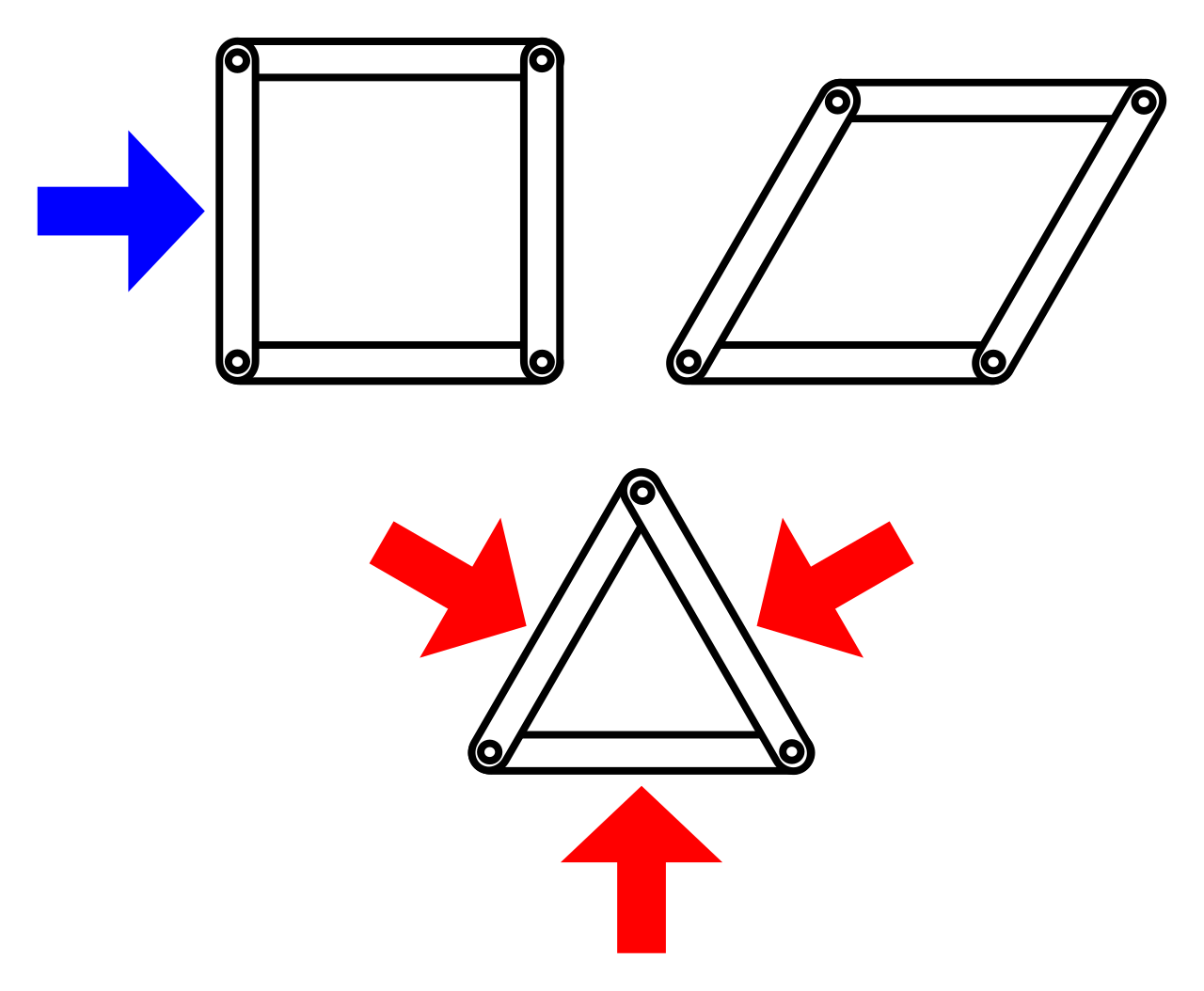
For the Praxis Core Mathematics exam, you must master not only how to identify these shapes but also how to wield the unbreakable mathematical laws that govern their existence and proportions.
Before we sort triangles into categories, we must establish the grand constraint that governs them all. In flat, Euclidean geometry, a triangle is a closed system of angles.
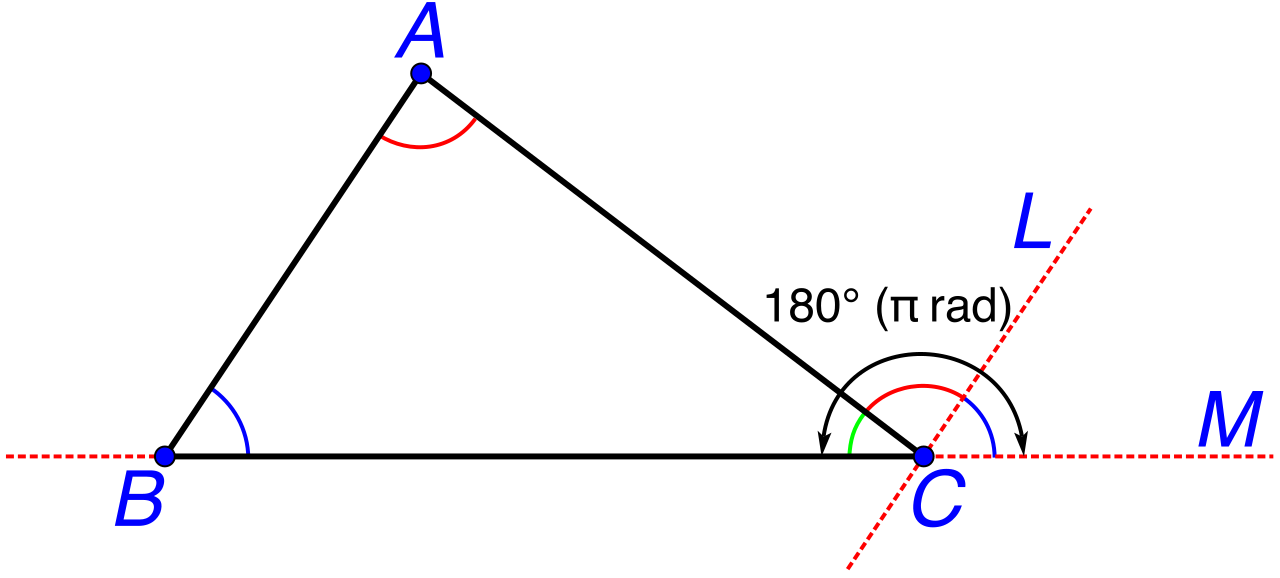
The 180-Degree Rule: The sum of the interior angles of any planar triangle is exactly 180∘.
Because this sum is absolute, altering one angle inherently forces a change in the others. The triangle is an exercise in strict mathematical compromise.
We can classify triangles by analyzing the relative lengths of their sides. In geometry, the equality of sides dictates the symmetry of the entire shape.
Scalene Triangles: Total Asymmetry
A scalene triangle has three sides of different lengths. Because the sides are completely unequal, the angles are pulled into asymmetry as well. Consequently, a scalene triangle has three interior angles of different measures.
Isosceles Triangles: Partial Symmetry
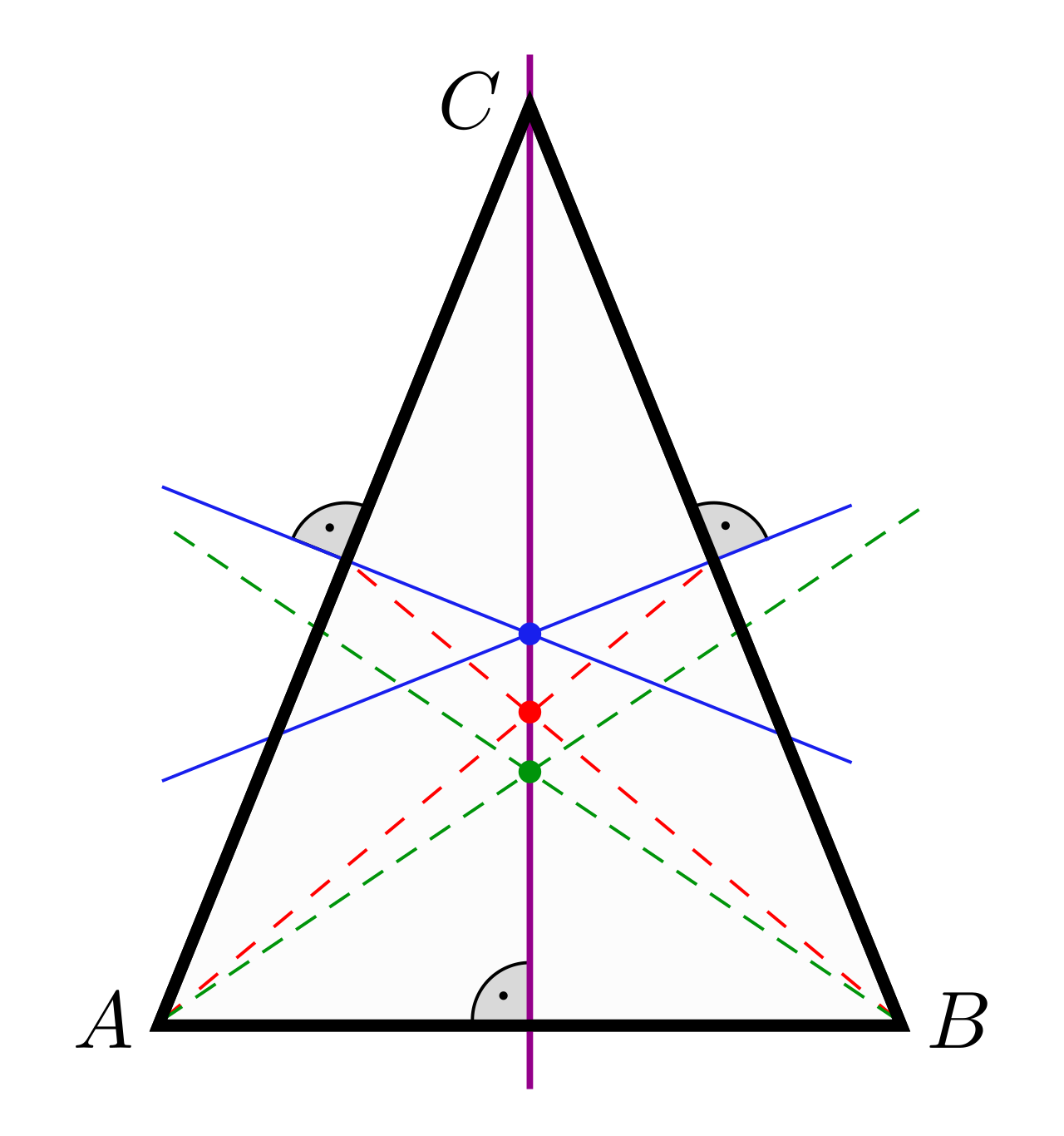
An isosceles triangle is defined as having at least two sides of equal length. Nature demands symmetry; thus, if two sides are equal, the structure balances itself. The two interior angles opposite the equal sides in an isosceles triangle are equal in measure.
Equilateral Triangles: Perfect Symmetry
An equilateral triangle has all three sides of equal length. Because perfect side symmetry mandates perfect angle symmetry, an equilateral triangle has three interior angles of equal measure.
Since all three angles must be identical and must sum to 180∘, the interior angles of an equilateral triangle each measure exactly 60∘ (180÷3=60).
Notice carefully the mathematical definition of an isosceles triangle: it requires at least two equal sides. Because an equilateral triangle possesses three equal sides, it easily meets this requirement. Therefore, every equilateral triangle is also classified as an isosceles triangle, though the reverse is not inherently true.
| Classification | Side Lengths | Angle Measures |
|---|---|---|
| Scalene | 3 different lengths | 3 different measures |
| Isosceles | At least 2 equal lengths | 2 equal measures (opposite the equal sides) |
| Equilateral | 3 equal lengths | 3 equal measures (exactly 60∘ each) |
Just as we categorize triangles by their sides, we can classify them by the size of their largest interior angle.
Acute Triangles
An acute triangle has three interior angles that each measure strictly less than 90∘. The "sharpness" of the angles means the shape naturally leans inward. Equilateral triangles are always acute, as all their angles are exactly 60∘.
Right Triangles
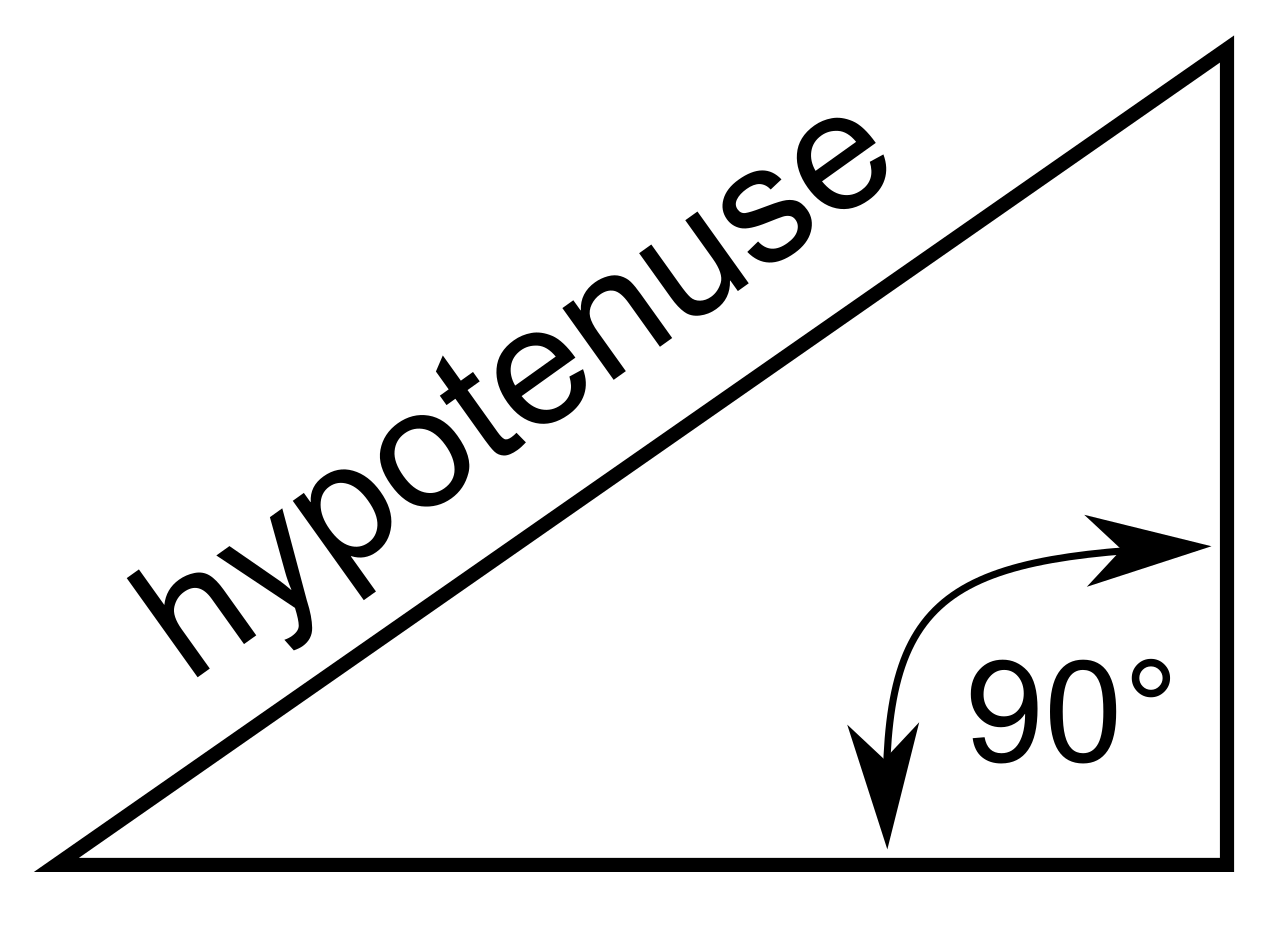
A right triangle has exactly one interior angle that measures exactly 90∘ (a right angle).
Right triangles possess a unique anatomy:
- The Hypotenuse: The side opposite the 90∘ angle in a right triangle is called the hypotenuse. The hypotenuse is always the longest side of a right triangle.
- Complementary Angles: Because the right angle consumes exactly 90∘ of the triangle's total 180∘, the remaining two angles must share the rest. Thus, the sum of the two non-right interior angles in a right triangle is exactly 90∘.
Obtuse Triangles
An obtuse triangle has exactly one interior angle that measures strictly greater than 90∘. The wide angle forces the triangle to "stretch" outward.
The Limits of Right and Obtuse Angles
Why do right and obtuse triangles have exactly one of their namesake angles? Consider the universal 180∘ limit. If a triangle had two 90∘ angles, they would sum to 180∘, leaving exactly 0∘ for the third angle—an impossibility. Therefore, a valid triangle cannot have more than one right angle. By the exact same logic, two obtuse angles (e.g., 91∘ and 91∘) would sum to 182∘, breaking the universal limit. A valid triangle cannot have more than one obtuse angle.
Sides and angles are not independent actors; they are locked in a dance of direct proportion. Imagine opening a hinge: the wider you open the hinge (the angle), the farther apart the ends of the metal arms become (the opposite side).
This yields two universal rules for any triangle:
- In any triangle, the longest side is always positioned directly opposite the largest interior angle.
- In any triangle, the shortest side is always positioned directly opposite the smallest interior angle.
This is why the hypotenuse is always the longest side of a right triangle—it sits directly opposite the 90∘ angle, which must necessarily be the largest angle in the shape.
Not just any three random lengths can connect to form a triangle. Try to build a triangle with sticks measuring 2 inches, 3 inches, and 10 inches. The 2-inch and 3-inch sticks, even when laid flat end-to-end, will only stretch 5 inches. They will never reach across the 10-inch gap.
This brings us to one of the most frequently tested concepts on the Praxis Core: The Triangle Inequality Theorem.
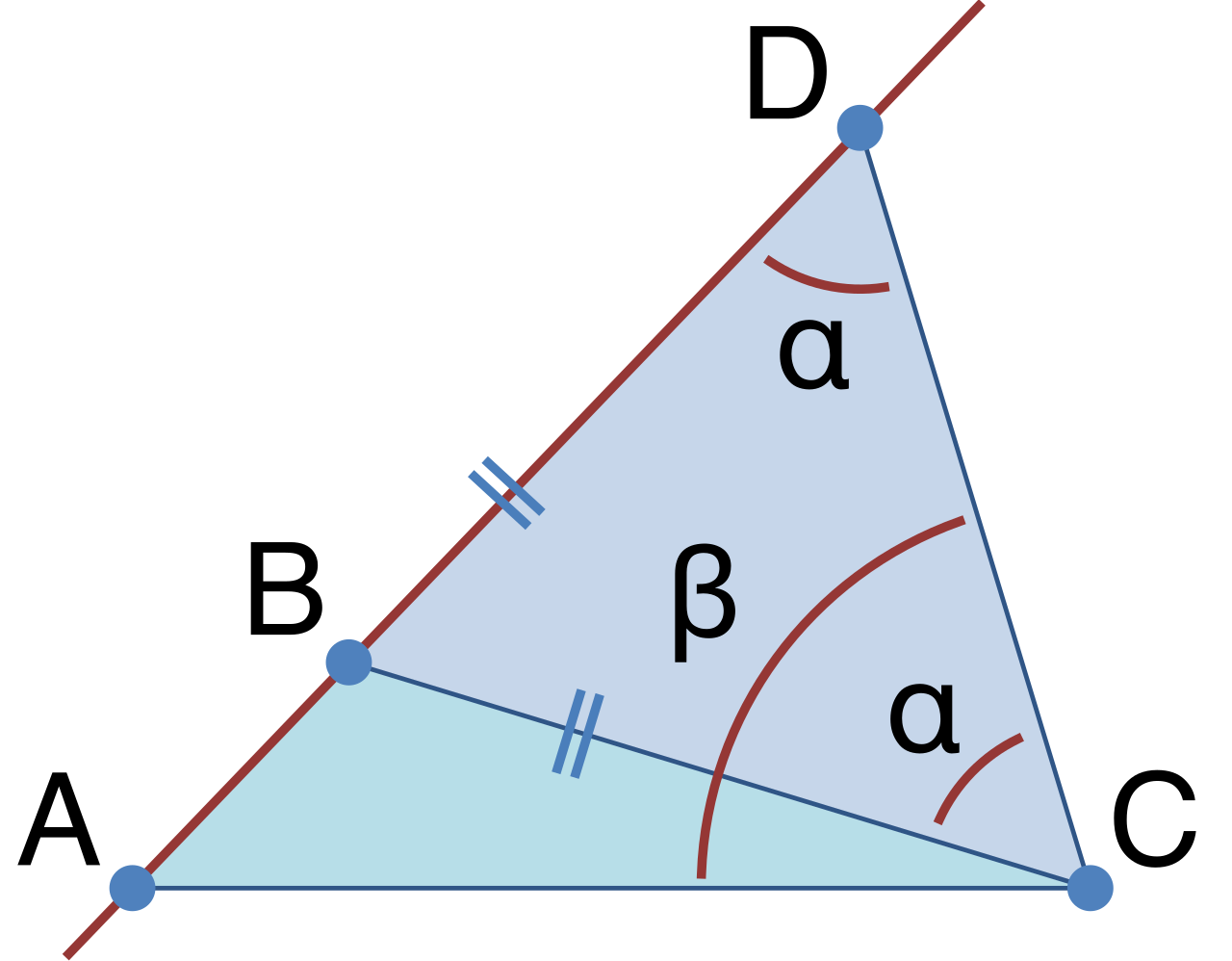
The Triangle Inequality Theorem: The sum of the lengths of any two sides of a triangle must be strictly greater than the length of the third side.
In an equivalent phrasing, the length of any single side of a triangle must be strictly less than the sum of the lengths of the other two sides. If you depart point A to get to point B, walking in a straight line will always be shorter than taking a detour to a third point C.
Verifying Triangle Validity
To rapidly verify if three lengths can form a valid triangle, one only needs to confirm that the sum of the two smaller lengths is strictly greater than the largest length. If the two smaller sides can bridge the gap of the largest side, the triangle can exist.
What happens if they fail this test?
- Failure by Deficit: If the sum of the lengths of the two shortest sides of a proposed triangle is less than the length of the longest side, the arms cannot meet. The triangle cannot exist.
- Failure by Equality: If the sum of the lengths of the two shortest sides of a proposed triangle is exactly equal to the length of the longest side, the arms meet, but only by collapsing perfectly flat against the longest side. The shape is a degenerate straight line rather than a valid two-dimensional triangle.
Predicting the Third Side
Examiners love to provide two sides of a triangle and ask you for the possible lengths of the third side. The rule bounds the third side on both the high end (it can't be too long) and the low end (it can't be too short).
- The Maximum: As established, the third side must be strictly less than the sum of the other two.
- The Minimum: Conversely, the length of the third side of a triangle must be strictly greater than the absolute difference between the lengths of the other two sides.
Therefore, given two side lengths of a triangle, the valid range for the third side length is exclusively between the absolute difference and the sum of the two given side lengths.
If you are given side a and side b, the third side c must fall in this exact range:
∣a−b∣<c<a+b
Example: If a triangle has sides of 5 and 8, the third side must be greater than 3 (8−5) and less than 13 (8+5).
Our final geometric principle requires us to look outside the triangle itself. Imagine walking along one side of a triangle, reaching a vertex, but instead of turning inward, you just keep walking straight.
An exterior angle of a triangle is formed by extending one side of the triangle continuously outward past the vertex. This creates a new angle sitting on the outside of the shape, adjacent to the interior angle you just passed.
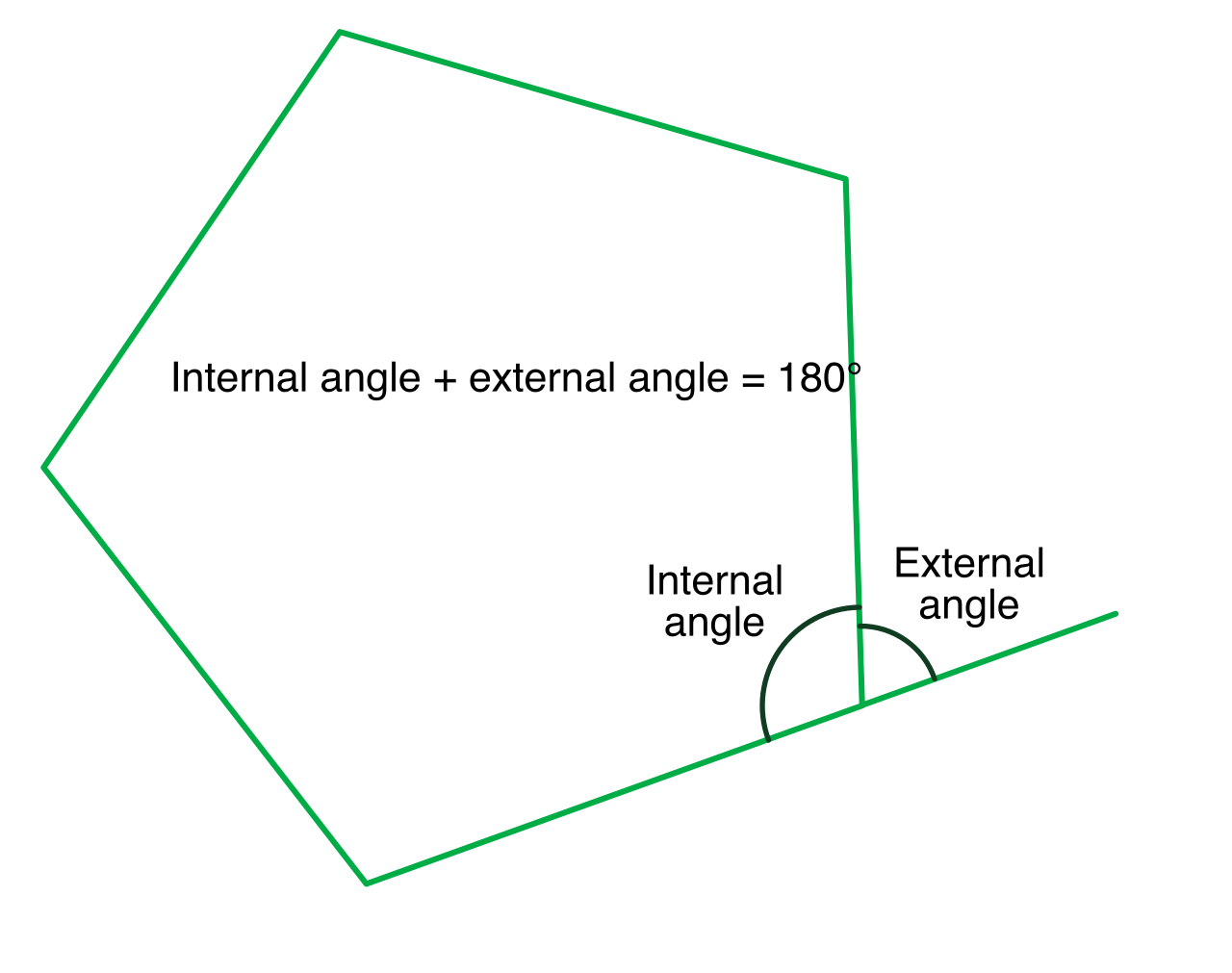
There is a brilliant, inevitable relationship between this exterior angle and the rest of the triangle.
The Exterior Angle Theorem: The measure of an exterior angle of a triangle is equal to the sum of the measures of the two remote interior angles of that same triangle.
Why is this necessarily true? It is a beautiful consequence of the rules we have already established. The exterior angle and its adjacent interior angle sit on a straight line, meaning they sum to 180∘. Simultaneously, all three interior angles sum to 180∘. Because the adjacent interior angle plays a role in both equations, the exterior angle mathematically must equal the exact sum of the two interior angles located at the other ends of the triangle (the "remote" angles).
If you master these proportional laws, inequality limits, and angular relationships, you will cease to see geometry questions as a guessing game. You will see them as absolute, predictable mechanics, ready to be solved.