Constant Rates and Rates of Change
Not sure you’re ready?
Take the ~3-minute readiness diagnostic and see where you stand.
Observe the physical universe, and you will notice very few things exist in pure isolation. A car traverses a stretch of highway; a faucet fills a reservoir; a consumer purchases groceries. In each case, a single, static measurement—distance, volume, or cost—is deeply incomplete. If I tell you a car drove 100 miles, you know nothing of the journey's intensity. Did it take an hour, or did it take a week? To understand the mechanics of the real world, we must relate one dynamic quantity to another. When we establish a structured, mathematical comparison between these distinct phenomena, we capture the essence of change.
To bring mathematical rigor to our physical observations, we use ratios. Fundamentally, a rate is a mathematical ratio comparing two quantities with different units of measurement.
Imagine you are filling a swimming pool. You are relating the volume of water entering the pool to the passage of time. If a hose dispenses 50 gallons of water over the course of 5 minutes, the rate is 50 gallons:5 minutes. While this is factually true, it is mathematically clunky. It does not easily allow us to predict how much water will be in the pool after 12 minutes, or 60 minutes.
To make rates truly useful, we normalize them into unit rates.
Definition: A unit rate is a rate where the second quantity in the comparison is exactly one unit.
Instead of asking "How many gallons in five minutes?" we ask "How many gallons in one minute?" A unit rate is calculated by dividing the first quantity by the second quantity. If we take our 50 gallons and divide by 5 minutes, we arrive at a unit rate of 10. But 10 what?
This brings us to the linguistic translation of mathematics. The word "per" in a mathematical phrase indicates division. Conceptually, the word "per" implies "for each" or "for every" single unit. Therefore, dividing 50 gallons by 5 minutes yields 10 gallons per minute.
In the real world, these standardized comparisons have become universal abbreviations. When engineers measure the flow of liquids, they frequently use the abbreviation gpm, which stands for gallons per minute. When we drive our cars, we measure velocity using the abbreviation mph, which stands for miles per hour.

The elegance of a unit rate lies in its predictive power. Once you know how a system behaves for a single unit of time, you can project that behavior infinitely forward or backward. This principle gives rise to the foundational formulas of motion.
Let us define three variables:
- d = Distance traveled
- r = Constant rate of travel (speed)
- t = Time elapsed
If you travel at a rate of 60 miles per hour, how far do you go in 3 hours? Common sense tells you it is 60+60+60=180 miles. Mathematically, the formula for distance traveled at a constant rate is distance equals rate multiplied by time (d=r×t).
Because mathematics is an interconnected system of logic, knowing this single formula allows us to deduce the other two through simple algebraic rearrangement.
| To Find... | Use Formula | Logical Rationale |
|---|---|---|
| Distance (d) | d=r×t | Total distance is the speed driven multiplied by the duration of the drive. |
| Rate (r) | r=d/t | The formula for a constant rate of travel is rate equals distance divided by time. You distribute the total miles evenly across the total hours. |
| Time (t) | t=d/r | The formula to find travel time at a constant rate is time equals distance divided by rate. You calculate how many "blocks" of speed fit into the total distance. |
The exact same mathematical principles governing physics and motion govern commerce. In economics, the distance traveled (d) translates to the total cost, while the speed (r) translates to the unit price.
Have you ever stood in a grocery aisle trying to decide between a bulk package of coffee and a smaller bag? To make a rational comparison, you must reduce both options to a common denominator: the unit price.
The unit price of a product is calculated by dividing the total cost by the number of units. If a 12-ounce bag of coffee costs $9.00, you divide the total cost by the quantity (9.00÷12) to discover a unit price of $0.75 per ounce.
Conversely, if you are planning a budget and already know the price per item, you project the total expense using multiplication. Total cost based on a constant unit price equals the unit price multiplied by the total quantity purchased. If you buy 8 bags of mulch at a unit price of $4.50 per bag, your total cost is 8 \times \4.50 = $36.00$.
Equations and arithmetic give us precision, but graphs give us intuition. By plotting rates on a Cartesian coordinate plane, we render abstract numbers as visible geometry.
When a process operates at a constant rate, its visual representation is highly predictable. A constant rate of change means a dependent variable changes by an identical amount for every one-unit increase in the independent variable. If you are earning $15.00 per hour, every single time your hours worked (the x-axis) increases by 1, your total money earned (the y-axis) increases by exactly 15.
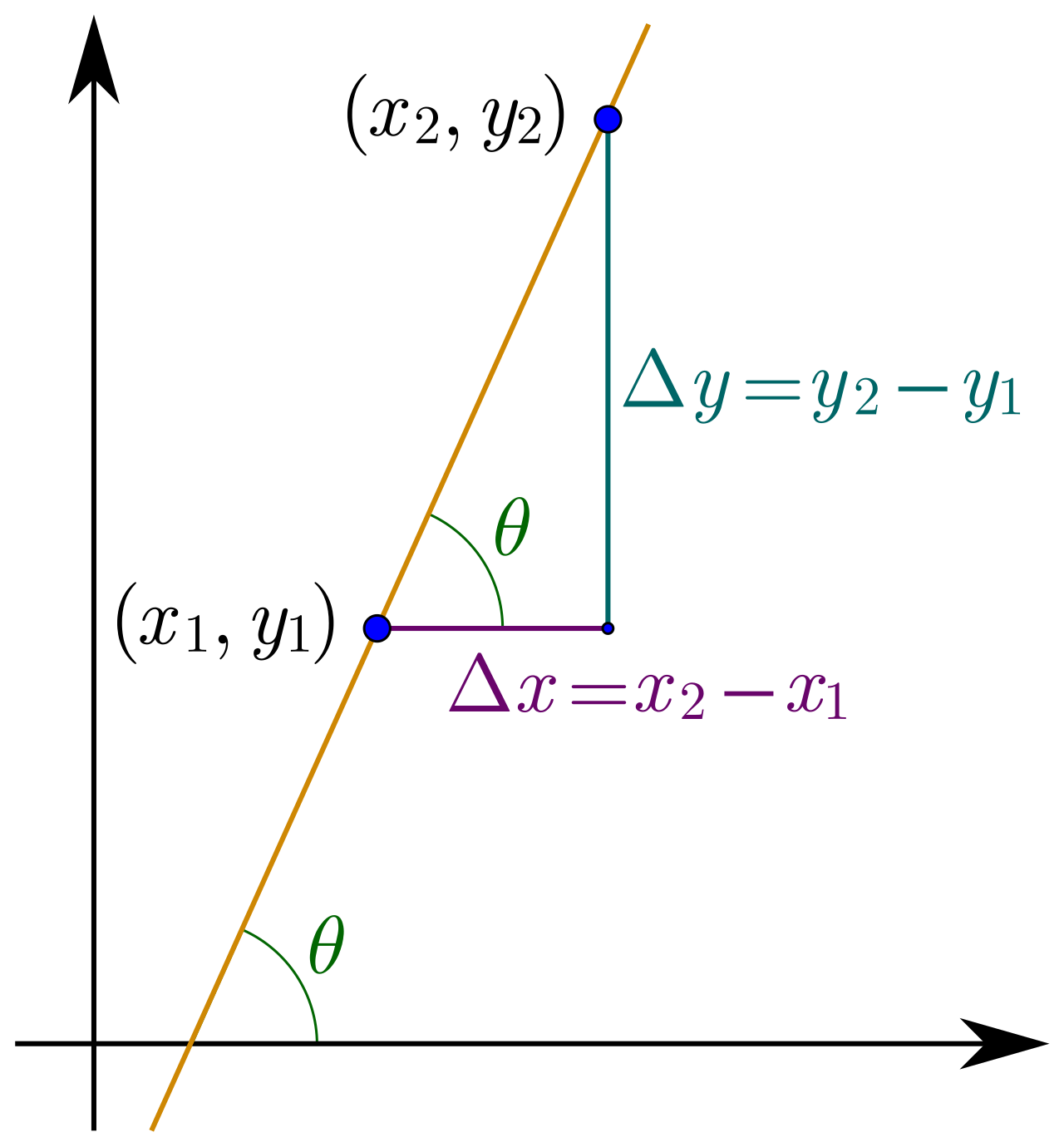
Because this stair-step pattern is entirely uniform, the slope of a straight line on a coordinate plane represents a constant rate of change. Slope is famously known as "rise over run"—the change in y divided by the change in x. This is exactly the definition of a unit rate! The "rise" is the first quantity, and the "run" (when reduced to 1) is the single unit of the independent variable.
Proportional Relationships
When mapping rates, we often encounter a scenario where doing nothing results in nothing. If you drive zero hours, you cover zero miles. If you buy zero apples, you spend zero dollars.
Crucial Concept: A graph illustrating a constant rate of change from a starting value of zero forms a straight line passing through the origin.
The origin is the coordinate (0,0). Relationships that form straight lines passing through the origin are called proportional relationships. They are the purest visual representation of a constant rate.
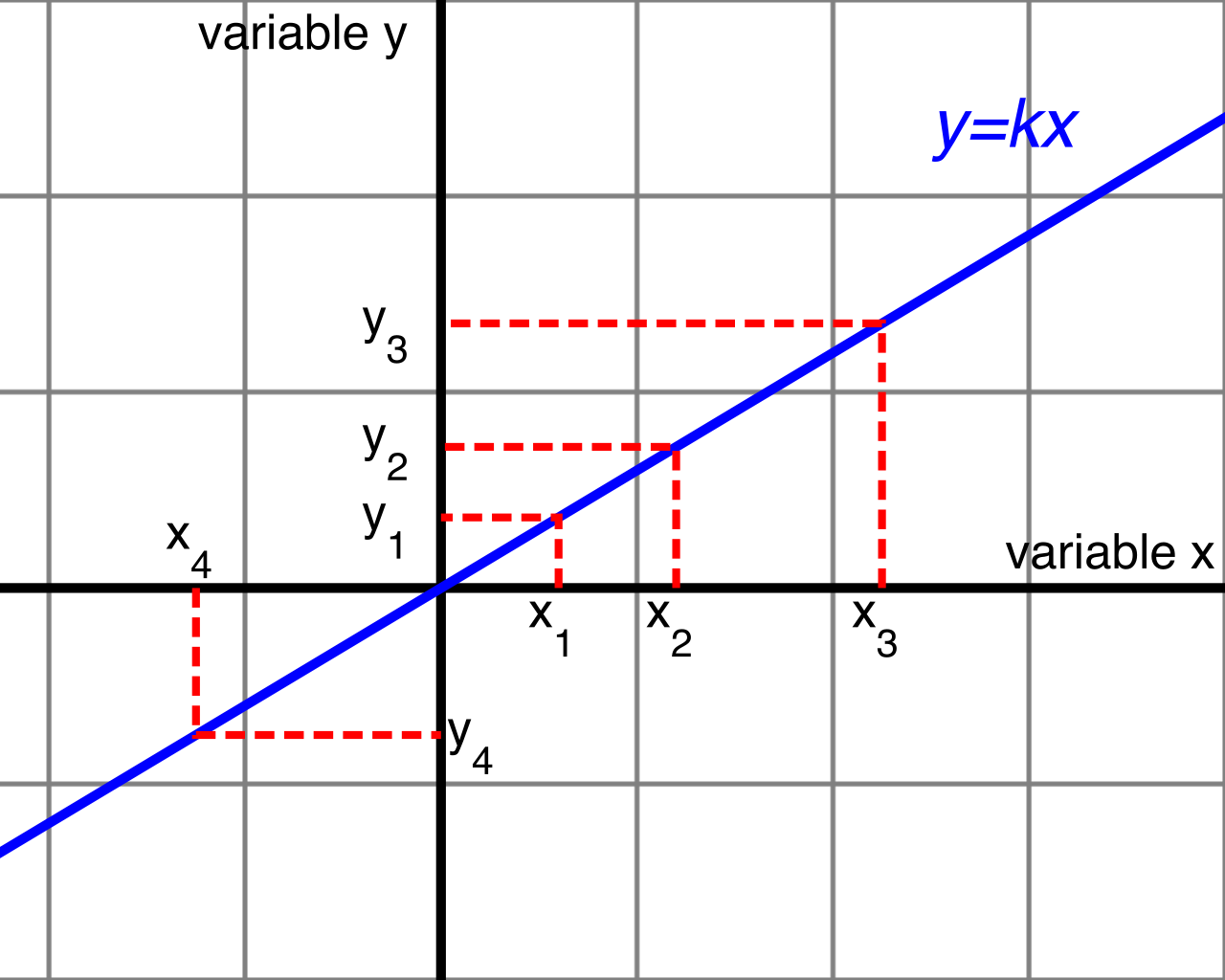
Furthermore, there is a beautiful trick to reading these graphs instantly. Because the slope is constant, finding the unit rate requires no calculation if you look at the right spot. On a graph of a proportional relationship, the unit rate is the y-value of the point where the x-value equals one.
If you look at the x-axis (time in hours) and move over to 1, then trace your finger vertically to the line, the corresponding y-value tells you exactly how many miles were traveled in that single hour. If the coordinate is (1,65), the unit rate is 65 miles per hour.
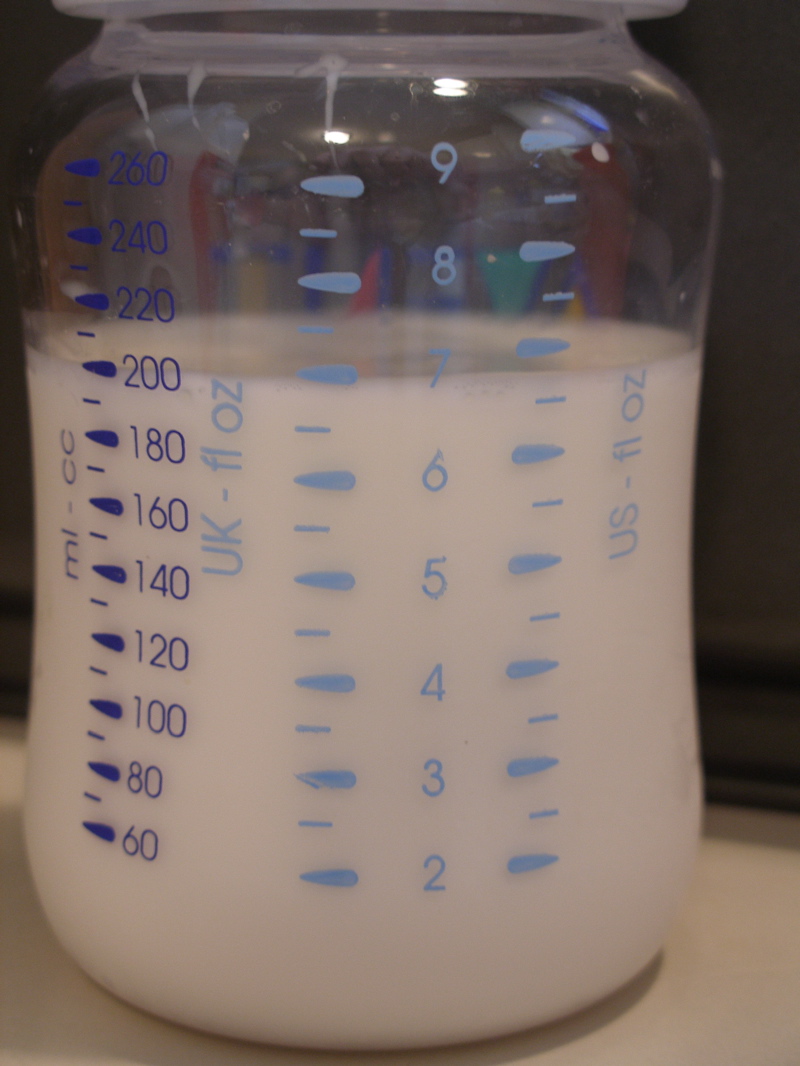
Often, the universe presents us with data in units that do not match our needs. You might know a cheetah's top speed in miles per hour, but you need to know how many feet it covers in a single second to understand if you can outrun it. To bridge this gap, we use the machinery of dimensional analysis—specifically, conversion factors.
A conversion factor is a ratio of equivalent measurements used to change the units of a rate.
Think of a conversion factor as a mathematical disguise. Because the numerator and denominator represent the exact same physical reality, the fraction mathematically equals 1. Multiplying a rate by a conversion factor changes the units without changing the actual mathematical value of the rate. Just as multiplying the number 5 by 1 keeps the value at 5, multiplying a speed by a conversion factor keeps the physical speed identical; it merely changes the vocabulary we use to describe it.
To convert rates reliably, you must memorize the fundamental constants of our measurement systems:
- There are 60 minutes in one hour.
- There are 60 seconds in one minute.
- There are 5,280 feet in one standard mile.
Walkthrough: Converting miles per hour to feet per second
Let us convert 60 miles per hour (mph) into feet per second. We will use conversion factors to systematically cancel out the units we don't want and introduce the units we do want. We treat the units (miles, hours, feet, seconds) exactly like algebraic variables (x, y) that can be canceled when they appear in both the numerator and the denominator.
Step 1: Write the initial unit rate. 1 hour60 miles
Step 2: Convert miles to feet. We need to eliminate "miles" from the numerator, so we place "miles" in the denominator of our conversion factor. We know there are 5,280 feet in one standard mile, so our conversion factor is 1 mile5280 feet.
1 hour60 miles×1 mile5280 feet=1 hour316,800 feet (Notice how the "miles" cancel out, leaving us with feet per hour).
Step 3: Convert hours to minutes. Now we must convert the denominator from hours to seconds. We will do this in two stages. First, we know there are 60 minutes in one hour. To cancel the "hour" in the denominator, we put "hour" in the numerator of our conversion factor: 60 minutes1 hour.
1 hour316,800 feet×60 minutes1 hour=60 minutes316,800 feet=1 minute5,280 feet
Step 4: Convert minutes to seconds. Finally, we know there are 60 seconds in one minute. We multiply by a final conversion factor to replace minutes with seconds: 60 seconds1 minute.
1 minute5,280 feet×60 seconds1 minute=60 seconds5,280 feet=1 second88 feet
Through the rigorous application of conversion factors, we have proven that 60 mph is exactly equivalent to 88 feet per second. The physical reality—the speed of the car—never changed. We simply multiplied by forms of the number 1 to alter the lens through which we view that speed.
Mastering rates, unit prices, and dimensional analysis gives you unparalleled predictive power. Whether you are finding the slope of a line on a coordinate plane, calculating the travel time for a road trip, or seeking the best value in a marketplace, you are relying on the powerful, foundational premise that changes in our universe are structured, measurable, and entirely understandable.