Percentages and Percent Change
Not sure you’re ready?
Take the ~3-minute readiness diagnostic and see where you stand.
The Latin root centum appears everywhere in our measurement of the world: a century marks a hundred years, a centurion commanded a hundred soldiers, and a dollar is split into a hundred cents. When we evaluate proportions mathematically, we rely on this exact same linguistic foundation. The word percent literally means per one hundred or out of 100. It is a standardization tool—a way of forcing all possible fractions and ratios into a single, universal language where the denominator is always rigidly set to 100. By establishing this universal baseline, we can instantly compare the performance of a student who scored 43 out of 50 on an exam with another who scored 68 out of 80 without needing to find a common denominator from scratch.
Fundamentally, a percentage represents a ratio expressed as a fraction with a denominator of 100. The mathematical symbol used to denote a percentage is %.
When we conceptualize percentages, it is vital to understand the boundaries of this scale. Because a percent is a ratio out of 100 parts, 100 percent represents the entire whole of a given quantity. If you possess 100% of an apple, you possess the entire apple. Consequently, a percentage greater than 100 represents an amount strictly larger than the original whole quantity. If a population grows to 150% of its previous size, it consists of the original population plus another half.
In mathematics, fractions, decimals, and percents are merely three different dialects of the same language. Fluency requires the ability to translate among them effortlessly.
Converting Percents to Decimals and Fractions
To strip away the percent symbol and work with pure numbers, we must reverse the "out of 100" scaling.
To convert a percent to a decimal, divide the percentage value by 100. Because we operate in a base-10 number system, dividing by 100 has a clean, visual shortcut: converting a percent to a decimal involves moving the decimal point two places to the left. For example, 42.5% becomes 0.425.
If we prefer fractions, the translation is equally direct. To convert a percent to a fraction, place the numerical percentage value over a denominator of 100. Thus, 45% becomes 10045. However, mathematical rigor requires that fractions derived from converting percentages should be simplified to their lowest terms. By dividing both the numerator and denominator by their greatest common divisor (in this case, 5), 10045 simplifies to 209.
Converting Decimals and Fractions to Percents
To translate back into the language of percentages, we apply the inverse operations.
To convert a decimal to a percent, multiply the decimal value by 100. Visually, converting a decimal to a percent involves moving the decimal point two places to the right. Therefore, 0.73 becomes 73%.
Converting a fraction to a percent offers two primary mathematical pathways:
- The Decimal Route: To convert a fraction to a percent, divide the numerator by the denominator to get a decimal and then multiply that decimal by 100. For instance, to convert 85, we divide 5 by 8 to yield 0.625, which scales to 62.5%.
- The Equivalent Fraction Route: Another method to convert a fraction to a percent involves setting up an equivalent fraction with a denominator of 100. If you are given 257, you can multiply both the numerator and denominator by 4 to obtain 10028, which is instantly recognizable as 28%.
Canonical Equivalencies
There are certain numerical translations that appear so frequently they warrant memorization. Recognizing these fractions allows you to bypass tedious calculations entirely.
| Fraction | Decimal | Percentage |
|---|---|---|
| 1/10 | 0.10 | 10 percent is exactly equivalent to the mathematical fraction 1/10. |
| 1/5 | 0.20 | 20 percent is exactly equivalent to the mathematical fraction 1/5. |
| 1/4 | 0.25 | 25 percent is exactly equivalent to the mathematical fraction 1/4. |
| 1/3 | 0.333... | 33.33 repeating percent is exactly equivalent to the mathematical fraction 1/3. |
| 1/2 | 0.50 | 50 percent is exactly equivalent to the mathematical fraction 1/2. |
| 3/4 | 0.75 | 75 percent is exactly equivalent to the mathematical fraction 3/4. |
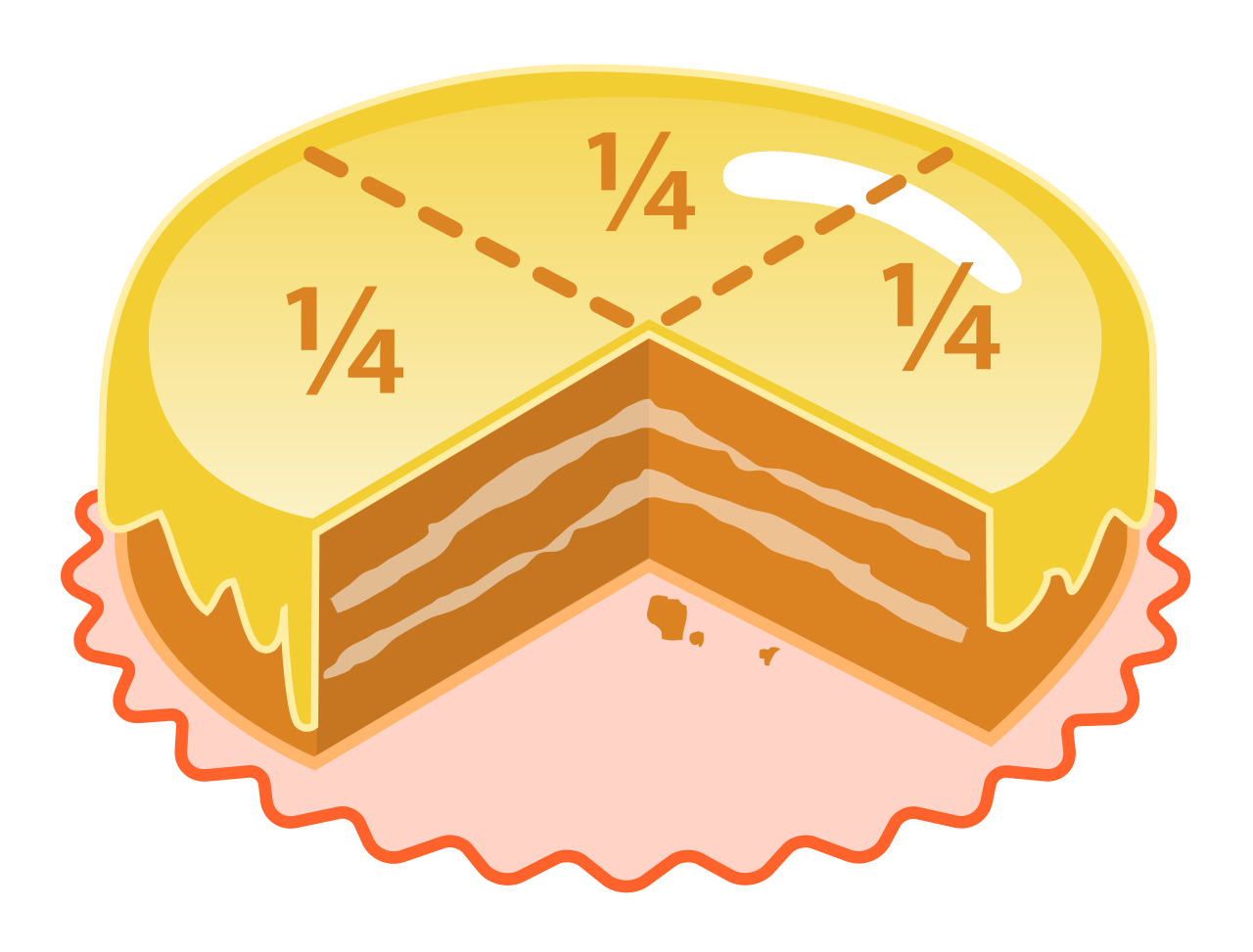
When we need to extract a piece of a whole, multiplication is our primary tool.
To find a specific percent of a number, multiply the number by the decimal equivalent of the percent. If you need to find 15% of 80, you translate the percent to a decimal (0.15) and compute 0.15×80=12.
Alternatively, to find a specific percent of a number, multiply the number by the fractional equivalent of the percent. This is often vastly superior when dealing with canonical fractions. If asked to find 33.33...% of 90, multiplying by 0.3333 is tedious and imprecise. Multiplying 90 by the fraction 31 instantly yields 30.
What if we are given the pieces and must deduce the percentage? To determine what percent one number is of another, divide the part by the whole and multiply the quotient by 100. If a student answers 42 questions correctly out of a 60-question test, we divide the part (42) by the whole (60) to get 0.70. Multiplying by 100 gives a score of 70%.
Static percentages tell us about a single snapshot in time. To understand dynamics—how a quantity evolves—we use percent change. Percent change calculates the relative size of the change between an original value and a new value.
The Core Formula for Percent Change: Percent Change=(Original ValueAbsolute Difference)×100
Notice the sequence of operations. The first step in finding percent change is calculating the absolute difference between the new value and the original value. We simply subtract the smaller number from the larger number to find the magnitude of the shift.
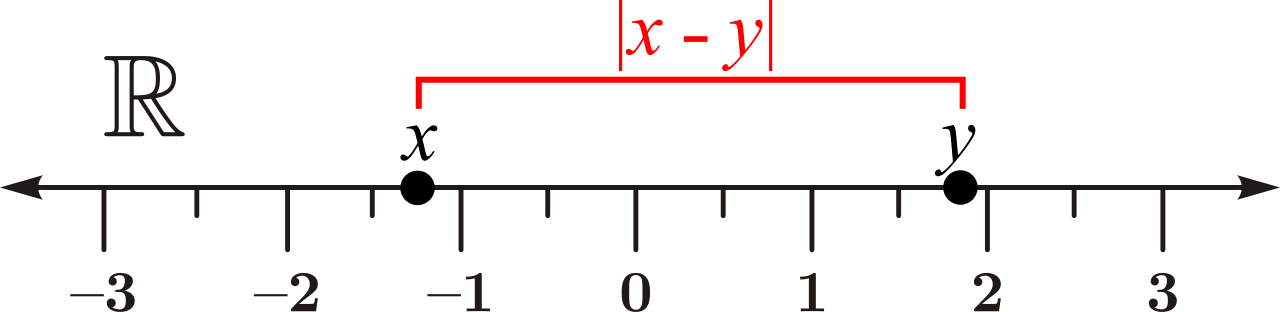
Next, to calculate percent change, divide the absolute difference by the original value and multiply the result by 100.
The Law of the Denominator
If there is one concept in proportional mathematics where human intuition frequently fails, it is in selecting the denominator for this calculation.
Critical Warning: The denominator in a percent change calculation must always be the original starting value.
You must measure the journey from the point where you began. If a stock falls from $100 to $80, the absolute difference is $20. The percent change is 10020=20%. If that same stock recovers from $80 back to $100, the absolute difference is again $20. But the percent change is now 8020=25%. The magnitude of the number changed, but because the starting anchor changed, the percentage behaves differently.
Classifying the Shift
We classify this evolution simply based on the direction of the final state:
- A percent increase occurs when the final value is strictly greater than the initial value.
- A percent decrease occurs when the final value is strictly less than the initial value.
When dealing with financial and scientific applications, calculating the exact amount of the change and then adding or subtracting it is mathematically correct, but incredibly inefficient.
Think about the structure of a percent increase. If an item increases by 8%, you retain the original 100% of the item, and gain an additional 8%. You now possess 108% of the initial value. Therefore, multiplying a number by 1 plus the decimal rate calculates the final amount after a percent increase.
- Application: Sales tax involves adding a specified percentage of the purchase price to the total cost. If you buy a $50 item with an 8% sales tax, the multiplier is (1+0.08)=1.08. The final cost is simply \50 \times 1.08 = $54$.
Conversely, consider a percent decrease. If an item loses 20% of its value, you subtract 20% from the original 100%. You are left with exactly 80% of the initial value. Multiplying a number by 1 minus the decimal rate calculates the final amount after a percent decrease.
- Application: Discounts involve subtracting a specified percentage of the original price from the total cost. If a $50 item is discounted by 20%, your multiplier is (1−0.20)=0.80. The final cost is \50 \times 0.80 = $40$.

By viewing percent changes through the lens of these single-step multipliers, complex problems—even those involving multiple sequential changes—collapse into a single, elegant string of multiplication. This is the ultimate power of percentages: standardizing chaos into predictable, scalable ratios.