Equivalent Algebraic Expressions
Not sure you’re ready?
Take the ~3-minute readiness diagnostic and see where you stand.
Imagine examining the intricate blueprint of a complex machine. To an untrained eye, it is a chaotic web of lines, symbols, and intersecting nodes. But to an engineer, it is a precise set of instructions describing functional parts that can be modularized, rearranged, and simplified—without altering what the machine fundamentally does. In mathematics, an algebraic expression is precisely this kind of blueprint. It is a mathematical phrase containing numbers, variables, and operational symbols without an equal sign. Because it lacks an equal sign, we do not "solve" an expression; instead, we translate, manipulate, and streamline it. By understanding the foundational properties of mathematical operations, we can rewrite these structural instructions, condensing them into equivalent forms while perfectly preserving their fundamental quantitative value.

Before we can manipulate an expression, we must recognize its component parts. Algebraic expressions are built from constants (fixed numbers) and variables—symbols used to represent unknown numerical values in mathematical expressions. When we wish to scale these variables, we use a coefficient, which is the numerical factor placed immediately in front of a variable within an algebraic term. In the term 7x2, for example, 7 is the coefficient and x is the variable.
Together, variables, coefficients, and operations form the "phrases" of mathematics. Our goal is often to take a complex phrase and reduce it to its most elegant, readable form.
Mathematics is a language, and like any language, it requires translation. To construct or decode an algebraic expression from a real-world scenario, we must reliably translate verbal phrases into exact mathematical operations. The English language offers numerous ways to describe basic arithmetic, and absolute precision is required to map these to their proper operational symbols.
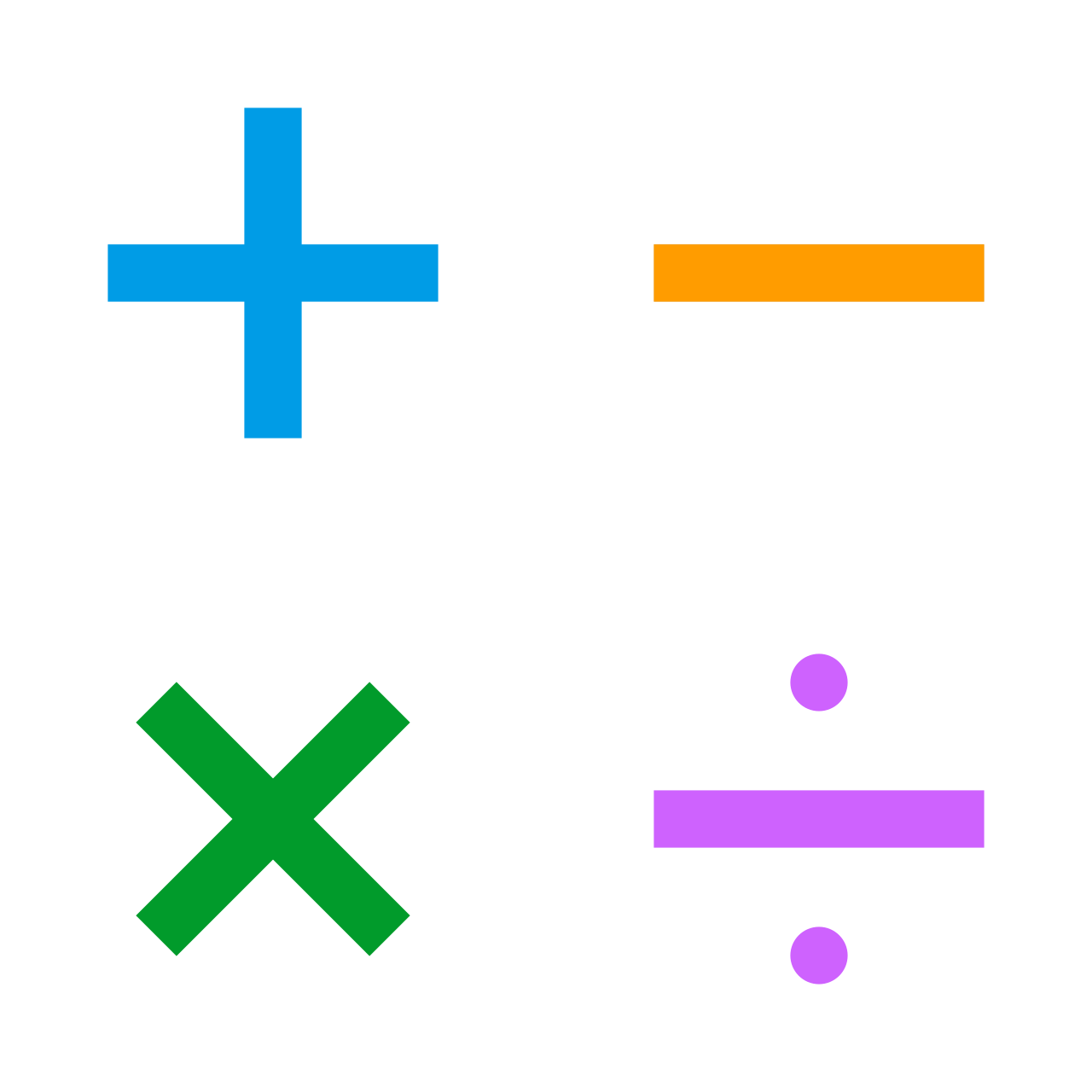
Addition and Subtraction
Addition is the arithmetic of accumulation. In an algebraic expression, the verbal phrase "the sum of" indicates the operation of addition. Similarly, the verbal phrase "increased by" translates to the operation of addition, as does the phrase "more than".
Subtraction represents a differential or a reduction. The verbal phrase "the difference of" translates to subtraction in an algebraic expression, as does the verbal phrase "decreased by".
However, subtraction harbors a linguistic trap. The verbal phrase "less than" indicates subtraction in an algebraic expression, but it behaves uniquely: the phrase "less than" reverses the mathematical order of the terms relative to their order in the verbal description.
Crucial Translation Warning If you encounter the phrase "5 less than x", the correct algebraic translation is x−5, not 5−x. The "less than" operator always subtracts the first spoken quantity from the second.
Multiplication and Division
Scaling a value requires multiplication. The verbal phrase "the product of" translates to multiplication in an algebraic expression. A highly common specific case is the word "twice", which translates to multiplying a specific variable or quantity by the number two.
Partitioning a value requires division. The verbal phrase "the quotient of" translates to division in an algebraic expression.
| Verbal Phrase | Mathematical Operation | Algebraic Example (Translation) |
|---|---|---|
| "The sum of a and b" | Addition (+) | a+b |
| "y increased by 4" | Addition (+) | y+4 |
| "7 more than x" | Addition (+) | x+7 |
| "The difference of m and n" | Subtraction (−) | m−n |
| "p decreased by 3" | Subtraction (−) | p−3 |
| "8 less than k" | Subtraction (−) | k−8 (Note the reversal!) |
| "The product of 5 and z" | Multiplication (× or ⋅) | 5z |
| "Twice the value of w" | Multiplication (× or ⋅) | 2w |
| "The quotient of r and 4" | Division (÷ or fractions) | 4r |
To alter an algebraic expression without destroying its underlying value, we rely on immutable laws known as the properties of operations. These are the mathematical rules of engagement. They dictate precisely how we can move, group, and transform terms.
The Commutative Property (Freedom of Sequence)
Think of the word commute—it means to move around. The commutative property of addition states that changing the order of addends does not change the final sum. The commutative property of addition is represented algebraically by the formula:
a+b=b+a
Similarly, the commutative property of multiplication states that changing the order of factors does not change the final product. The commutative property of multiplication is represented algebraically by the formula:
a∗b=b∗a
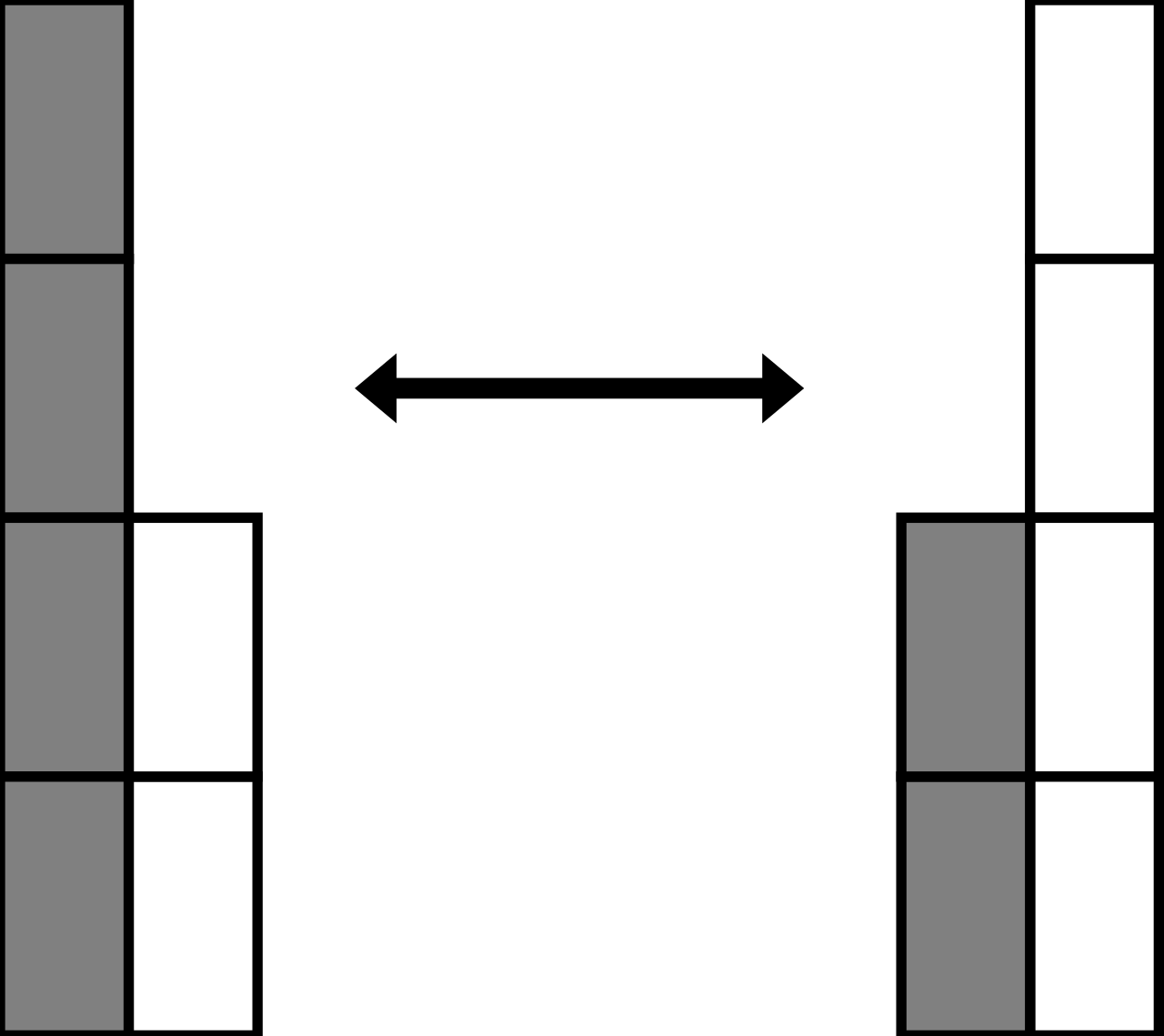
You must note, however, the strict limitations of this symmetry: subtraction operations do not hold the commutative property (5−3=3−5), and division operations do not hold the commutative property (10÷2=2÷10). Order matters immensely when taking away or dividing.
The Associative Property (Freedom of Grouping)
If commutative means to move, associative means to group (or associate with). The associative property of addition states that changing the grouping of addends does not change the total sum. The associative property of addition is represented algebraically by the formula:
(a+b)+c=a+(b+c)
Likewise, the associative property of multiplication states that changing the grouping of factors does not change the final product. The associative property of multiplication is represented algebraically by the formula:
(a∗b)∗c=a∗(b∗c)
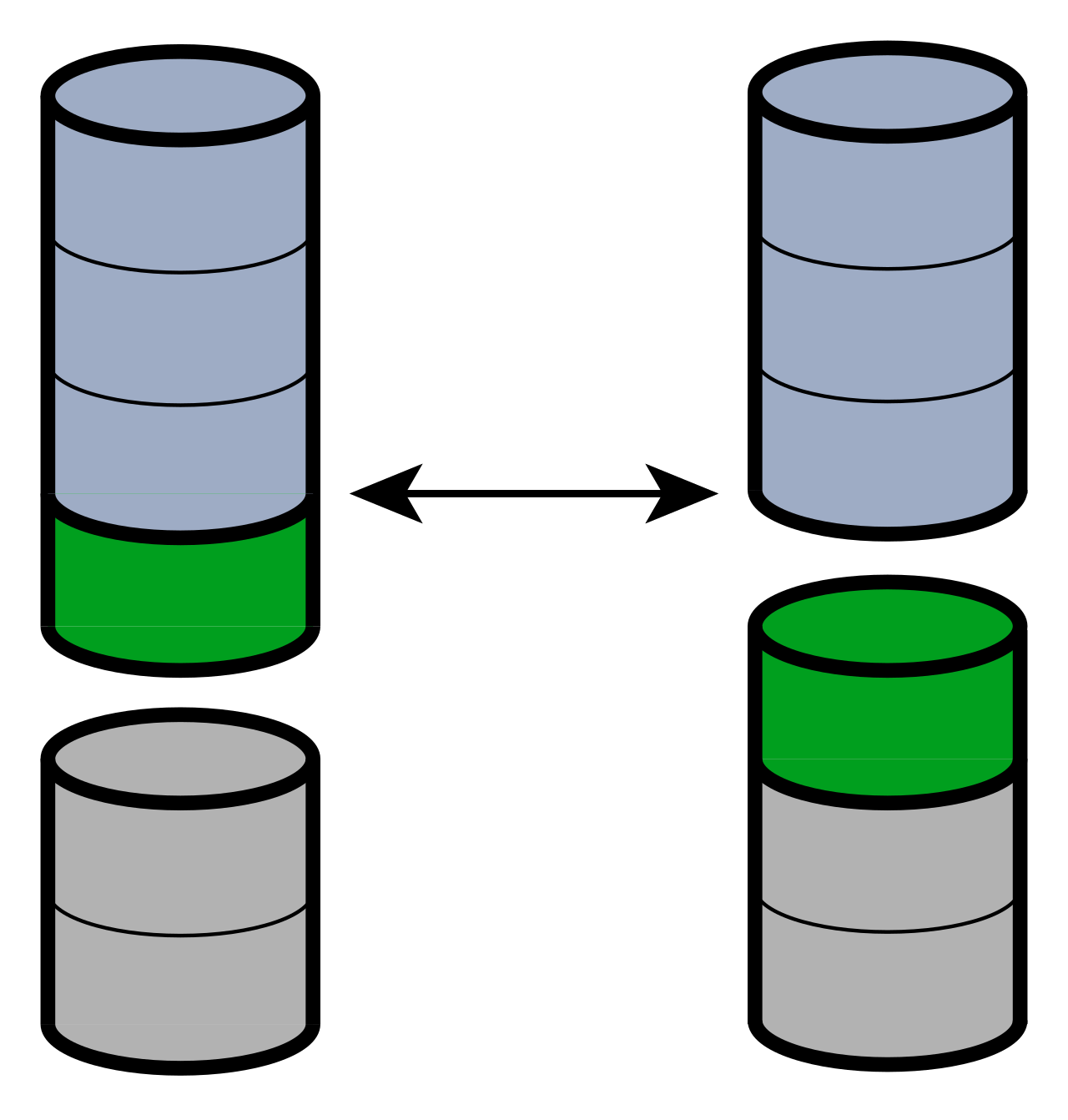
Just as before, the rigidity of certain operations remains: subtraction operations do not hold the associative property, and division operations do not hold the associative property.
Identities and Inverses (The Art of Doing Nothing, or Undoing Everything)
Sometimes, in manipulating expressions, we need terms to preserve their exact value, or we need them to purposefully cancel out.
- The Additive Identity: The additive identity property states that adding zero to any variable leaves that variable's value unchanged (x+0=x).
- The Multiplicative Identity: The multiplicative identity property states that multiplying any variable by one leaves that variable's value unchanged (x∗1=x).
- The Additive Inverse: What if we wish to eradicate a term? The additive inverse property states that the sum of any algebraic term and its negative opposite always equals zero (x+(−x)=0).
- The Multiplicative Inverse: The multiplicative inverse property states that a non-zero algebraic term multiplied by its reciprocal always equals one (x∗x1=1).
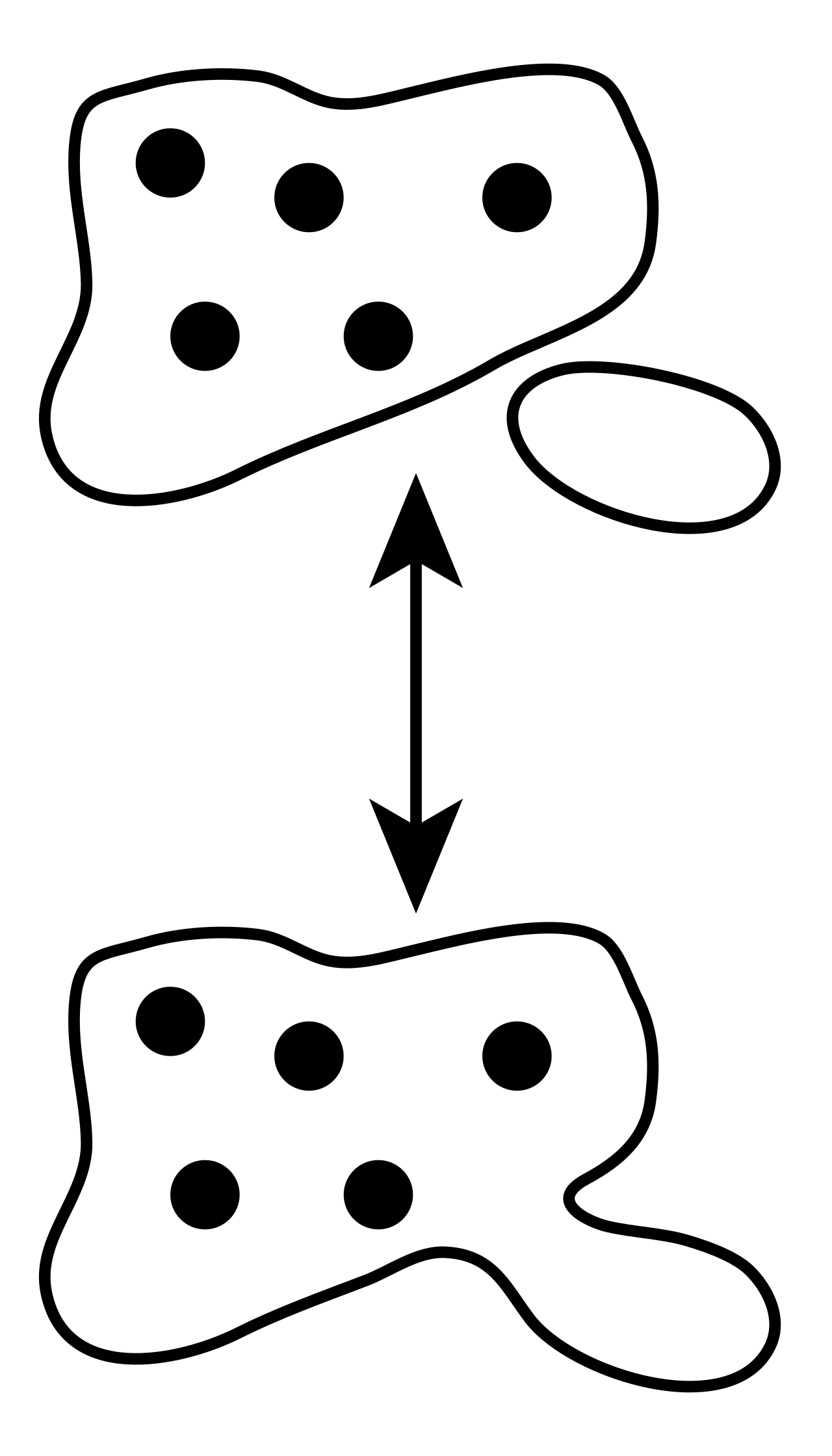
The single most powerful tool for dismantling complex algebraic structures is the distributive property. It acts as the bridge between grouped operations and individual terms.
The distributive property allows a multiplied factor to be distributed to every addend within a set of parentheses. The distributive property is represented algebraically by the formula:
a(b+c)=ab+ac
When we utilize this property, we perform an expansion. Expanding an algebraic expression involves removing parentheses by multiplying external terms according to the distributive property. For example, expanding 3(x+4) yields 3x+12.
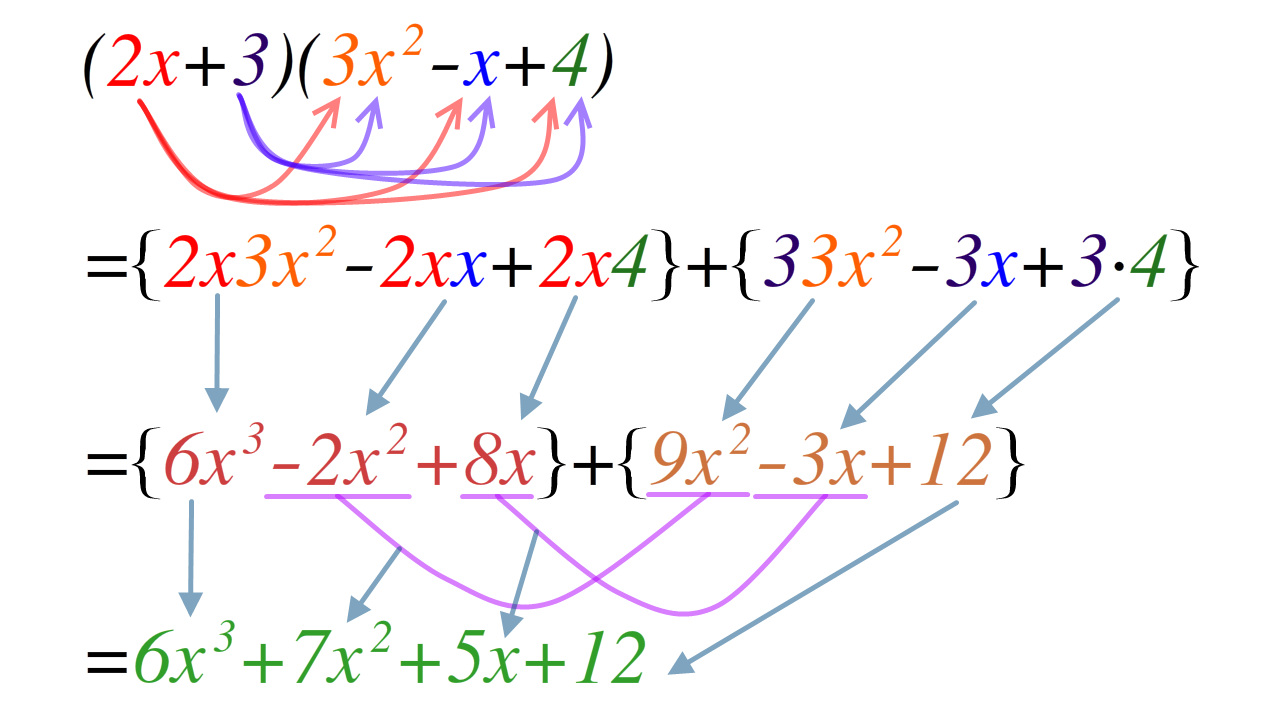
Beware the Negative Sign Trap: A common pitfall occurs when dealing with negation. A negative sign placed immediately before a set of parentheses distributes as a negative one multiplier to every enclosed term. For example, −(2x−5) becomes −2x+5. The negative flips the sign of every piece inside the mathematical grouping.
Conversely, we often need to build parentheses rather than tear them down. Factoring an algebraic expression involves extracting the greatest common factor from all individual terms within the expression. If expanding is packing items into a distributed state, factoring is the exact inverse operation of applying the distributive property. If we encounter 4x+8, we can factor out the greatest common factor, 4, rewriting the expression as 4(x+2).
The ultimate goal of applying these operations is to manipulate expressions to verify or create equivalence. Two algebraic expressions are equivalent if they evaluate to the exact same numerical value for every possible substituted variable value.
How do we prove equivalence? We simplify.
The Anatomy of Like Terms
To simplify an expression, we must gather similar pieces. In algebra, like terms are algebraic terms that contain the exact same variables raised to the exact same exponents.
For instance, 3x2 and 5x2 are like terms. However, 3x2 and 5x are not like terms because their exponents differ. The variable structures act like atomic chemical signatures—you can only fuse identical atoms. Therefore, only like terms can be directly combined through the operations of addition or subtraction.
Combining like terms involves adding or subtracting the numerical coefficients of those specific terms while leaving the variable and exponent completely unchanged.
- 3x2+5x2=(3+5)x2=8x2.
The Order of Operations
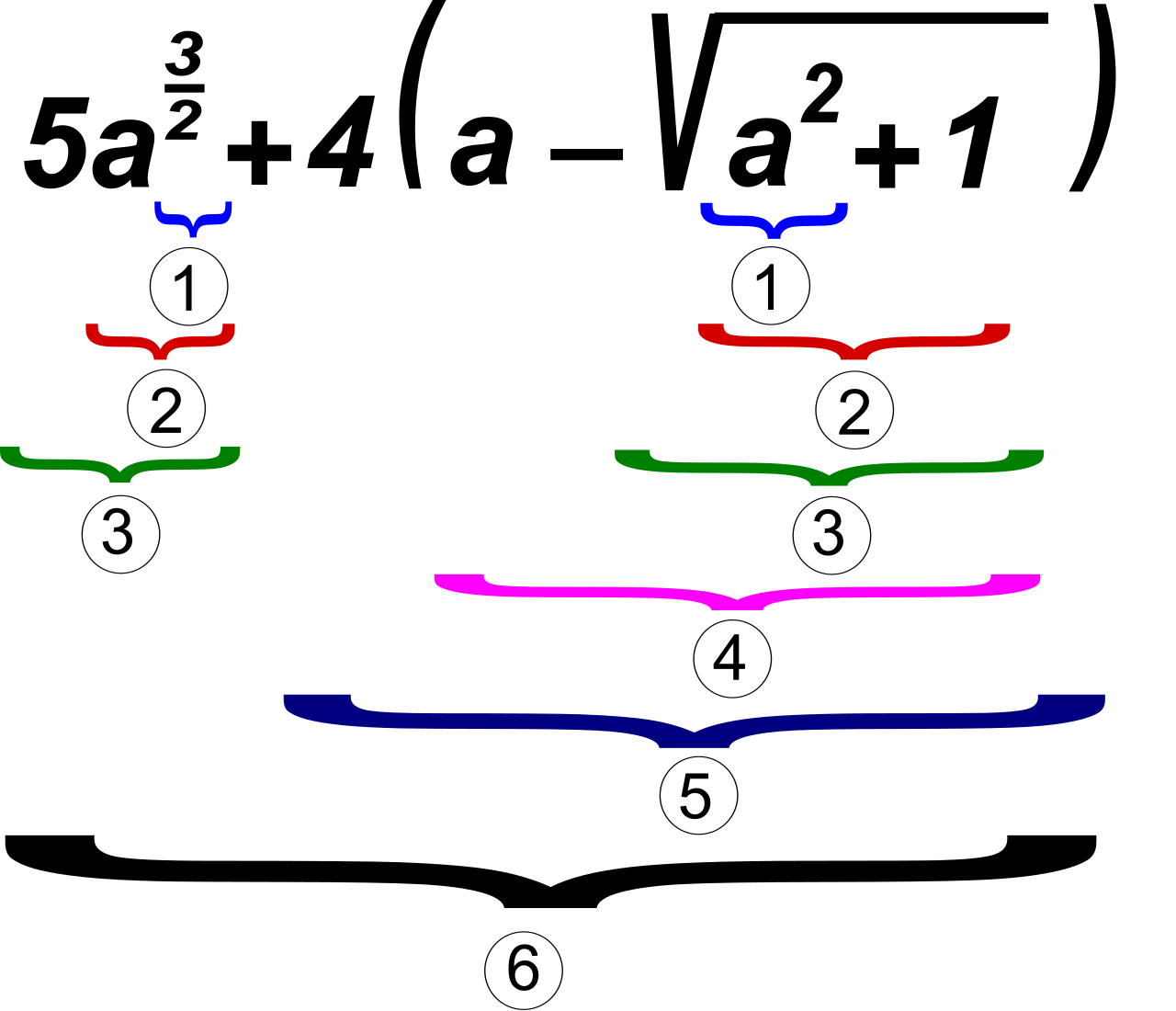
If you attempt to expand or combine terms haphazardly, the entire blueprint collapses. To prevent logical anarchy, mathematics utilizes the order of operations. The order of operations dictates the strict sequence of mathematical steps required to simplify complex algebraic expressions.
- Grouping Symbols: Parentheses and other grouping symbols must be evaluated first according to the standard order of operations. This isolates mini-environments of arithmetic that demand immediate resolution.
- Exponents: Exponents are evaluated immediately after grouping symbols according to the standard order of operations. Exponentiation is fundamentally repeated multiplication, giving it a higher hierarchical priority than standard multiplication.
- Multiplication and Division: Multiplication and division are evaluated sequentially from left to right immediately after exponents. Remember, multiplication and division sit on the same level of hierarchy; neither intrinsically outranks the other.
- Addition and Subtraction: Finally, addition and subtraction are evaluated sequentially from left to right immediately after multiplication and division.
Recognizing Fully Simplified Forms
How do you know when your work is finished? When is the blueprint as elegant and condensed as theoretically possible?
There are two primary conditions. First, an algebraic expression is considered fully simplified when there are no parentheses remaining. We must distribute and expand all grouped structures. Second, an algebraic expression is considered fully simplified when there are no like terms left to combine.
If you are handed the expression 2(3x+4)−x+5, you apply the order of operations and the distributive property first: 6x+8−x+5
Then, you commute and group the like terms: (6x−x)+(8+5)
Finally, you combine those like terms: 5x+13
There are no parentheses remaining, and the x-term cannot be combined with the constant. The mathematical blueprint has been perfected. By deeply understanding the operations that govern these transformations—from the commutative and associative symmetries to the power of distribution and precise verbal translation—you gain absolute command over the structural logic of algebraic expressions.