Writing Algebraic Equations and Expressions
Not sure you’re ready?
Take the ~3-minute readiness diagnostic and see where you stand.
Nature speaks to us in relationships, quantities, and changes, but it does not speak in English. To understand how a pendulum swings, how a business accumulates profit, or how an airplane consumes fuel, we must translate the descriptive prose of reality into the precise, mechanical syntax of mathematics. This act of translation—taking a verbal description and converting it into algebraic notation—is the foundational skill of mathematical modeling. It requires treating English sentences as cryptographic puzzles where every word, phrase, and comma maps to a specific mathematical symbol or structural rule.
Before we can translate sentences, we must understand the basic grammar of the language we are writing. In English, we have noun phrases and full sentences. Algebra mirrors this structure perfectly.
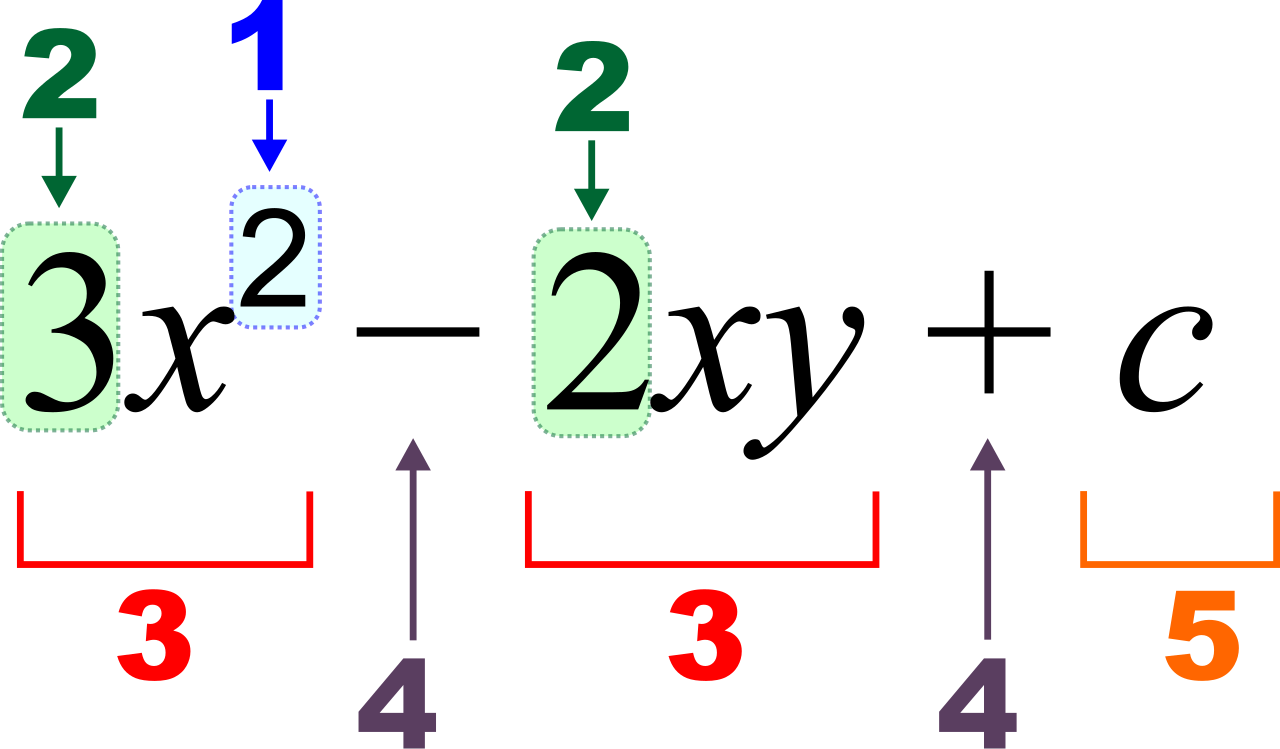
At the core of this language is the variable, a symbol (typically a letter like x, y, or t) used to represent an unknown numerical value in an algebraic expression or equation. It is the placeholder for the physical quantity we are trying to discover.
When we combine variables with numbers and operations, we create an algebraic expression. You can think of an expression as a mathematical phrase containing numbers, variables, and operation symbols without an equals sign. If I say "three times a number," that is an expression (3x). It asserts nothing; it simply exists as a description of a quantity.
An algebraic equation, however, is a complete mathematical statement asserting equality between two algebraic expressions. It contains a verb—an equals sign. If I say "three times a number is twelve," I have now written an equation (3x=12).
Crucial Distinction:
- Expression: 4x−7 (A phrase, no equals sign)
- Equation: 4x−7=25 (A complete thought, asserts equality)
To accurately translate real-world problems, we must build a mental dictionary that maps English vocabulary directly to mathematical operations.
Addition and Subtraction
Addition is the mathematics of accumulation. The word "sum" indicates the mathematical operation of addition, as do the phrases "more than" and "increased by".
Subtraction is the mathematics of difference and removal, but it carries a hidden trap. The word "difference" and the phrase "decreased by" straightforwardly indicate the mathematical operation of subtraction, reading left to right. For example, "a number decreased by five" is simply x−5.
However, you must pay extreme attention to the phrases "less than" and "subtracted from". These specific phrases reverse the standard left-to-right order of operands in a subtraction expression. Why? Think about the physical reality. If I have \100andyouhave$20∗lessthan∗me,youcomputeyourmoneybytakingmy$100andsubtracting$20.TheEnglishlanguagepresentsthe$20$ first, but the mathematics demands the baseline comes first.
Therefore, the verbal phrase "x less than y" translates algebraically to the expression y−x. Never write x−y for this phrase!
Multiplication and Division
Multiplication handles scaling and repetitive addition. The word "product" and the word "times" indicate the mathematical operation of multiplication. Frequently, we encounter the word "twice", which specifically indicates the mathematical operation of multiplying a quantity by the number two.
Furthermore, when dealing with parts of a whole, the word "of" immediately following a fraction or percentage indicates the mathematical operation of multiplication. If a problem states "half of the employees" or "25% of the total," it is asking you to multiply: 21x or 0.25x.
For division, we are looking at partitioning. The word "quotient" and the phrase "divided by" indicate the mathematical operation of division. Additionally, the word "ratio" typically indicates the mathematical operation of division, often written as a fraction (yx).
Equality
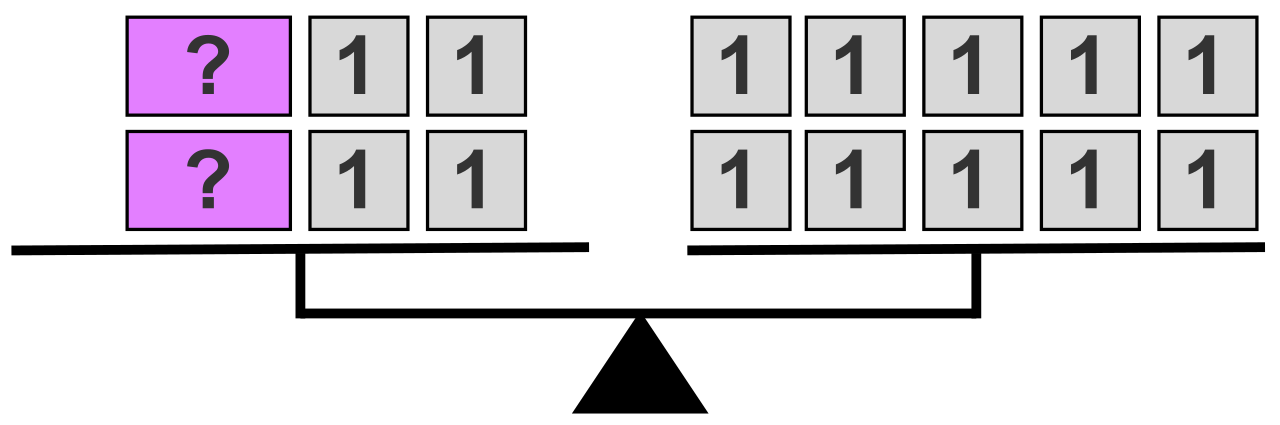
How do we know when to place our equals sign? In translation, the word "is" translates to an equals sign in an algebraic equation. Similarly, the action phrase "yields" and the phrase "results in" translate to an equals sign in an algebraic equation. They are the balance points of our mathematical sentence.
The Translation Dictionary
| Mathematical Operation | English Vocabulary Clues |
|---|---|
| Addition (+) | Sum, more than, increased by |
| Subtraction (−) | Difference, decreased by, less than*, subtracted from* |
| Multiplication (×) | Product, times, twice (multiply by 2), "of" (after fraction/percent) |
| Division (÷) | Quotient, divided by, ratio |
| Equality (=) | Is, yields, results in |
*Remember: "Less than" and "subtracted from" reverse the order of the terms!
In English, the placement of a comma changes the entire meaning of a sentence ("Let's eat, Grandma!" vs. "Let's eat Grandma!"). In algebra, parentheses serve this exact grammatical function.
Parentheses are used in algebraic expressions to group operations that must be performed first according to the standard order of operations. Without them, the strict rules of multiplication and division take precedence, which can butcher the intended meaning of a physical description.
Consider the verbal phrase: "the sum of x and y, multiplied by z." If we mechanically write this left-to-right as x+yz, we have failed. By the standard order of operations, x+yz tells us to multiply y and z first, then add x. But the English phrase clearly asks us to find the sum first, and then multiply that entire result by z.
To fix this, the phrase "the sum of x and y, multiplied by z" requires placing the sum of x and y inside parentheses before multiplying the result by z.
Correct Translation: (x+y)z
Always look for grouping words. "The sum of," "the difference of," or "the quantity of" are giant neon signs demanding that you open a set of parentheses.
Now we apply our translation skills to reality, moving from abstract numbers to physical and economic systems.
Linear Economic Models
Many businesses operate on a linear model. If you open a bakery, you have to buy an oven (a one-time purchase), and then you have to buy flour for every loaf of bread you bake.
In mathematics, fixed costs in a real-world linear model are represented by the constant term in an algebraic equation. They do not change, no matter how many items you produce. Conversely, variable costs in a real-world linear model are represented by a numerical coefficient multiplied by a variable.
To find the grand total, total cost in a linear algebraic model is calculated by adding the fixed cost to the product of the variable rate and the number of items.
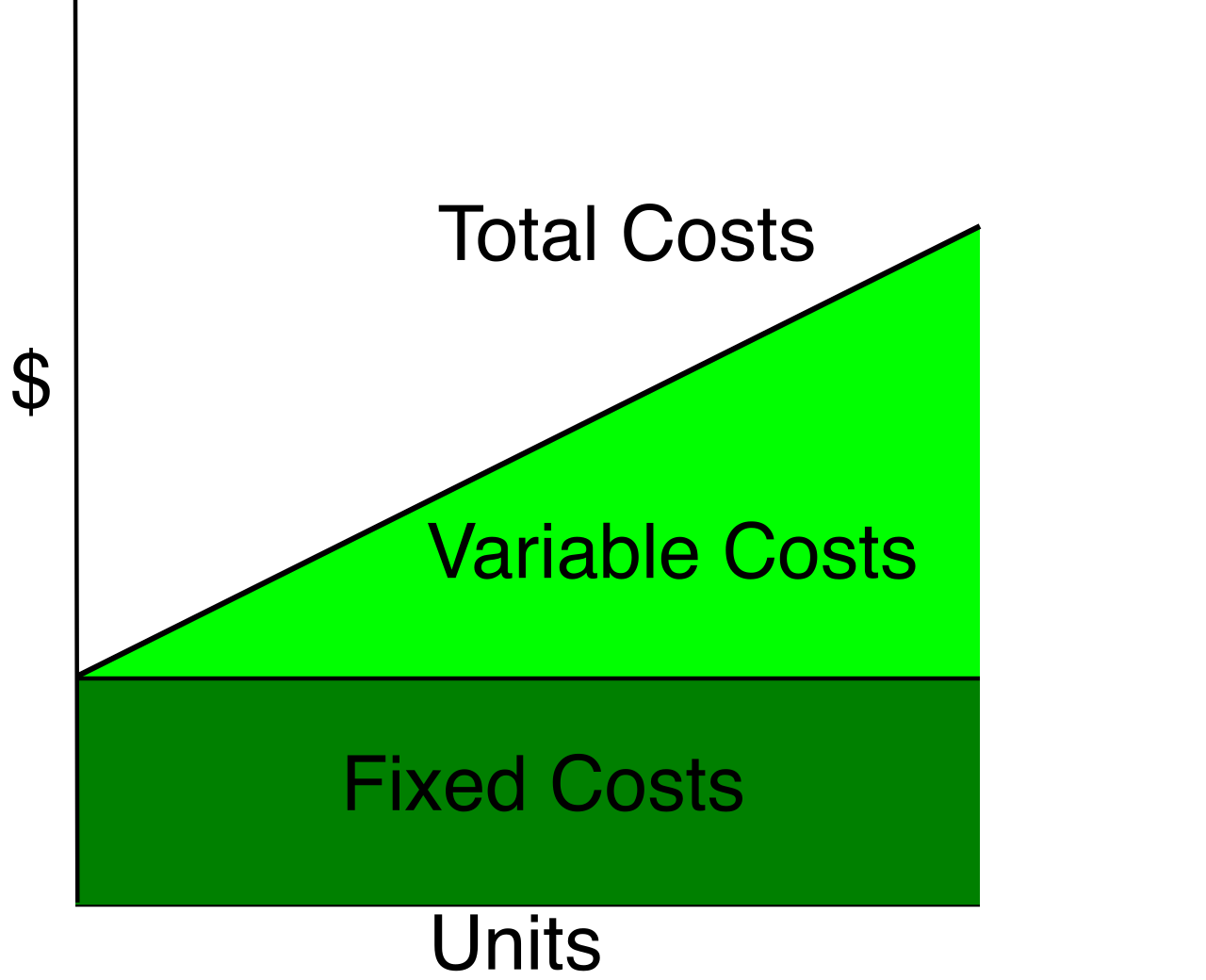
Let C be the total cost, and x be the number of loaves of bread. If the oven costs \500andeachloafcosts$2$ in flour, the equation is: C=500+2x
Motion and Travel
When physical objects move, we rely on the most famous foundational equation of kinematics. Distance traveled is modeled by the algebraic equation representing Distance equal to Rate multiplied by Time. D=r⋅t If a car travels at 60 miles per hour (the rate, r) for 3 hours (the time, t), the distance D is 60×3=180 miles. When Praxis questions describe two trains leaving a station, they are fundamentally asking you to set up D=rt equations for each train.
Percentage Changes
Real-world quantities expand and shrink. When populations grow or shoes go on sale, we use percentage models.
A percentage increase problem requires multiplying the original amount by the percentage in decimal form and adding that product to the original amount. For example, if a \40itemistaxedat8%,youtaketheoriginalamount(40),multiplybythedecimal(0.08$), and add it back: Total=x+0.08x
Conversely, a percentage decrease problem requires multiplying the original amount by the percentage in decimal form and subtracting that product from the original amount. If a \40itemisdiscountedby20%$: Sale Price=x−0.20x
Sometimes, the physical world does not give us a perfect equality; it gives us a boundary, a limit, or a threshold. We must be highly precise in distinguishing between operations and relationships.
Earlier we noted that "less than" means subtraction (e.g., "3 less than 10" is 10−3). However, the addition of the tiny verb "is" changes the entire mathematical universe. The phrase "is less than" indicates a mathematical inequality rather than an operation of subtraction.
- "Five less than a number" →x−5
- "Five is less than a number" →5<x
Similarly, we have bounds. If a bridge can hold "at most" 10,000 pounds, that means 10,000 is the absolute ceiling; it can hold exactly 10,000, or anything less. Thus, the phrase "at most" translates to a less-than-or-equal-to symbol (≤) in an algebraic inequality.
If a ride requires you to be "at least" 48 inches tall to ride, 48 is the absolute floor. You can be exactly 48, or anything taller. Therefore, the phrase "at least" translates to a greater-than-or-equal-to symbol (≥) in an algebraic inequality.
Finally, we come to a classic puzzle format found frequently on standardized exams: the "consecutive integer" problem. The trick here is defining the unknown sequence solely in terms of a single variable, x.
Consecutive integers are whole numbers that follow each other in order without skipping (like 17,18,19). Because each number is exactly one unit larger than the last, they are represented algebraically by a sequence such as x, x+1, x+2, and so forth.
But what happens when the exam specifies "even" or "odd" integers? Even numbers (like 10,12,14) skip by two. Therefore, consecutive even integers are represented algebraically by a sequence such as x, x+2, x+4.
Here is the brilliant, counter-intuitive truth that trips up thousands of students: consecutive odd integers are also represented algebraically by the sequence x, x+2, x+4.
Why? It feels wrong to use "+2" and "+4" for odd numbers. But remember, the sequence describes the distance between the numbers, not the numbers themselves! Odd numbers (like 11,13,15) are still exactly two units apart. If your baseline x is an odd number (say, 11), adding 1 gives you an even number (12). To jump to the next odd number, you must add 2 (yielding 13).

Mastering this distinction—separating the label of the thing from the logical structure of how the thing operates—is the ultimate triumph in algebraic translation. You are no longer just reading words; you are reading the invisible machinery beneath them.