Multiplication is simply a mechanism for accelerated addition, and exponential growth is a mechanism for accelerated multiplication. When we describe the vast volume of a star or the microscopic radius of a cellular nucleus, we do not write out endless strings of zeros. Instead, we package these quantities into an elegant shorthand. An exponent indicates the number of times a base is multiplied by itself, where the base is the number being multiplied repeatedly in an exponential expression. However, reality refuses to restrict itself to clean, whole numbers. When we reverse this multiplication process, we inevitably uncover values that refuse to resolve into neat fractions, extending infinitely into decimals that never terminate or repeat. Mastering both the strict algebraic rules of integer exponents and the intuitive art of approximating these boundless irrational numbers forms the foundation of mathematical fluency.
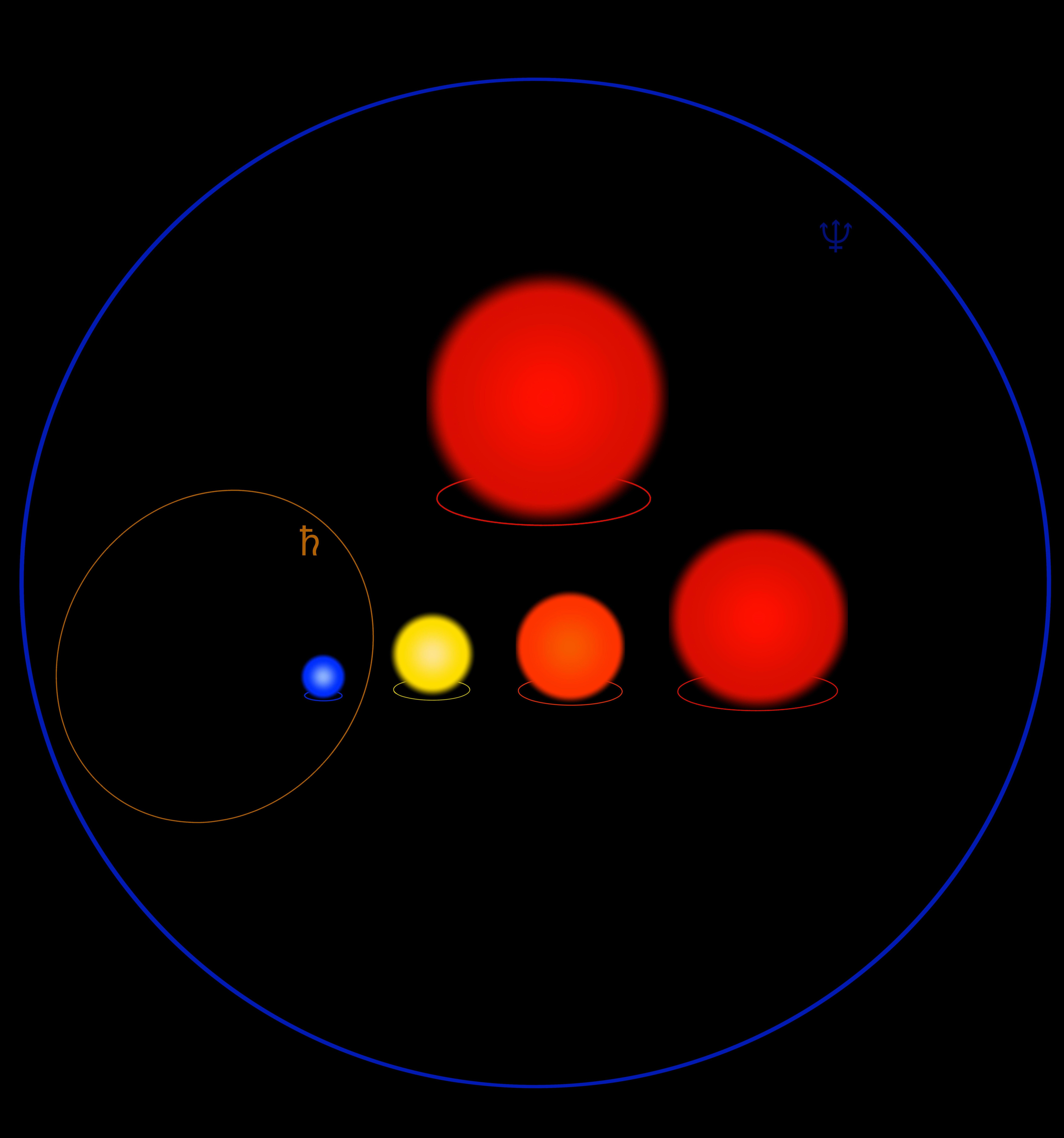
Exponents provide a compact shorthand for expressing the immense volumes of hypergiant stars compared to smaller stellar bodies.
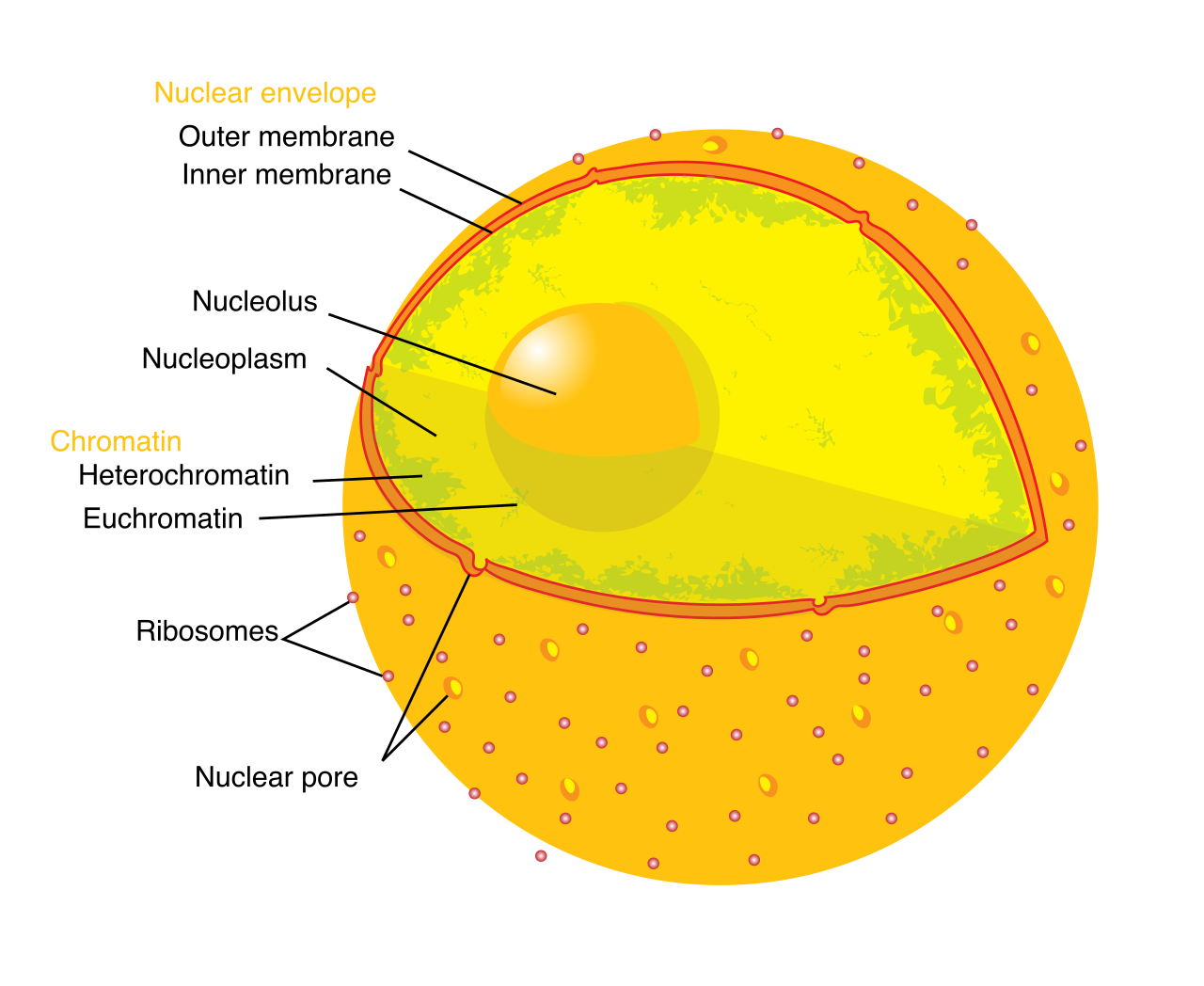
Conversely, negative exponents allow us to concisely describe microscopic structures, such as the architecture of a human cell nucleus.
Mathematics is deeply concerned with patterns, and the rules of exponents are simply codifications of counting. When we manipulate exponential expressions, we are performing arithmetic on the number of times a base is multiplied.
To navigate this shorthand efficiently, we rely on five fundamental laws. Rather than memorizing them blindly, observe how they naturally emerge from the definition of multiplication.
The Product Rule: Multiplying two expressions with the same base involves adding their exponents.
Why it works:x2⋅x3=(x⋅x)⋅(x⋅x⋅x). We simply count five x’s, so the result is x2+3=x5.
The Quotient Rule:Dividing two expressions with the same base involves subtracting the exponent of the denominator from the exponent of the numerator.
Why it works:x2x5=x⋅xx⋅x⋅x⋅x⋅x. Two factors of x cancel out, leaving x5−2=x3.
The Power of a Power Rule: Raising an exponential expression to another power involves multiplying the two exponents.
Why it works:(x2)3=(x2)⋅(x2)⋅(x2)=x2+2+2=x2⋅3=x6.
The Power of a Product Rule: A product raised to an exponent is equal to each individual factor raised to that exponent.
Why it works:(xy)3=(xy)(xy)(xy)=(x⋅x⋅x)(y⋅y⋅y)=x3y3.
The Power of a Quotient Rule: A fraction raised to an exponent is equal to the numerator raised to the exponent divided by the denominator raised to the exponent.
Why it works:(yx)3=yx⋅yx⋅yx=y3x3.
What happens when we run out of numbers to multiply? Consider a descending sequence of base 2: 23=8, 22=4, 21=2. Each step down halves the value. If we continue this logical progression, 20 must be half of 2, which is 1.
This leads to a universal truth: Any non-zero number raised to the power of zero is exactly equal to one.
There is, however, a critical mathematical boundary. The number 0 raised to the power of 0 is a mathematically undefined expression. We cannot divide zero by zero to maintain a pattern, so 00 shatters the rules and remains undefined.
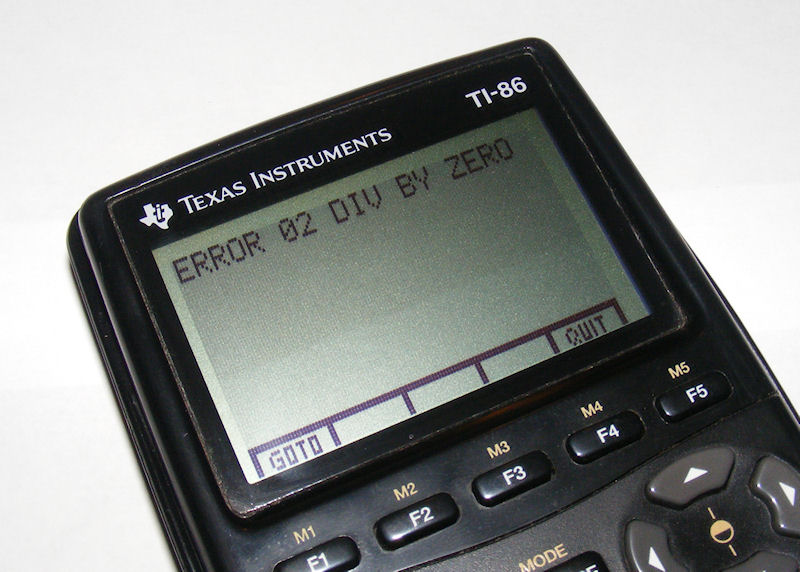
Attempting to calculate a mathematically undefined expression, such as dividing by zero to justify a pattern, breaks fundamental arithmetic rules and causes calculators to halt.
If we step further below zero, we encounter negative exponents. Continuing our halving pattern from 20=1, the next step is 2−1=21, and then 2−2=41. Thus, a base raised to a negative exponent is equal to one divided by the base raised to the corresponding positive exponent. An expression like x−n is simply a request for division rather than multiplication: x−n=xn1.
Adding and Subtracting Exponential Terms
Multiplication and division flow effortlessly through exponents because exponents are multiplication. Addition and subtraction, however, require far more caution.
When dealing with addition, terms with identical bases and identical exponents can be combined by adding or subtracting their coefficients. If you have three blocks of x2 and someone hands you four more blocks of x2, you possess seven blocks of x2. Algebraically: 3x2+4x2=7x2.
Conversely, adding or subtracting exponential terms with different bases or different exponents requires evaluating each term to its standard numerical value first. You cannot seamlessly merge 23 and 52. They represent entirely different geometries of value. You must unpack them: 23+52 becomes 8+25, which yields 33.
If an exponent builds a number up, a root tears it back down to its foundation. A square root of a given number is a value that yields the given number when multiplied by itself. For example, both 3 and −3 are square roots of 9, because 3×3=9 and (−3)×(−3)=9. However, when we speak of the symbol, we are asking for the principal square root, which refers specifically to the non-negative square root of a real number.
To navigate the landscape of roots, we rely on landmarks. A perfect square is an integer that equals the square of another integer. Recognizing the earliest perfect squares allows us to perform rapid mental mathematics:
The number 1 is a perfect square because 1 multiplied by 1 equals 1.
The number 4 is a perfect square because 2 multiplied by 2 equals 4.
The number 9 is a perfect square because 3 multiplied by 3 equals 9.
The number 16 is a perfect square because 4 multiplied by 4 equals 16.
The number 25 is a perfect square because 5 multiplied by 5 equals 25.
The number 16 is a perfect square, as its value can be geometrically visualized as a 4 by 4 grid of units.
What happens when we attempt to find the square root of a number stranded between these perfect squares, like 10? There is no integer that, when multiplied by itself, yields 10. This plunges us into the realm of the irrational.
An irrational number is a real number that cannot be written as a simple fraction of two integers. If you attempt to calculate one, you will find that the decimal representation of an irrational number never terminates and never forms a repeating pattern. It is an infinite smearing of digits.
To handle these untamable numbers on an exam or in the laboratory, we use approximation. Estimating the square root of a non-perfect square involves identifying the two consecutive perfect squares that the target number falls between. It is a mathematical certainty that the square root of a given non-perfect square always lies strictly between the square roots of the closest perfect squares below and above the given number.
Let us bound 10. The closest perfect square below 10 is 9 (9=3). The closest perfect square above 10 is 16 (16=4). Therefore, the square root of 10 must lie strictly between 3 and 4. Because 10 is vastly closer to 9 than it is to 16, we can confidently estimate that 10 is slightly greater than 3.
Certain irrational numbers appear with such staggering frequency in geometry, physics, and nature that their approximations must be committed to memory.
The mathematical constant pi is an irrational number representing the ratio of a circle's circumference to its diameter.
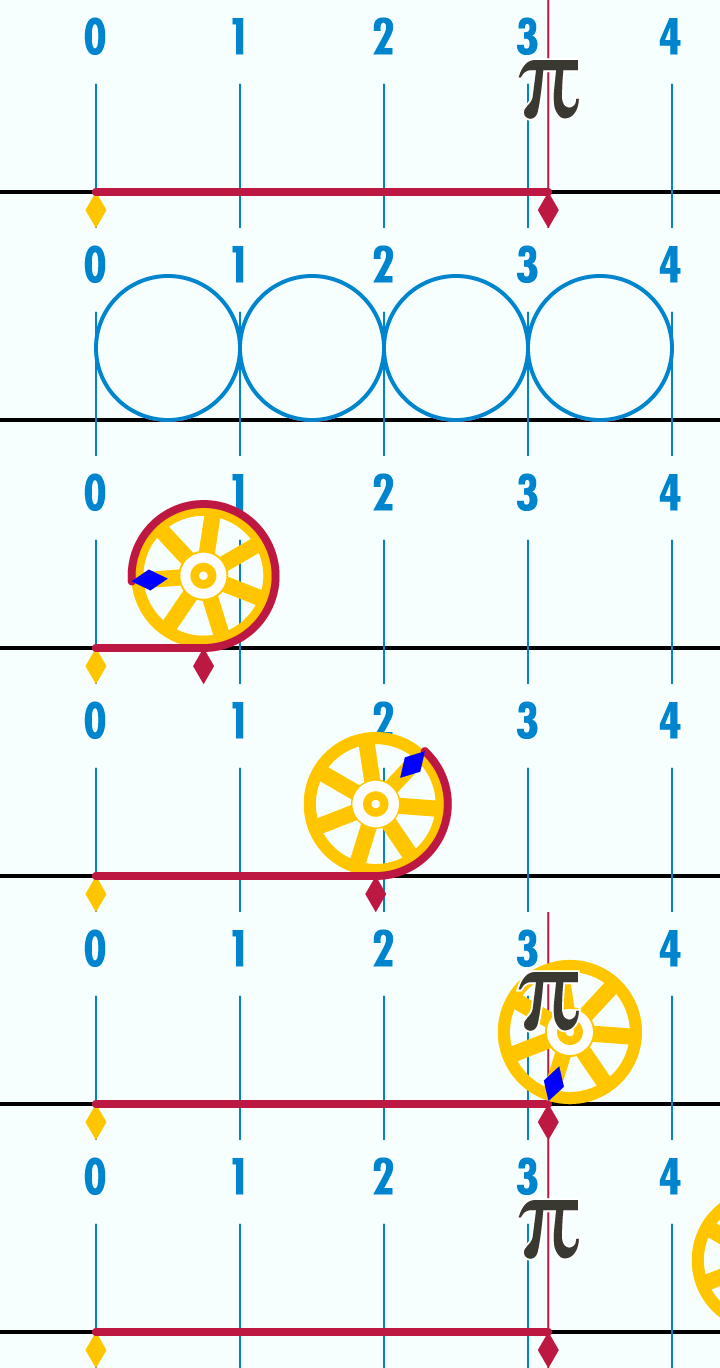
No matter how large or small the circle, folding its diameter around its edge will always take slightly more than three spans. Therefore, the mathematical constant pi is approximately equal to 3.14.
While decimals are standard, fractions are often more elegant for rapid cancellation. Consequently, the mathematical constant pi is frequently approximated in calculations using the fraction 722.
Unrolling a circle's circumference demonstrates that it is slightly more than three times the length of its diameter, physically visualizing the constant pi.
Key Square Roots
Memorizing the approximate values of small, prime square roots acts as a powerful accelerant during problem-solving:
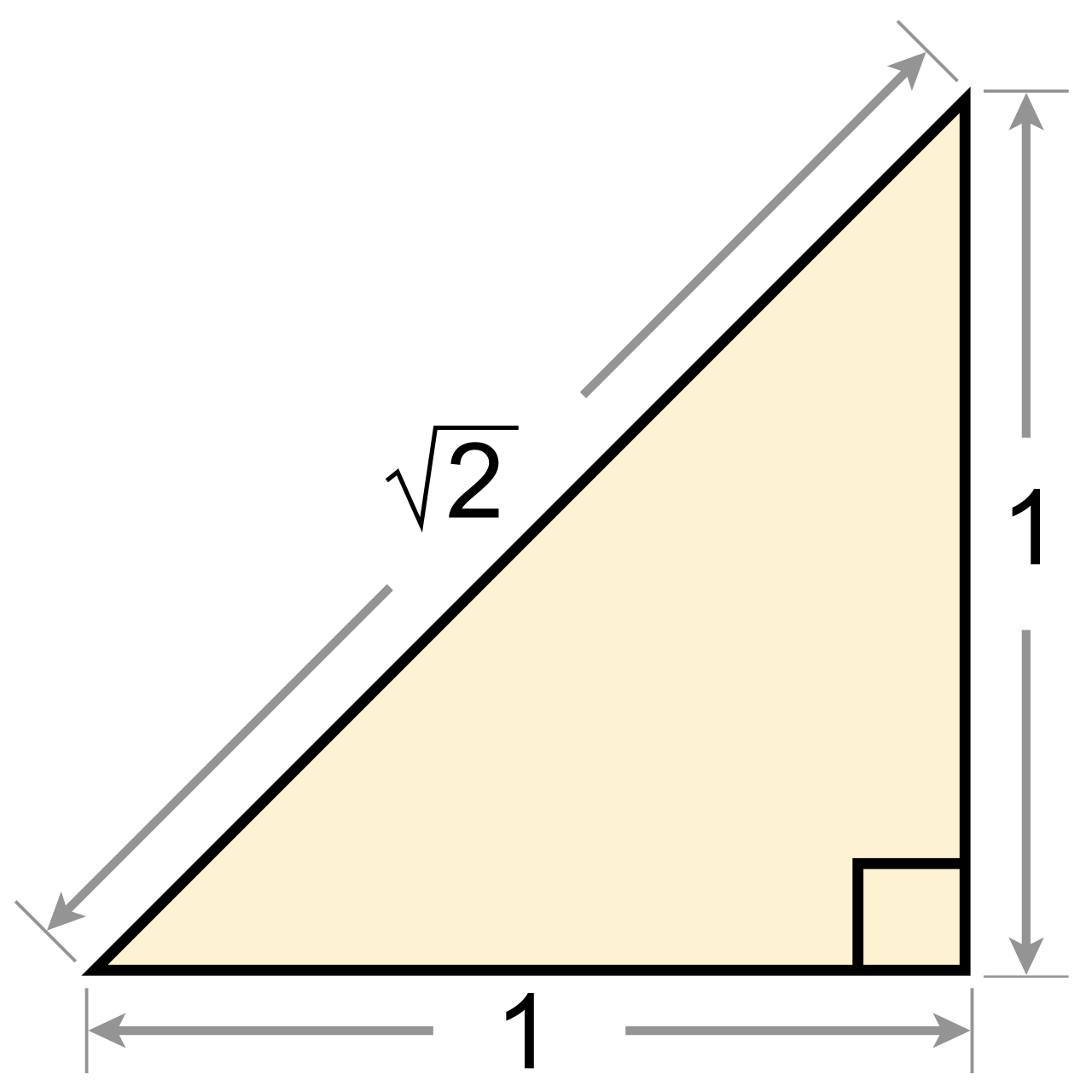
The square root of 2 is an irrational number. Measuring the diagonal of a square with sides of length 1 yields this exact value. The square root of 2 is approximately equal to 1.414.
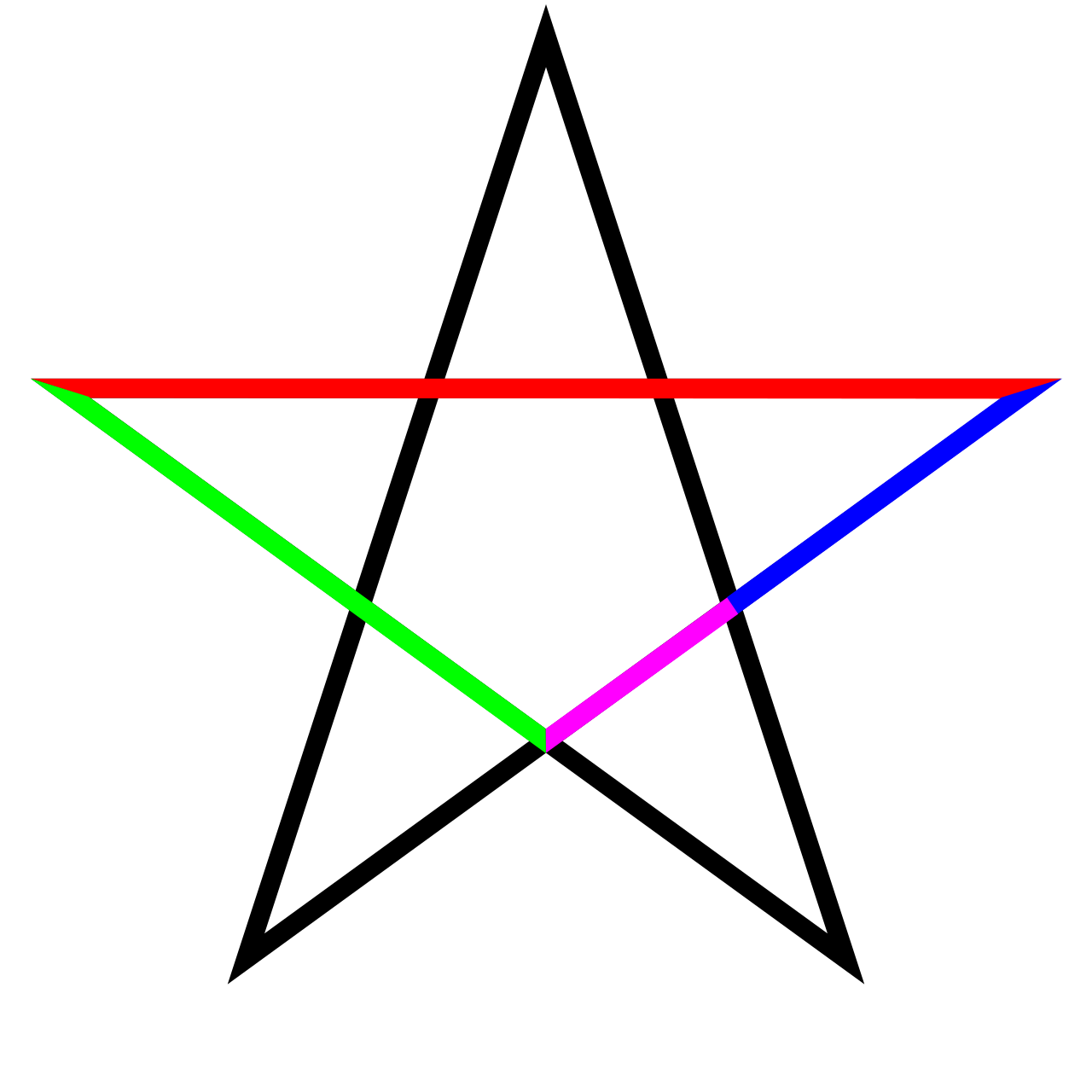
The square root of 5 is an irrational number. It forms the bedrock of the Golden Ratio. The square root of 5 is approximately equal to 2.236.
The square root of 10 is an irrational number. As deduced earlier through our guideposts, it sits just above 3. The square root of 10 is approximately equal to 3.162.
The square root of 2 geometrically manifests as the hypotenuse of a right triangle with legs of length 1.
The irrational square root of 5 is essential to the Golden Ratio, a proportion that mathematically dictates the relative lengths of intersecting segments in a regular pentagram.
By understanding that exponents are the machinery of scalable multiplication, and that roots often unearth boundless, infinite decimal structures, you strip away the intimidation of high-level arithmetic. Whether applying the rigid laws of integer exponents or fluidly estimating the value of an irrational square root, you are simply manipulating the fundamental shapes and magnitudes of reality.