Linear Word Problems and Applications
Not sure you’re ready?
Take the ~3-minute readiness diagnostic and see where you stand.
Watch a dripping faucet slowly fill a five-gallon bucket, and you are witnessing algebra in its purest form. If you measure the volume of water at precisely one-minute intervals, you will find it increases by the exact same amount each time. This predictable, unvarying growth forms the foundation of what mathematicians call a linear relationship. By capturing these physical realities in the symbolic language of mathematics, we gain the extraordinary ability to run reality forward or backward on paper—calculating exactly when the bucket will overflow without having to wait and watch.
A linear word problem describes a mathematical relationship characterized by a constant rate of change. Whether calculating the trajectory of a moving train, the monthly billing of a utility company, or the descent of a descending airplane, the underlying architecture is identical. To master these problems for the Praxis Core Mathematics exam, you must learn to strip away the descriptive prose and expose the rigid, logical skeleton beneath it.
At the heart of every linear system is an equation that perfectly balances two sides of a scenario. Translating a word problem into a mathematical equation requires identifying the unknown quantity. If you do not know what you are looking for, no amount of arithmetic will help you find it. The unknown variable in a linear word problem typically represents the specific quantity requested in the problem prompt—usually found in the final interrogative sentence, such as "How many hours did it take?" or "What was the original price?"
The Universal Blueprint: y=mx+b
Once you isolate the unknown, you must build an equation around it. The standard framework for these relationships is a brilliantly simple piece of mathematical machinery. The slope-intercept form of a linear equation is y=mx+b.
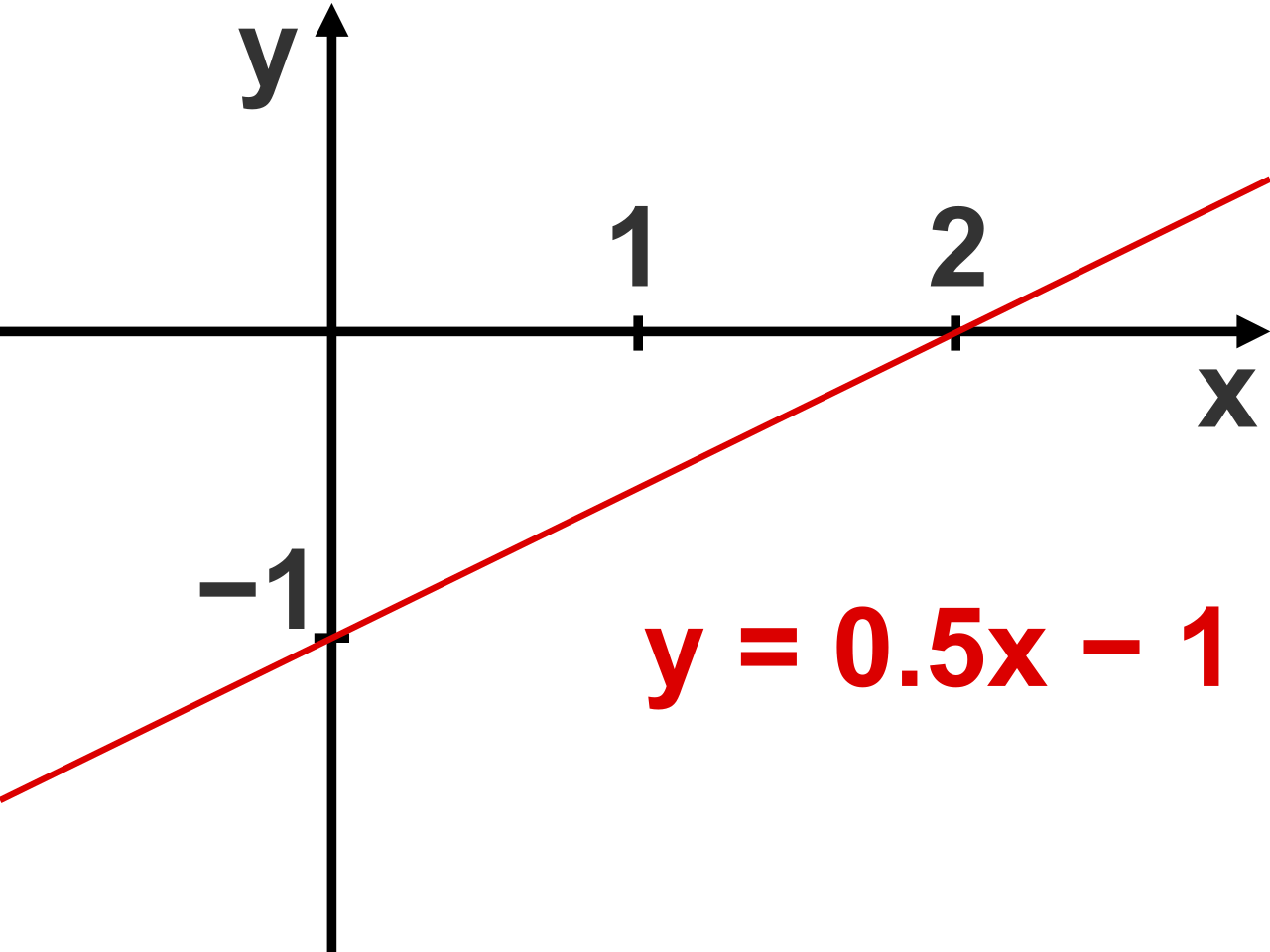
Every variable in this formula serves a distinct physical purpose:
-
The variable b in the equation y=mx+b represents the y-intercept or initial value. In the physical world, a fixed starting amount in a real-world scenario corresponds to the y-intercept of the constructed linear equation. If a plumber charges a flat fee just to show up at your door, that fee is b.
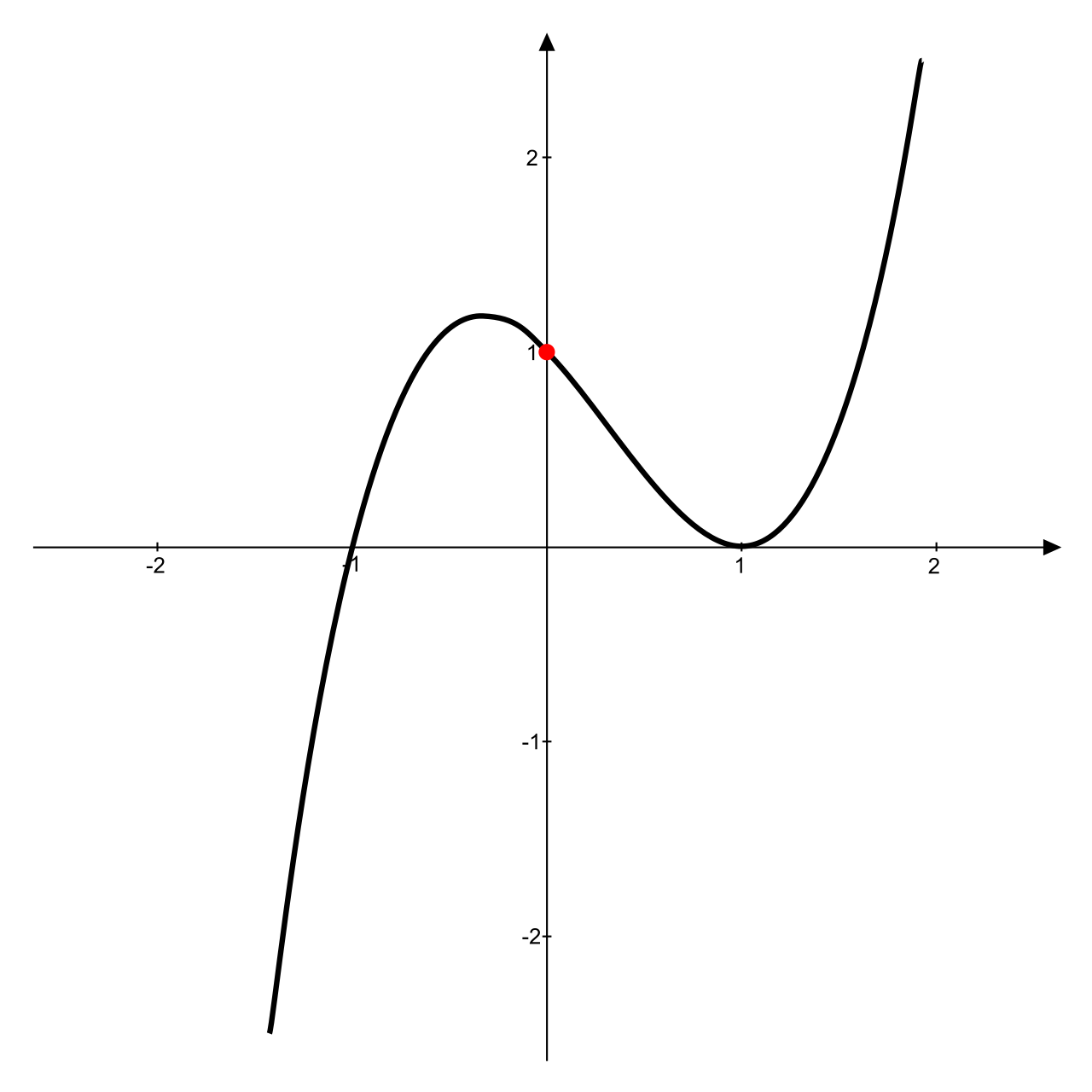
The y-intercept represents the initial value (b), graphically depicted as the exact point where a line crosses the vertical y-axis. Source: Y-intercept by -- p b r ok s 1 3 talk?, CC BY 3.0. -
The variable m in the equation y=mx+b represents the slope or rate of change. A repeating per-unit rate in a real-world scenario corresponds to the slope of the constructed linear equation. The hourly rate the plumber charges after arriving is m.
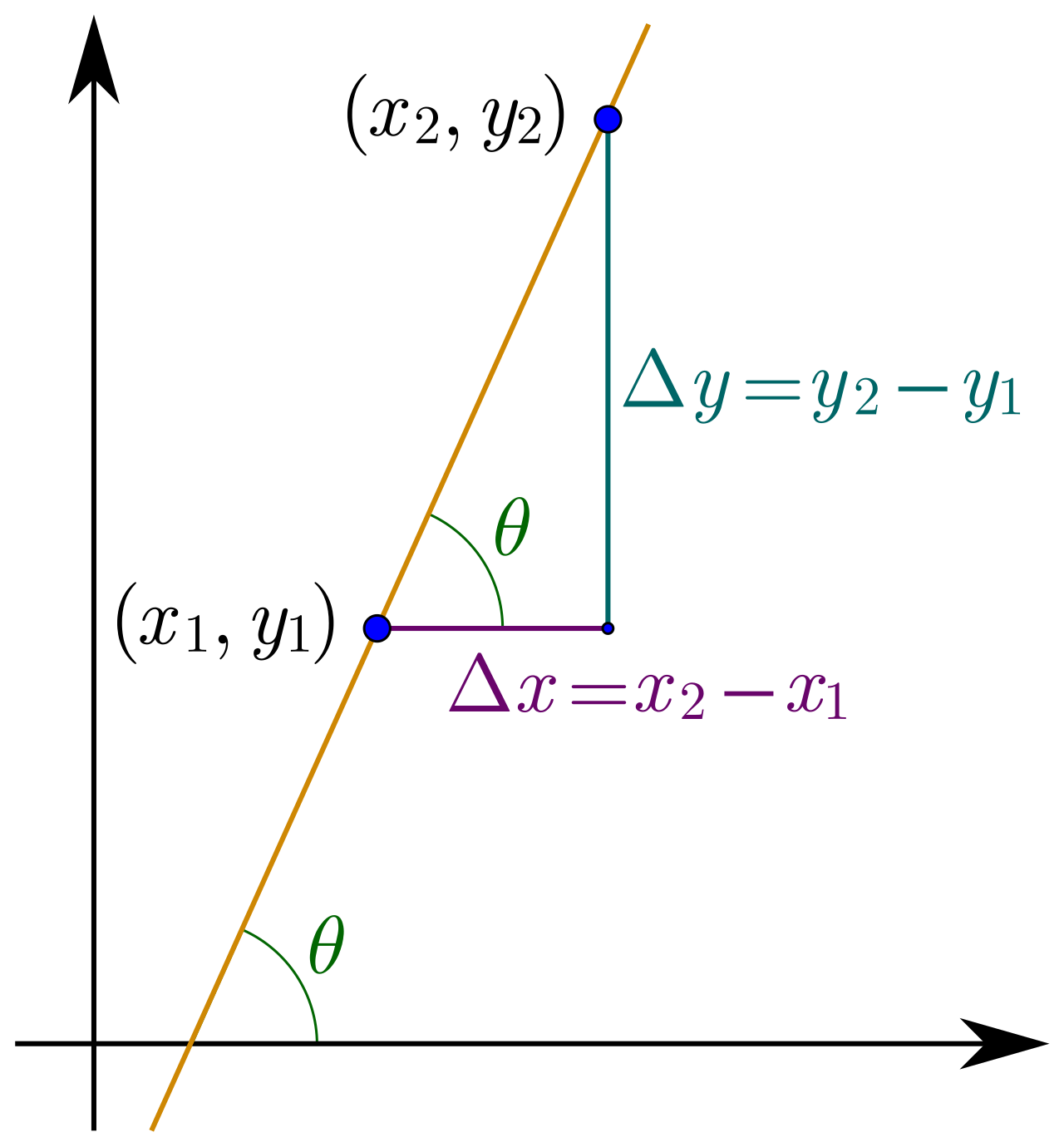
The slope (m) determines the steepness of the line, calculated by dividing the vertical change by the horizontal change between any two points. Source: Wiki slope in 2d by Maschen, CC BY-SA 3.0. -
The variable x is the independent variable. The independent variable in a linear word problem frequently represents units of time (hours, months, miles driven).
-
The variable y is the dependent variable. The dependent variable in a linear word problem frequently represents an accumulated total cost, distance, or total volume.
Therefore, constructing a total cost linear equation requires adding the fixed initial value to the product of the rate and the independent variable.
Core Principle: Total Cost (y) = (Rate × Time) + Initial Fee
Mathematics is a language. Like any language, it has a precise vocabulary. To solve linear word problems, you must act as an interpreter, converting English phrasing into mathematical operators.
Here is the essential translation matrix for the Praxis Core exam:
| English Phrase | Mathematical Translation | Example in Context |
|---|---|---|
| "is" | The English word "is" in a mathematical word problem translates to an equals sign in an algebraic equation. | "The total cost is $50" translates to =50. |
| "increased by" | The English phrase "increased by" in a mathematical word problem translates to an addition operation. | "A base weight increased by 5 pounds" translates to w+5. |
| "less than" | The English phrase "less than" in a mathematical word problem translates to a subtraction operation. | "Three less than a number" translates to x−3. |
| "product" | The English word "product" in a mathematical word problem translates to a multiplication operation. | "The product of 4 and a number" translates to 4x. |
| "quotient" | The English word "quotient" in a mathematical word problem translates to a division operation. | "The quotient of a number and 2" translates to 2x. |

Let us apply this dictionary to a classic paradigm. Among the most common linear relationships you will encounter is the calculation of movement through space. The standard distance formula used in linear word problems is distance equals rate multiplied by time (d=rt).
Notice how this is simply a variation of y=mx+b where the starting distance (b) is zero. If a train leaves a station traveling at a constant rate of 60 miles per hour, its distance is the product of its rate (60) and its independent variable, time (t). The resulting equation is d=60t.
If, however, the train was already 10 miles down the track when we started our stopwatch, we must account for that initial value. Our equation shifts to d=60t+10. The physical constraints of the real world map perfectly onto the algebraic constraints of the equation.
Once you have successfully constructed your linear equation, you must solve it. Think of an equation like a knot tied in a piece of string. To untie it, you must perform the exact opposite motions used to tie it, in reverse order. In mathematics, solving a linear equation requires applying inverse mathematical operations to isolate the unknown variable.
We maintain the balance of the equation—the fundamental "is" or equals sign—by applying the same operation to both sides simultaneously.
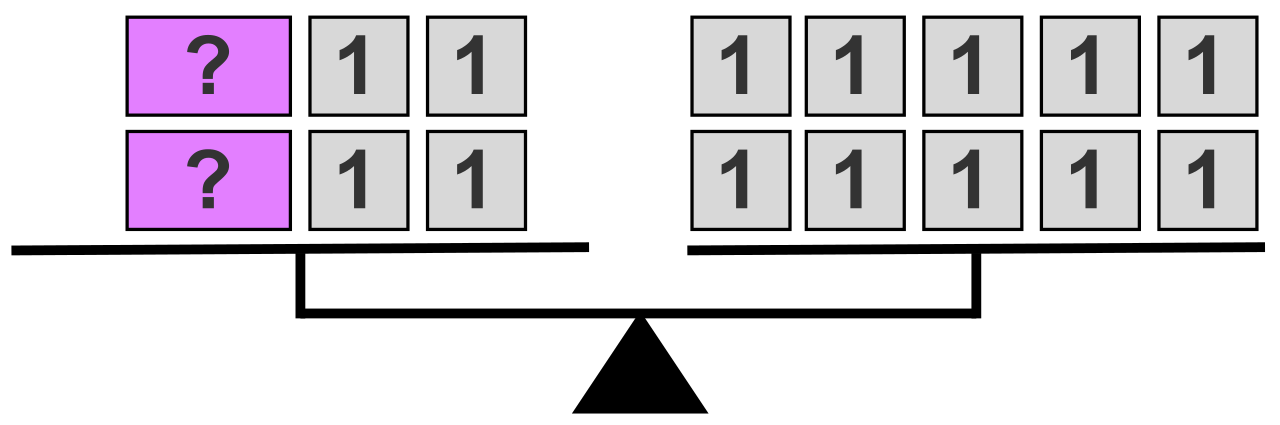
Applying Inverse Operations
- Addition and Subtraction: Addition is the inverse mathematical operation of subtraction. If your equation is x−15=40, the variable was tangled up by subtracting 15. You untangle it by adding 15 to both sides, isolating x to reveal x=55.
- Multiplication and Division: Multiplication is the inverse mathematical operation of division. If your equation is 4x=12, you isolate the variable by multiplying both sides by 4, yielding x=48. Conversely, if you have 5x=35, you divide both sides by 5 to find x=7.
Consider a scenario where a rental car company charges a fixed fee of $30 plus $0.15 per mile driven. If a customer's total bill is $75, how many miles did they drive?
- Identify the unknown: The prompt asks "how many miles," so let x= miles driven.
- Construct the equation: The accumulated total cost ($75) is the fixed starting amount ($30) increased by the product of the rate ($0.15) and the miles (x). 75=0.15x+30
- Apply inverse operations:
- First, unwind the addition. Subtract 30 from both sides: 45=0.15x
- Next, unwind the multiplication. Divide both sides by 0.15: x=0.1545 x=300
The customer drove 300 miles.
A true mathematician never turns in their work on blind faith. You must prove your conclusion. Verifying an algebraic solution requires substituting the calculated numerical value back into the original word problem constraints to ensure it produces a true statement.
Take our car rental answer of 300 miles. Substitute 300 back into the original constraint: 0.15(300)+30=45+30=75. The statement 75=75 is true. The math holds.
The Boundary of Logic
However, the mechanics of algebra are entirely blind to the constraints of physical reality. The math will dutifully calculate whatever numbers you feed it, even if the result is physically impossible.
A mathematically correct solution to a linear equation must be discarded if the solution violates real-world logical constraints.
If you are solving an equation to find the time it takes for two hikers to meet, and your algebraic steps result in t=−4 hours, you cannot simply circle "-4" as your answer. Negative time implies a violation of causality. Similarly, if you are calculating the number of buses required to transport students and the equation yields 3.4 buses, you must step out of the abstract algebra and back into the real world. You cannot order 0.4 of a school bus. In the physical world, you would need 4 buses to ensure all students have a seat.
Always ask yourself: Does this answer make sense in the universe I actually inhabit?
Mastering linear word problems is fundamentally an exercise in translation and logic. You take the messy, descriptive realities of costs, rates, and distances, encode them into the elegant, rigid rules of y=mx+b, use inverse operations to expose the hidden truth, and finally, translate that truth back into the real world.