Solving Simple Quadratic Equations
Not sure you’re ready?
Take the ~3-minute readiness diagnostic and see where you stand.
When a mathematical operation erases information, reversing that operation requires us to confront multiple possibilities. Multiplication by itself—squaring a number—is one such operation because it systematically destroys the "sign" of the original number. If we are handed a squared value and asked to find its origin, we act as algebraic detectives working backward from a known product to an unknown source. Solving the simplest quadratic equations is an exercise in managing this lost information and mathematically proving that two distinct paths can lead to the exact same destination.
At its core, a simple quadratic equation can be written in the form x2=c, where x is a variable and c is a constant.
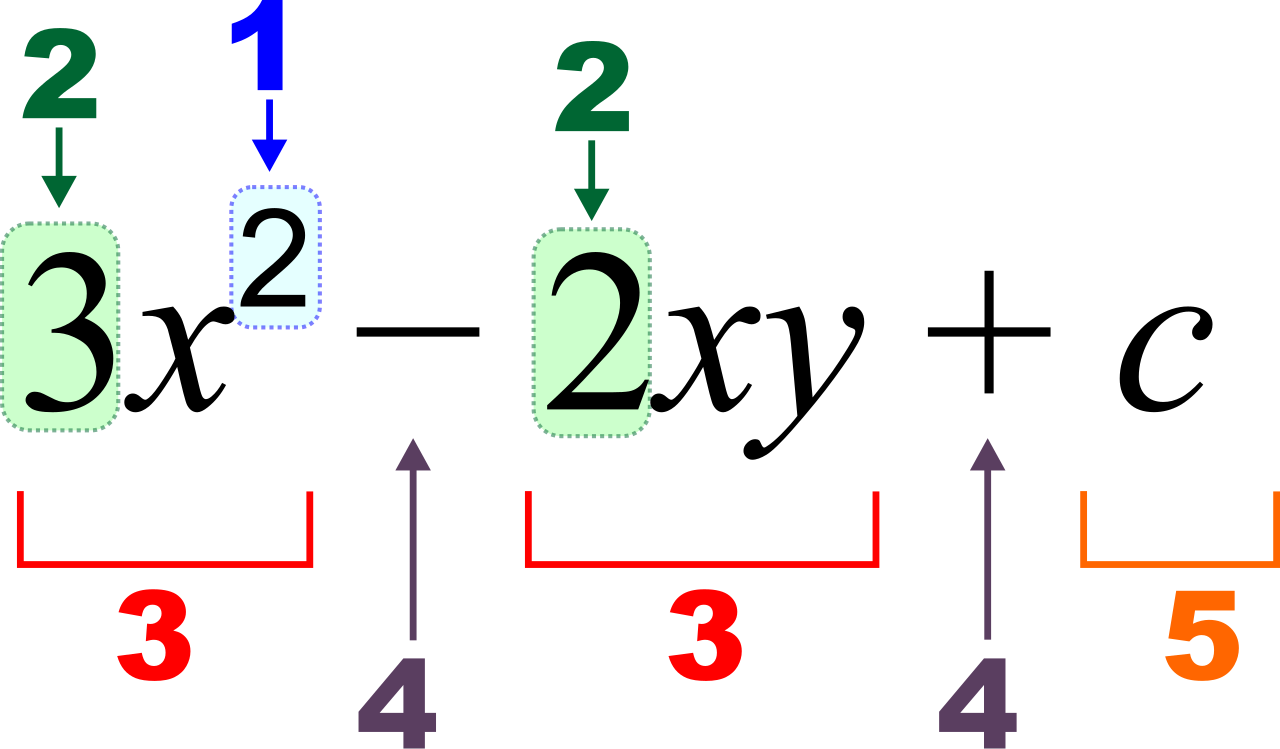
Unlike linear equations where a variable is simply scaled or shifted, the variable x here is interacting directly with itself. Solving the equation x2=c requires finding all numerical values of x that produce the constant c when multiplied by themselves.
Think of the equation x2=c as a machine that asks a specific question: "What number, when I use it as both the length and the width of a mathematical square, yields an area of c?" However, because algebra extends beyond the physical constraints of geometry (where lengths must be positive), we must look at the fundamental rules of multiplication to understand our solutions fully.
To master simple quadratics, we must first master the behavior of numbers when they are squared. There is a beautiful, unavoidable symmetry in the real number line.
We know intuitively that the square of any positive real number is always a positive real number. If you multiply 5×5, you get 25.
However, the rules of arithmetic also dictate that multiplying a negative real number by itself always results in a positive real number product. If you multiply −5×−5, the negative signs cancel out, leaving you again with 25.
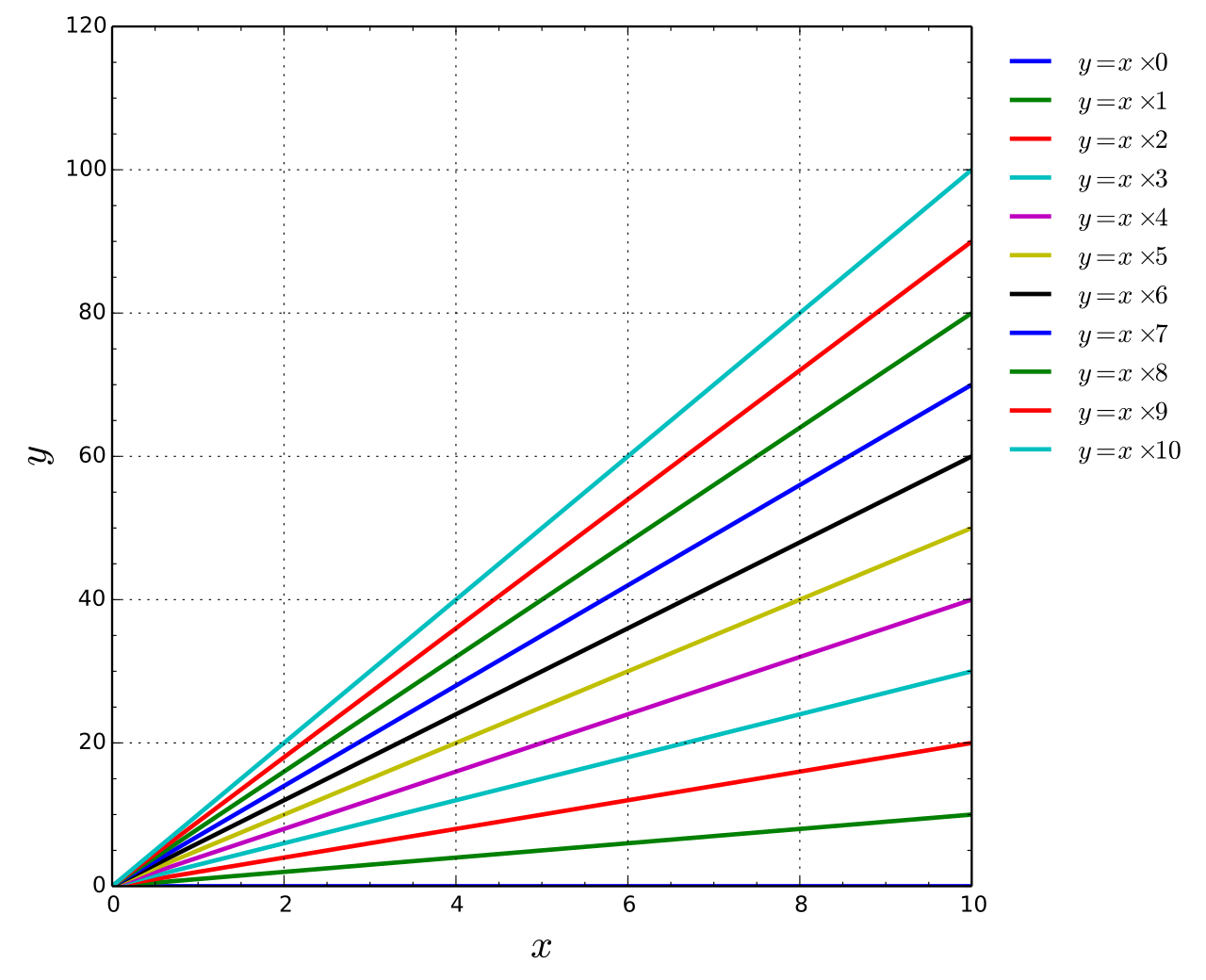
This geometric and algebraic symmetry brings us to a foundational rule of quadratics: an equation of the form x2=c has exactly two distinct real solutions when the constant c is a positive number. Because the squaring operation turns both positive and negative inputs into positive outputs, working backward from a positive output guarantees two distinct origins.
The Square Root Property The square root property states that if x2=c for a positive number c, the solutions are x=c and x=−c.
When applying this property, the two solutions to the equation x2=c for a positive constant c are the principal square root of c and the negative square root of c.
To save time and ink, mathematicians developed a specific shorthand for this binary outcome. The mathematical symbol ± is read as 'plus or minus'. Therefore, the mathematical notation x=±c is a shorthand representation for the two independent solutions x=c and x=−c.
Why does taking the square root of both sides of an equation automatically spawn a ± symbol? It is not a magic trick; it is a consequence of rigorous mathematical logic regarding absolute values.
As educators, we frequently see students take the equation x2=c, apply a square root to both sides, and arrive at x=c, ignoring the negative counterpart completely. In fact, a common algebraic error when solving equations of the form x2=c is omitting the negative square root solution.
To understand why this happens, we must look at what the square root symbol (the radical, ) actually does. The radical symbol specifically asks for the principal (positive) square root of a number.
When you look at the term x2, you might be tempted to say the square root and the square simply cancel each other out, leaving just x. But what if x was originally −3? (−3)2=9. The principal square root of 9 is 3. Therefore, (−3)2 returns 3, not −3.
Because the result strips away the negative sign and returns the positive magnitude of whatever x was, we arrive at a critical concept: the algebraic expression x2 simplifies to the absolute value of x, written as ∣x∣.
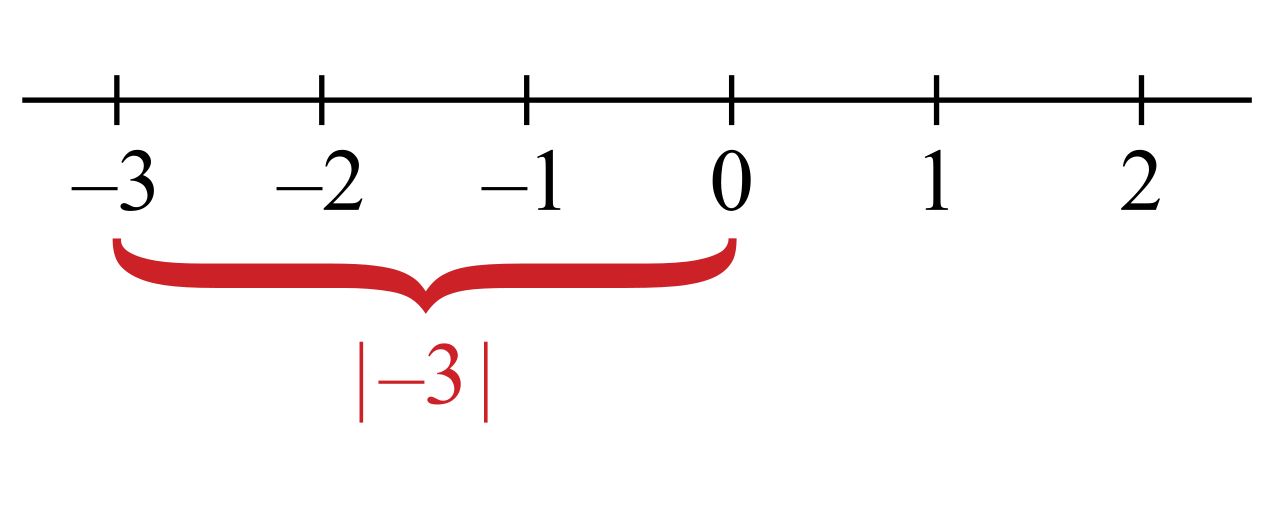
When we solve our quadratic equation step-by-step, the invisible mechanics look like this:
- x2=c
- x2=c
- ∣x∣=c
Therefore, taking the square root of both sides of the equation x2=c yields the intermediate algebraic equation ∣x∣=c. It is from this absolute value equation that we derive our two pathways: x=c and x=−c.
Let us apply this logic to a concrete example. We are faced with the equation x2=49.
Because 49 is a positive constant, we immediately know from the square root property that the quadratic equation x2=49 has exactly two real number solutions.
Let us verify these solutions:
- First, we check the positive principal root. 7×7=49. Thus, the positive integer 7 is a valid solution to the equation x2=49.
- Second, we check the negative root. Squaring the number -7 yields the positive number 49, because (−7)×(−7)=49. Thus, the negative integer -7 is a valid solution to the equation x2=49.
Our solution set is {−7,7}, or written in shorthand, x=±7.
The behavior of the equation x2=c changes dramatically depending on the value of the constant c. The universe of real numbers breaks down into three distinct scenarios when dealing with simple quadratics.
| Value of Constant c | Number of Real Solutions | Algebraic Reason |
|---|---|---|
| Positive (c>0) | Two | Both a positive and a negative number can be squared to yield a positive product. |
| Zero (c=0) | One | Zero carries no sign. There is no "positive zero" or "negative zero". |
| Negative (c<0) | None | Real numbers squared always yield a non-negative result. |
When c is Zero
The symmetry we rely on for positive numbers collapses exactly at the origin. An equation of the form x2=c has exactly one real solution when the constant c is equal to zero.
If we attempt to apply the square root property to x2=0, we ask ourselves: What number multiplied by itself equals zero? The answer is uniquely zero. Furthermore, there is no such thing as +0 or −0 in standard arithmetic; zero is its own negative. Therefore, the only real number solution to the equation x2=0 is the number 0.

When c is Negative
If c drops below zero, the algebraic landscape changes completely. An equation of the form x2=c has no real number solutions when the constant c is a negative number.
Why? Because of the fundamental multiplication rules we established at the beginning. A positive times a positive is positive. A negative times a negative is positive. Zero times zero is zero. In the realm of real numbers, we have exhausted all possibilities. There is no real number that can be squared to produce a negative product.
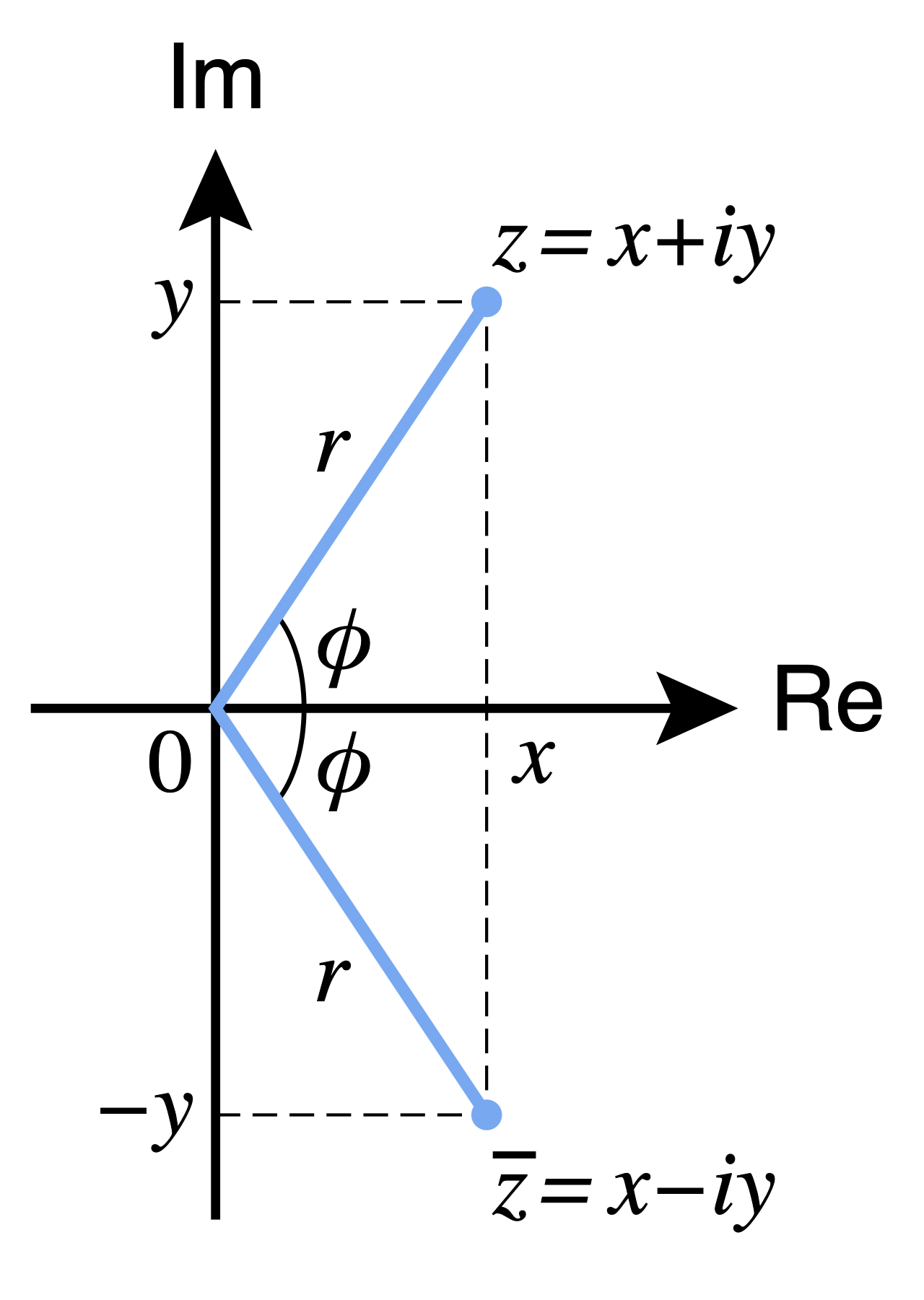
If a student attempts to solve x2=−25, they are looking for a mathematical ghost. In higher mathematics, this problem is resolved by introducing imaginary numbers (where i=−1), but strictly within the domain of the real number system—which is the focus for standard Praxis Core mathematics—the solution set is empty.
As you prepare to test your mathematical fluency and step into the classroom, remember that simple quadratic equations are not just about memorizing the ± symbol. They are about understanding the flow of information in arithmetic.
When you see x2=c:
- Check the sign of c to immediately know whether you are looking for two solutions, one solution, or zero real solutions.
- Remember the intermediate absolute value step (∣x∣=c) to explain why the ± symbol exists.
- Watch out for the most common error: students providing only the principal root. Constantly remind them that equations like x2=49 map to both 7 and −7.
By mastering the precise logic behind these straightforward equations, you not only ensure your success on the exam but also equip yourself to dismantle the algebraic roadblocks your future students will inevitably face.