Perimeter and Area of Triangles and Rectangles
Not sure you’re ready?
Take the ~3-minute readiness diagnostic and see where you stand.
Imagine tracing the outline of a flat plot of land by walking its entire edge, step by step, until you return precisely to where you began. By doing so, you have just measured a boundary. Now, imagine covering every inch of soil within that same boundary with a perfectly even layer of sod. You are no longer dealing with edges; you have just measured a surface. This fundamental distinction between the physical edge of a shape and the flat expanse it contains sits at the heart of all geometric reasoning. In mathematics, we formalize these two distinct spatial properties as perimeter and area. To master the geometry required for the Praxis Core mathematics exam, one must not merely memorize the equations that govern these properties, but deeply understand how they map physical dimensions into quantifiable space. By breaking down the fundamental polygons—rectangles, squares, and triangles—we can strip away the abstraction and see exactly how one-dimensional lines stretch and multiply together to construct the two-dimensional world.
Before we calculate the properties of specific shapes, we must establish exactly what it is we are measuring. The geometry of flat shapes is a study of two fundamental concepts, each constrained by its own distinct dimension.
Perimeter is the total length of the continuous outside boundary of a closed two-dimensional figure. It is, in essence, a measure of distance. Because it tracks a path—even if that path bends or makes sharp corners around a polygon—perimeter is strictly a measure of length. Consequently, perimeter is measured using one-dimensional linear units such as meters, feet, or inches. If you were to take the boundary of any polygon, cut it at one corner, and pull it perfectly straight, the length of that straight line is your perimeter.

Conversely, area represents the measure of the two-dimensional space enclosed within the boundary of a flat shape. You are no longer measuring a distance; you are measuring a capacity. Because of this, area is strictly measured using two-dimensional square units such as square meters or square feet.
Why squares? It seems arbitrary at first glance, but it is the foundation of all spatial quantification. A standard geometric square with a side length of exactly one unit encloses an area of exactly one square unit. This 1×1 square is the atomic building block of geometry. When we calculate the area of any shape, from a simple rectangle to a bizarre, irregular blob, we are ultimately asking one simple question: Exactly how many of these standard 1×1 square units can we pack inside this boundary?
We begin our calculations with the most intuitive shape in the geometric arsenal. A rectangle is defined as a four-sided flat polygon featuring exactly four right internal angles. Because all four angles are exactly ninety degrees, the opposite sides of a rectangle will always be parallel and equal in length. We typically call these pairs of sides the "length" (l) and the "width" (w).
Perimeter of a Rectangle
To find the boundary, you simply walk the edges. You walk the length, turn ninety degrees, walk the width, turn, walk the second length, and finally walk the second width to return to your origin. Mathematically, the perimeter of a rectangle is calculated by adding two times the length to two times the width.
Perimeter of a Rectangle:
P=2l+2w
Area of a Rectangle
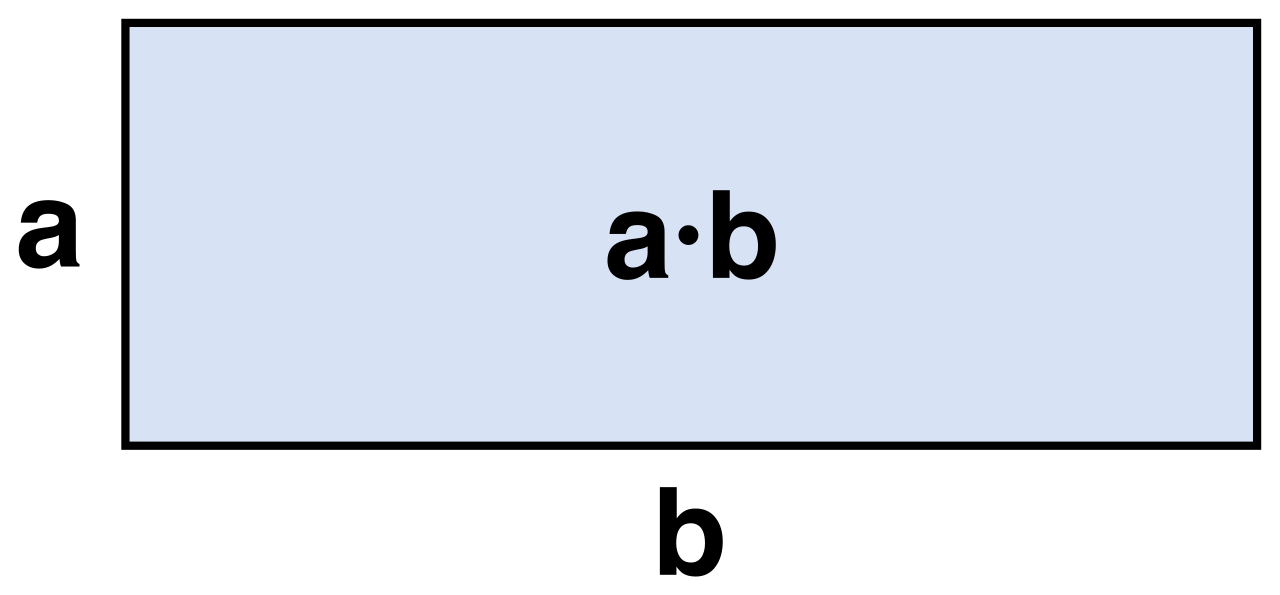
To find the area, we return to our 1×1 standard squares. Imagine a rectangle that has a length of 5 units and a width of 3 units. If you lay down 1×1 squares along the bottom length, exactly 5 of them will fit. Because the width is 3, you can perfectly stack 3 rows of these 5 squares. The total count is 5+5+5, or simply 5×3=15 squares.
Therefore, the area of a rectangle is calculated by multiplying the length of the rectangle by its width. You are merely multiplying the number of columns by the number of rows.
Area of a Rectangle:
A=l×w
The Special Case of the Square
A square is not a different category of shape; rather, it is a specific classification of a rectangle possessing four sides of exactly equal length. It retains the four right angles of a rectangle, but enforces an absolute symmetry upon its boundaries. Let us call this uniform side length s.
Because all four sides are identical, our formulas simplify beautifully. The perimeter of a square is calculated by multiplying the length of one side by four.
Perimeter of a Square:
P=4s
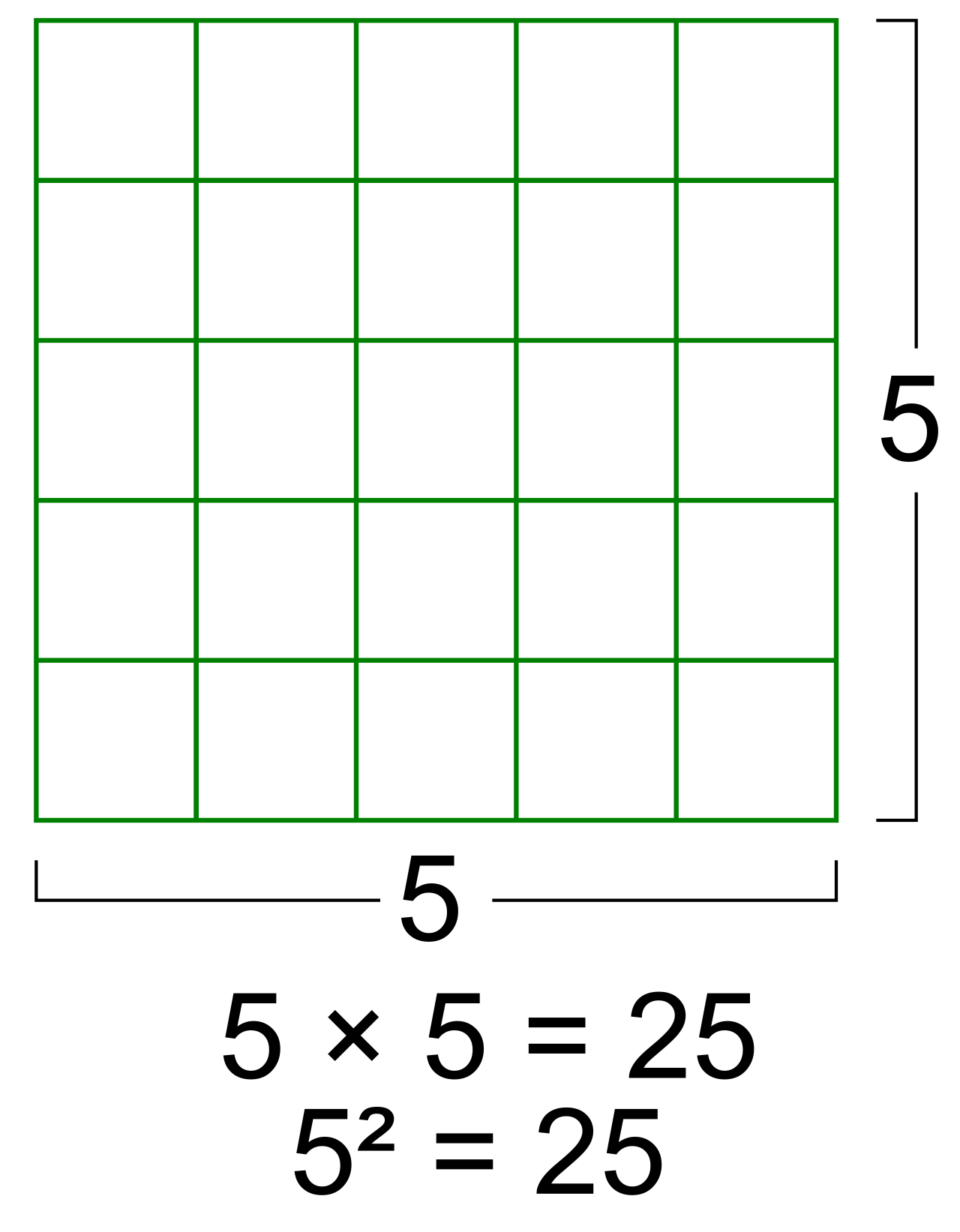
Likewise, the area calculation behaves identically to a rectangle, but since the length and width are the same number, the area of a square is calculated by multiplying the length of one side by itself.
Area of a Square:
A=s×s=s2
Having mastered four-sided, orthogonal shapes, we turn our attention to the simplest possible closed polygon. A triangle is a closed two-dimensional polygon consisting of exactly three sides and three vertices. It is the minimal structure required to enclose space; two straight lines can only ever intersect, but three straight lines can wrap around to form an interior.
Perimeter of a Triangle
Because a triangle lacks the parallel symmetry of a rectangle, there are no guaranteed shortcut formulas for its boundary unless you are dealing with special cases (like equilateral triangles). In the universal case, the perimeter of a triangle is calculated by summing the linear lengths of all three of its sides. If the sides are a, b, and c:
Perimeter of a Triangle:
P=a+b+c
Area of a Triangle
How do we find the area of a shape with slanted sides? You cannot simply stack 1×1 square units neatly inside a triangle; the slanted edges will slice the squares into irregular fractions.
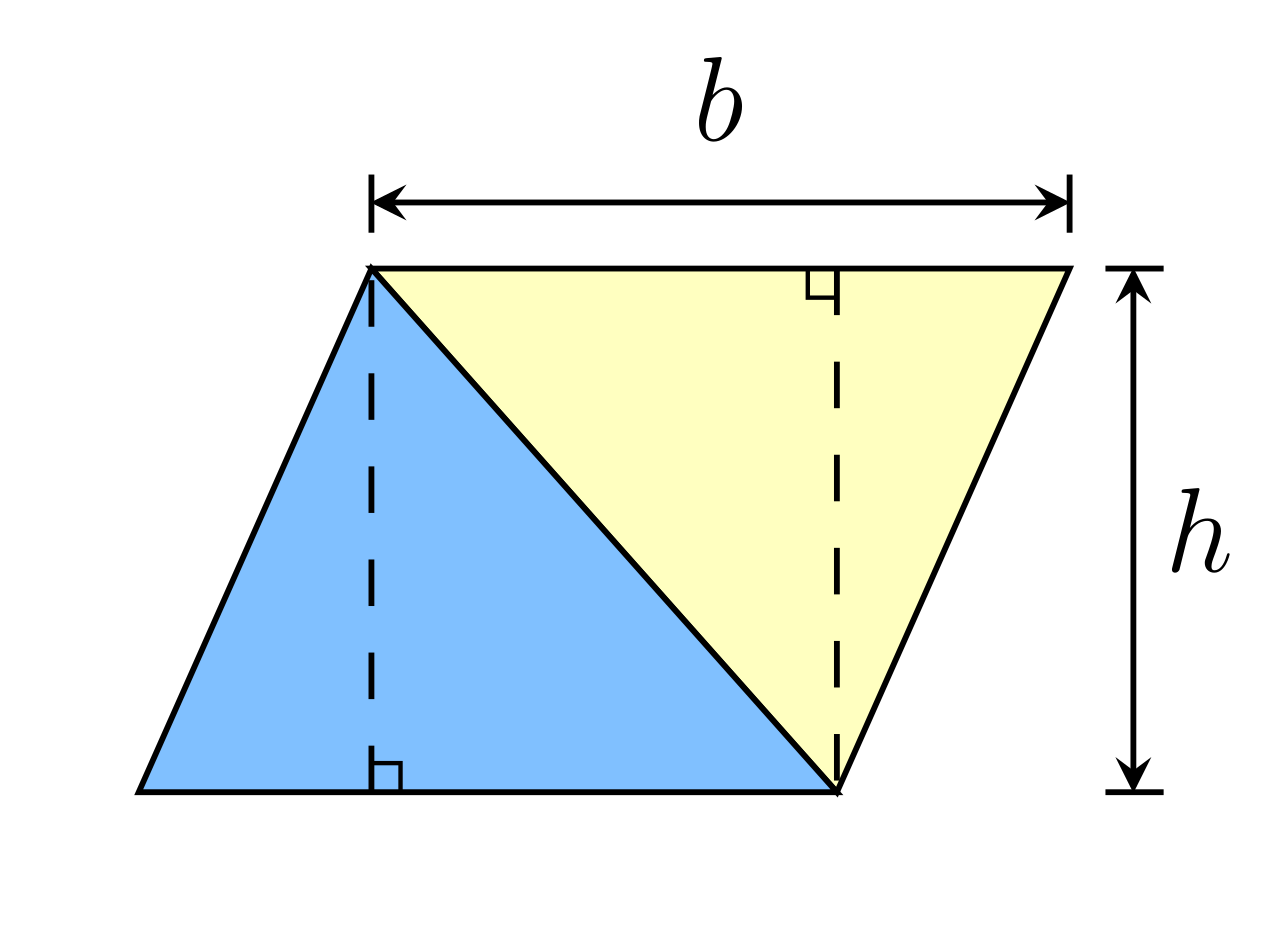
To solve this, mathematicians employ a brilliant visualization. Imagine taking any triangle, copying it exactly, flipping it upside down, and interlocking it with the original. You will inevitably form a four-sided parallelogram (and in specific cases, a rectangle). The area of that larger four-sided shape is simply its base multiplied by its height. Since our original triangle is exactly half of that constructed shape, the area of a triangle is calculated by multiplying one-half times the base times the height.
Area of a Triangle:
A=21×b×h
The formula for the area of a triangle introduces two variables—base (b) and height (h)—which frequently cause confusion for test-takers. The confusion stems from a misunderstanding of what a "height" actually is in geometry.
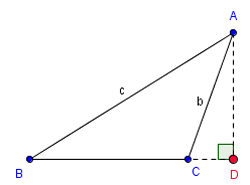
The height of a triangle must always be a perpendicular line segment measured from the chosen base to the opposite vertex. Height measures altitude. It is a line dropped perfectly straight down at a 90∘ angle. It is absolutely crucial to understand that slanting sides are not the height (unless the triangle happens to be a right triangle, which we will discuss momentarily). If you lean a 10-foot ladder against a wall, the top of the ladder is not 10 feet off the ground; the slant reduces the vertical altitude. The same logic applies to triangles.
The Freedom to Choose the Base
A beautiful property of triangles is orientation independence. Any of the three sides of a given triangle can be selected to serve as the base for an area calculation. The area of the space inside the triangle is an absolute physical reality; it does not change if you rotate the shape on the page.
If you pick side a as your base, you must drop a perpendicular height from the vertex exactly opposite to side a. If you choose side b as the base, you must draw a new perpendicular height down to side b. While the numbers for base and height will change depending on your chosen orientation, the final product of 21×b×h will remain identical.
The Elegance of the Right Triangle
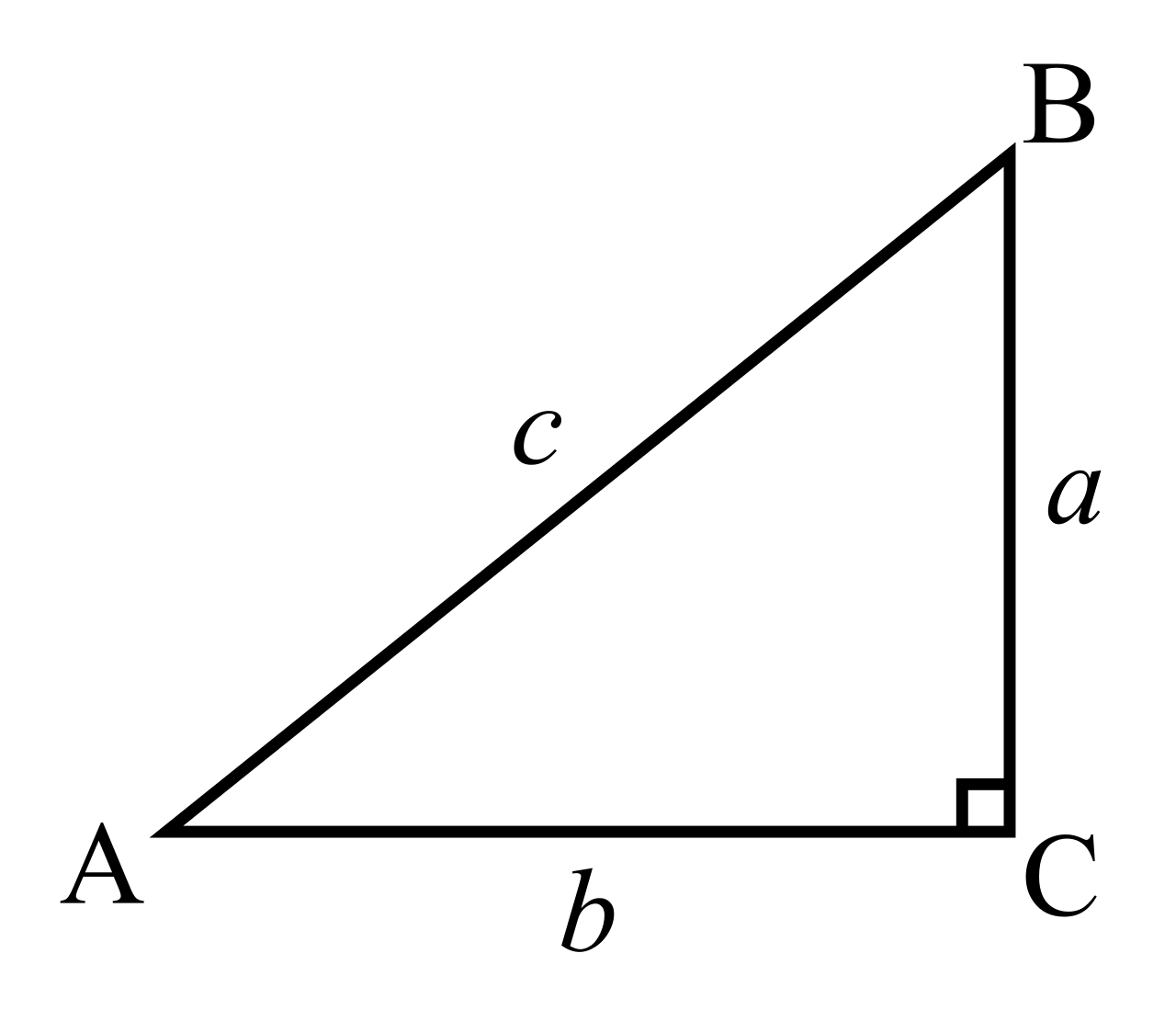
There is one scenario where the sides of the triangle themselves act as the altitude. In a right triangle, the two sides forming the ninety-degree angle function identically to the base and the height for area calculations.
Because the angle between them is already perfectly perpendicular (90∘), one leg serves as the base, and the intersecting leg automatically fulfills the strict requirement of being a perpendicular line segment reaching the opposite vertex. You do not need to drop an artificial altitude line down the middle of the shape. Simply multiply the two orthogonal legs together and cut the result in half.
When you encounter geometry problems on the Praxis Core, the test-makers will not merely ask you to regurgitate these formulas. They will test your conceptual understanding of how these formulas map reality.
You may be given a composite shape—for instance, a house profile made of a triangle sitting atop a rectangle. You must recognize that the total area requires calculating the rectangle's area (l×w) and adding it to the triangle's area (21bh), while ensuring you do not double-count the boundary line they share if asked for the overall perimeter.
You may also see units disguised in practical terms. If a question states that fencing costs $12 per linear foot, and sod costs $4 per square foot, you must immediately recognize the geometry embedded in the economics. Fencing wraps around a boundary; therefore, you multiply the $12 cost by the one-dimensional perimeter. Sod covers a surface; therefore, you multiply the $4 cost by the two-dimensional area.
By grounding yourself in the physical reality of what perimeter and area actually represent, the formulas cease to be an arbitrary alphabet soup of P=2l+2w or A=21bh. They become logical, inevitable expressions of spatial truth. Whether mapping standard geometric squares or calculating perpendicular altitudes, the mathematics of flat polygons is an elegantly interlocked system, waiting only to be unpacked.