Ratios and Proportions
Not sure you’re ready?
Take the ~3-minute readiness diagnostic and see where you stand.
Imagine trying to mix the perfect batch of concrete to lay the foundation of a house. If you dump cement, sand, and gravel into a mixer at random, the foundation will crumble under its own weight. The secret to concrete that can hold up a skyscraper is not the absolute tonnage of materials you use, but the exact relational balance between them. This underlying structural harmony is the essence of ratios and proportions. They allow us to understand how different quantities scale, balance, and interact within the physical world, from the turning gears of a mechanical clock to the scaling of an architectural blueprint.
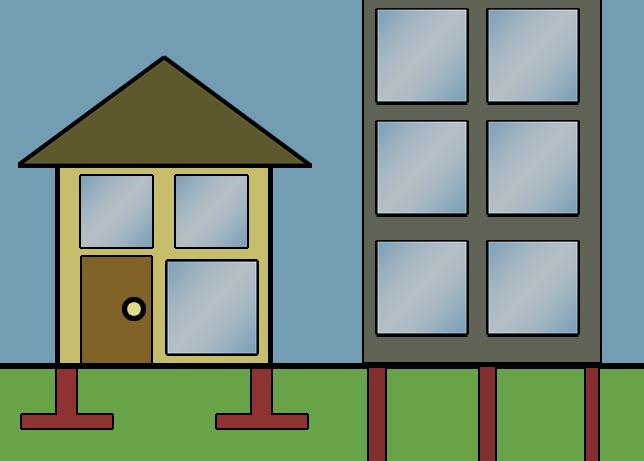
At its core, a ratio is a mathematical relationship comparing the sizes or amounts of two or more quantities. When you state a ratio, you are defining how much of one thing exists in relation to another.
To communicate these relationships, mathematicians use three standard formats. If we are comparing quantity a to quantity b, we can write the ratio as:
- A colon: Expressed in the format a:b.
- A fraction: Expressed in the format ba.
- Verbal language: Expressed using the word 'to', such as "a to b".
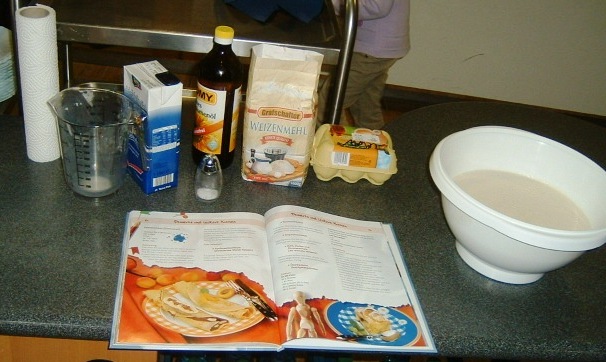
When dealing with ratios, precision is paramount. The order of numbers in a ratio must strictly match the order described in the ratio's corresponding verbal language. If a recipe calls for a ratio of flour to sugar of 3:1, swapping those numbers yields a 1:3 ratio, resulting in a disastrously sweet, flat cake. Because this positional order acts as a strict set of instructions, the ratio a:b is not mathematically equal to the ratio b:a unless quantity a is exactly equal to quantity b.
Ratios allow us to slice up a group of items into different analytical perspectives. Imagine a classroom containing 15 girls and 10 boys.
- A part-to-part ratio compares one specific subset of a group to another specific subset of the same group. The ratio of girls to boys is 15:10. We are comparing two separate pieces of the total population directly to one another.
- A part-to-whole ratio compares one specific subset of a group to the entire group. The ratio of girls to the total number of students is 15:25. Here, the whole (25) is the sum of its parts.
We are not limited to comparing just two things. Often, a system requires multiple components. Ratios comparing three quantities are typically written using colons in the format a:b:c. For example, if we introduce 5 teachers to our classroom, the ratio of girls to boys to teachers becomes 15:10:5.
Crucial Rule: The total number of parts in an a:b:c ratio is calculated by adding the values of a, b, and c together. In our classroom example, the total number of parts representing all humans in the room is 15+10+5=30.
When you zoom in on a photograph, the image gets larger, but the picture itself doesn't distort. The relationship between the height and the width remains unchanged. This brings us to a fundamental concept: Equivalent ratios are distinct ratio expressions that represent the exact same relationship between quantities.
The ratio 1:2 represents the same fundamental relationship as 5:10 or 500:1000. To navigate between these different sizes of the same relationship, we rely on two operations:
- Multiplying every term of a ratio by the same non-zero number creates an equivalent ratio.
- Dividing every term of a ratio by the same non-zero number creates an equivalent ratio.
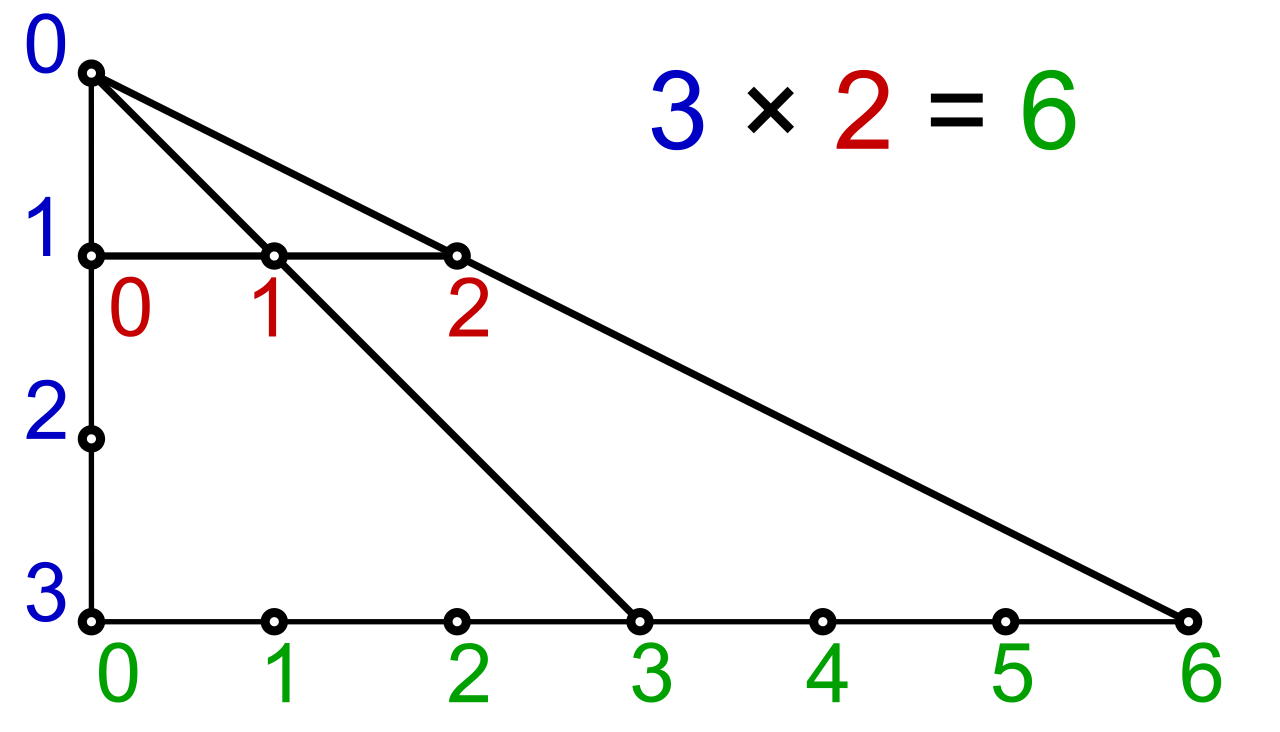
The number you choose to multiply or divide by serves a special function. It acts as a scale factor, which is the single multiplier used to scale all quantities in a given ratio up or down proportionally. If you are tripling a recipe, your scale factor is 3; you multiply every ingredient's quantity by 3.
Just as we can scale up, we can scale down. Ratios are simplified to their lowest terms by dividing all quantities within the ratio by their greatest common factor. If you have a ratio of 20:30, the greatest common factor is 10. Dividing both terms by 10 simplifies the ratio down to its most elegant, fundamental state: 2:3.
It is a common misconception that you can only compare things that are alike. In mathematics, ratios can compare quantities possessing the exact same units of measurement (like measuring a model airplane's wingspan in inches against the real airplane's wingspan in inches).
However, ratios can also compare quantities possessing completely different units of measurement. When we bridge two entirely different dimensions—like distance and time, or money and mass—we give this relationship a special name. A ratio comparing two quantities with entirely different units of measurement is specifically classified as a rate.
When you drive on the highway, you measure your speed in miles per hour. You are comparing miles (distance) to hours (time). Within the world of rates, there is an incredibly useful subcategory: A unit rate is a specific type of ratio where the second quantity in the comparison is exactly one.
If you earn $60 in 4 hours, your rate of pay is 60:4. By dividing both terms by 4, you find your unit rate: $15 per 1 hour. Unit rates are the ultimate tool for comparing value, allowing you to instantly determine which brand of cereal is cheaper per ounce or which car is more fuel-efficient per gallon.
Up until this point, we have treated ratios as standalone concepts. A ratio acts as an independent mathematical expression representing a single comparison. It sits on the page by itself: 43.
But what happens when we connect two equivalent ratios with an equals sign? We create a proportion. A proportion acts as a full equation connecting two independent ratio expressions.
Definition: A proportion is a mathematical equation stating that two different ratios are equal to each other.
A proportion is typically written in the fractional format ba=dc. This structure transforms ratios from descriptive expressions into powerful algebraic tools.
Because a proportion is a full algebraic equation, it allows us to solve mysteries. If we know three out of the four numbers in a proportion, we can always find the missing fourth.
To uncover the missing variable, we use a beautifully efficient mechanism. Cross-multiplication is an algebraic method used to solve for an unknown variable within a proportion.
How does it work? In the proportion ba=dc, the product of a and d equals the product of b and c according to cross-multiplication rules. Visually, you multiply diagonally across the equals sign.
Let's say you know your car travels 150 miles on 5 gallons of gas. You want to know how many gallons (x) you need to travel 450 miles. You set up the proportion: 5150=x450
By cross-multiplying, you multiply 150 by x, and 5 by 450: 150x=2250 Divide both sides by 150, and you discover that x=15. You need 15 gallons of gas.
Cross-multiplication is also the ultimate lie detector for equivalency. Two ratios form a true proportion only if their resulting cross-products are perfectly equal. If someone claims that 32=85, you cross-multiply: 2×8=16, and 3×5=15. Since 16 does not equal 15, the ratios are definitively not proportional.
Often, real-world problems give us the total amount of a mixture and the ratio of its ingredients, but hide the absolute amounts of each individual part. We must reverse-engineer the recipe.
Imagine a landscaper wants 40 pounds of a custom soil blend made of sand and compost in a 3:5 ratio. How much sand is actually in the mix?
First, calculate the total "parts" making up the whole. 3+5=8 total parts. Next, establish the value of a single part. To find an unknown part-to-whole quantity using a ratio, divide the real-world total quantity by the sum of the ratio parts to find the value of one single ratio part. 40 lbs÷8 parts=5 lbs per part
Now that you know one "part" weighs 5 pounds, you can find the actual weight of the sand. The sand constitutes 3 parts, so 3×5=15 pounds of sand.
This logic works equally well in reverse to find the total. The total real-world quantity of a mixture defined by a ratio is calculated by multiplying the value of a single ratio part by the sum of all parts in the ratio. If you were told a single ratio part weighs 5 pounds, and the mixture consists of 8 total parts, you multiply 5×8 to verify the total mixture weighs 40 pounds.
Through ratios and proportions, mathematics transcends mere counting. It becomes the science of relationships, allowing you to seamlessly scale a microscopic architectural blueprint up into a towering steel bridge.