Real-Life Word Problems and Rounding
Not sure you’re ready?
Take the ~3-minute readiness diagnostic and see where you stand.
Mathematics is the rigorous process of stripping away the chaotic, irrelevant details of reality to reveal the pure logical structure beneath. When engineers design a suspension bridge, they do not need to calculate the color of the paint to determine the tension in the steel cables; they extract only the variables that dictate force and mass. Standard mathematical word problems test exactly this faculty. They present a messy, real-world scenario and demand that you extract the mathematical operations hiding within the text, solve the resulting equation, and then translate the abstract numerical answer back into a practical, meaningful quantity. This process—translation, calculation, and contextual approximation—is the fundamental bedrock of applied mathematics.
To solve a word problem, you must first treat the English language as a cipher. Everyday sentences contain precise instructions for mathematical operations, provided you know how to read them.
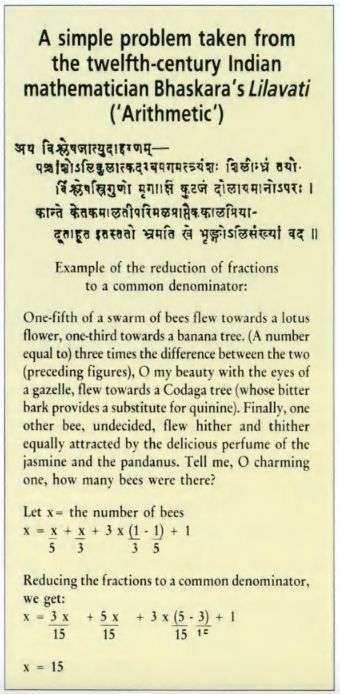
Before we map this vocabulary, we must establish the first rule of mathematical modeling: The Principle of Exclusion. Real-world scenarios are noisy. Therefore, extraneous numerical information in a word problem must be identified and excluded before translating the scenario into a mathematical equation. If a problem states, "A teacher has 30 students and buys 4 boxes of markers on Tuesday for $12 each," and asks for the total cost of the markers, the 30 students and the day Tuesday are irrelevant noise. You must isolate the factors that matter.
Once the noise is stripped away, we look for key structural words that dictate our mathematical operations.
The Dictionary of Operations
Below is the definitive translation guide for converting English prose into mathematical symbols.
| Operation | English Vocabulary | Analytical Context |
|---|---|---|
| Addition (+) | Sum | The word sum in a mathematical word problem indicates an addition operation, usually asking for the total of disparate parts. |
| More than | The phrase more than in a mathematical word problem indicates an addition operation, implying a baseline value has been increased. | |
| Altogether | The word altogether in a mathematical word problem indicates an addition operation, signaling the pooling of quantities. | |
| Subtraction (−) | Difference | The word difference in a mathematical word problem indicates a subtraction operation, measuring the gap between two values. |
| Less than | The phrase less than in a mathematical word problem indicates a subtraction operation, implying a reduction from a baseline. | |
| Remaining | The word remaining in a mathematical word problem indicates a subtraction operation, asking what is left after a portion is removed. | |
| Multiplication (×) | Product | The word product in a mathematical word problem indicates a multiplication operation. |
| Times | The word times in a mathematical word problem indicates a multiplication operation, representing scaling or repetition. | |
| Of | The word of immediately following a fraction or percentage indicates a multiplication operation. (e.g., "half of 10" translates to 21×10). | |
| Division (÷) | Quotient | The word quotient in a mathematical word problem indicates a division operation. |
| Split equally | The phrase split equally in a mathematical word problem indicates a division operation, distributing a total into uniform parts. | |
| Per | The word per in a mathematical word problem often indicates a division operation, establishing a rate (e.g., miles per hour is miles÷hours). | |
| Equivalence (=) | Is | The word is in a mathematical word problem translates to an equals sign. It represents the fulcrum of the equation, balancing the two sides. |

Once we have translated our problem and calculated a raw answer, we are often left with a long string of digits. However, high-precision numbers are rarely practical. You cannot hand a cashier a fraction of a penny, nor can you order 4.362 pizzas. We must approximate, and we do this through a standardized algorithmic process called rounding.
The Geography of Decimals
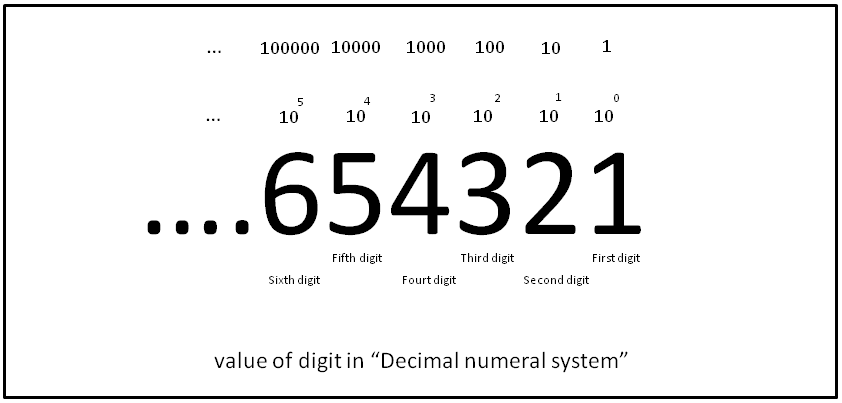
To round correctly, you must first precisely identify the anatomical structure of a decimal number. Moving to the right of the decimal point, the values represent progressively smaller fractions of a whole:
- The tenths place is the first numerical position to the right of the decimal point. (0.1)
- The hundredths place is the second numerical position to the right of the decimal point. (0.01)
- The thousandths place is the third numerical position to the right of the decimal point. (0.001)
The Standard Algorithm of Rounding
Rounding is not guesswork; it is an entirely deterministic algorithm governed by rigid rules. Standard rounding involves identifying the target place value and examining the digit immediately to the right of the target place value. The digit to the right is the sole judge of what happens to your target digit.
Rule 1: The Floor (0–4)
A target digit remains unchanged during rounding if the digit immediately to the right is zero, one, two, three, or four. Because the number is geometrically closer to the lower bound, we "round down" by leaving the target digit exactly as it is.
Rule 2: The Ceiling (5–9)
A target digit increases by one during rounding if the digit immediately to the right is five, six, seven, eight, or nine. Because the number is geometrically closer to the upper bound (or exactly in the middle, by mathematical convention), we bump the target digit up.
Dealing with the Aftermath: Whole Numbers vs. Decimals
Once the target digit has been evaluated and either retained or increased, you must deal with the trailing digits. The rules here diverge wildly depending on whether your target digit was part of a whole number or a decimal fraction.
- Whole Numbers: All digits to the right of a rounded whole number target digit must be converted to zeros.
- Example: Round 4,382 to the nearest hundred. The target is 3. The digit right is 8. The target becomes 4. The trailing digits must hold the spatial geometry of the number, so they become zeros. The answer is 4,400. (If you dropped them, your answer would be 44, which is absurdly wrong).
- Decimals: All digits to the right of a rounded decimal target digit must be entirely removed from the final number.
- Example: Round 6.73 to the nearest tenth. The target is 7. The digit right is 3. The target stays 7. The trailing digits are dropped entirely. The answer is 6.7. Writing 6.70 incorrectly implies precision to the hundredths place.
The Domino Effect: Rounding Nines
A fascinating mechanical exception occurs when you are forced to round up a target digit that is a 9. Because a single digit cannot hold a value of 10, we experience a cascade.
When rounding up a target digit of nine, the nine becomes a zero and the digit immediately to its left increases by one. If the digit to the left is also a nine, the cascade continues leftward until it hits a non-nine digit.
- Example: Round 13.97 to the nearest tenth. The target is 9. The digit right is 7, telling us to round up. The 9 becomes a 0, pushing a +1 to the 3 to its left, making it a 4. The trailing 7 is removed entirely. The final answer is 14.0.
Standard rounding algorithms apply to pure, abstract mathematics. However, word problems represent the physical world. Physical reality imposes absolute constraints that utterly override standard rounding rules. You must look at the nature of the things you are counting.
The Currency Constraint
When dealing with money, standard rounding applies, but the target place value is dictated by the currency system. Financial calculations in standard word problems generally require rounding to the nearest hundredth to accurately represent cents. If a calculation results in $14.568, standard rounding dictates an answer of $14.57, because the smallest transacting denomination is the penny.

The Ceiling Constraint: Discrete Containers
Imagine you are planning a school field trip for 132 students, and each bus holds 40 students. You divide 132 by 40 to get 3.3 buses.
If you apply standard rounding, 3.3 rounds to 3 buses. But what happens in reality? Three buses hold 120 students, leaving 12 children stranded on the sidewalk. Because buses are physical, indivisible objects, you must order a 4th bus.
Word problems asking for the number of discrete containers needed to hold a continuous amount require rounding up to the next whole integer regardless of the calculated decimal value. Whether the math yields 3.1 or 3.9, you require 4 complete containers (or buses, boxes, or cans of paint) to encompass the total amount.
The Floor Constraint: Maximum Whole Items
Conversely, imagine you are a carpenter building birdhouses. You have 17 feet of lumber, and each birdhouse requires 3 feet. You divide 17 by 3 to get 5.66 birdhouses.
Standard rounding rules would tell you to round 5.66 up to 6. But physical reality intervenes: you do not have enough wood to materialize a 6th birdhouse out of thin air. You only have enough material to complete 5 full items.
Word problems asking for the maximum number of whole items that can be created from a limited resource require rounding down to the nearest integer. Regardless of how close your decimal gets to the next whole number, if you lack the resources to finish it, the fractional part must be discarded.