Solving Linear Equations in One Variable
Not sure you’re ready?
Take the ~3-minute readiness diagnostic and see where you stand.
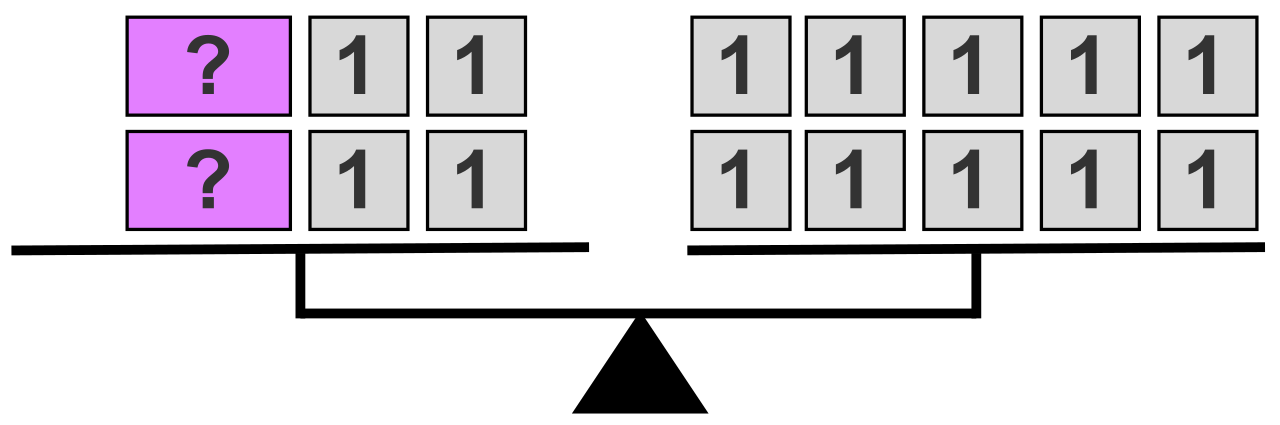
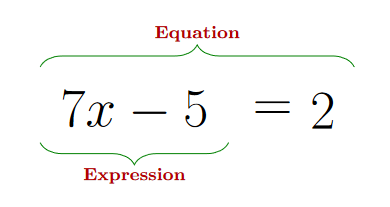
An equation is not a command to compute; it is a statement of absolute balance. When we observe the mathematical phrase representing a linear equation in one variable—an algebraic equation that can be written in the standard form ax+b=c—we are looking at a system in perfect equilibrium. The equal sign acts as an unyielding fulcrum. Whatever numerical weight rests on the left side of that sign must exert the exact same gravitational pull as the mathematical weight on the right side. Our objective as mathematicians is to strip away the complex numbers surrounding our unknown quantity without ever tipping the scale. This process, known as isolating a variable, means mathematically manipulating an equation so the target variable stands completely alone on one side of the equal sign.

To manipulate our equation without destroying its balance, we must follow strict rules of conservation. These rules are known as the Properties of Equality, and they act as our foundational tools for altering the landscape of an equation while preserving its underlying truth.
The Addition Property of Equality states that adding the same number to both sides of an equation maintains absolute equality.
The Subtraction Property of Equality states that subtracting the exact same number from both sides of an equation maintains absolute equality.
The Multiplication Property of Equality states that multiplying both sides of an equation by the same non-zero number maintains equality.
The Division Property of Equality states that dividing both sides of an equation by the same non-zero number maintains equality.
If you add a 5-pound weight to the left pan of a balance, the scale will tip heavily—unless you simultaneously add a 5-pound weight to the right pan. This is the essence of these properties. Whatever operation you apply to the left side, you must faithfully replicate on the right.
Unwinding the Knot: Inverse Operations
Having established how we are permitted to change an equation, we must decide what changes to make. We want to peel away the numbers attached to our variable. To do this, we use the principle of undoing.
Inverse operations are pairs of specific mathematical operations that systematically undo each other. Think of them as tying and untying a knot.
- Addition and subtraction are mathematical inverse operations. If a variable has 7 added to it, subtracting 7 will neutralize the operation.
- Multiplication and division are mathematical inverse operations. If a variable is multiplied by 4, dividing by 4 liberates it.
Single-Step Equations
The simplest scenario we face is an equation where only one operation stands between us and our isolated variable. Solving a single-step equation requires applying the inverse operation of the mathematical operation performed on the variable.
If we are presented with x+9=15, we observe that 9 is being added to x. We apply the inverse operation—subtraction—and subtract 9 from both sides using the Subtraction Property of Equality. The variable falls out effortlessly: x=6.
Multi-Step Equations
Nature, however, rarely hands us neatly packaged single-step problems. Multi-step linear equations require applying two or more sequential inverse operations to fully isolate the variable.
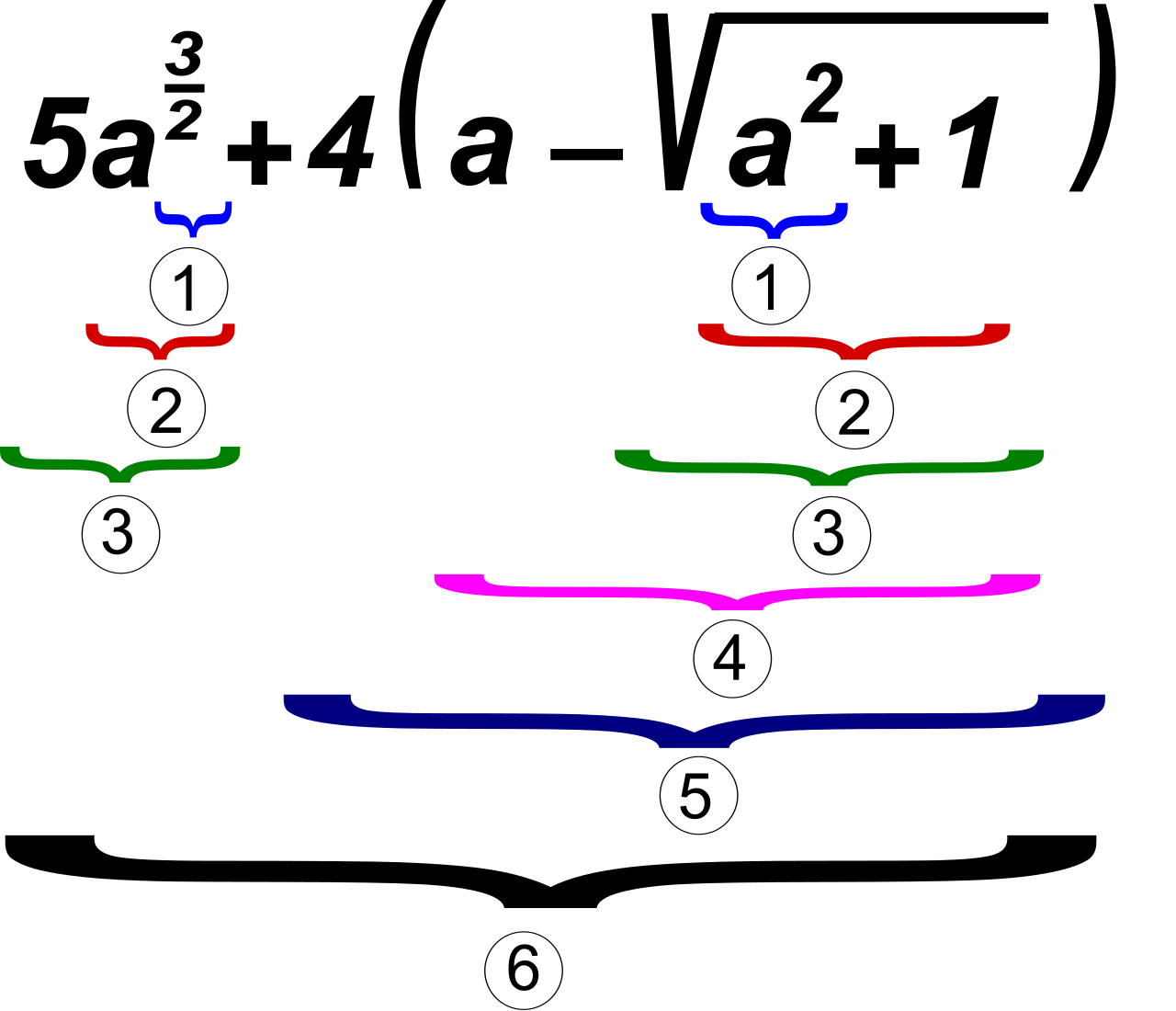
When unwrapping a multi-step equation, we generally reverse the traditional order of operations (PEMDAS). We clear away loose addition and subtraction first, saving the multiplication and division for the end.
Consider the equation 3x−4=11.
- First, we neutralize the subtracted 4 by adding 4 to both sides. The equation simplifies to 3x=15.
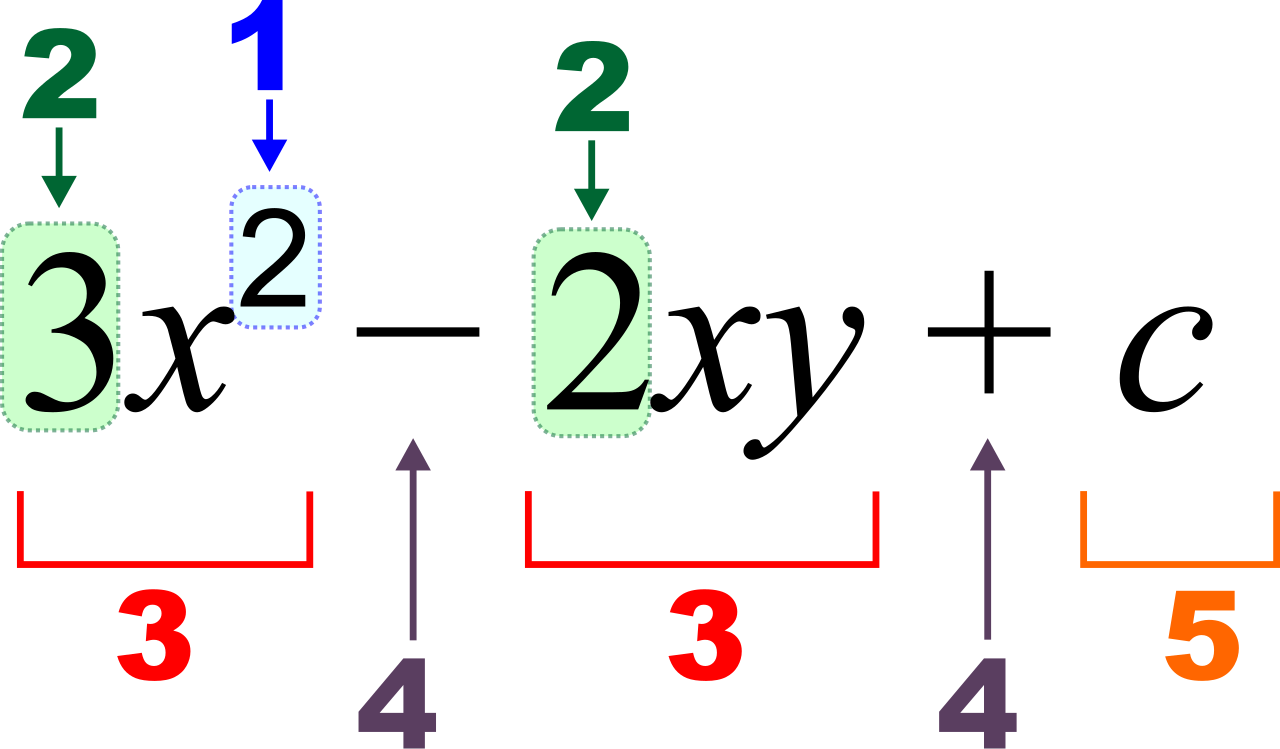
- Now we must address the coefficient. A coefficient is the specific numerical factor multiplied by a variable within an algebraic term. Here, the coefficient is 3.
- The final step in isolating a variable typically involves dividing both sides of the linear equation by the mathematical coefficient of the variable. We divide both sides by 3, achieving our goal: x=5.
Attempting to solve an equation while it is cluttered with parentheses and scattered variables is like trying to build a delicate watch on a messy desk. Before we can use our inverse operations to cross the equal sign, we must organize each independent side of the equation.
The Distributive Property
The Distributive Property must often be applied to eliminate parentheses before attempting to isolate a variable in a linear equation.
If you see 4(x+3), you cannot simply subtract 3. The 3 is trapped inside the parentheses, scaled up by the factor of 4 resting outside. What does the math demand? The Distributive Property dictates that multiplying a sum by a number gives the same result as multiplying each addend by the number and adding the products. You must distribute the 4 to both the x and the 3, transforming the expression into 4x+12. Now, the terms are free to be manipulated.
Consolidating Like Terms
Once parentheses are shattered, we look for redundancies. Like terms are algebraic terms that contain the exact same variables raised to the exact same exponent powers. For example, 5x and 2x are like terms; 5x and 2x2 are not.
Like terms must be combined on each independent side of a linear equation before applying properties of equality across the equal sign. If the left side of your equation reads 2x+5+3x=20, you must first combine 2x and 3x to create a clean, singular term (5x+5=20) before you begin moving values across the fulcrum.
Variables on Both Sides
Often, a variable will appear on both the left and right sides of the equal sign, like so: 7x−2=4x+10. You cannot solve for a variable if it is split across the balance scale. Properties of equality must be used to collect all variable terms on a single side if variables exist on both sides of a linear equation.
By treating a whole algebraic term (like 4x) exactly as we treat a constant number, we can use the Subtraction Property of Equality to subtract 4x from both sides. 7x−4x−2=10⟹3x−2=10. Suddenly, our complex equation is a manageable multi-step equation.
Some students panic when an equation is infested with fractions or decimals. But as mathematicians, we control the structure of the equation. We can systematically sweep these inconveniences away before solving.
| Strategy | Methodology | Example |
|---|---|---|
| Clearing Fractions | Fractions can be systematically cleared from a linear equation by multiplying every single term on both sides by the least common denominator. By leveraging the Multiplication Property of Equality, the denominators cancel out entirely, leaving only integers. | For 21x+31=2, multiply everything by 6. Result: 3x+2=12. |
| Clearing Decimals | Decimals can be systematically cleared from a linear equation by multiplying every single term on both sides by an appropriate power of ten. If the longest decimal goes to the hundredths place, multiply both sides entirely by 100. | For 0.05x+1.2=3.45, multiply everything by 100. Result: 5x+120=345. |
When we solve linear equations, we are essentially interrogating the mathematics to discover the conditions under which it tells the truth. There are exactly three possible realities that can emerge from this interrogation.
1. Exactly One Solution (The Conditional Equation)
This is the most common outcome. A linear equation with exactly one solution results in a final simplified statement where the variable equals a specific numerical value. If our algebra leads us to x=8, the equation is true under one rigid condition: the variable must be precisely 8. Any other number will cause the equation to collapse into falsehood.
2. Infinitely Many Solutions (The Identity)
Sometimes, an equation is structured so that the left side is perfectly identical to the right side from the start, just wearing different algebraic clothing.
An identity equation is a mathematical equation that is true for all possible real numerical values of the variable. If we attempt to solve an equation like 2(x+3)=2x+6, we might subtract 2x from both sides, eliminating the variable completely. What remains? 6=6.
Solving an identity linear equation algebraically results in a true numerical statement containing no remaining variables. As a concrete example, the mathematical statement 5=5 is an example of a true statement indicating an equation has infinitely many possible solutions. Because 5 is always equal to 5, the original equation will balance no matter what number you substitute for x.
3. No Solution (The Contradiction)
In rare cases, an equation makes an impossible demand. It creates a contradiction that violates the laws of mathematics.
A linear equation with no solution results in a mathematically false statement after all variables are algebraically eliminated. Imagine solving x+4=x+8. If we subtract x from both sides, the variables vanish entirely, and we are left staring at 4=8.
The mathematical statement 3=7 is an example of a completely false statement indicating an equation has absolutely no solution. Because 3 will never equal 7, there is no real number in the universe you could plug into that equation to make it true.
A theoretical physicist does not simply publish an equation and walk away; they test it against reality. In algebra, our experimental test is the "check" phase.
Checking an algebraic solution requires substituting the calculated numerical value back into the original equation in place of the corresponding variable. You simply rewrite the original, un-manipulated equation, erase every instance of the variable, and write in the number you found. Then, you simplify each side using the standard order of operations.
- An algebraic solution is verified as absolutely correct if substituting the solution into the original equation produces exactly equal values on both sides. If your final line of arithmetic reads 14=14, you have irrefutable proof that your answer is correct.
- Conversely, an incorrect algebraic solution produces different numerical values on the left and right sides of the equal sign when substituted back into the original equation. If your check results in 12=15, the scale is tipped. You have isolated the variable incorrectly and must retrace your steps to find the error.
By systematically applying the properties of equality, strategically utilizing inverse operations, clearing mathematical clutter, and rigorously testing your findings, you cease to be someone merely manipulating symbols. You become a master of maintaining equilibrium.