Finding Supporting Ideas and Specific Details
Not sure you’re ready?
Take the ~3-minute readiness diagnostic and see where you stand.
Consider the structure of a steel bridge. The sweeping suspension cables and towering arches represent the overarching design—the main idea—but the structural integrity relies entirely on the thousands of specific steel rivets binding the beams together. If you are asked to evaluate the bridge's stability, you do not merely gesture at its silhouette; you inspect the rivets. In academic reading, these rivets are the explicit, supporting details. A text’s central argument is an abstract claim until it is anchored by empirical evidence, historical precedent, or logical exposition. When reading for comprehension, distinguishing between the grand design and the structural rivets is not just a theoretical exercise; it is the fundamental mechanics of evidence-based reasoning.

As future educators, you are going to spend your careers dealing with claims. A student will claim a dog ate their homework. A textbook will claim that the industrial revolution fundamentally altered global economics. But a claim sitting all by itself is weak. It wobbles. To make it stand up, the author has to build a scaffold underneath it, and that scaffold is made of supporting details.

Supporting details are specific pieces of information that explain or validate the main idea of a text. If the main idea is your destination, the supporting details are the exact turns you take to get there. For the purposes of the Praxis reading exam, we are deeply interested in explicit details. These are not hidden, implicit meanings you have to guess at in the dark; explicit details are stated directly within the text. They are right there on the page, waiting to be pointed at.
Authors do not just throw details at a page randomly. They choose their tools carefully based on what the argument requires. Supporting ideas can take the form of statistics, anecdotes, expert quotes, or historical examples. Each has a specific psychological and logical job:
- Statistics provide quantifiable evidence to support a claim made by an author. If an author says, "The new literacy program saves the district money," that is an unsupported claim. If they write, "The literacy program saves the district $50,000 annually," they have provided a statistical rivet.
- Anecdotes provide short illustrative narratives to clarify a broader concept in a text. Sometimes raw numbers are too dry to connect with the reader, so an author tells a brief story about one specific student's breakthrough. It makes the abstract concept concrete.
You can often spot these details arriving because authors use transition phrases to guide your attention. Signal words like 'for example', 'specifically', or 'in particular' frequently precede explicit supporting details. When you see those words, the author is flashing a neon sign saying: Here comes the evidence!
Reading isn't just about knowing what is written; it's about understanding why it's written. The structural role of a supporting detail is the specific function that detail serves in advancing the overall argument of the author.
Does a detail exist to introduce a counterargument? Is it there to establish a timeline? Is it illustrating a disastrous consequence? The Praxis Core Reading test includes questions requiring test-takers to identify the function of a specific sentence within a paragraph.
When you encounter this, do not just read the targeted sentence in a vacuum. Look at the sentence immediately preceding it and the one following it. Ask yourself, "If I surgically removed this exact sentence, what would the paragraph's argument lose?" The answer to that question is its structural function.
Let's talk about the specific environment you will be operating in. The Praxis 5713 Reading exam is an objective selected-response test. This means there is no room for subjective, poetic interpretation on these questions. There is one objectively correct answer, and it is derived entirely from the ink on the page.
Because of this rigid format, correct answer choices for explicit detail questions must rely solely on information provided within the text. Test-takers must locate exact evidence in the passage to answer detail-oriented questions. You cannot rely on a vague memory of what the passage "felt" like; you have to go back and put your finger on the evidence.
How do you know you're dealing with one of these questions? Detail-oriented questions often use phrases like 'according to the passage' or 'the author states'. When you see those words, your strategy must shift from passive reading to active hunting.
To find these explicit details efficiently, employ two core tools:
- Keyword matching: This involves identifying unique, highly specific terms in the question prompt—such as a specific year, a proper noun, or a rare scientific term—and finding those same terms in the text.
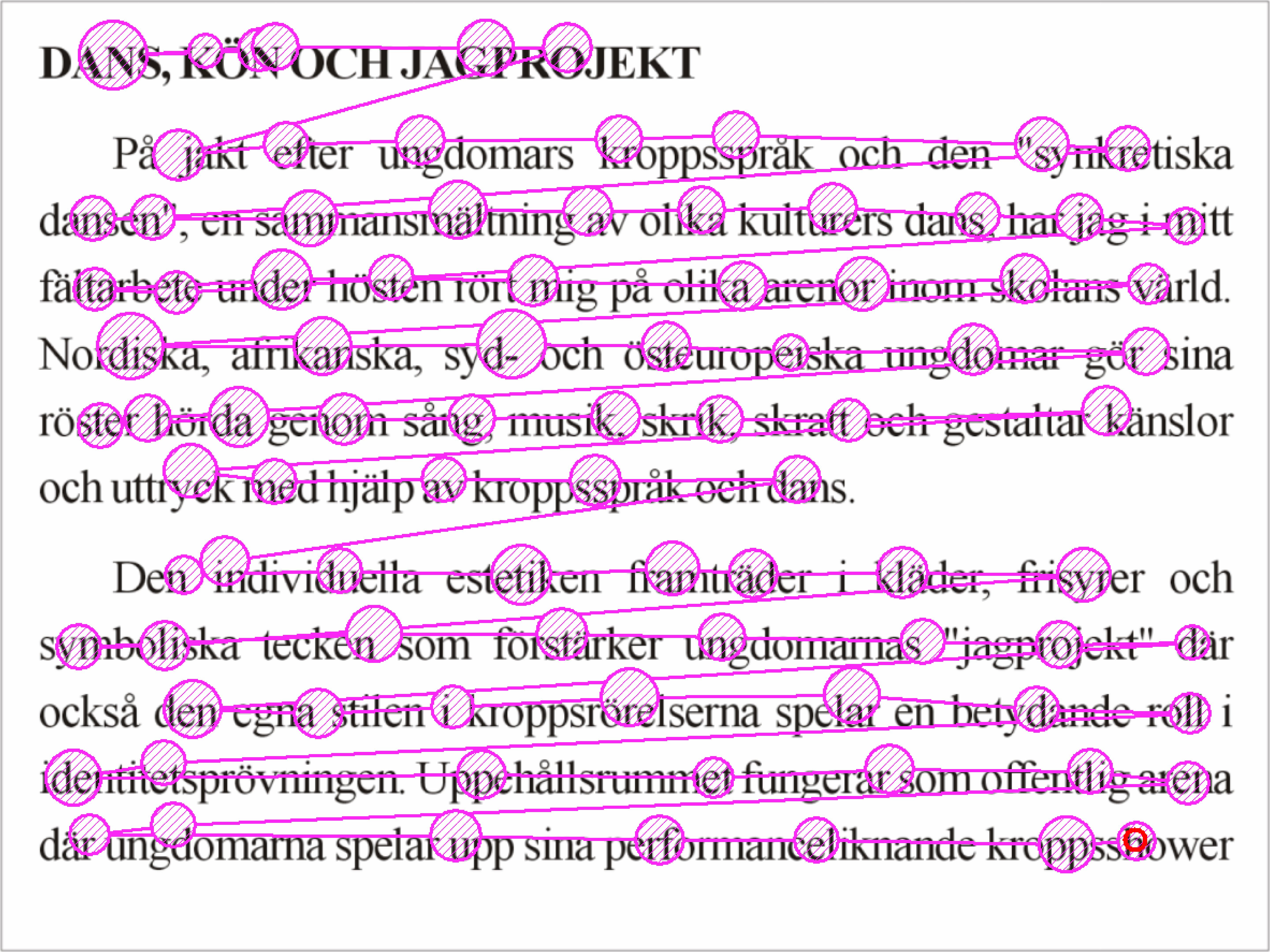
- Scanning: Once you have your target keywords, scanning is a reading technique used to quickly locate specific words or phrases within a passage. You do not re-read every single word; your eyes sweep the text vertically and horizontally, like a radar dish looking for a blip, until you spot your keyword.
Here is where the test-makers get exceptionally clever. You scan the text, you find your keyword, you read the sentence, and then you look down at the multiple-choice options. But the exact sentence you just read isn't there!
Why? Because correct answers to supporting detail questions frequently paraphrase the exact wording used in the original passage. A paraphrase retains the original meaning of a detail without using the exact same vocabulary.
If the passage states, "The implementation of the new policy caused a precipitous decline in tardiness," the correct answer choice might say, "The recent rule change led to a sharp drop in late arrivals." It is the exact same underlying concept, simply wearing a different coat of paint.
Occasionally, the exam will ask you to zoom out slightly and identify an accurate summary of supporting ideas. An accurate summary of supporting ideas captures the essential points without adding outside information. It is like a well-drawn map: it shows you the major mountains and rivers, but it intentionally leaves out every single tree. Consequently, a supporting idea summary must omit minor irrelevant details to accurately represent the core supporting argument. If an answer choice gets bogged down in one highly specific, obscure statistic when you are asked for a summary, it is missing the forest for the trees.
In a selected-response test, the incorrect options are not just randomly generated words. They are carefully engineered psychological traps known as distractors. Eliminating answer choices containing unsupported claims increases the probability of selecting the correct supporting detail.
Understanding how these traps are built is half the battle. Here is a field guide to the most common distractors you will encounter:
| Trap Type | How It Works | Why It Fails |
|---|---|---|
| The Real-World Truth | Distractor answer choices often contain information that is factually true in the real world outside the text. | As an educator, your brain loves correct information. But the question asks what the author stated, not what is historically or scientifically true. If it is not in the text, it is wrong. |
| True But Irrelevant | A distractor answer choice may contain a true statement from the passage that fails to answer the specific question asked. | It is a real rivet, but it belongs to a different part of the bridge. Always double-check that the detail you select actually answers the specific prompt. |
| The Extreme Paraphrase | Extreme language in an answer choice often indicates an incorrect paraphrase of a more moderate supporting detail. | If the author writes, "Many students struggle with algebra," and the answer choice says, "All students struggle with algebra," the paraphrase is broken. |
| The Rotten Apple | Incorrect answer choices sometimes combine a true supporting detail from the text with a false assertion. | Half-true is entirely false. If 90% of an answer choice is a brilliant, accurate paraphrase, but the last three words contradict the text, the entire option must be thrown out. |
Feynman's Warning on "Absolute" Language: In rigorous science and academic reading, we are very careful about claiming that an event happens every single time without exception. The universe is messy, and texts are usually nuanced. Absolute words like 'always', 'never', or 'all' frequently signal incorrect answer choices in explicit detail questions. Unless the author explicitly used absolute language in the passage itself, an absolute answer choice is almost certainly a trap.
By treating the text as your only universe of facts, scanning for explicit evidence, and ruthlessly eliminating distractors that warp the author's original words, you will master the architecture of reading comprehension. You are not just learning to pass a test; you are mastering the precise evaluation of evidence—a skill you will soon pass on to the next generation of learners.