Recognizing Similarities Across Reading Selections
Not sure you’re ready?
Take the ~3-minute readiness diagnostic and see where you stand.
When two independent observers examine the same phenomenon, their resulting accounts will invariably overlap in underlying logic while diverging in perspective. The Praxis Core Reading exam utilizes paired passages to test a candidate's ability to correlate concepts across two different texts in exactly this manner. For aspiring educators, this is not merely an academic exercise; it is the daily reality of teaching. Every day, teachers must synthesize competing educational theories, reconcile differing historical accounts for their students, and recognize when two seemingly distinct classroom behaviors stem from the exact same psychological root.
Mastering this skill on the exam requires looking past the superficial words printed on the page to identify the structural, logical, and thematic geometry operating beneath the surface.
To understand how two texts relate, you must first understand them in isolation. Recognizing similarities across reading selections requires identifying the central theme of a primary text before evaluating secondary texts. You cannot map a connection between Passage A and Passage B until you have firmly established the center of gravity in Passage A.
Once the primary theme is established, evaluating cross-text similarities requires comparing the primary purpose of each passage. Ask yourself: Why was this written? Is Author A attempting to persuade, while Author B is attempting to inform?
When examining these relationships, do not be fooled by the emotional volume of the writing. Two authors can share a central thematic idea while employing entirely different rhetorical tones. Imagine two teachers discussing the necessity of recess. One might deliver an impassioned, furious defense of physical play (a highly emotional tone), while the other provides a dry, statistical analysis of kinetic learning (a detached, academic tone). Despite the stark contrast in how they sound, both share the exact same thematic idea: physical activity is crucial for student development.
Furthermore, you must rigorously police the difference between words and ideas. Test-takers must distinguish between superficial overlapping vocabulary and major shared thematic concepts when evaluating text similarities.
| Concept Profile | Example Scenario | Verdict for Correlation |
|---|---|---|
| Superficial Vocabulary Overlap | Passage A discusses the "budget" for a school play. Passage B discusses the state "budget" for highway infrastructure. | False Similarity. The word is identical, but the themes and contexts are completely divorced. |
| Shared Thematic Concept | Passage A argues that standardized testing narrows curriculum. Passage B argues that rigid pacing guides stifle teacher creativity. | True Similarity. The vocabulary differs, but the central theme—strict educational mandates limit pedagogical freedom—is identical. |
When the Praxis presents you with opposing viewpoints, your instinct will be to focus on the conflict. However, to correlate concepts effectively, you must learn to look at what holds the conflict together. Finding similarities across texts requires temporarily filtering out the contrasting viewpoints to isolate the shared background information. Two people cannot argue about a concept unless they first agree that the concept exists.
This often occurs at the base level of the texts. A point of agreement between two opposing passages is frequently located in the foundational definitions provided by both authors. If Author A believes phonics is the only way to teach reading, and Author B believes whole-language immersion is superior, their point of agreement is not their methodology; their point of agreement is the foundational definition that literacy is a primary goal of early education.

To locate these hidden agreements, look for three elements:
- The Intersecting Subtopic: Integrating knowledge across multiple texts involves pinpointing the exact subtopic where the arguments of both authors intersect. They may disagree broadly on a macro-level topic like "technology in the classroom," but they might intersect and agree on a specific subtopic, such as "blue light from screens causes eye strain."
- Shared Assumptions: A shared assumption is an unstated, underlying premise relied upon by multiple authors to build their respective arguments. Think of assumptions as the unseen foundation of a house. If both authors argue about how to allocate funding for a new science lab, they both share the unstated assumption that a new science lab is valuable and necessary.
- Parallel Attitudes: Parallels between two distinct reading selections frequently exist in the authors' attitudes toward the subject matter. Even if they discuss different subjects, if both authors convey a profound skepticism toward unverified data, their attitude is the connective tissue.
One of the most cognitively demanding tasks on the Praxis Core Reading is moving logic from the world of the text into the real world. To achieve this, Praxis Core Reading questions frequently present a hypothetical scenario to test analogous reasoning skills.
Analogous reasoning questions require a test-taker to match the underlying logic of a situation in a passage to a completely new scenario. As an educator, you do this intuitively. If you understand the pedagogical concept of "scaffolding"—providing temporary support to a student until they can perform a task independently—you can recognize that using training wheels to teach a child to ride a bike is an analogous situation.

How do we systematically solve these questions? By abstracting the rule.
The Rule of Abstraction: Applying a concept from a passage to a new situation requires abstracting the specific details into a generalized rule.
Generalizing a rule involves stripping away the specific characters and settings of a passage to reveal the core mechanism of the situation.
Let us view this through an analytical lens. Suppose a passage describes a historical event where "A local mayor banned a popular book to suppress dissent, which paradoxically caused citizens to seek the book out in record numbers."
- Step 1: Strip away specific characters and settings. Remove the mayor, the book, and the citizens.
- Step 2: Reveal the core mechanism. The underlying rule is: Attempting to forcibly restrict access to something inadvertently increases the public's desire for it.
- Step 3: Match to a new scenario. Which hypothetical scenario matches? "A parent forbids their teenager from listening to a specific genre of music, prompting the teenager to secretly download the entire discography."
The logic is perfectly parallel. The analogous reasoning is complete.
Sometimes, the connection between two texts has nothing to do with what the authors are saying, and everything to do with how they are saying it. Similarities across texts can occur purely in the argument structure used by the authors.
Just as two different buildings can share the same architectural blueprint, two different arguments can share the same logical progression. An argument structure similarity exists when two different authors use the exact same logical progression to reach their distinct conclusions.
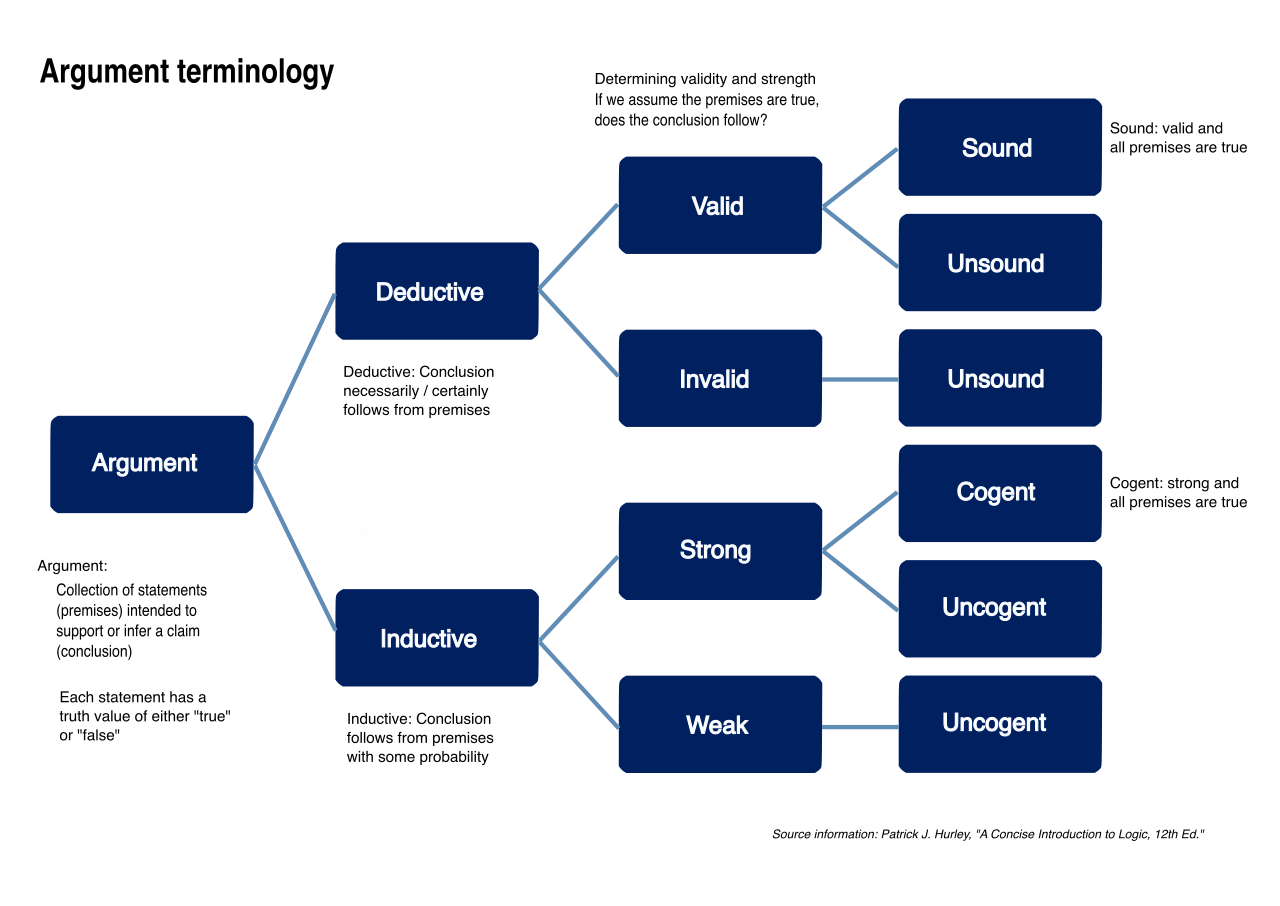
Consider the following structural progression:
- Identify a traditional practice.
- Provide empirical data demonstrating the practice's failure.
- Propose a novel, alternative solution.
Author A might use this structure to argue for a new method of grading mathematics. Author B might use this exact same structure to argue for a new method of urban waste management. The topics are entirely unrelated, but the argument structure is identical.
Similarly, pay close attention to the nature of the proof provided. Identifying overlapping evidence requires noticing when two different texts cite analogous facts to support their claims. If Passage A supports its claim about climate change by citing the migration patterns of arctic birds, and Passage B supports its claim about urban sprawl by citing the displacement patterns of suburban deer, both texts are relying on overlapping evidence: disruptions in animal geographic distribution.
The final tier of cross-text analysis requires you to actively place the two authors in a hypothetical room and force them to interact. Synthesizing information demands combining explicit details from two separate texts to form a unified conclusion. You are no longer just comparing; you are actively building a new, broader understanding by taking a premise from Passage A and combining it with a factual finding from Passage B.
This synthesis culminates in a very specific type of exam inquiry. Cross-text questions frequently ask how the author of one passage would likely respond to a specific claim made in a second passage.
To accurately predict this interaction, you must act as a psychological profiler for the authors. Predicting one author's response to another author requires a clear understanding of the first author's main argument and core values. You cannot guess what Author A will say to Author B based on a whim; you must root your prediction strictly in the evidence of Author A's values as established in their text.
If Author A's core value is strict adherence to empirical data, and Author B makes a claim based on anecdotal emotional experience, Author A will unequivocally reject Author B's claim on the grounds of insufficient evidence. By mastering the core values of the primary text, the response to any secondary text becomes a matter of inevitable logical deduction.