Drawing Conclusions from Material
Not sure you’re ready?
Take the ~3-minute readiness diagnostic and see where you stand.
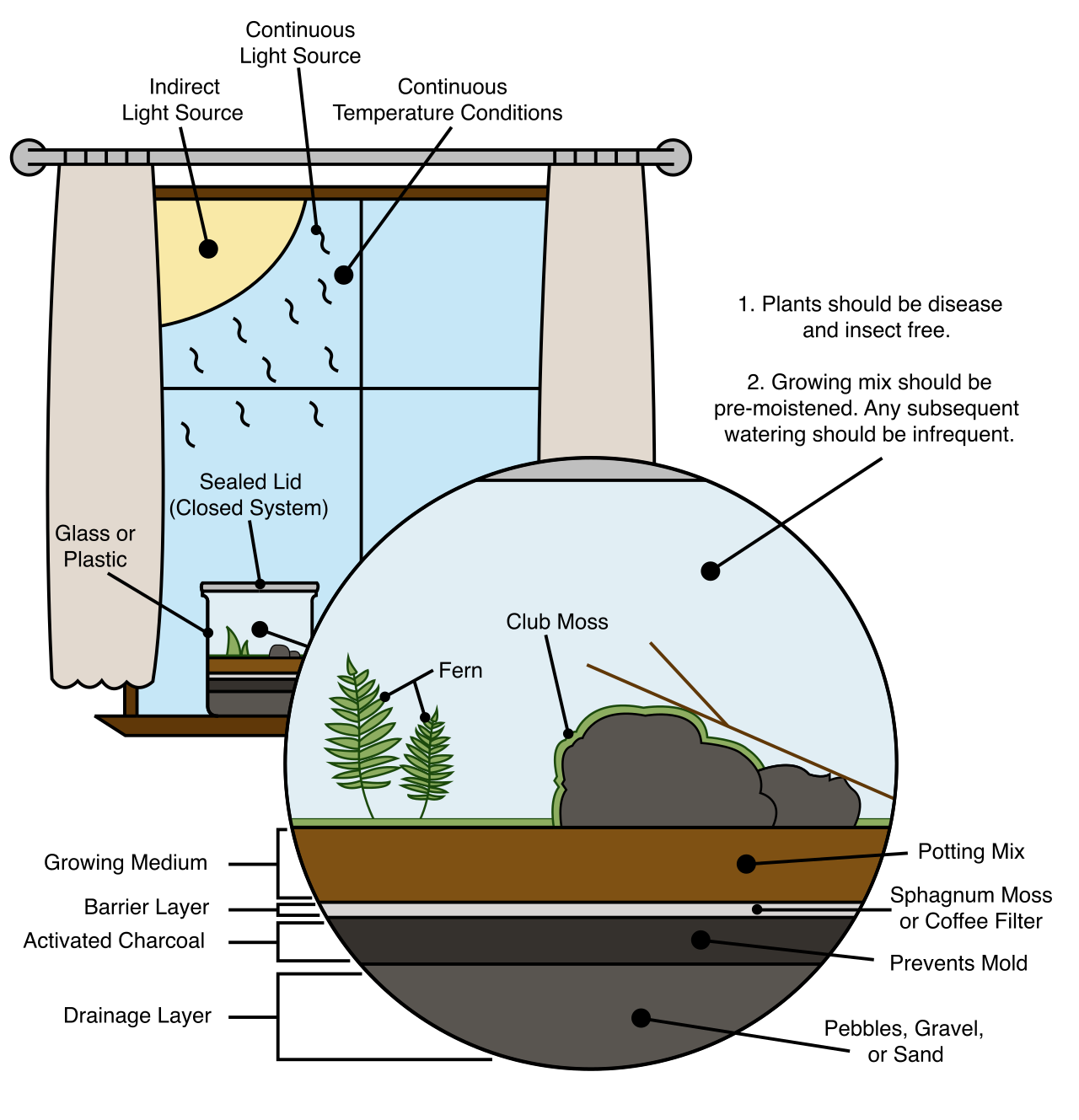
Imagine observing a sealed terrarium. You can measure the moisture on the glass, catalog the types of moss, and track the condensation cycle, but you cannot introduce foreign soil or guess what the weather is like outside the room. This sealed ecosystem mirrors the foundational principle of drawing logically sound conclusions from written material. In academic reading, the text is a closed universe; every valid deduction must be tethered strictly to the observable data within its boundaries. For an educator, mastering this discipline is not merely about parsing paragraphs; it is about cultivating an evidentiary mindset, teaching students to separate verifiable facts from unfounded leaps of logic.
To conquer any formal assessment, you must first understand the structural rules of the game you are playing. The Praxis Core Reading exam is designated by the test code 5713. This standardized gateway for aspiring educators requires a precise, analytical approach to reading comprehension.
The exam is built entirely on multiple-choice selected-response questions. You are not asked to write an essay defending your interpretation; you are asked to identify the single, undeniable truth logically supported by the passage. Within the blueprint of this exam, the Integration of Knowledge and Ideas section is a specific scoring category. This section tests your ability to evaluate how an author builds an argument, synthesize the data provided, and extrapolate logical outcomes without violating the boundaries of the text.
How do we actually construct a conclusion? In the realm of academic reading, a conclusion is a judgment reached by reasoning based on text evidence.
You do not simply "find" a conclusion sitting plainly in a sentence; drawing a reading comprehension conclusion requires synthesizing information from a passage. Synthesis is the cognitive act of pulling together discrete threads of information to see the complete fabric. To do this accurately, you must distinguish between two types of information:
- Explicit information consists of direct literal statements made in the text. (e.g., "The school district reduced its textbook budget by $50,000 this year.")
- Implicit information is information not directly stated in a text.
The magic of reading comprehension happens in the space between the two. Implicit information can be logically derived from explicit statements within a text. When you derive that unstated truth, you are making an inference. An inference is a logical assumption based on textual evidence. But remember the terrarium: a valid inference is explicitly supported by clues within the reading passage. If the clue isn't in the soil or the condensation, the inference is invalid.
If there is one cardinal rule you must engrave into your mind for the Praxis 5713, it is this: valid conclusions on a reading exam must rely solely on the provided text.
As an aspiring educator, you possess a vast repository of real-world knowledge. You must turn it off. Test-takers must not use outside knowledge to validate a conclusion on a reading comprehension exam.
Imagine you are reading a passage discussing a historical theory about the construction of the Egyptian pyramids. The passage argues that ramps were not used. You happen to know, from a documentary you watched yesterday, that modern archeologists have discovered definitive proof of ancient ramp systems. It does not matter. If you use your outside knowledge to answer the question, you will get it wrong. The test is evaluating your ability to navigate the author's universe, not your own.

Therefore, evaluating a conclusion involves checking for direct textual evidence supporting the claim. If you cannot physically point your finger to the sentences that build the premise, you cannot logically select the answer. Naturally, a valid conclusion cannot contradict stated facts within the reading passage. Furthermore, answer choices introducing new topics not mentioned in the passage represent invalid conclusions. If the passage is about the migratory patterns of monarch butterflies, an answer choice concerning the impact of pesticides on local bees—no matter how scientifically accurate in the real world—is instantly incorrect.
Test designers are brilliant psychologists. They know what human brains want to do. They know we like to jump to conclusions, and they bait their traps accordingly.
Reading comprehension distractor choices often present plausible statements unsupported by the specific passage. They sound smart. They sound like things a teacher would agree with. But they are mirages.
Often, distractor answer choices frequently exaggerate claims made in the reading passage. To spot these exaggerations, you must become hyper-sensitive to the author's vocabulary. Pay close attention to the spectrum of certainty.
The Extremity Trap: Extreme language in reading comprehension answer choices often indicates an invalid conclusion. Extreme language includes absolute words like always, never, all, or none.
In the real world, very few things are absolute. If a passage states that "many middle school students struggle with fractions," a distractor might offer the conclusion that "middle school students always find fractions difficult." The leap from "many" to "always" invalidates the conclusion entirely.
Conversely, valid reading comprehension conclusions often feature moderate language.
The Safety of Moderation: Moderate language includes qualifying words like sometimes, often, may, or could.
By softening the claim, the test-maker ensures the conclusion is defensible based strictly on the limited evidence provided in a short passage.
| Feature | Invalid Distractor | Valid Conclusion |
|---|---|---|
| Language Tone | Extreme / Absolute | Moderate / Qualified |
| Keywords | Must, Prove, All, None, Every | Suggests, May, Frequently, Some |
| Scope | Introduces outside concepts | Bound entirely by passage details |
| Relationship | Exaggerates the author's claim | Follows logically from the premises |
A valid conclusion must follow logically from the premises established by the author. We trace this logic through two primary pathways: induction and deduction.
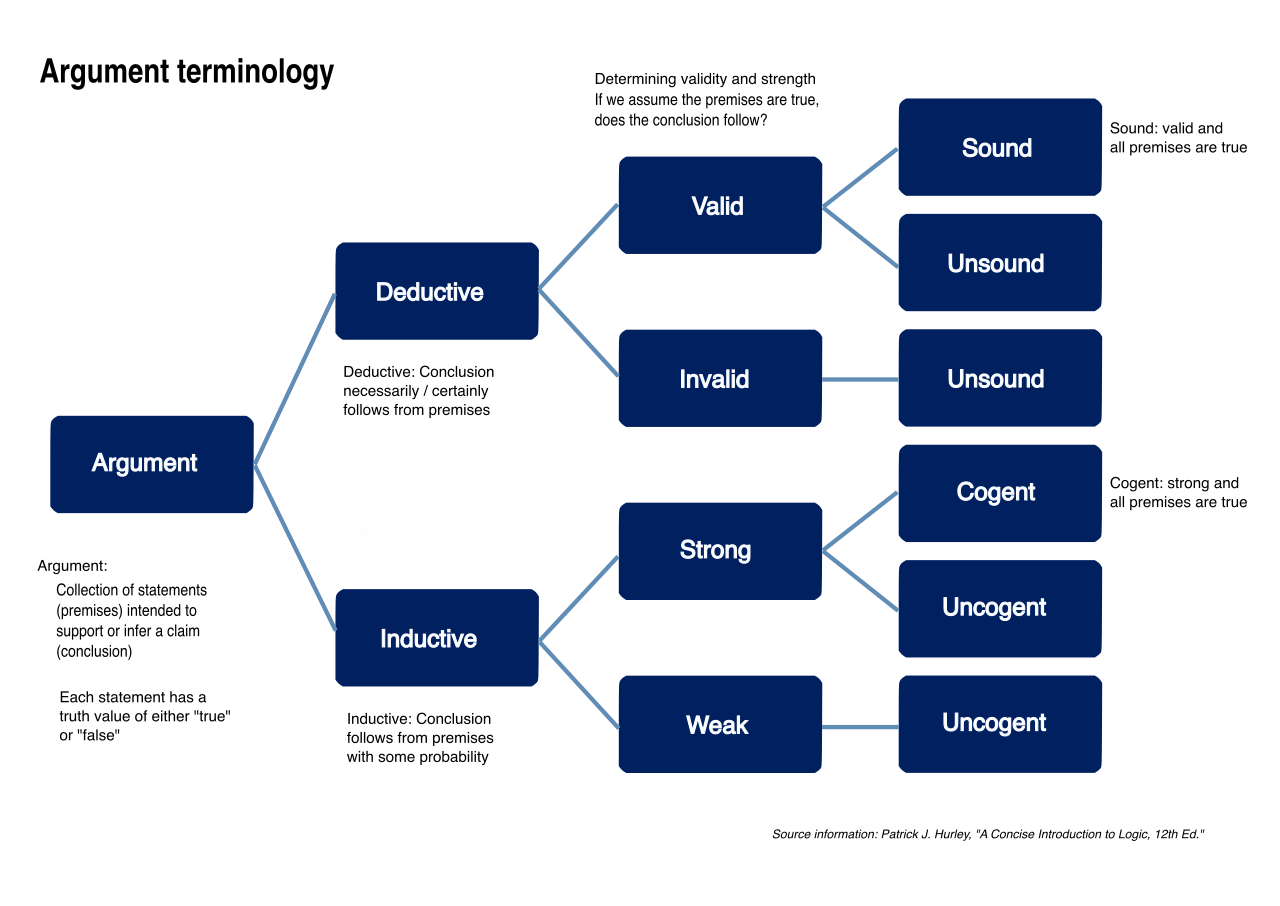
- Inductive reasoning in reading involves drawing a general conclusion from specific text examples.
- Example in Text: The passage notes that Ms. Miller’s 3rd-grade class improved their reading scores after a daily 15-minute silent reading period. It also notes that Mr. Davis’s 5th graders showed similar gains using the same method.
- Inductive Conclusion: Daily silent reading periods may improve elementary students' reading scores.
- Deductive reasoning in reading involves applying a general rule stated in the text to a specific situation.
- Example in Text: The passage states that all mammals are warm-blooded. It later mentions that the newly discovered creature, the Beringian Volve, is a mammal.
- Deductive Conclusion: The Beringian Volve is warm-blooded.
When parsing an author's reasoning, you must constantly ask yourself: Why did the author write this? Identifying the author's primary purpose helps in selecting the most logical conclusion. If the author's purpose is to critique a specific educational policy, the logical conclusion will likely reflect the flaws of that policy.
Because a sound conclusion aligns with the main idea of the reading passage, you must guard against getting lost in the weeds. A sound conclusion avoids focusing exclusively on minor text details. If a passage is broadly about the benefits of bilingual education, but spends one sentence mentioning a specific $500 grant given to a school in Texas, a conclusion that focuses entirely on funding mechanisms in Texas is a trap. It misses the forest for a single leaf.
To synthesize information effectively, you must dismantle the author's argument into its component parts.
First, distinguishing between an author's stated opinion and a verifiable fact is necessary to draw accurate conclusions. A fact is an objective reality (e.g., "The school day begins at 8:00 AM"). An opinion is a subjective assessment (e.g., "Starting the school day at 8:00 AM is detrimental to student health"). If you mistake an author's passionate opinion for a stated fact, your conclusions will be fundamentally flawed.
Beyond facts and opinions, there is the invisible glue that holds arguments together: assumptions. An assumption is an unstated premise necessary for an author's argument to hold true.
Suppose a passage argues: "Because the new standardized test is being administered digitally, students will score higher this year."
What is the invisible glue here? The author is assuming that digital administration inherently improves student performance, perhaps because they believe students are more comfortable with computers than paper. Validating an assumption requires ensuring the text implies the premise without directly stating it. As an educator reading diagnostic reports or academic research, spotting these unstated premises is a critical skill. It allows you to see the vulnerabilities in an argument and determine whether a conclusion genuinely holds weight.
You might wonder why the Praxis 5713 focuses so intensely on these rigid rules of logic. As a future educator, you will be inundated with data, texts, and arguments daily. You will read individualized education programs (IEPs), administrative directives, and educational research.
When a parent comes to you frustrated about a student's grade, you must base your discussion strictly on the "explicit information" in your grade book, rather than making "extreme" assumptions about the student's study habits at home. When you teach your future students how to read history or science, you will be guiding them to rely strictly on textual evidence, avoiding the "outside knowledge" of rumors or misunderstandings.
Passing the Praxis Core Reading exam is not just about proving you can read; it is about proving you possess the disciplined, analytical mind required to lead a classroom. By mastering the art of the logical conclusion, avoiding extreme language distractors, and keeping your reasoning tethered firmly to the text, you are honing the very skills you will use to shape the minds of the next generation.