Informative/Explanatory Essays: Attribution and Plagiarism
Not sure you’re ready?
Take the ~3-minute readiness diagnostic and see where you stand.
Imagine reading a high school student’s research paper on the American Revolution. The words flow beautifully, the syntax is flawless, and the historical analysis is breathtaking. Yet, you quickly realize the student hasn't written a brilliant essay; they have simply copied a chapter from a Pulitzer-winning historian. The integrity of education relies on a clear, unassailable boundary between what a learner creates and what a learner borrows. When you write an essay, whether for a college seminar or your own teacher certification, you are participating in a scholarly conversation. You must clearly map the borders of your own intellect by acknowledging exactly who else is speaking.
When you sit for your licensing exams, you aren't just proving you can spell correctly; you are proving you can think systematically. The Praxis Core Writing exam requires test-takers to synthesize information from provided source texts in the essay section.
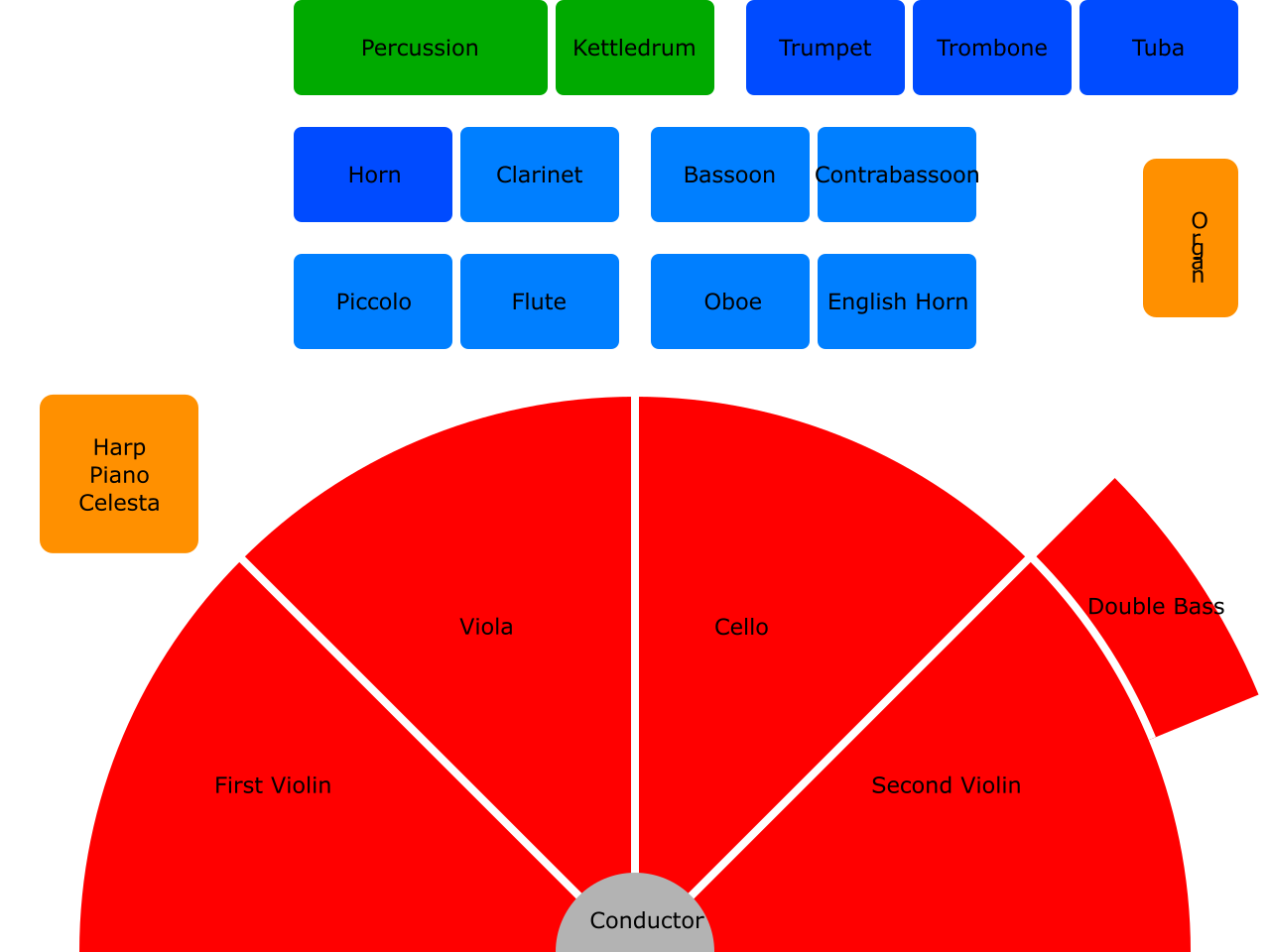
What does this actually mean? Synthesizing information involves combining facts from multiple distinct sources into a single cohesive written response. Think of it like conducting an orchestra. You don't just have the violins play a song, followed by the cellos playing a different song. You weave their distinct sounds together to serve a unified musical vision. In your essay, writers should use integrated sources to support their own central thesis.
Crucially, you are crafting an informative essay, which means your task is to explain a topic objectively using factual evidence rather than subjective opinion. Your goal is clarity, accuracy, and neutrality. However, a common trap aspiring educators fall into is letting the evidence do the talking for them. Remember: Integrated source quotes should not replace the writer's own voice or analytical explanation. You are the guide; the sources are merely the exhibits you point to along the tour.
If you want to use someone else's evidence, you must introduce it properly. The tool for this job is the signal phrase.
A signal phrase introduces external evidence by naming the source immediately before the borrowed material. For example, the phrase "According to Dr. Smith" functions as a standard signal phrase.
Why do we care about such a minor grammatical convention? Because signal phrases clarify the boundary between the writer's original thoughts and the integrated source material. They serve as a turn signal, warning the reader, I am now handing the microphone to someone else.
Avoiding "Dropped Quotes"
A failure to use a signal phrase results in one of the most jarring errors in academic writing. Dropped quotes are direct quotations inserted into an essay without any introductory signal phrase or contextual framing. They fall from the sky, disorienting the reader.
Furthermore, writers must integrate quotations grammatically into the syntax of their own surrounding sentences. You cannot simply jam a square peg into a round hole. Read your sentence aloud; if the grammar fractures when the quote begins, you have not integrated it properly.
Context and Fidelity
When you borrow words, you inherit a responsibility to the original author's intent. Writers must accurately represent the original context of an author's words when integrating quotes. Cherry-picking a phrase to mean the opposite of what the author intended is a violation of academic trust; taking a quote out of context misrepresents the original source's intended meaning.
To help you seamlessly embed quotes while remaining faithful to the source, the academic toolkit provides two specific punctuation marks:
- Ellipses (...): These indicate the intentional omission of irrelevant words from within a direct quotation. Use them when you need to skip a rambling clause, but ensure the core meaning remains intact.
- Brackets [ ]: These indicate a writer's clarifying addition to the exact text of a direct quotation. If a quote says, "He believed it was true," you might use brackets to clarify the pronoun: "[Lincoln] believed it was true."
The stakes of attribution are absolute. Plagiarism is the act of presenting another creator's ideas or words as one's own original work. To survive in academia and to model ethical behavior for your future students, writers must attribute borrowed information to the original source to avoid plagiarism.
Plagiarism is not always a malicious attempt to cheat. Often, it is a byproduct of sloppy note-taking or rushed writing. But the rules of attribution do not care about your intentions:
- Accidental omission of quotation marks around borrowed text constitutes plagiarism.
- A missing citation for a properly paraphrased idea constitutes plagiarism.
If the idea didn't originate in your brain, you must point to the brain it came from.
There are three primary ways to bring external information into your essay. Mastering the differences between them is the secret to passing the Praxis Core Writing exam.
1. Direct Quotation
A direct quotation reproduces a source's exact language word-for-word. The rules here are rigid: Writers must enclose all direct quotations within quotation marks, and every direct quotation must include a specific attribution to the original author or document.
2. Paraphrasing and the Danger of Patchwriting
Paraphrasing translates an author's specific idea entirely into the writer's own original words.
Many students fundamentally misunderstand what "own words" means. They grab a thesaurus, change "happy" to "glad" and "fast" to "quick," and call it a paraphrase. This is dangerous.
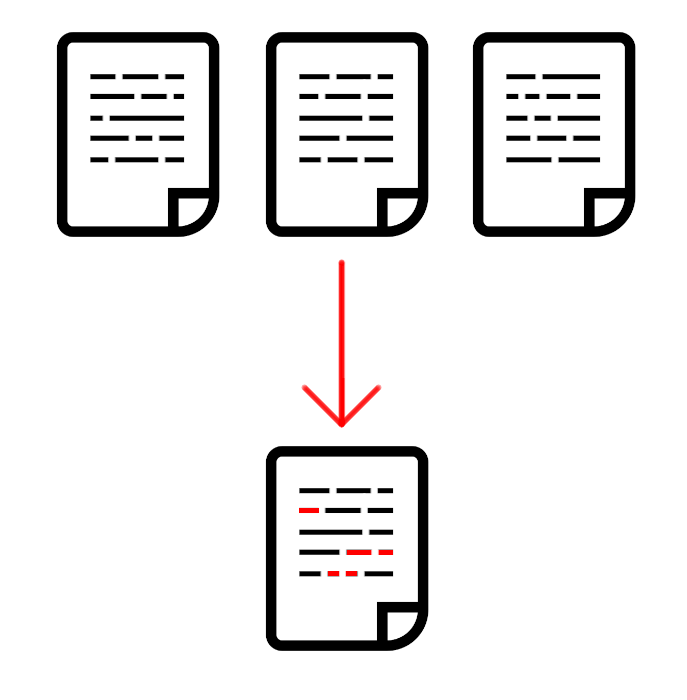
Warning: Patchwriting occurs when a writer replaces a few words from a source with synonyms while keeping the original syntax.
Patchwriting is an illusion of originality. Therefore, patchwriting is classified as a form of academic plagiarism. The most critical fact to remember for your exams is that patchwriting remains plagiarism even if the writer includes a citation for the source. Why? Because a citation for a paraphrase implies you have digested the idea and recreated it, but retaining the author's syntax means you are still stealing their structural intellectual property.
To paraphrase legitimately, you must clear two distinct hurdles:
- Legitimate paraphrasing requires altering the original vocabulary of the source text.
- Legitimate paraphrasing requires altering the original sentence structure of the source text.
And, as always, paraphrased ideas must include an attribution to the original author.
3. Summarizing
While paraphrasing zeroes in on a specific idea, summarizing condenses the broad main points of a longer text into a brief overview. You might summarize a 300-page book in a single paragraph. Even though the expression is entirely your own and highly condensed, summaries of external texts must be attributed to the original source.
If we had to cite absolutely everything we learned from someone else, our essays would be nothing but citations. We are rescued by a concept called "common knowledge."
Common knowledge consists of factual information widely known by the general public. Because this information belongs to everyone, common knowledge facts do not require citation.
How do you know where the line is? If an average, educated person could verify the fact without specialized research, it is likely common knowledge.
| Category | Explanation & Examples | Citation Required? |
|---|---|---|
| Basic Science | The scientific fact that water boils at 100 degrees Celsius is an example of common knowledge. | No |
| Undisputed History | Historical dates of major undisputed world events are generally considered common knowledge. (e.g., The Declaration of Independence was signed in 1776). | No |
| Specialized Data | Specific statistics generated by a researcher's specialized study require citation. (e.g., A 2023 survey showing 42% of teachers prefer digital grading). | Yes |
| Analytical Claims | An author's unique subjective interpretation of a historical event requires citation. (e.g., A historian's argument that crop failures were the primary catalyst for a war). | Yes |
When you sit down to write your Praxis Core essay, remember that you are stepping into a well-lit room of experts. Your job is not to invent the universe from scratch, nor is it to blindly parrot what others have said. Your job is to gather the facts, respect the minds that discovered them by citing them properly, and synthesize them into an objective, brilliantly clear explanation. Do this, and you will not only ace the exam—you will become the kind of precise, intellectually honest educator your future students deserve.