Mechanics: Semicolons and Apostrophes
Not sure you’re ready?
Take the ~3-minute readiness diagnostic and see where you stand.
Sentence mechanics are the invisible architecture of thought. When a student hands you an essay, you do not merely read their words; you traverse a structure built of clauses and phrases. To construct these structures reliably, writers rely on specialized joints and fasteners. The semicolon and the apostrophe are two of the most misunderstood tools in the English language, yet they operate on strict, elegant logic. One acts as a load-bearing hinge between equal, self-sustaining ideas, while the other serves as a precise hook to indicate ownership or compression. Mastering these mechanics is not about memorizing arbitrary rules; it is about understanding structural integrity. For a future educator, demonstrating flawless mechanics on the Praxis Core is the first step toward modeling that clarity for the next generation of writers.
To understand the semicolon, you must first understand the independent clause. An independent clause is a grouping of words that contains a subject and a verb and expresses a complete thought. It can stand entirely on its own as a sentence.
When we want to bring two complete thoughts together, we have to consider how to connect them safely.
Linking Independent Clauses
At its most fundamental level, a semicolon links two independent clauses. However, you cannot simply bolt any two random sentences together. By rule, independent clauses linked by a semicolon must be closely related in meaning. The semicolon signals to the reader that the second clause is intimately tied to the first, often explaining, contrasting, or expanding upon it.
Correct: The fire alarm rang unexpectedly; the students evacuated the laboratory in silence.
Because both sides of the semicolon are perfectly capable of standing alone, a semicolon can replace a coordinating conjunction between two independent clauses (the coordinating conjunctions are for, and, nor, but, or, yet, so). If you remove the conjunction, the semicolon elegantly takes its place.
A semicolon must not join an independent clause and a dependent clause. A dependent clause relies on the rest of the sentence for its meaning; it cannot bear its own weight. Placing a semicolon between an independent and dependent clause is like trying to attach a heavy steel door to a sheet of drywall.
Incorrect: Although the lesson was meticulously planned; the students remained confused. Correct: Although the lesson was meticulously planned, the students remained confused.
The Comma Splice and Its Remedy
One of the most frequent structural failures in student writing—and a heavy focus of the Praxis Core—is the comma splice.
A comma splice occurs when two independent clauses are joined solely by a comma. A comma is too weak to hold two complete sentences together; it bends and snaps under the grammatical weight.
Comma Splice: The bell rang, the students rushed into the hallway.
How do we fix this? Because we are dealing with two independent clauses, a comma splice can be corrected by replacing the linking comma with a semicolon.
Corrected: The bell rang; the students rushed into the hallway.
Conjunctive Adverbs
Sometimes, writers want to explicitly guide the reader's logic between two independent clauses using transition words. The words 'therefore,' 'furthermore,' and 'moreover' are examples of conjunctive adverbs.
When these words bridge two complete thoughts, the punctuation requires absolute precision: a semicolon is used before a conjunctive adverb linking two independent clauses, and crucially, a conjunctive adverb following a semicolon must be followed by a comma.
Formula: [Independent Clause] ; [Conjunctive Adverb] , [Independent Clause] Example: The district reduced the arts budget**; therefore,** we must rely on community donations.
The "Super-Comma" in Complex Lists
While the semicolon's primary job is connecting independent clauses, it has a secondary, highly specialized function. Semicolons separate items in a complex list containing internal commas.
Imagine you are writing a newsletter detailing the locations of upcoming professional development conferences. If you use standard commas to separate cities and states, the list descends into chaos. The semicolon steps in as a "super-comma" to establish clear boundaries between the major items.
Correct: This year, our department will attend conferences in Austin, Texas; Portland, Oregon; and Chicago, Illinois.
If the semicolon is a heavy hinge, the apostrophe is a delicate hook. It performs two entirely different jobs: it replaces missing characters, and it establishes ownership. Mixing up these two functions is the root of almost all apostrophe errors.
1. The Apostrophe of Compression (Contractions)
In spoken English, we naturally compress words to speak more efficiently. In writing, an apostrophe replaces omitted letters or numbers in a contraction. It tells the reader exactly where the missing pieces used to be.
- The word 'they're' is a contraction representing the words 'they are'. (The apostrophe replaces the 'a').
- The word 'you're' is a contraction representing the words 'you are'. (The apostrophe replaces the 'a').
- The word 'it's' is a contraction representing the words 'it is' or 'it has'.
- The word 'who's' is a contraction representing the words 'who is' or 'who has'.
If you are ever unsure whether to use a contraction on an exam, temporarily expand it back to its original two words. If the sentence still makes sense, the contraction is correct.
2. The Apostrophe of Ownership (Possessives)
Nouns use the apostrophe to claim things. Broadly, apostrophes indicate noun possession or ownership. However, the placement of the apostrophe shifts depending on whether the noun is singular or plural.
Singular Nouns: The possessive form of a singular noun requires an apostrophe followed by the letter 's'.
Example: The teacher's desk. (One teacher owns the desk).
Plural Nouns: When dealing with plural nouns, you must first ask: Does the plural noun end in 's'?
- The possessive form of a plural noun ending in 's' requires only an apostrophe after the final 's'.
Example: The teachers' lounge. (Multiple teachers own the lounge).
- The possessive form of a plural noun not ending in 's' requires an apostrophe followed by the letter 's'. English features several irregular plurals. The words 'children's' and 'men's' are examples of possessive plural nouns that do not end in 's'. Because there is no existing 's' at the end of the word, you must add both the apostrophe and the 's'.
Example: The children's literature section.
Joint vs. Individual Ownership
When multiple people own something, the placement of the apostrophe signals exactly how they own it. This is a brilliant, subtle feature of English mechanics.
- Joint ownership of an item by multiple people requires an apostrophe and an 's' on only the final name in the list.
Example: Mr. Miller and Ms. Clark's classroom. (They co-teach in a single, shared classroom).
- Individual ownership of separate items requires an apostrophe and an 's' on every name in a list.
Example: Mr. Miller's and Ms. Clark's classrooms. (They each have their own separate classrooms).
To recognize sentences completely free of mechanical and punctuation errors—the ultimate goal on the Praxis Core—you must know not only where punctuation goes, but where it is strictly forbidden.
Possessive Pronouns
Here is the most heavily tested trap in English grammar: possessive pronouns never take an apostrophe.
Pronouns like he, she, it, they, we, and you have built-in possessive forms that already indicate ownership perfectly well without the help of punctuation. The words 'yours,' 'hers,' 'ours,' 'theirs,' and 'its' are examples of possessive pronouns.
| Contraction (Requires Apostrophe) | Possessive Pronoun (No Apostrophe!) |
|---|---|
| It's (It is / It has) | Its (Belonging to it) |
| They're (They are) | Theirs (Belonging to them) |
| Who's (Who is / Who has) | Whose (Belonging to whom) |
| You're (You are) | Yours (Belonging to you) |
Incorrect: The committee made it's decision. (Translates to: The committee made it is decision). Correct: The committee made its decision.
Regular Plurals, Decades, and Acronyms
Apostrophes possess; they do not pluralize. An apostrophe is never used to form a regular plural noun. Writing "The student's are reading" is a fatal mechanical error.
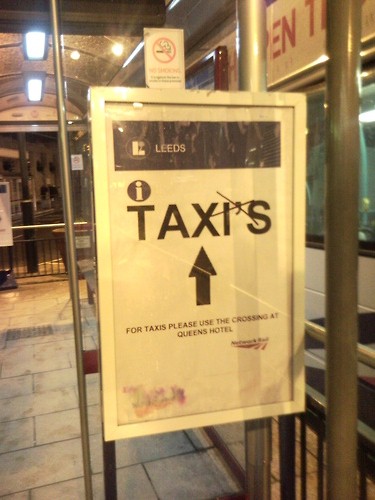
This rule remains absolute even when pluralizing non-standard words:
- Pluralizing a decade like the 1990s does not require an apostrophe. (Write 1990s, not 1990's).
- Pluralizing a capital letter or an acronym does not require an apostrophe. If your school has multiple Parent-Teacher Associations, they are PTAs, not PTA's. If you are writing multiple Individualized Education Programs, they are IEPs, not IEP's.
When you sit down to the Praxis Core Writing exam, view every sentence through the lens of structural engineering.
- Identify the independent clauses. Are they improperly spliced with a comma? Bolt them together with a semicolon.
- Spot the transitions. Is there a conjunctive adverb like therefore? Ensure it is shielded by a semicolon before it and a comma after it.
- Audit the apostrophes. Are they acting as hooks for omitted letters, or claiming ownership for a noun? If you see an apostrophe on a pronoun (it's, their's), or on a standard plural (the 1980's, the IEP's), you have found the structural flaw.
By mastering these fundamental joints and fasteners, you ensure your writing—and eventually the writing of your students—will stand the test of time and scrutiny.