Mechanics: Capitalization and Commas
Not sure you’re ready?
Take the ~3-minute readiness diagnostic and see where you stand.
Written language is a telepathy machine, but its signal degrades without a precise encoding system. When you write an Individualized Education Program (IEP), an email to a concerned parent, or the directions for a final exam, you are transmitting a sequence of ideas across time and space. Mechanics—specifically capitalization and comma usage—are not arbitrary hurdles designed to torture test-takers. They are the microscopic architecture of meaning. Capital letters act as highlighters, signaling absolute beginnings and unique identities. Commas function as hinges, dictating the physical physics of how a sentence bends, breathes, and connects.
To master the Praxis Core Writing exam, we must stop memorizing rules in a vacuum and start seeing them as engineering principles for clear thought. Let us disassemble these mechanisms to understand exactly how they control the flow of information.
Capital letters instruct the reader’s brain to assign special status to a word. They indicate boundaries and specify unique, singular entities.
Beginnings and Pronouns
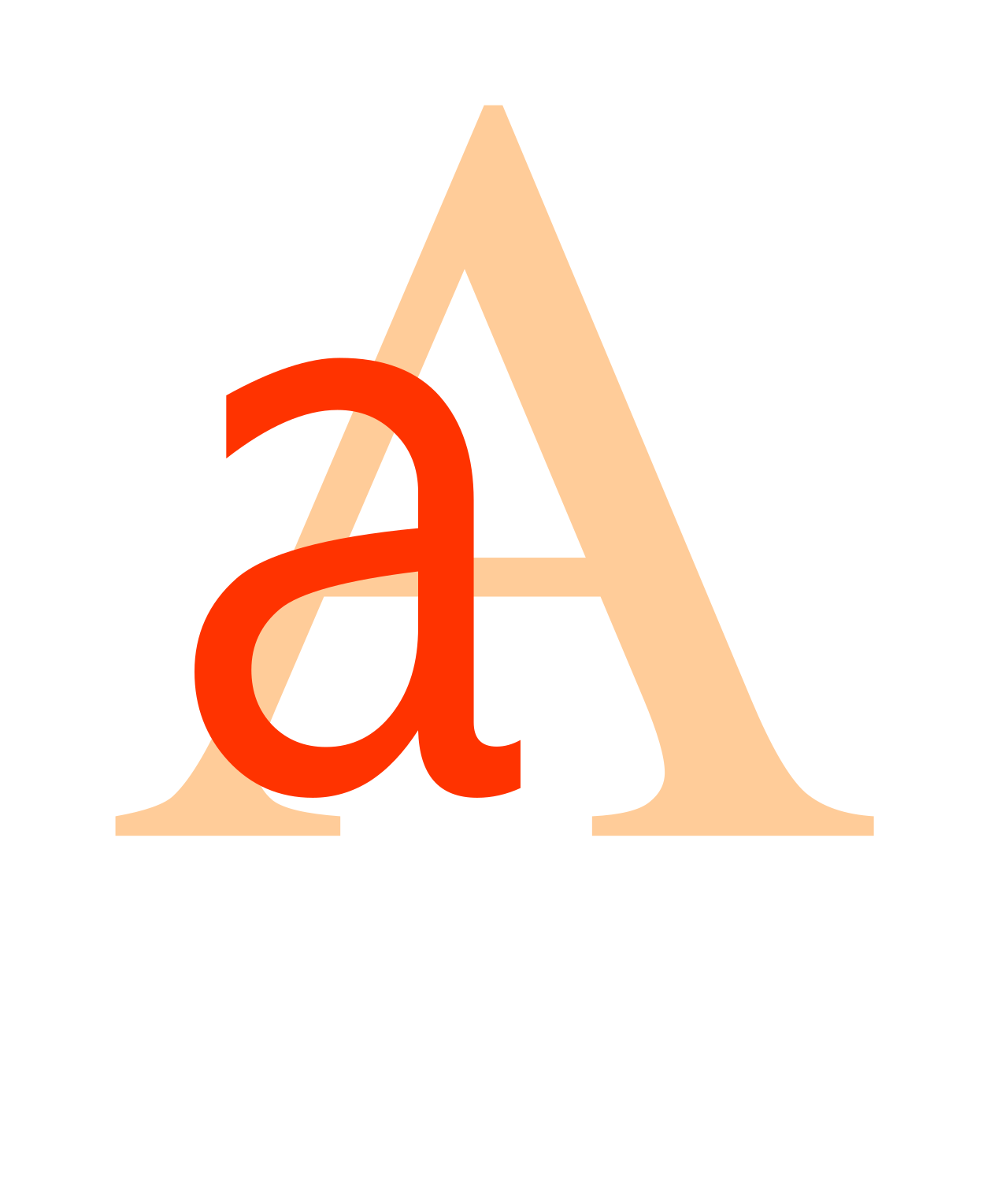
The most fundamental boundary in writing is the sentence. By universal convention, the first word of a sentence must begin with a capital letter. This resets the reader's internal metronome. Similarly, the pronoun 'I' is always capitalized regardless of the pronoun's position in a sentence, visually asserting the writer's presence.
This boundary rule extends to dialogue. The first word of a direct quotation that forms a complete sentence must begin with a capital letter.
- Incorrect: The principal noted, "we must improve our math scores."
- Correct: The principal noted, "We must improve our math scores."
The Specificity Principle: Proper Nouns
We capitalize to distinguish the specific from the general. Proper nouns naming specific entities require capitalization. If a word acts as a generic label, it remains lowercase; if it acts as a unique name tag, it is capitalized.
This principle governs time and nature. The names of days of the week (Monday) and the names of months of the year (October) require capitalization. However, seasons represent cyclical, generic periods. The names of seasons are written in lowercase letters (spring, winter) unless the season is part of a proper noun (the Winter Olympics, the Spring Gala).
Geography and Human Constructs
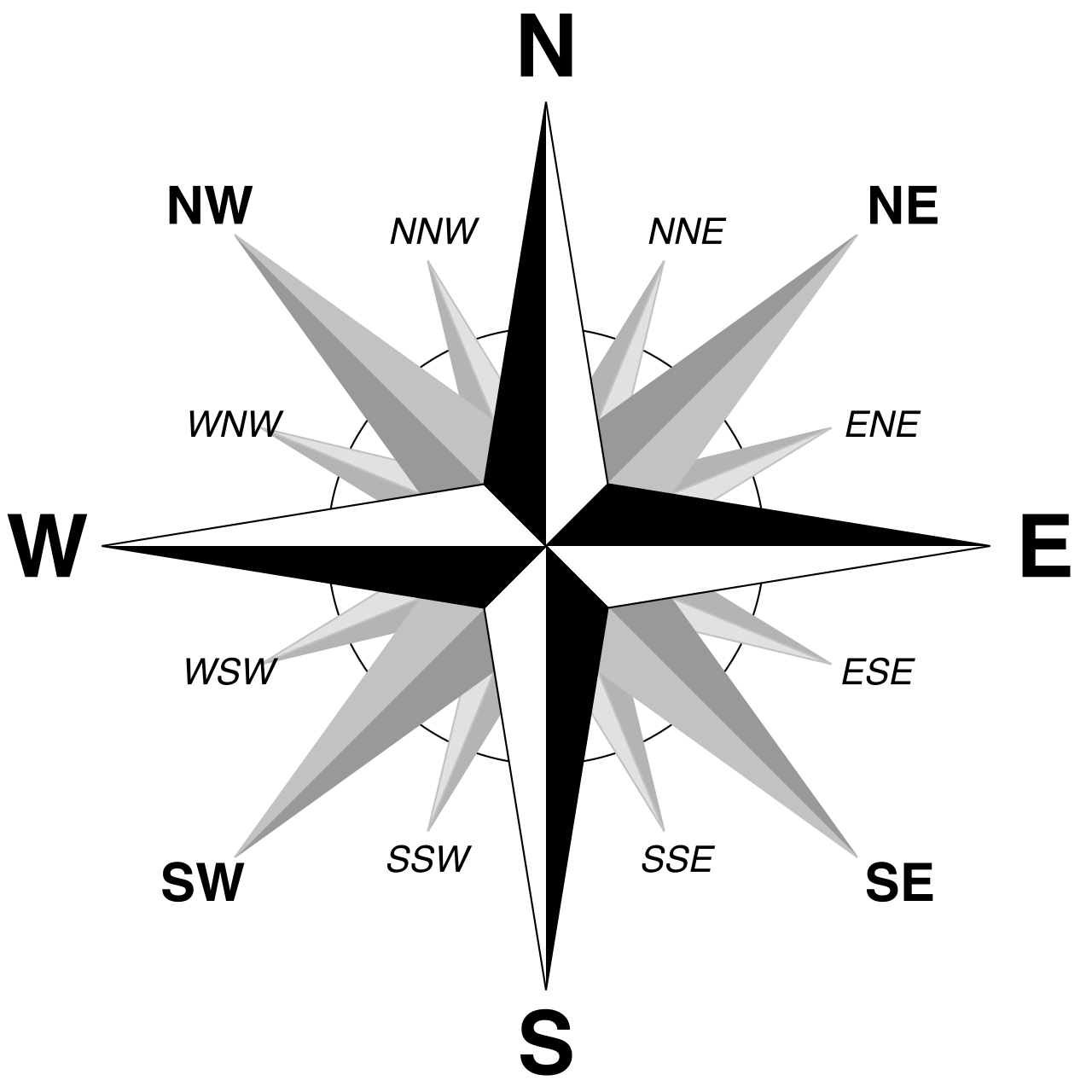
Are you giving directions or naming a location? Compass directions are written in lowercase letters when indicating a physical direction ("Drive south on Main Street"). But compass directions are capitalized when designating a specific geographic region ("The history of the American South is complex").
Human identity follows similar specificity rules:
- The names of nationalities, races, and languages require capitalization (Japanese, Caucasian, Spanish).
- The names of specific historical events and historical periods require capitalization (the Renaissance, the Civil War).
Navigating the Academic World
As a future educator, you must write about your own profession precisely. General subjects are generic labels; specific academic courses and languages are proper nouns.
- The names of academic subjects are written in lowercase letters unless the subject is a language (history, chemistry, English, French).
- The names of specific academic courses require capitalization (Algebra II, Introduction to Special Education 101).
People, Titles, and Family
Titles act like adjectives until they are welded to a name, at which point they become part of a proper noun.
- A formal title preceding a person's name requires capitalization (Superintendent Chalmers).
- A title used alone without a person's name is generally written in lowercase letters ("I spoke to the superintendent").
- A title following a person's name is generally written in lowercase letters ("Mr. Chalmers, the superintendent, arrived late").
Family relationships follow the exact same logic. Are you using the relationship word as a name, or to describe whose relative it is?
- A family relationship word is capitalized when used as a proper name in direct address ("Did you sign my permission slip, Mom?").
- A family relationship word is capitalized when immediately preceding a person's name ("I met Aunt Carol").
- A family relationship word is written in lowercase letters when preceded by a possessive determiner such as 'my' or 'your' ("I met my aunt Carol").
Titles of Works: The "Title Case" Algorithm
When writing the title of a written work or creative piece (a book, poem, or curriculum), capitalization follows a strict visual hierarchy:
- The first word in the title of a written work or creative piece requires capitalization.
- The last word in the title of a written work or creative piece requires capitalization.
- Major words within a title require capitalization (nouns, verbs, adjectives, adverbs, pronouns).
- Articles (a, an, the), short prepositions (in, on, of, to), and coordinating conjunctions (and, but, or) are written in lowercase letters unless the article, preposition, or conjunction is the first or last word.
Example: The Catcher in the Rye ("The" is the first word; "Catcher" and "Rye" are major words; "in" is a short preposition; "the" is an article).
If capital letters are highlighters, commas are traffic yields. They group related ideas, separate distinct clauses, and tell the reader exactly how to pace their intellectual breathing.
Independent Clauses and the Comma Splice Trap
An independent clause is a complete thought—a subject and a verb that can stand alone as a sentence. What happens when you want to join two of them?
You have seven specialized tools for this: the coordinating conjunctions in English include for, and, nor, but, or, yet, and so (easily remembered by the acronym FANBOYS).
A comma is required before a coordinating conjunction that links two independent clauses.
- Correct: The students were exhausted**, so** I gave them a brain break.
If you omit the FANBOYS and try to weld two independent clauses together with a comma alone, the structural integrity of the sentence collapses. A comma splice occurs when two independent clauses are joined by only a comma.
Fixing a Comma Splice Error: The bell rang, the students rushed to the door.
- Solution 1: A comma splice can be corrected by adding a coordinating conjunction after the comma. ("The bell rang**, and** the students rushed to the door.")
- Solution 2: A comma splice can be corrected by replacing the comma with a semicolon. ("The bell rang**;** the students rushed to the door.")
Setting the Stage: Introductory Elements
When you begin a sentence with contextual information before getting to the main subject and verb, you must use a comma to signal to the reader, "The introduction is over; here comes the main point."
- A comma is used immediately after an introductory dependent clause. ("Although the reading was difficult, the class understood the theme.")
- A comma is used immediately after a long introductory prepositional phrase. ("Under the towering oak tree in the courtyard, the students read their books.")
- A comma is used immediately after an introductory participial phrase—a verb phrase acting as an adjective. ("Exhausted by the standardized testing, the teacher drank her fourth coffee.")
- A comma is used to set off introductory words such as 'yes', 'no', or 'well'. ("Yes, you may go to the restroom.")
Essential vs. Nonessential Information
This is where commas do their most precise surgical work. You must evaluate whether a piece of information is required to understand the noun it modifies (restrictive) or if it is merely a bonus detail (nonrestrictive).
A nonrestrictive clause provides nonessential information to a sentence. If you pluck it out, the core meaning remains intact. Because it is extra, nonrestrictive clauses must be set off from the rest of the sentence by commas.
A restrictive clause provides essential information identifying the noun being modified. If you remove it, you lose the identity of the noun. Because it is structural, restrictive clauses are not set off by commas.
Watch how the pronouns that and which dictate this rule:
- Dependent clauses beginning with the relative pronoun 'that' function as restrictive clauses. Therefore, dependent clauses beginning with the relative pronoun 'that' do not take commas.
- Example: The lesson plan that I wrote yesterday was highly effective. (Tells us which specific lesson plan. Essential. No commas.)
- Dependent clauses beginning with the relative pronoun 'which' typically function as nonrestrictive clauses. Therefore, nonrestrictive clauses beginning with the relative pronoun 'which' require commas.
- Example: My lesson plan**, which I wrote yesterday,** was highly effective. (We already know it's my lesson plan; the "which" clause is just a bonus fact. Commas required.)
This logic applies directly to appositives. An appositive is a noun or noun phrase that renames a nearby noun. Just like clauses, nonessential appositives must be set off by commas.
- Example: Mr. Feeny**, a veteran educator,** graded the papers.
The Mathematics of Adjectives and Lists
Commas break things up. A comma is used to separate elements in a series of three or more items. (e.g., "Pencils, paper, and erasers.")
But what about adjectives stacked in front of a noun? Do they need commas? It depends on their relationship.
- Coordinate adjectives are adjectives of equal status that modify the same noun. They independently modify the noun. A comma is used to separate coordinate adjectives.
- The Test: Coordinate adjectives can be identified by placing the word 'and' between the adjectives without changing the meaning.
- Example: The loud**,** energetic classroom. (Loud and energetic classroom makes sense).
- A comma is not used between cumulative adjectives that build upon each other to modify a noun.
- Example: Three energetic little boys. (You wouldn't say "three and energetic and little boys." They stack in a specific order to create one idea. No commas.)
Formatting the Real World
Finally, commas manage the everyday formatting we use to contextualize communication. Memorize these distinct applications for your written responses and Praxis editing questions:
- Direct Address: A comma is used to set off nouns of direct address from the rest of the sentence. ("Class**,** please open your textbooks.")
- Quotations: A comma is used to set off a speaker tag from a direct quotation. (The student asked**,** "Is this on the test?")
- Contrasts: A comma is used to separate contrasting coordinate elements at the end of a sentence. ("The capital of New York is Albany, not New York City.")
- Dates: A comma is used to separate the day of the month from the year in a date. Crucially, a comma must follow the year when a full date is located in the middle of a sentence.
- Example: School began on September 5**,** 2026**,** with great excitement.
- Places: A comma is used to separate a city name from a state name. Likewise, a comma must follow the state name when a city and state appear together in the middle of a sentence.
- Example: We visited Springfield, Illinois, on our field trip.
When you sit down to take the Praxis Core Writing exam, do not rely merely on what "sounds right." Listen for the logic. Check for the specific identity of your nouns to govern your capitalization, and analyze the structural joints of your clauses to place your commas. In doing so, you prove you are ready not just to pass a test, but to command the written word in your classroom.