Word Choice
Not sure you’re ready?
Take the ~3-minute readiness diagnostic and see where you stand.
A surgeon does not ask for "the cutting thing," and a master teacher does not settle for "good enough" when selecting words. Language is the fundamental instrument of education. When you draft a lesson plan, explain a complex biological process to a struggling student, or write an essay for the Praxis Core, your credibility rests entirely on the precision of your vocabulary. Every word you place on the page must be a deliberate choice.
This conscious selection of vocabulary is called diction, which refers to the deliberate choice of words in writing to convey exact meaning. Poor diction creates static. It confuses the reader, obscures your logic, and signals a lack of professional polish. To master the Praxis Core Writing exam, you must learn to identify and correct the subtle errors that degrade clear communication: mistaken words, warped idiomss, and unnecessary repetition.
To choose the right word, you must understand that words operate on two distinct frequencies.
Denotation is the strict, literal dictionary definition of a word. Connotation encompasses the cultural or emotional associations connected to a word.
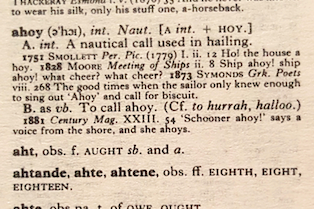
Imagine you are writing a letter of recommendation for a student. You could describe them as persistent or stubborn. The denotation of both words is nearly identical: a refusal to easily change course. Yet, their connotations are worlds apart. Persistent carries the connotation of admirable grit, while stubborn implies frustrating inflexibility. In source-based writing and timed essays, your diction must align both the denotation and the connotation with your exact intent.
The human brain stores language largely by sound.
When you reach for a word while writing quickly, your brain will often hand you a phonetic imposter. This phenomenon is known as a malapropism—the mistaken use of a word in place of a similar-sounding word with a different meaning.
In the high-pressure environment of a timed Praxis essay, or when writing a swift email to a principal, these phonetic traps are waiting. Let us dissect the foundational vocabulary that frequently trips up even seasoned writers.
1. Action, Result, and Influence
These words dictate causality and action, the bedrock of academic writing.
| Word | Function & Exact Meaning | Classroom Context |
|---|---|---|
| Affect | Typically used as a verb meaning to influence something. | The disruptive noise will affect the students' concentration. |
| Effect | Typically used as a noun meaning the result of an action. | The effect of the new policy was immediate. |
| Accept | A verb meaning to receive or agree to something. | The teacher will accept late assignments. |
| Except | A preposition meaning to exclude. | Every student except John finished the exam. |
| Elicit | A verb meaning to draw out a response. | The open-ended question was designed to elicit debate. |
| Illicit | An adjective describing something illegal or forbidden. | Checking cellphones during the exam is an illicit activity. |
| Lose | A verb meaning to be deprived of or cease to have something. | Do not lose your syllabus. |
| Loose | An adjective meaning not firmly or tightly fixed in place. | The screw on the desk is loose. |
| Led | The correct past tense and past participle form of the verb "to lead." | She led the professional development seminar yesterday. |
2. The Mechanics of Comparison, Grammar, and Quantity
Grammar establishes the geometry of your sentences. Misusing these structural words fractures your logic.
| Word | Function & Exact Meaning | Classroom Context |
|---|---|---|
| Than | A conjunction used for making comparisons. | The second exam was harder than the first. |
| Then | An adverb indicating time or a sequence of events. | We will read the chapter, then we will discuss it. |
| Fewer | Used exclusively with countable nouns. | There are fewer desks in this room than the other. |
| Less | Used exclusively with uncountable, continuous quantities. | The new schedule allows for less confusion. |
| Number | Used for items that can be counted individually. | A large number of students attended. |
| Amount | Used for bulk measurements that cannot be counted individually. | A vast amount of research supports this method. |
(A note on verbs of perception: Do not confuse how we process information. The word imply means to suggest something indirectly, which is done by the speaker or author. Conversely, the word infer means to deduce or conclude information from evidence, which is an action performed by the listener or reader.)
3. Possession and Contraction Traps
Apostrophes represent omitted letters in contractions, not possession, in the case of pronouns.
- The contraction "it's" stands for "it is" or "it has."
- The word "its" is a possessive pronoun indicating ownership.
- The contraction "they're" stands for the phrase "they are."
- The word "their" is a possessive pronoun indicating ownership by a group.
- The word "there" is an adverb indicating a place or position.
Furthermore, when indicating past possibility, students frequently misspell phonetic sounds.
- The phrase "could of" is an incorrect spelling of the contraction "could've."
- The phrase "should of" is an incorrect spelling of the contraction "should've."
- The phrase "would of" is an incorrect spelling of the contraction "would've."
4. The Teacher's Professional Lexicon
As an educator, you will use these terms constantly. Use them correctly.
| Word | Exact Meaning |
|---|---|
| Principal | Can mean a school administrator or a primary sum of money. |
| Principle | Refers to a fundamental truth, rule, or belief. |
| Advice | A noun referring to guidance or recommendations offered regarding prudent future action. |
| Advise | A verb meaning to offer suggestions about the best course of action to someone. |
| Cite | A verb meaning to quote or reference a source. |
| Site | A noun referring to a specific physical or digital location. |
| Sight | A noun referring to the ability to see or something seen. |
| Complement | Means to complete or enhance something else. ("The visuals complement the lecture.") |
| Compliment | Means to offer praise or an expression of admiration. |
| Allusion | An indirect reference to a person, place, or event. |
| Illusion | A false perception or a deceptive appearance. |
| Stationery | Refers to writing materials such as paper and envelopes. |
| Stationary | Means not moving or not intended to be moved. |
| Capital | Refers to a city serving as a seat of government or to wealth in the form of money. |
| Capitol | Refers specifically to a building where a legislative body meets. |
| Emigrate | Means to leave one's own country to settle permanently in another. |
| Immigrate | Means to come to live permanently in a foreign country. |
Language is not always mathematically logical. Sometimes, native speakers combine words in ways that defy literal translation. An idiom is a phrase whose established meaning cannot be deduced from the literal definitions of the individual words.

Within the realm of grammar, Standard English idioms frequently demand specific prepositions to follow certain verbs or adjectives. If you pair the wrong preposition with a verb, the sentence immediately sounds uneducated or colloquial to a trained evaluator.
Here are the strict idiomatic pairings you must memorize for the Praxis Core:
- Capable of: The adjective "capable" must be followed by the preposition "of" in standard English idioms. (Incorrect: capable to do)
- Comply with: The verb "comply" must be followed by the preposition "with" in standard English idioms. (Incorrect: comply to)
- Different from: The adjective "different" is traditionally followed by the preposition "from" in formal American English. (Incorrect: different than)
- Based on: The phrase "based off" is an incorrect colloquialism for the standard idiom "based on." You base a curriculum on research, not off research.
- By accident: The standard idiom "by accident" is often incorrectly written as the colloquial phrase "on accident."
- In regard to: The standard idiom "in regard to" is often incorrectly pluralized as "in regards to." Keep it singular.
When revising sentences on the Praxis multiple-choice section, look directly at the prepositions trailing the verbs. That is where the trap is usually set.
In writing, there is a fundamental law of thermodynamics: unnecessary words consume mental energy that the reader should be spending on your ideas.
Redundancy occurs when a writer uses multiple words that mean exactly the same thing within a single phrase. Eliminating redundancy improves sentence clarity by removing unnecessary words. A leaner sentence is a stronger sentence.
Consider the physics of these common redundant phrases. Why are they structurally flawed?
"Revert back" The phrase "revert back" is redundant because the verb "revert" inherently means to go back. Drop the "back." ("Please revert to the original lesson plan.")
"Close proximity" The phrase "close proximity" is redundant because the noun "proximity" inherently means closeness. You cannot be in "distant proximity." ("The desks are in proximity to the whiteboard.")
"Past history" The phrase "past history" is redundant because the noun "history" inherently refers to past events. There is no such thing as future history. ("The student's history of absences is concerning.")
"End result" The phrase "end result" is redundant because the noun "result" inherently implies the end of a process. ("The result of the experiment was surprising.")
"Free gift" The phrase "free gift" is redundant because a gift is by definition free. If it is not free, it is a purchase. ("The textbook comes with a gift.")
"Exact same" The phrase "exact same" is redundant because the word "same" inherently means identical. ("They submitted the same essay.")
When you sit down to draft your Praxis argumentative or source-based essay, write your first draft with passion, but edit it with a scalpel. Comb through your sentences specifically looking for words that simply repeat a concept already established by the noun or verb preceding them.
Excellent diction is not about utilizing the largest words in the dictionary. It is about total mechanical control over the words you choose. When you master malapropisms, honor idiomatic prepositions, and relentlessly eliminate redundancies, your writing ceases to be a barrier and becomes exactly what it should be: a clear, unobstructed window into your intellect.