Financing on the Arizona Real Estate Salesperson (AZ-RES): What's Tested and How to Study It
In short
Financing and settlement together carry about 17 questions across the two AZ-RES papers — 9 on the General exam including the math items, and 8 on the Arizona State exam. Start with how a loan is documented, then the loan programs, the federal disclosure deadlines, and last Arizona's deed of trust and anti-deficiency rule.
What the exam tests about financing
The loan is two documents
Almost every financing question rests on one fact: a home loan is made of two separate pieces of paper.
The promissory note is the borrower's written promise to repay. It carries the amount, the interest rate, the payment schedule, and the term. The note is the debt itself.
The security instrument pledges the property as collateral so the lender can take it if the borrower stops paying. Most states call this a mortgage. Arizona almost always uses a deed of trust instead, and the difference matters enough that the state exam tests it directly.
A mortgage runs between two parties, borrower and lender. A deed of trust brings in a third. The trustor is the borrower, the beneficiary is the lender, and a neutral trustee holds legal title in trust until the loan is paid off. That third party is what lets Arizona lenders use a power of sale and foreclose without going to court.

Arizona forecloses without a courtroom
Because Arizona runs on deeds of trust, the standard foreclosure is a trustee's sale, handled outside the court system. The trustee records a notice of trustee's sale, and Arizona statute bars the auction until the 91st day after that recording. Memorize the number as 91, since the round-sounding 90 is a natural wrong answer. Non-judicial foreclosure is faster and cheaper for the lender, which is why judicial foreclosure is rare here.
Then comes the rule the General paper never touches. Arizona's anti-deficiency statute stops a lender from suing a borrower for the shortfall after a trustee's sale, provided the property is two and a half acres or less and was used as a one-family or two-family dwelling. Sell a qualifying home at a trustee's auction for less than the loan balance, and the borrower generally walks away owing nothing further. The Arizona State exam gives foreclosure, short sales, and deeds in lieu their own area.
Six clauses, and who each one protects
Six clauses come up repeatedly. The table names what each one does and who it shields.
| Clause | What it does |
|---|---|
| Acceleration | Lender can demand the whole balance at once on default |
| Alienation (due-on-sale) | Whole balance falls due if the property changes hands |
| Defeasance | Clear title returns to the borrower once the debt is paid |
| Prepayment penalty | Borrower is charged for paying the loan off early |
| Subordination | A lienholder agrees to sit behind a newer loan in priority |
| Release | Individual parcels are freed from a blanket loan as they are paid for |
When a buyer tries to take over a seller's old low-rate loan, the alienation clause is what stops them. The release clause is how a subdivision developer sells lots one at a time while a single loan covers the whole tract.
Where the money comes from
The primary mortgage market is where borrowers get loans: banks, credit unions, mortgage bankers, and brokers. Loans get bought and sold afterward on the secondary market. Fannie Mae and Freddie Mac are the main buyers. When a lender sells a loan on, the cash comes back and it can lend again, which is the mechanism that keeps mortgage money circulating. Ginnie Mae never buys a loan at all. Its job is guaranteeing the securities built from FHA and VA loans.
Loan programs split into three families, and the exam tests them as a comparison.
| Program | Down payment | Mortgage insurance | Who backs it |
|---|---|---|---|
| Conventional | As low as 3% | Private mortgage insurance required below 20% down | Nobody; conforming loans meet Fannie/Freddie limits |
| FHA | As low as 3.5% with qualifying credit | Premium up front and annually | Federal Housing Administration insures it |
| VA | None | None | Department of Veterans Affairs guarantees it; funding fee and Certificate of Eligibility required |
| USDA rural development | None | Guarantee fee | USDA, inside eligible areas and income limits |
Private mortgage insurance carries one rule people routinely get backwards. The Homeowners Protection Act measures against the home's original value — the lower of the purchase price or the appraisal at the time of purchase. A borrower may request cancellation once the balance reaches 80 percent of that figure, and the servicer must terminate automatically at 78 percent. Rising market value does not move either threshold.
The third family is seller financing, where the seller acts as the lender. Arizona's version is the Agreement for Sale, in which the seller keeps legal title while the buyer takes possession and pays over time.
The loans built for one situation
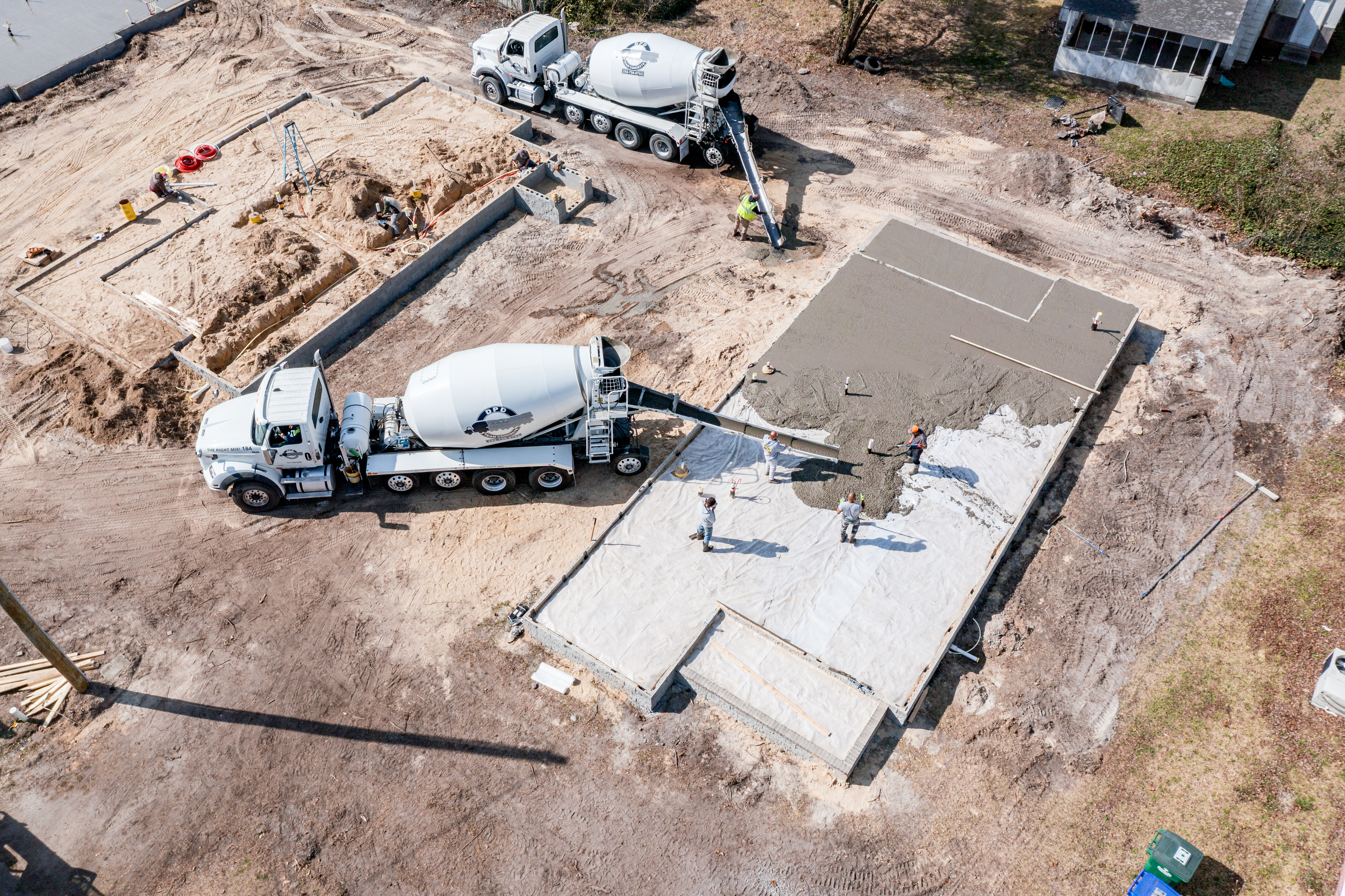
A reverse mortgage lets a homeowner aged 62 or older convert equity into payments, with the balance repaid when they sell, move out, or die. A home equity loan or line of credit sits as a second lien behind the first mortgage. Construction lending works on milestones: the lender releases money in draws as the work reaches each stage, then permanent financing — a take-out loan — replaces the construction loan at completion. Someone buying before their current home has sold uses a bridge loan to cover the overlap.
The federal rules, and the timing that goes with them
Four federal rules carry most of the disclosure questions.
The Truth in Lending Act, enforced through Regulation Z, makes lenders state the true cost of credit as an annual percentage rate. It also gives a borrower three business days to rescind when they refinance a primary residence.
RESPA, the Real Estate Settlement Procedures Act, bans kickbacks and unearned referral fees between settlement service providers. Steering a buyer to a title company in exchange for a payment is the classic violation.
TRID merges the two into a single set of forms with two deadlines to memorize:
Borrower applies →
lender delivers the Loan Estimate within 3 business days →
lender delivers the Closing Disclosure at least 3 business days before closing →
closing.
The Consumer Financial Protection Bureau enforces all of it. The Equal Credit Opportunity Act then prohibits credit discrimination on race, color, religion, national origin, sex, marital status, and age. It also covers income from public assistance. ECOA's list differs from the Fair Housing Act's, which is worth writing out side by side — marital status, age, and public-assistance income are ECOA additions.
How lenders decide, and the two calculations
Underwriting is the lender deciding whether the borrower and the property are good for the money. It looks at credit history, income ratios, and loan-to-value. Loan-to-value is the loan amount divided by the lesser of the purchase price or the appraised value. When an appraisal comes in below the contract price, the lender lends against the appraisal, and the buyer covers the difference in cash.
Two calculations show up in the General exam's math section. A discount point costs 1 percent of the loan amount and buys the interest rate down. Simple interest is principal times rate times time, so an item that supplies three of those values is asking for the fourth.
Predatory lending closes the section. Negative amortization is where the balance grows because the payment doesn't cover the interest. Teaser rates reset sharply after an introductory period. Balloon payments leave a large lump sum due at the end. And the outline names loans made without regard to whether the borrower can repay.
How it shows up on the exam
Only Ever's curriculum gives Financing 6 study hours across 6 topics, out of 100 total prep hours for this exam. That figure is our own estimate of how long the material takes to learn. The exam board publishes question counts instead, and those are below.
Pearson VUE's published outlines show where the questions sit:
| Where it's tested | Questions |
|---|---|
| General: Financing and Settlement | 7 of 80 |
| — Financing concepts and components | 2 |
| — Federal financing regulations and regulatory bodies | 2 |
| — Settlement and closing the transaction | 2 |
| — Lender requirements | 1 |
| General: Math — loan financing costs, settlement and closing costs | 2 of 80 |
| State: Critical business services (escrow, title insurance, lending) | 5 of 60 |
| State: Foreclosure, short sale, deed in lieu | 3 of 60 |
Pearson also publishes a difficulty split for each General area. Financing and Settlement runs 4 knowledge items, 2 application, and 1 analysis. Four of the seven ask you to recall a fact.
The Arizona State paper adds 8 more. Escrow, title insurance, and lending account for 5 questions, and foreclosure for another 3, against the General exam's 9.
Study it accordingly. Learn the split between the note and the security instrument first, since everything else hangs off it. Work the loan-program table above until you can reproduce it from memory, because that comparison is the format the questions use. Memorize the three-day TRID deadlines and the three-day rescission window as bare facts. Then give Arizona's deed of trust, the 91-day trustee's sale, and the anti-deficiency statute a session of their own.
Common questions
How many financing questions are on the AZ-RES exam? About 17 across both papers. On the General exam, 7 scored items sit in Financing and Settlement and 2 more in the math section. On the Arizona State exam, 5 cover escrow, title insurance, and lending, and 3 cover foreclosure.
Does Arizona use mortgages or deeds of trust? Deeds of trust, in nearly all cases. A trustee holds legal title until the loan is paid, and the power of sale in that document is what allows foreclosure without a court case.
What is Arizona's anti-deficiency statute? It stops a lender pursuing the borrower for the remaining balance after a trustee's sale, where the property is two and a half acres or less and was used as a one-family or two-family dwelling.
What's the difference between PMI and MIP? Private mortgage insurance attaches to conventional loans. A borrower can request cancellation at 80 percent of the home's original value and the servicer must terminate it at 78 percent. The mortgage insurance premium attaches to FHA loans, is charged up front and annually, and follows FHA's own rules for removal.
When do I get the Loan Estimate and Closing Disclosure? The Loan Estimate within three business days of applying, and the Closing Disclosure at least three business days before closing. Both windows are three business days, measured from different events.
Does the three-day right of rescission apply when I buy a house? It applies only when refinancing a primary residence. On a purchase loan there is no rescission window, so check which kind of transaction a question describes before you reach for the three days.
Only Ever's guides and practice questions for this exam are free, including the AI-generated question sets other providers charge for. Try the free practice questions and start with the loan-program comparisons and the TRID timing items, which are compact enough to learn in one sitting.